
 FLATLANDS — To celebrate the country’s 250th anniversary, Flatlands resident and Brooklyn Borough Historian Emeritus Ron Schweiger, 81, put together a program titled, “The Battle of Brooklyn, Prior to, During and After the Revolutionary War,” which took place at the Flatlands Library, 2065 Flatbush Ave. on Friday, June 26.
“We did lose the Battle of Brooklyn but we ended up winning the war. If we didn’t win the war, I’d be speaking to you right now in a British accent,” Schweiger said of the battle.
The Battle of Brooklyn took place on Aug. 27, 1776. It was the first and largest battle of the American Revolutionary War following the signing of the Declaration of Independence on July 4, 1776.
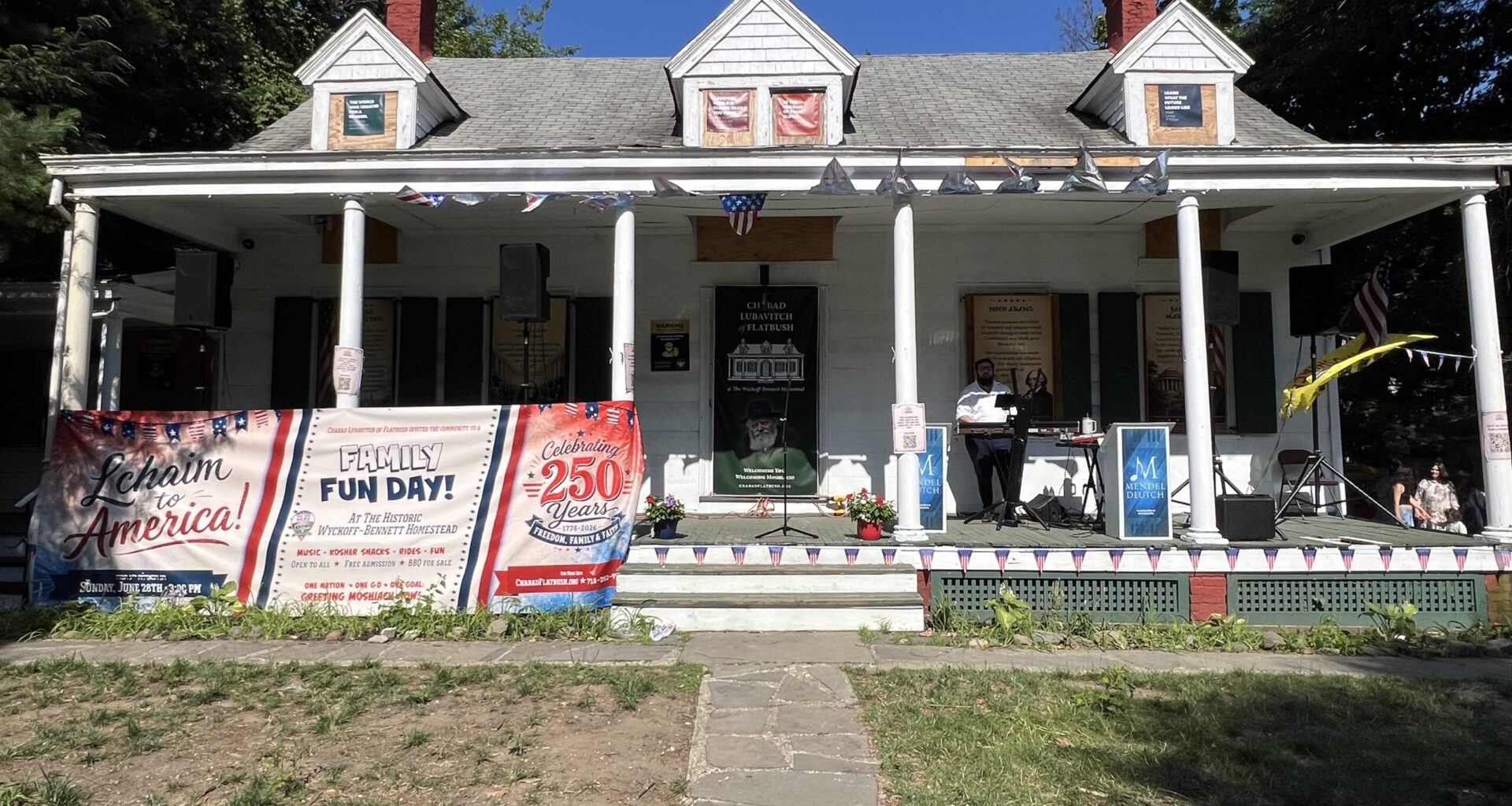
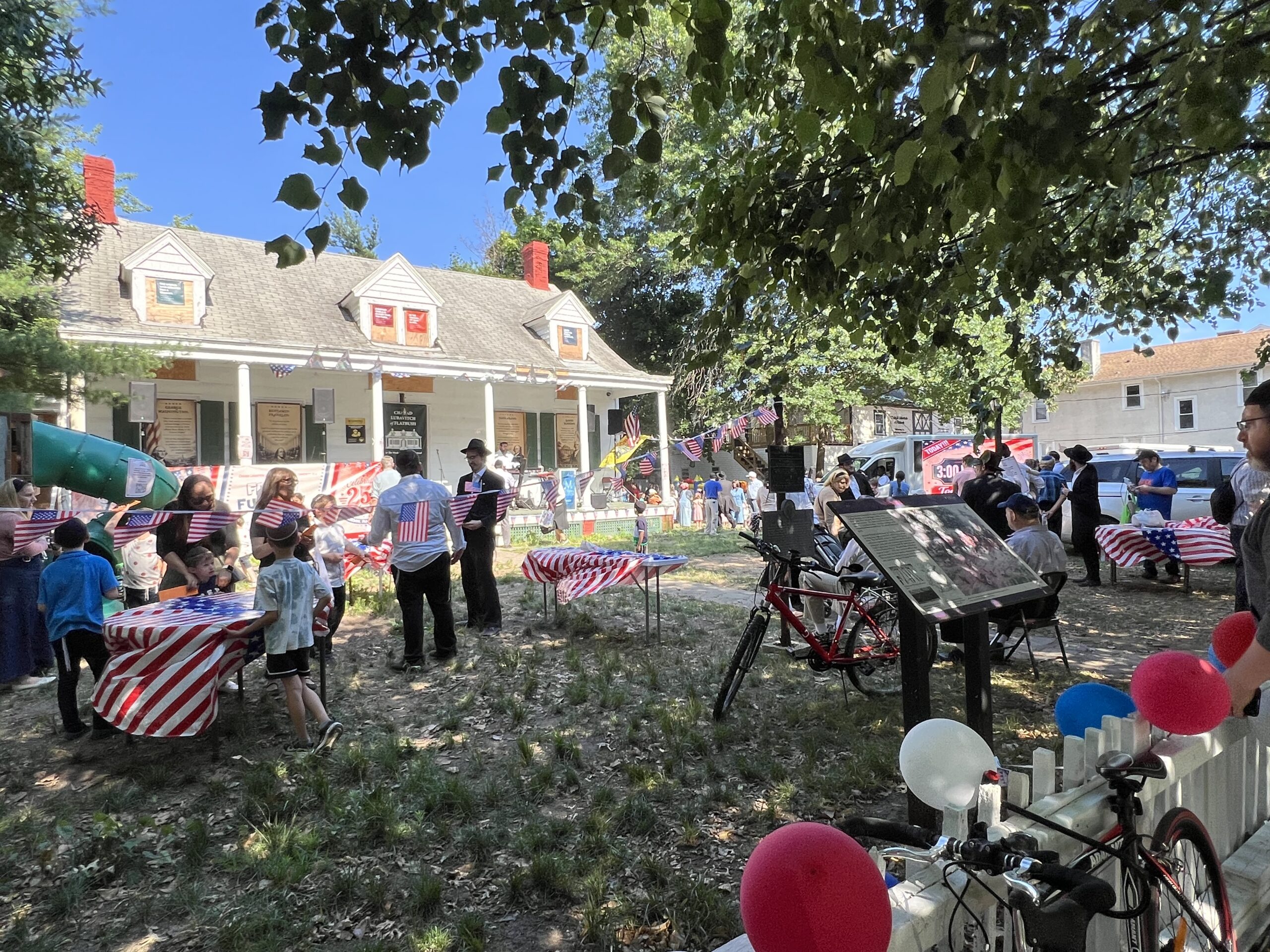 Chabad of Flatbush hosted a “250 Years of Freedom, Family and Faith Celebration” at the Wyckoff–Bennett Homestead on Sunday, June 28 at Kings Highway and East 22nd Street. Photo: Loretta Chin/Brooklyn Eagle
Schweiger gave a slideshow presentation of historical photos, maps and artist depictions with many pictures of Flatbush Avenue in the 1870s and 1880s when it was still a village.
At the time, many of the streets and roads were named after early Dutch settlers. As Schweiger pointed them out from a photo of an old map, he touched upon places where the British troops traveled in what is now Prospect Park and the nearby area with emphasis on the Village of Flatbush.
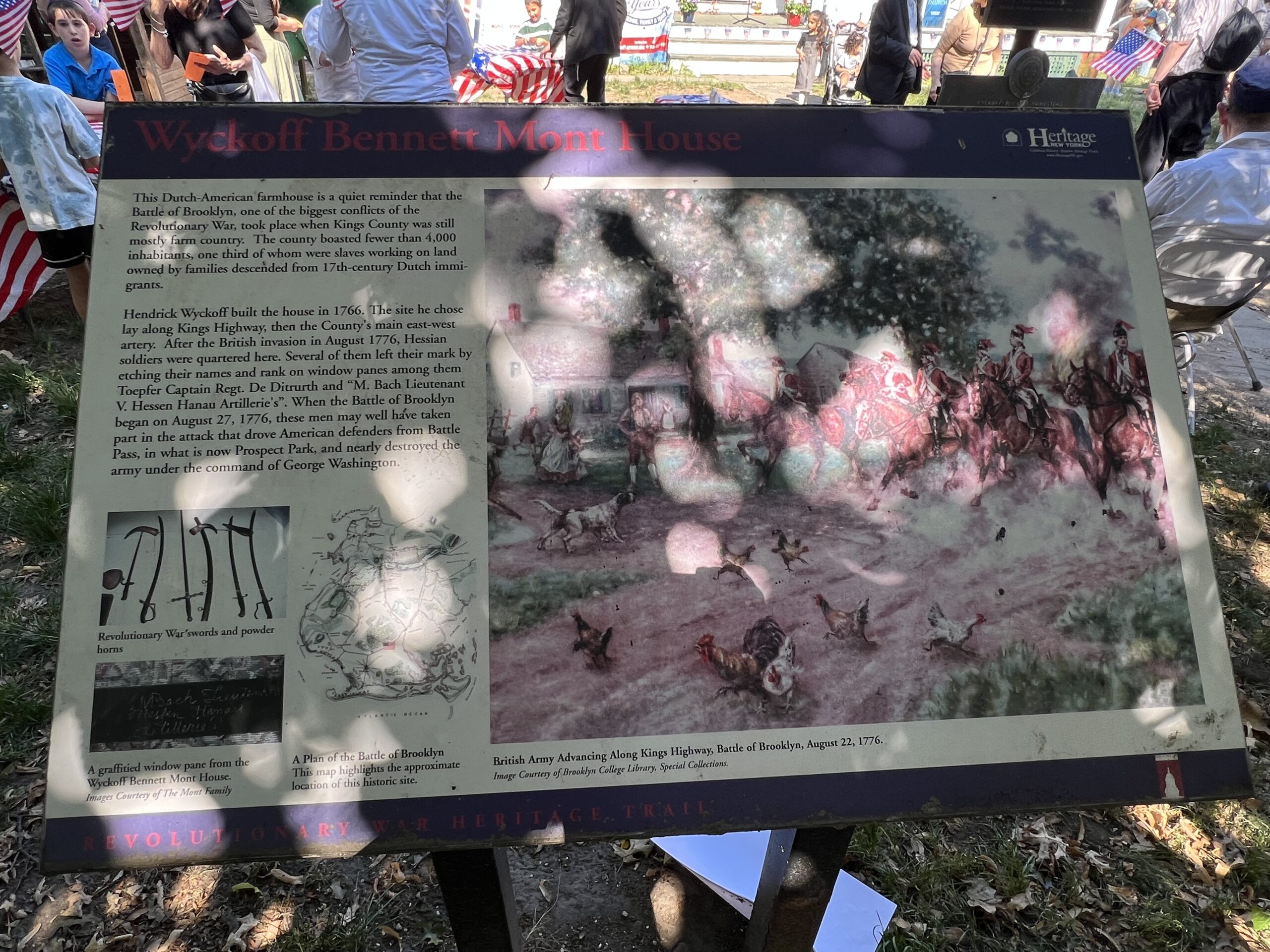 Information about the historical landmark, which is also sometimes called the Wyckoff–Bennett–Mont house. Photo: Loretta Chin/Brooklyn Eagle
The Old Stone House, built in 1699 on Fifth Avenue and Third Street at the border of Park Slope and Gowanus, is where the main battle took place.
Schweiger visited and took pictures in places like the Botanic Garden and Prospect Park, which has several boulders and monuments with historical plaques about the role the area played in the Revolutionary War.
Brooklyn Botanic Garden’s bronze strip
Schweiger spoke of a bronze strip that runs along a section of the Botanic Garden that people walk over every day, yet many have no idea that it leads to a boulder marking the dividing line between what was once the town of Brooklyn and the Village of Flatbush.
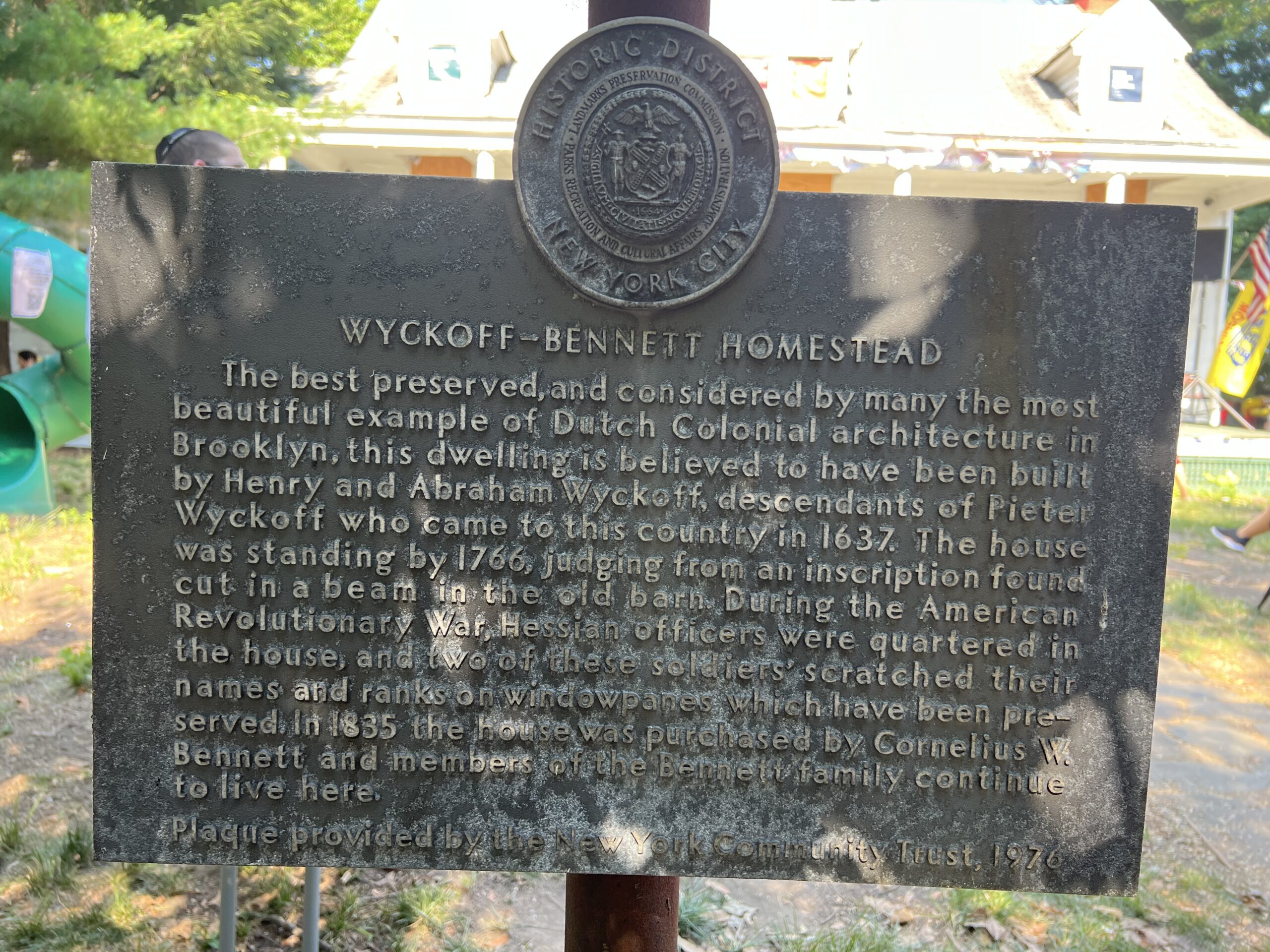 Another historical marker in front of the Wyckoff–Bennett Homestead today. Photo: Loretta Chin/Brooklyn Eagle
In 1834, Downtown Brooklyn and Brooklyn Heights was a city. It was one of six small towns in Kings County and did not become a part of New York City until 1898. Other towns were Flatbush, Flatlands, Gravesend, New Utrecht and Bushwick, but they were later annexed, along with Williamsburgh, into the city of Brooklyn.
Prospect Park Dongan Oak Monument
During the war, Prospect Park was once natural forest land and the locals wanted to block the British and German soldiers from continuing further on towards the Old Stone House or further into Flatbush.
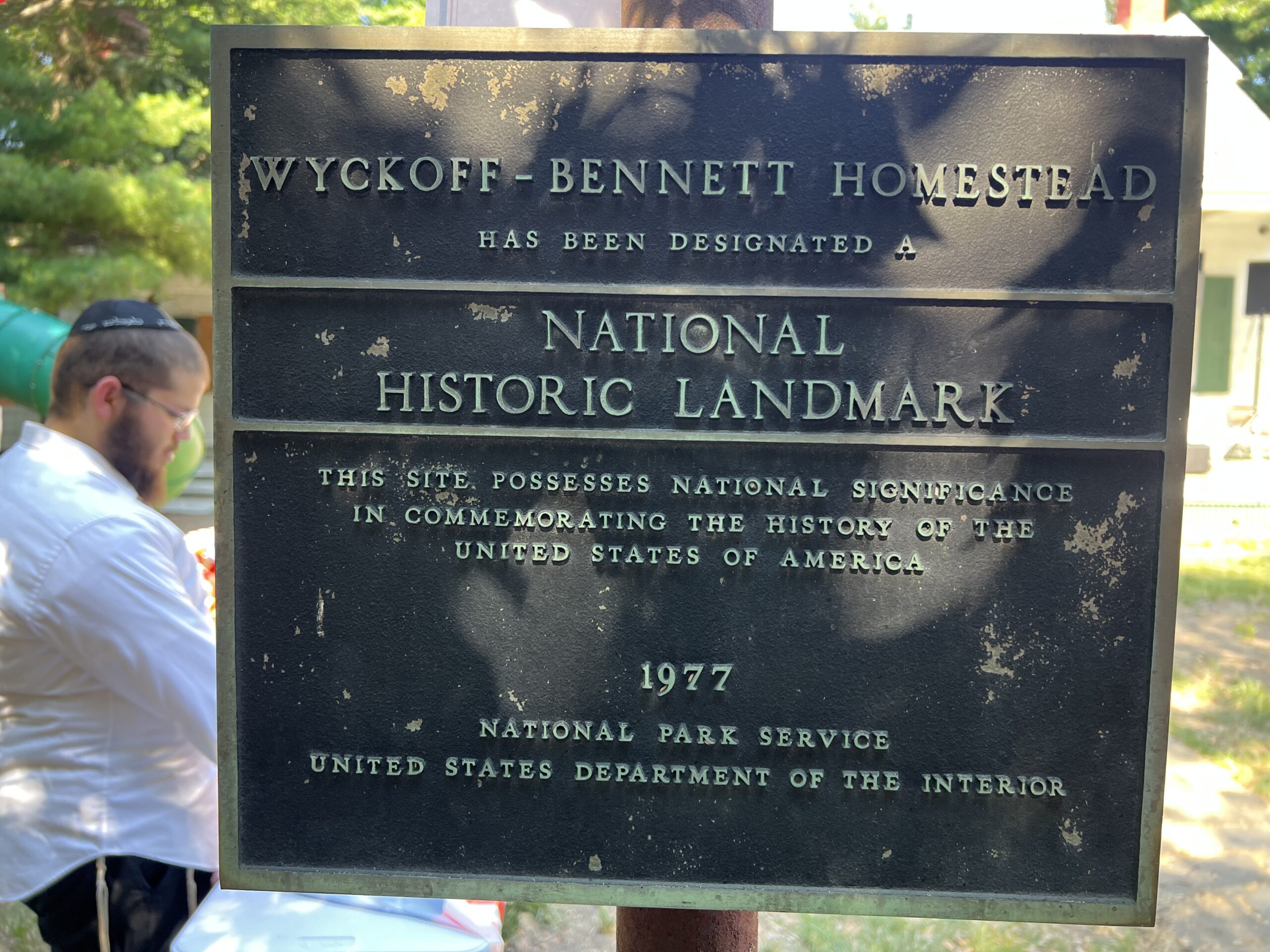 Historical marker in front of the Wyckoff–Bennett Homestead today. Photo: Loretta Chin/Brooklyn Eagle
They cut down a big white oak tree that, up to that time, served as a marker separating Brooklyn and Flatbush. They threw it across the road, creating an important obstruction that aided the Americans against the British and Hessian soldiers.
Battle Pass marker
Further on and related to the Dongan Oak Monument is a plaque on a boulder that marks the location of the Battle Pass, which was a ridge located in the natural gap through the hills. The location was the pathway from Flatbush toward Brooklyn Heights and George Washington’s troops.
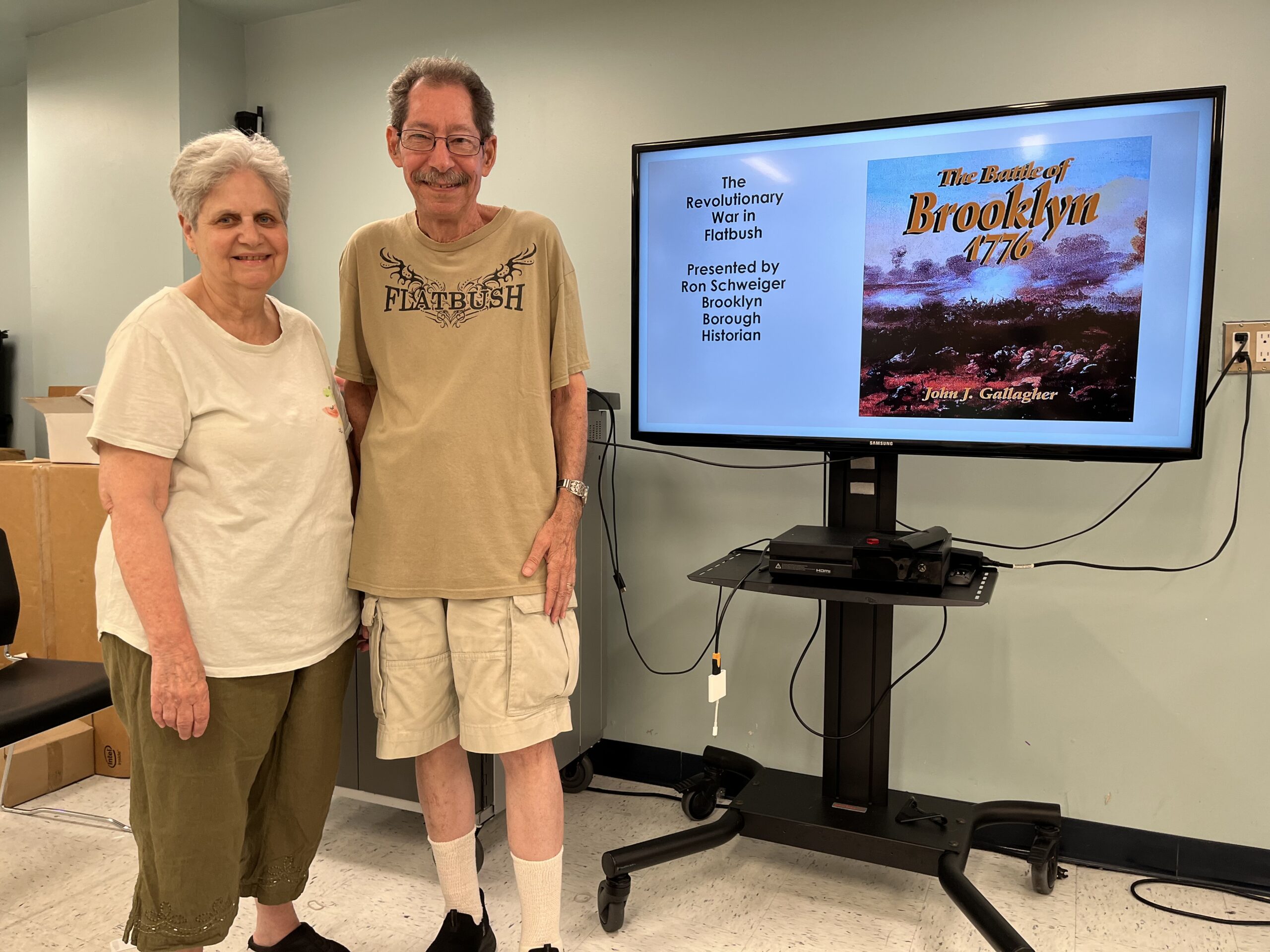 Ron Schweiger with his executive producer and wife, Phyllis. Photo: Loretta Chin/Brooklyn Eagle
In addition to the Dongan Oak, the American troops did their best to set up defenses to defend the ridge from further trespass and advances by the enemy.
Battle of Brooklyn at the Old Stone House
The overwhelming number of British forces succeeded to overcome the soldiers blocking the pass and on Aug. 27, 1776, the most important battle of the Revolutionary War took place in Brooklyn at the Old Stone House.
For the first time, the Continental Army faced the British in combat. General Washington, defeated, fled with his remaining soldiers across the East River, aided by an overnight fog that shrouded their escape.
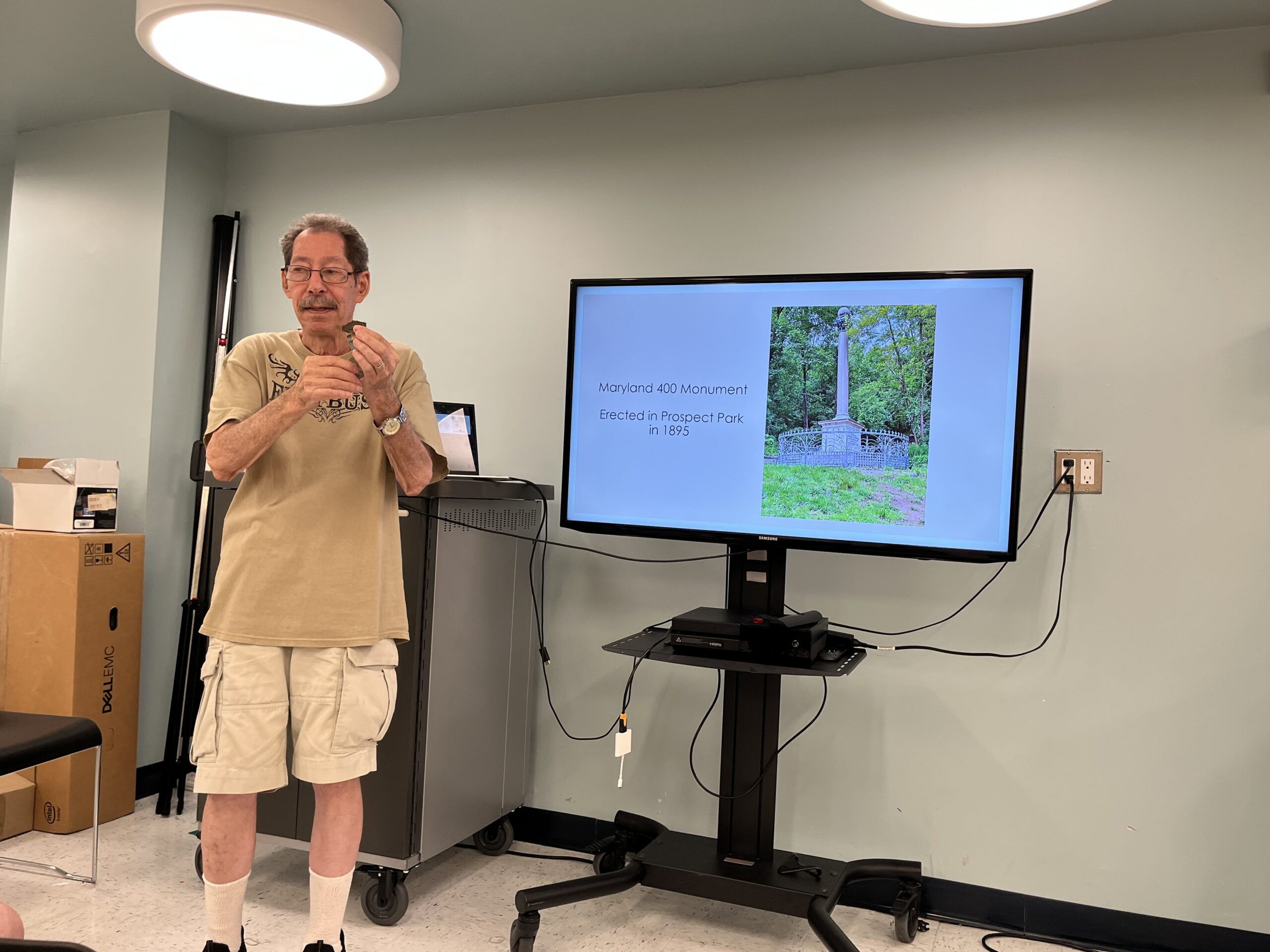 The Maryland 400 Monument was erected in Prospect Park in 1895. Photo: Loretta Chin/Brooklyn Eagle
According to Schweiger, the battle at the Old Stone House enabled Washington to escape. There were 400 Maryland troops that battled 3,000 British and Hessian troops. 256 died with many more wounded, but they held the British back long enough to allow Washington and the rest of the Continental Army to escape with his troops, eventually making it to Valley Forge, P.A.
“The battle lasted two to three days, but it was very pivotal in the history of this country,” Schweiger said.
Most of the villagers and farmers fled to Long Island or New Jersey after burning their hay and crops so the British wouldn’t have access. Those who stayed were forced to feed and take care of the soldiers.
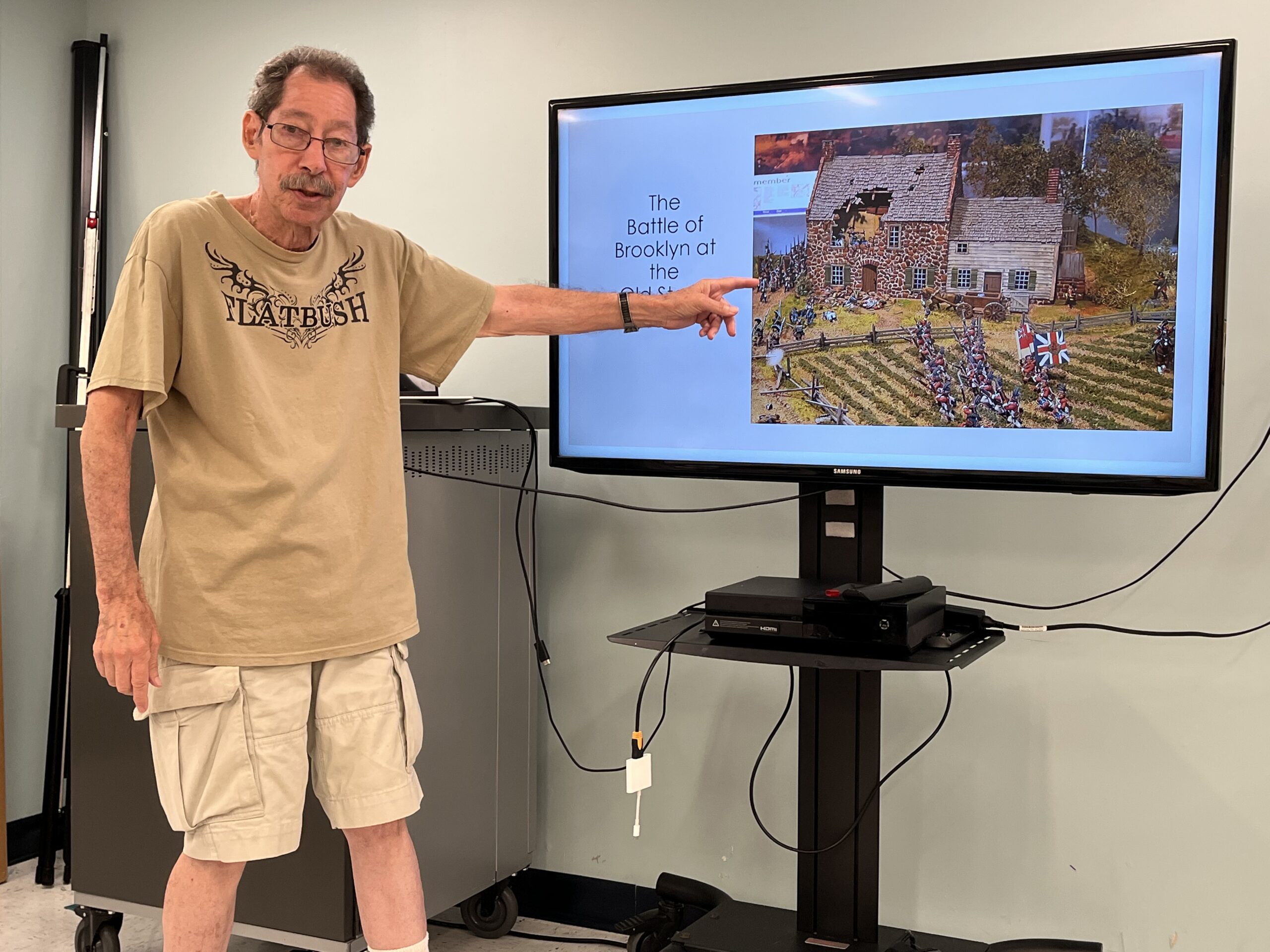 Ron Schweiger with a photo of the Old Stone House during the Battle of Brooklyn. Photo: Loretta Chin/Brooklyn EagleWyckoff–Bennett homestead: A city, state and national landmark
The Wyckoff house was built 10 years before the revolutionary war in 1766 and later sold to the Bennett family in 1835. The British and Hessian soldiers passed by that house during the war.
Two Hessian soldiers forced their way into the house, demanding to be fed and housed. Schweiger said that they started one of the first forms of graffiti in America by taking their knives and scratching their names and rank onto one of the glass windowpanes of the house.
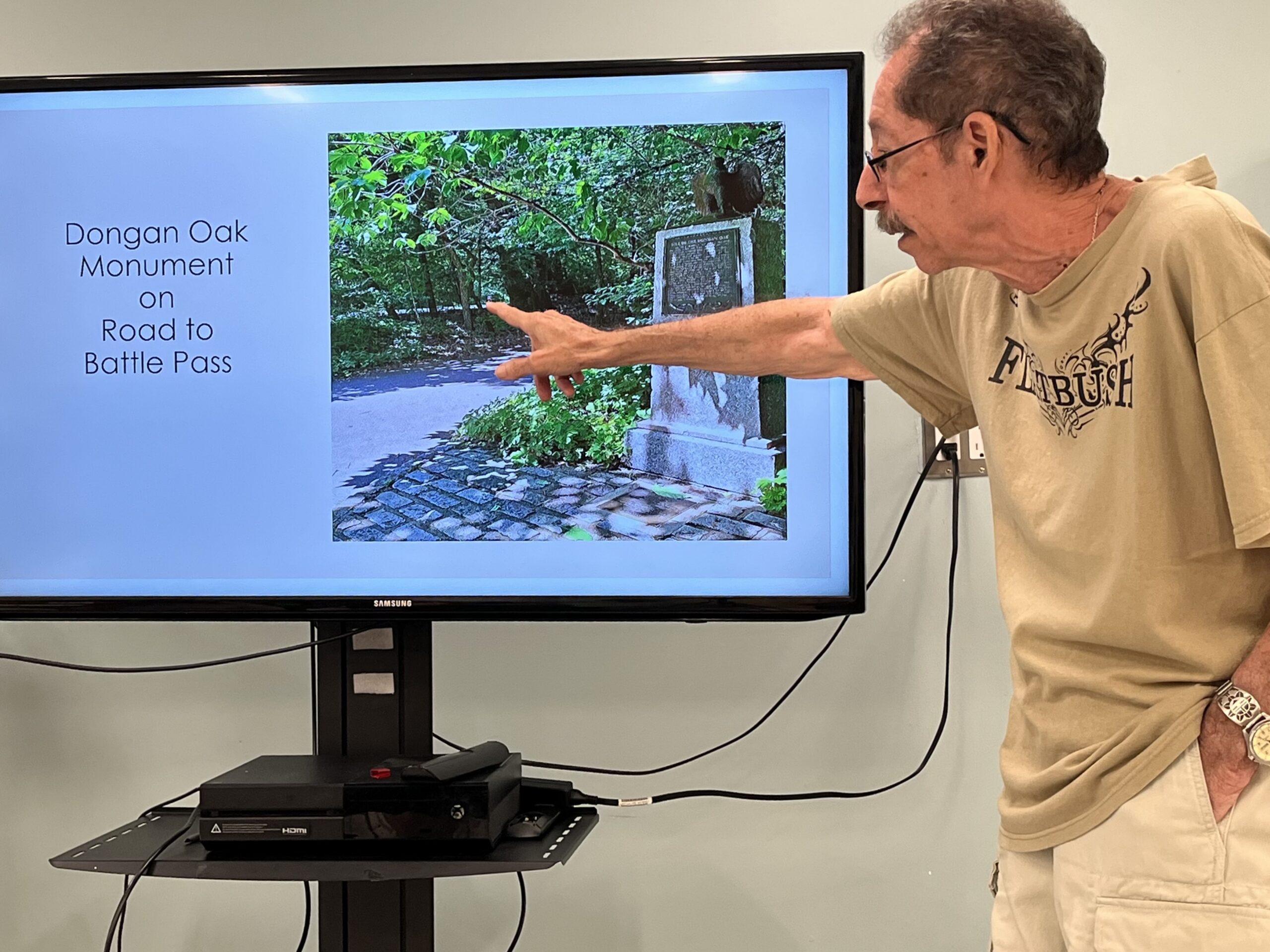 Dongan Oak Monument on the road to Battle Pass. Photo: Loretta Chin/Brooklyn Eagle
The house remained intact when it was sold to the Mont family in the 1980s with historical notes written about the items left in the house. One note, left in a copper tea pot, said that in 1790, Washington, who stopped by the house after the war to review Kings County, was served tea out of that teapot.
Everything was later moved out of the house when it was sold in 2000, with much of the collection at museums or moved to the Hendrick I. Lott House in Marine Park.
Schweiger said the house was sold about a year and a half ago to the Chabad of Flatbush, where a “250 Years of Freedom, Family and Faith” celebration took place on Sunday, June 28, at Kings Highway and East 22nd Street.
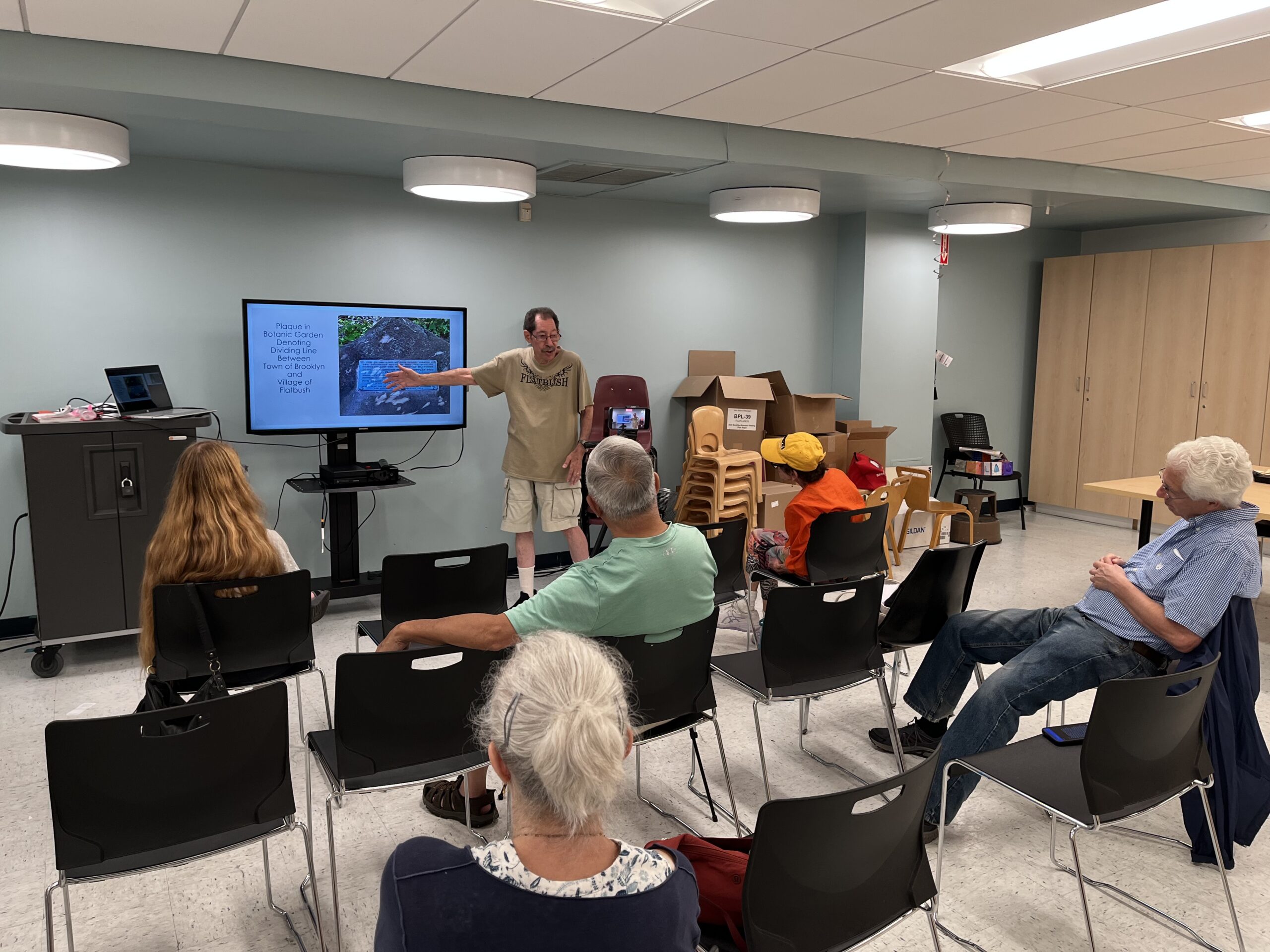 Brooklyn Borough Historian Emeritus Ron Schweiger presents “The Battle of Brooklyn” at the Flatlands Library. Photo: Loretta Chin/Brooklyn EagleMaryland 400 Monument
After the war, in 1895, a monument was erected in Prospect Park in honor of the 400 Maryland troops who saved the Continental Army. Washington inscribed a quote on it when he realized that his troops were outnumbered and must escape. It read, “Good God, what brave fellows this day I must lose.”
Early Dutch settlement
Schweiger spoke again about the various streets named after the early Dutch settlers and historical locations near Flatbush Avenue, including the Flatbush Dutch Reformed Church, which was rebuilt three times in 1654, 1699 and 1796; the Zabriske Homestead on Flatbush and Church Avenues; the Freeman Clarkson-Bergen House at the NW corner at Flatbush Avenue and Albemarle Road; Martense Street and other locations.
He also spoke about the significance of the reconstructed Old Stone House in later baseball history and as a museum today. The Lefferts Homestead at 563 Flatbush Ave. was later rebuilt and moved to Prospect Park. Flatbush Town Hall on Snyder Avenue, Erasmus Hall Academy on Flatbush Avenue, and the Flatbush Toll Booth later moved into Prospect Park.