
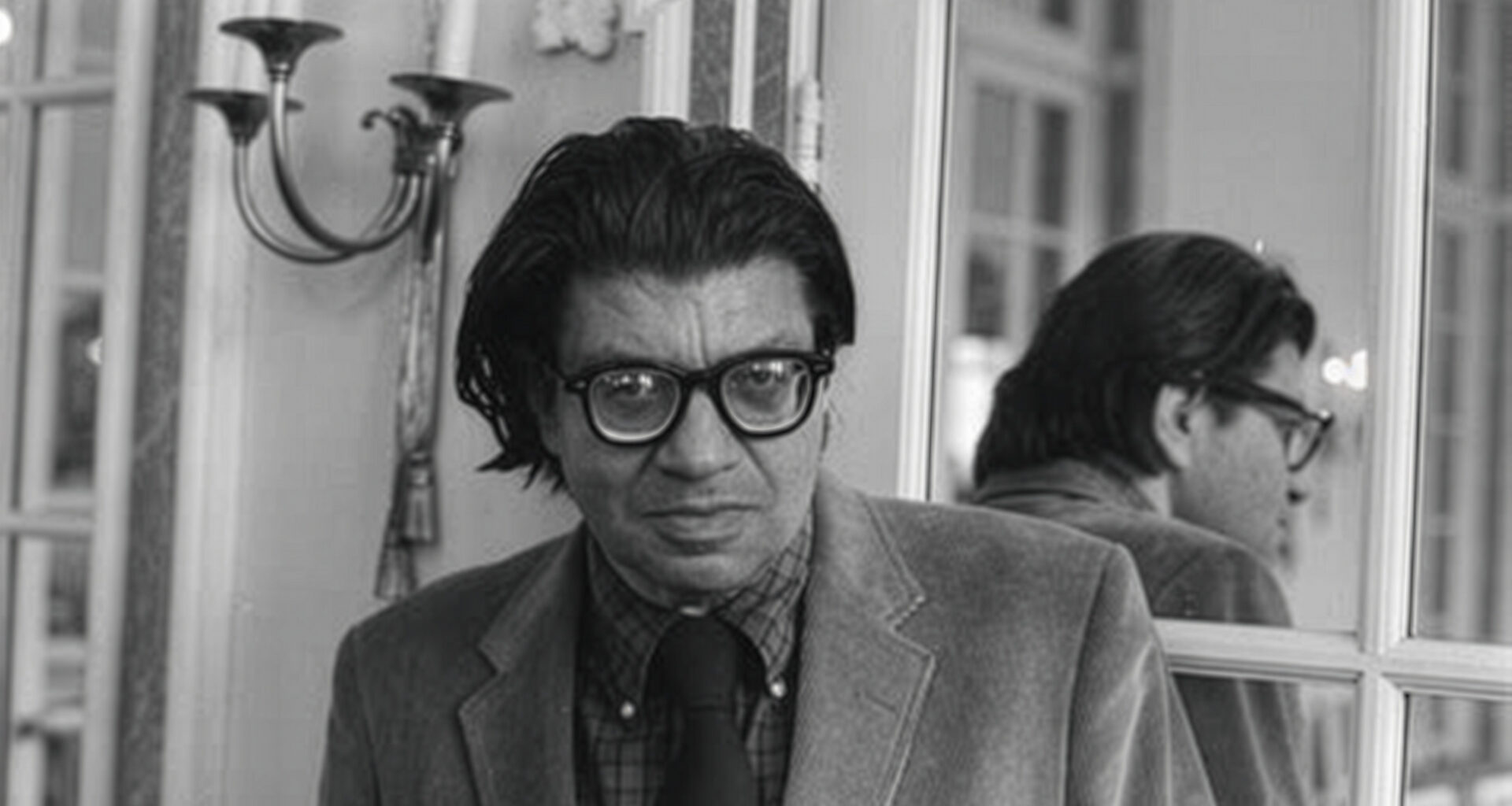
Forty years after Morton Feldman’s death, he seems to be as little understood as when he was alive. This is strange because he has his fans, more now than when he was prolifically making new pieces.
At the narrow margins of the recording era, which has been dominated by popular music, he has been possibly the most heavily documented avant-garde composer, and one of the most well-documented composers in living memory. The Mode label alone has recorded most of his important solo instrumental and chamber music. Feldman has an ongoing afterlife as something to be collected.
One does wonder what he would think about this. He was obstreperous, more so with his friends than anyone else, and it seemed the case of the people closest to you being most vexing because they don’t always see who you are while being in the position where they should. And Feldman, who was brilliant at seeing the work of others, wanted to be seen.
That’s the thing. New work can be difficult to see from close up in time, especially music which, when brand new, is almost always heard only live, and almost always only once. Memory has to share time with listening, listening to understand what’s going on, memory to hold on to immediate impressions and find a place to fit those into the knowledge and experience you’ve gained. New books and paintings can be taken in at leisure, you can go see a new movie again, but a world premiere goes at its own pace, has its own duration, then disappears.
When Feldman’s music was new, especially his works notated on graph paper, it must have been startling and hard to grasp as what it is. In a 1967 article, Feldman explained the origins of his graph pieces, describing a dinner with John Cage and David Tudor, where he got up, went into the other room, and “wrote on graph paper some indeterminate music for cello—no notes, just indications of high, low, middle, short, long, loud, soft.” He claimed that “was probably the first piece of indeterminate music.”
It is necessary to understand what that means. A composer’s score is a set of instructions to musicians, and Feldman’s gave the performer some choices within specific guidelines—which also included general directions to play slowly, softly, and to allow substantial periods of silence. That was his sound. It seemed related to what Cage was doing, which it wasn’t, and outside of classical music, which it also wasn’t.
As to the first, indeterminacy is not chance, which was Cage’s field. Cage wanted to remove intentional choice from his compositions, so designed bespoke procedures to use chance to make all the choices for him. Indeterminacy is first chosen by the composer, then produced through the musician’s choices. But it will sound different each performance.
For the second, it’s fair to call the graphic scores and indeterminate music Feldman’s avant-garde/experimental period. But like a quantum physicist collapsing wave functions, he moved from indeterminacy to complete determinacy. Feldman always saw himself as a classical composer, and in retrospect the early music seems like a long apprenticeship through which he found what he wanted to hear and figured out how to write it down, on manuscript paper, with the type of standard notation that any musician could read. In method, this was as traditional as classical music gets.