
Shannon Sanders
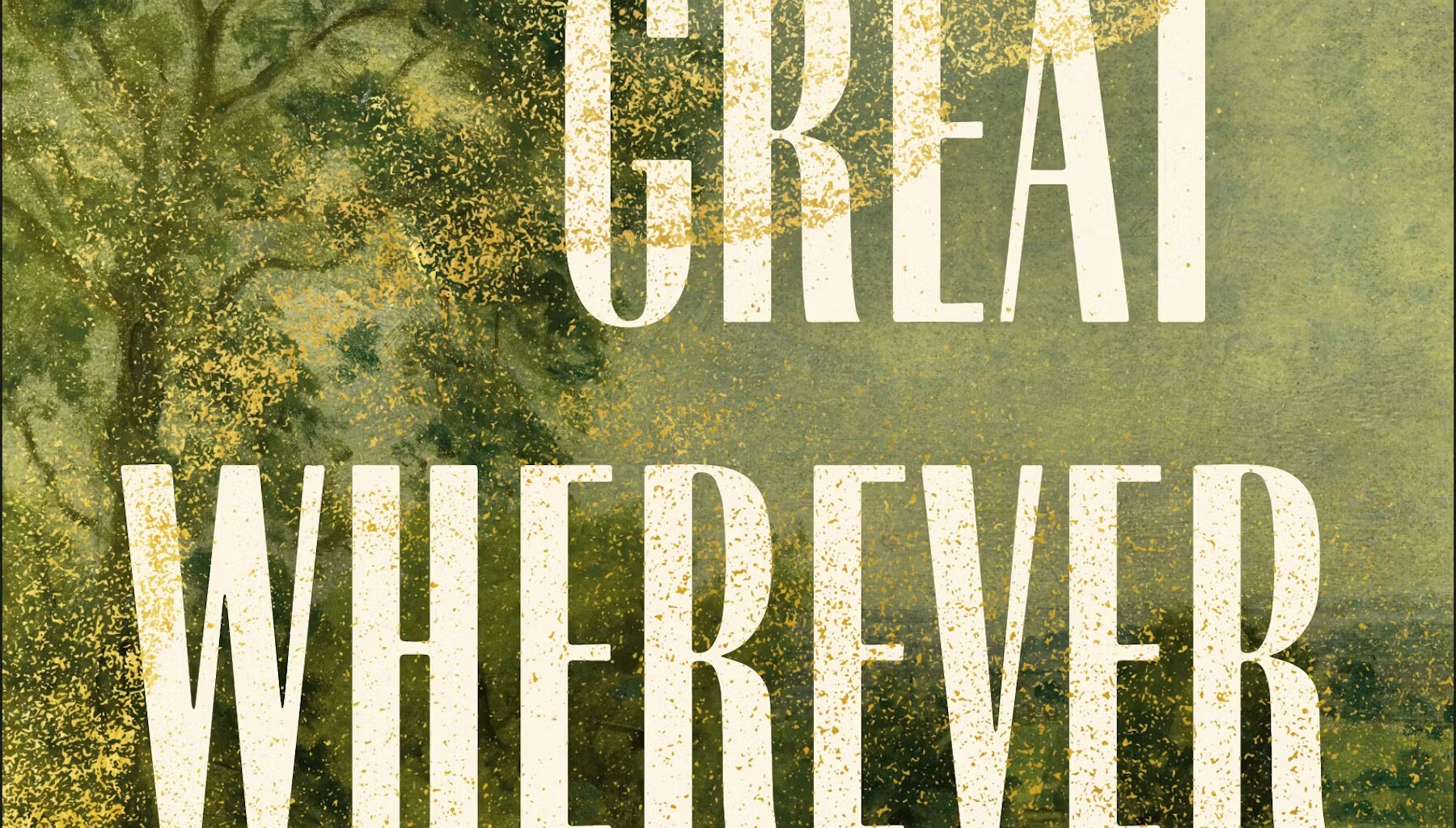
The Great Wherever
Henry Holt & Co., 2026
When we meet Aubrey, the protagonist in Shannon Sanders’s debut novel, The Great Wherever, she is falling apart. Reeling from a heavy and unexpected break-up and still mourning the loss of her father, Aubrey—to her surprise—finds herself departing from her group house in DC in sleepwalking pursuit of the ancestral home in rural Tennessee that has been willed to her. Accompanied by previously unknown relatives and the ghosts of her lineage’s past, Aubrey’s pilgrimage soon becomes something not quite otherworldly, but rather liminal. Aubrey’s trip is a homecoming, of sorts—a return to a home that she never quite knew, but that all along knew her. The haunting begins.
Upon her arrival, it becomes clear that ghosts and sorrow are not the only things present here. An offer has been made to the family. Aubrey is not the only descendant circling this plot; the descendants of those who once presided over the land, and who maintained a grip on the captives and forced laborers enslaved there, would like the land back and are offering a large sum—a sum accumulated first by the labor undertaken by Aubrey’s ancestors—for it. Herein lies the central tension in The Great Wherever. As Aubrey and her cousins consider the offer, each approaching it with their own individual hesitations or excitements, the story’s true question is revealed: what is worth passing down?
In The Great Wherever, Sanders asks the reader to consider value and wealth—whether or not they are the same thing, the spaces where they may overlap or diverge, and most importantly, which one is worth holding onto. There is capital, and there is spirit. The land offers so much to Aubrey and its contemporary holders: reminders of lineage, a monument to survival, a place to come home to. However, as one character points out, spirit cannot pay rent.
The Great Wherever follows behind Company, Sanders’s 2023 short-story collection that similarly tackles family and inheritance across generations. The collection of stories sets Sanders up well in approaching her debut novel, and an anecdotal approach is certainly present in The Great Wherever. The central narrative weaves across time, whisking the reader away from the present and delivering us to the front stoop of Tennessee homes, to ponds stuffed away within Southern forests, to the confines of an overstuffed office, and more. We meet a sprawling cast of characters—grandparents, great-grandparents, great-great-grandparents, and so on, with each new time period opening Aubrey’s world up wider and wider to include a cross-tangled web of stories. In the ghostly haze, Sanders effectively blurs the veil between yesterday and today (and tomorrow, for that matter). Through Aubrey’s eyes, things are difficult to place. The novel’s central farmhouse appears old, although ageless to her. It isn’t only the land itself that permeates across time. The same is true for the contours of lives lived by ancestor and descendant alike. Sanders’ characters are colored by shared heartbreak, complicated family, and financial strain.