
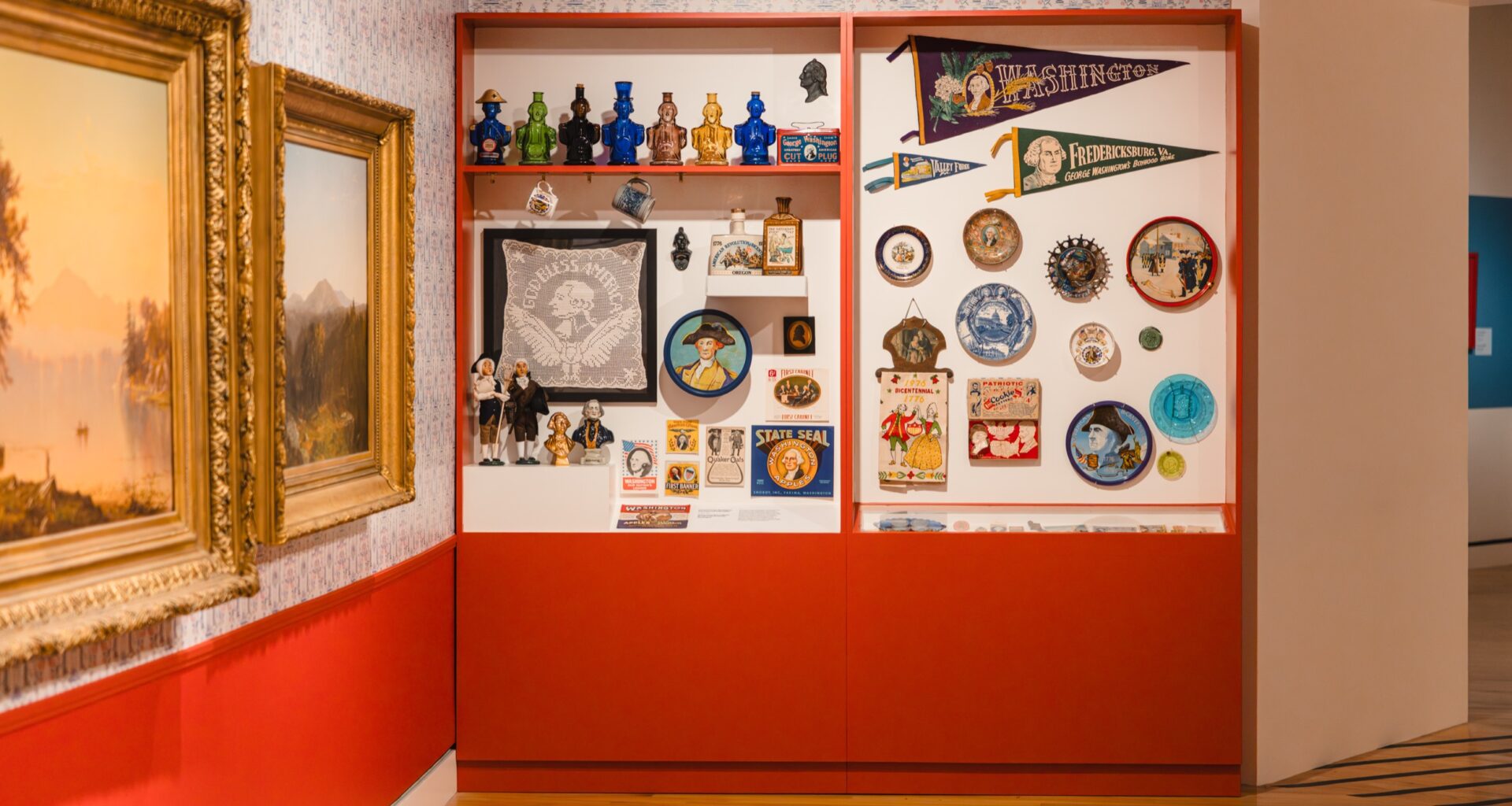
Regeneration: Long Island’s History of Ecological Art and Care, Parrish Art Museum, Water Mill, NY
Responding to language in the Declaration of Independence that states “life” as one of the inalienable rights, Regeneration explores our responsibility to the various forms of life that sustain us. The exhibition adopts a regional focus, featuring eleven intergenerational artists—Scott Bluedorn, Jeremy Dennis (Shinnecock), Sasha Fishman, Maya Lin, Tucker Marder, Mamoun Nukumanu, Randi Renate, Cindy Pease Roe, Sara Siestreem (Hanis Coos), Alan Sonfist, and Michelle Stuart—who have created work about the ecological conditions of Long Island’s East End and the environmental pressures that threaten them. At the heart of the exhibition is a presentation of newly commissioned work by Siestreem and the Shinnecock Kelp Farmers, an intergenerational collective of Indigenous women who are restoring the ancestral Shinnecock tradition of seaweed harvesting to reduce nitrogen pollution in local waters.
Mni Sóta: Traditions & Innovations, Textile Center, Minneapolis, MN
Mni Sóta: Traditions & Innovations is a celebration of the Indigenous textile histories of Minnesota and the ways artists from the Tribal Nations of Minnesota continue to innovate within these traditions. The exhibition honors Native textile and fiber arts as living knowledge—held in the hands of artists and shaped by place. Curated by Delina White of the design house IamAnishinaabe (Leech Lake Band of Anishinaabe), Mni Sóta brings together Minnesota artists whose work invites close looking and thoughtful appreciation. Each piece carries labor, intention, and story, affirming Native textile arts as a living and evolving presence.
Mni Sóta: Traditions & Innovations is presented as part of Minnesota Handwork, a program partner of Craft in America’s Handwork: Celebrating American Craft 2026.
Who is America at 250?: Artist Books on the State of Democracy, San Francisco Center for the Book (San Francisco, CA) traveling to the Boston Athenæum (Boston, MA) and Minnesota Center for Book Arts (Minneapolis, MN)
Through artists’ books and related artworks, Who Is America at 250? reflects on the current state of the American experiment, examining how ideals of democracy have been interpreted, contested, and reshaped in contemporary life. Curated by Betty Bright, Mark Dimunation, Maymanah Farhat, Yuka Petz, and Ruth Rogers, the exhibition brings together works by forty artists from across the United States that address urgent issues facing individuals and communities today, including immigration, social injustice, racial inequity, income inequality, and more. More than ever, the identity of America is in flux and under pressure or outright attack. Rather than retreat, artists have created works that touch upon memory, place, and ritual to carry us into reflection on the critical issues faced by America in a manner that provides depth and perspective, and hopefully prompts conversation and clarity.
Some American Dreams, The Fabric Workshop and Museum, Philadelphia, PA
Drawing its title from June Jordan’s 1986 essay calling for practices of collectivity, Some American Dreams proposes: what if there is not one America, but many? Made by past Artists-in-Residence in collaboration with the FWM Studio, twenty-seven exhibited projects employ a range of media including furniture, sculpture, textiles, and photography. Considering America(s) beyond the confines of the United States as a nation, its borders and ostensible 250 years of history, the works grapple with themes of Indigeneity and race, alternative origin stories, landscape and the environment, the construction of historical narrative, modes of resistance, and expanded visions of kinship and community. As poet Hanif Abdurraqib writes of Jordan’s work, “one must be as inventive with their commitments to loving others as they are with their commitments to immediately and urgently dismantling every brutality, every cruelty that places any limitations on our hearts.” In Some American Dreams, I take this invocation seriously, asking how artists might affirm, resist, or remake these Americas in the midst of ongoing apocalypses and from them, the making of new worlds.
—Hilde Nelson, Curatorial Fellow and curator of Some American Dreams
Rising Up: Rocky and the Making of Monuments, Philadelphia Museum of Art, Philadelphia, PA
The Rocky statue is among Philadelphia’s most visited landmarks—more than double the visitors to the Liberty Bell and approximately five times as many visitors to the museum itself. For decades the museum and the statue have been pitted against one another as adversarial. Organized around a central curatorial question “Why do millions of people visit the Rocky statue at the steps of the Philadelphia Museum of Art each year?” Rising Up looks to the statue of Rocky Balboa—the most famous Philadelphian who never lived but who thrives in the public imagination—to better understand our complex relationships to our monuments. The exhibition explores the meanings and mythologies of the Rocky statue, and extends that line of inquiry toward how we take comfort in fictionalizing our history.
—Paul M. Farber, Monument Lab, Curator of Rising Up: Rocky and the Making of Monuments
Buffalo Nation, Buffalo Bill Center of the West, Cody, WY
Buffalo Nation, an interdisciplinary exhibition honoring our national mammal, invites visitors into the story of the American buffalo—from its past and near extinction to its remarkable comeback, with a focus on its enduring significance. In recognition of the US semiquincentennial, the two-year long immersive exhibition centers the buffalo as a witness to sweeping change in America whose story precedes but was profoundly shaped by nation-building, and as an icon of resilience and possibility. The primary exhibition surrounds audiences with sights, sounds, art, and science, bringing the buffalo’s cultural and ecological importance into full view. Buffalo Nation was shaped by a curatorial team working with outside experts, and enriched by collaboration with an exhibition advisory council, students, tribal communities, nonprofit groups, filmmakers, photographers, and audiovisual innovators.
—Karen Brooks McWhorter, Margaret and Dick Scarlett Curator of Western American Art