
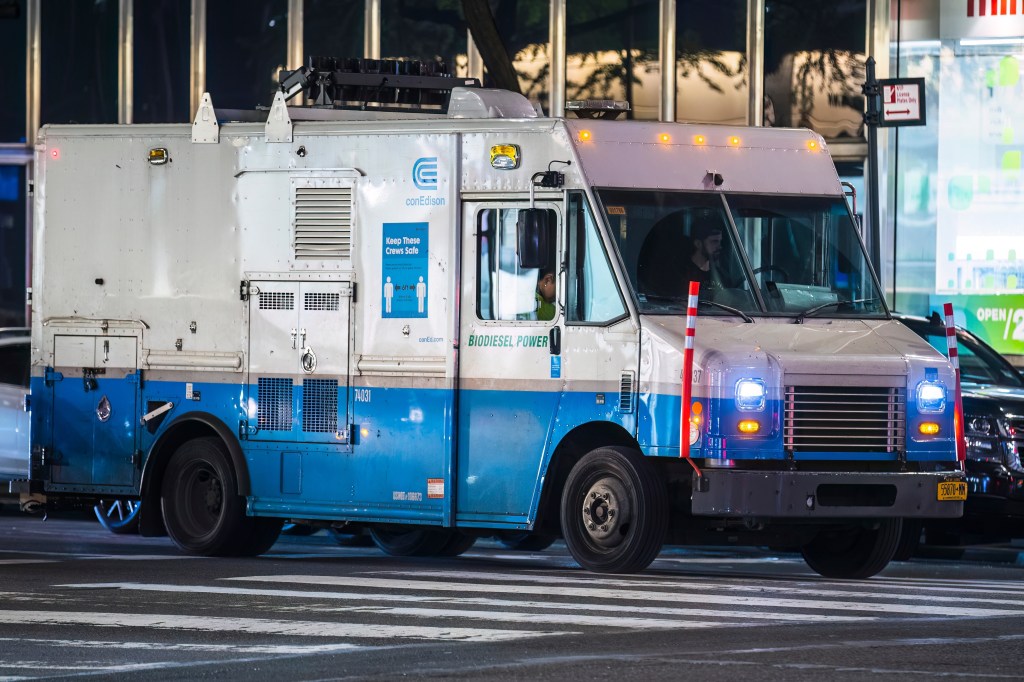
Even without a heat wave like this week, times are tough for New York’s utility customers. New Yorkers pay some of the highest electricity prices in the country, and these high prices have real consequences. Last year, Con Edison disconnected more than 88,000 households for nonpayment, and according to an AARP study released in March, one in five older New Yorkers has taken on debt or borrowed money in order to afford utility bills. Combine this with legally approved rate hikes and the long term supply impacts of the Iran war, and you’ve got a recipe for an electricity affordability crisis.
Many politicians have proposed solutions to high electricity bills. In New Jersey, Gov. Mikie Sherrill has embraced new renewable energy supplies, and directed the state Board of Public Utilities to consider ways to freeze rates. Here in New York State, lawmakers have proposed everything from cutting back renewable spending to creating virtual power plants in order to make electricity more affordable and reliable. But there’s a direct approach that New York hasn’t tried yet. What if we simply paid the private utility companies less money?
That’s where the Fair Authorized Investment Returns (FAIR) Act comes in. The FAIR Act is sponsored by Assemblymember Sarahana Shrestha and Sen. Shelley Mayer, and would lower the amount of money that for-profit utilities are legally allowed to charge to their customers for their investments.
Here in New York, the private utility companies do not provide electricity through a traditional market — as regional monopolies, they are not subject to competition. They also do not generate electricity directly. Instead, they own and operate the wires that bring electricity to our homes and businesses, and pass their supply costs for electricity from third party generators directly to the customer.
Utility profits are therefore based on distribution expenses and are regulated by the state Public Service Commission (PSC). The PSC has broad authority to determine how much money the utilities make, and they set a rate of return that is based on how much the utilities build. For every dollar spent on capital projects, the utilities are allowed a profit that they turn around and return to their investors. The FAIR Act would lower bills by lowering this profit.
To be clear, we need to make sure utilities have the resources they need to make necessary upgrades and improvements. The FAIR Act provides for this by allowing the utility companies to set their profits at what is necessary to attract investment. Former utility insiders are supporting this kind of investment model, arguing that the current model has allowed unnecessarily large payouts to private companies on the backs of everyday customers.
The FAIR Act is also important because of, well, fairness — in 2025, while Con Edison was cutting off power to struggling customers for nonpayment, they awarded their CEO nearly $20 million in compensation.
The FAIR Act’s approach to lowering bills is gaining momentum. The Pennsylvania House of Representatives has unanimously passed a bill that similarly curbs utility returns. Furthermore, many New York State legislative candidates who won in last week’s primary elections question whether there should be utility profits at all, much less whether the current rate of profit is excessive for struggling customers.
As the FAIR Act moves through the Legislature, the Utility Customers Association will be supporting it every step of the way. Gov. Hochul, if you care about utility customers, we hope you’ll support the FAIR Act too.
Robbins is the director of the Utility Customers Association.