
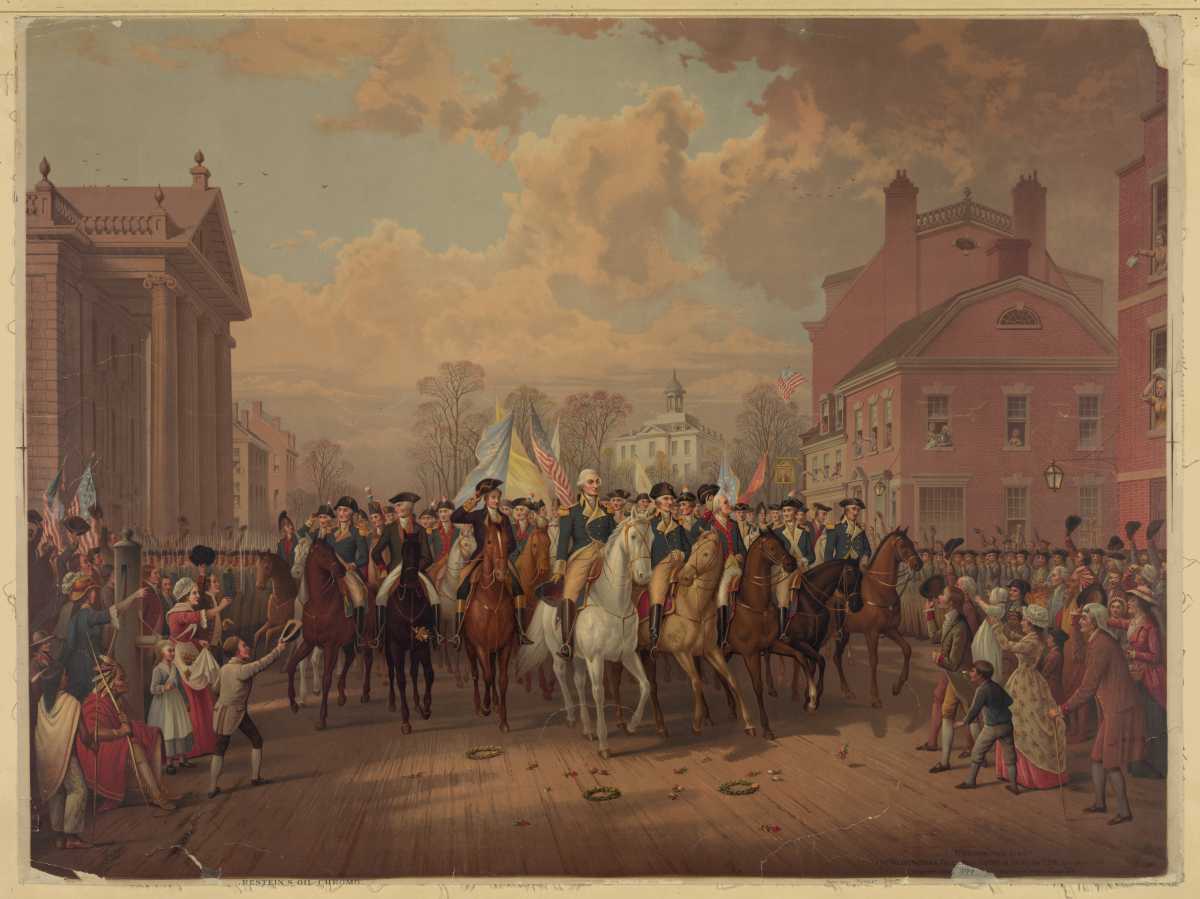
New York City is typically not lauded as a revolutionary site as much as cities like Boston or Philadelphia. During the war, however, it was of the utmost importance to both revolutionaries and the British.
New York was positioned halfway between the northern and southern colonies, making it a vital location in the war, as noted by Elisabeth Sherman, the Robert A. and Elizabeth Rohn Jeffe Chief Curator and Deputy Director at the Museum of the City of New York (MCNY). Sherman aided in curating “The Occupied City” exhibit at MCNY, a 7,000 square-foot exhibition made in collaboration with the Gotham Center for New York City.
The exhibition walks visitors through a timeline of New York during the Revolutionary War.
“If you can control New York, if you can control the Hudson, if you can divide the colonies in half and isolate the more revolutionary northern colonies from the south, presumably you can win the war, and that’s why we’re the first place that the British Navy comes to,” Sherman said. “That’s why Washington acknowledges that we are going to be a crucial site. The whole war, he’s pretty obsessed with New York and keeps coming back and wanting to return and recapture it. We are incredibly central to this story.”
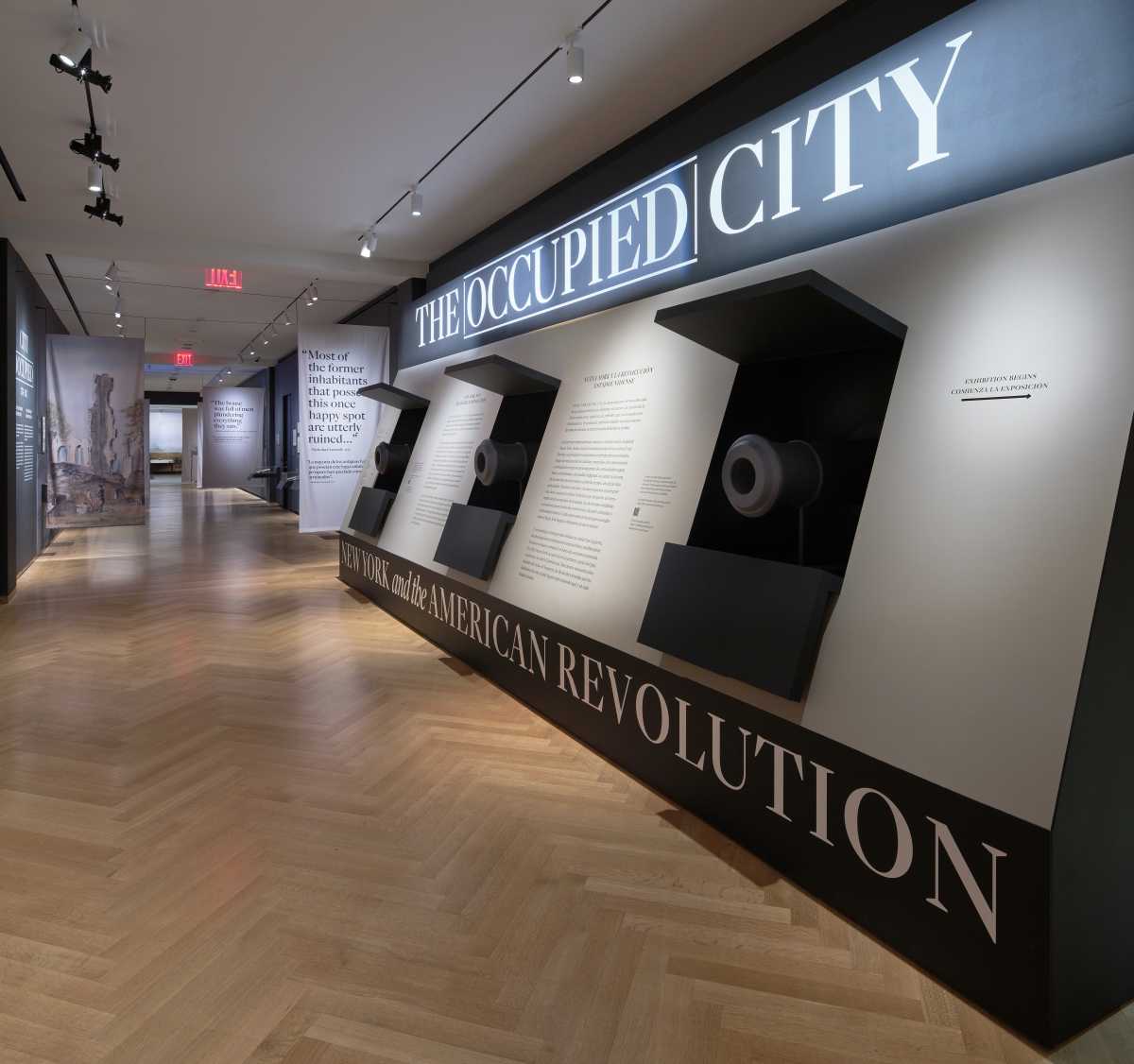 “The Occupied City” features interactive pieces for visitors to use in telling the story of the American Revolution in New York.Courtesy of Filip Wolak – picture provided by MCNY
The exhibition aims to highlight aspects of New York’s revolutionary history that are often untold. It shares the stories of enslaved people, Native people and women during the war, and does not shy away from the defeats that New Yorkers faced.
“Most people don’t know this story of the city being occupied,” Sherman said. “I think it’s the one [aspect] that’s so important to take away, that we can lose and still create something great, and the path to winning always includes losses along the way. If we only tell the triumphant stories of our other northern neighbors, we don’t understand the complexity of what it took to get here.”
How the American Revolution nearly ended on Staten Island
With this mix of British occupation and revolutionaries, New York was a place of high tension for citizens. Philip Papas, history professor at Union College, spoke about the kind of warfare New York saw at the time.
“If you study the history and the Revolution, you really see how the Revolution was a civil war,” Papas said. “The war in this area, and in other areas of the colonies too, was not just a conventional war of battlefields… It was a lot of guerrilla warfare, a lot of internecine warfare.”
Papas also serves as a board member of the Conference House Association. The Conference House, located in Staten Island, is one of the most underrated yet vital locations in New York’s revolutionary history.
“A lot of people don’t realize that the American Revolution could have ended here,” Papas said.
 The Conference House, located in the Tottenville neighborhood of Staten Island.Photo by Barbara Vasquez
Here, 250 years ago, three revolutionaries, including Benjamin Franklin and John Adams, met with British Admiral Lord Richard Howe for a failed peace conference. This meeting was the last reconciliation attempt from either side before entering war.
“What basically results from this conference is both sides realize that they’re gonna have to fight it out now,” Papas said. “This is going to be a full-scale war. The Americans are not going to give up their independence. The British are not going to accept America as a new sovereign country, and so it’s going to have to be war to decide that.”
After the peace conference, the war escalated with tensions between British occupiers and Patriot partisans steadily rising. Buildings were burned, cattle were killed, and citizens had to deal with the continued violence of the British.
New York City, now one of the greatest cities in the country, was once riddled with defeat. For Sherman, this story of loss is just as important to share as any other.
“New York was occupied for seven years, completely devastated and practically destroyed by the end of the war – but look at what happened just right after that,” Sherman said. “It can be an inspirational story for us today. Challenge and complexity and loss don’t have to be the end of the story.”
The fact that New York does not have a perfect revolutionary history does not diminish how important a role the city had played in the American Revolution.
“This is New York’s history too, just as much as it is in Boston and Philadelphia, if not more so, and we as New Yorkers should remember the role that the city played in this important history,” Sherman said.