
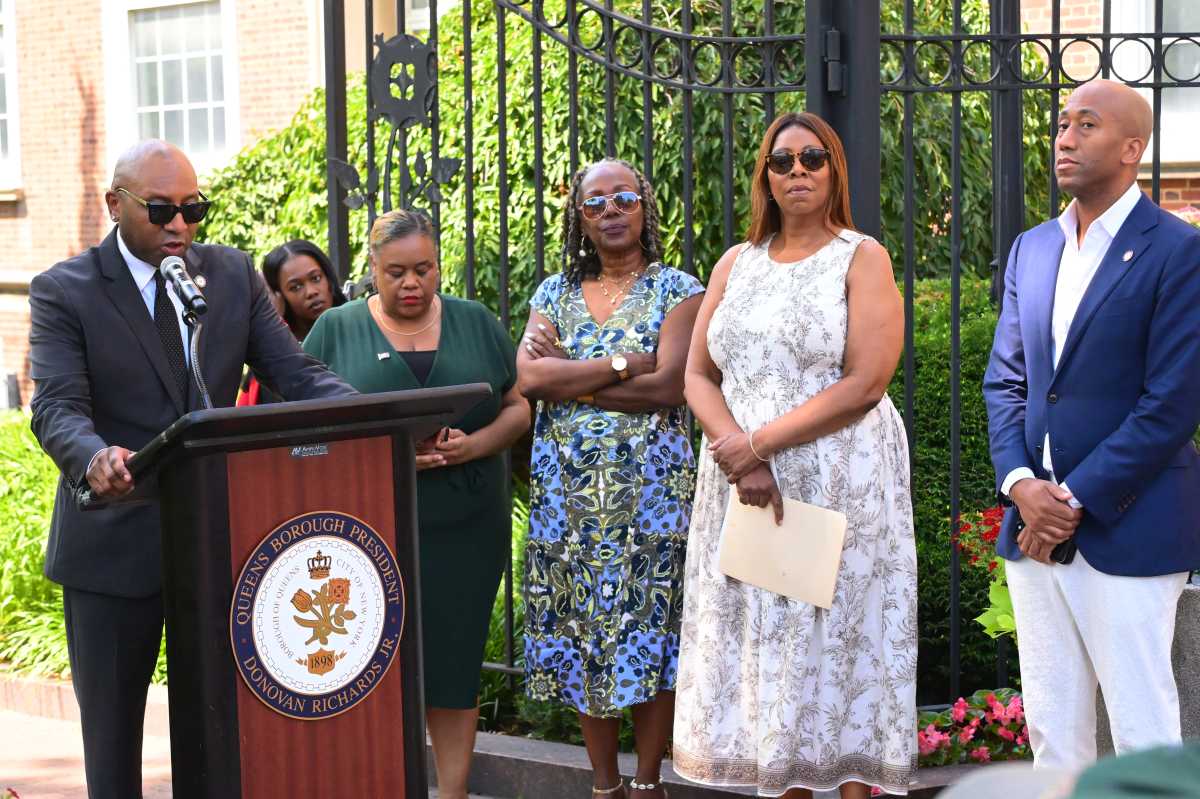
Queens Borough President Donovan Richards rallied in support of Haitian immigrants after what he called a “shameful” Supreme Court decision last Thursday allowing the Trump Administration to revoke Temporary Protected Status (TPS) for about 350,000 Haitian immigrants nationwide, as well as nearly 7,000 TPS recipients from Syria.
Haitian and Syrian TPS holders now face deportation, posing threats not only to individuals returning to countries ravaged by humanitarian crises, but could potentially cripple federal, state and local economies.
Richards was joined by New York Attorney General Letitia James, Assemblymember Clyde Vanel, Haitian Americans United for Progress (HAUP) CEO Elsie Saint Louis, Mayor’s Office of Immigrant Affairs (MOIA) community liaison Salamata Diallo and other Queens community leaders at Queens Borough Hall in Kew Gardens on June 29 to demand justice.
“This Saturday marks the 250th anniversary since we declared independence from a king who ruled like a tyrant,” Richards said. “But there will be no fireworks for our Haitian and Syrian brothers and sisters this weekend — just fear that comes with being accepted one day and being told you’re illegal the next.”
What is Temporary Protected Status (TPS)?
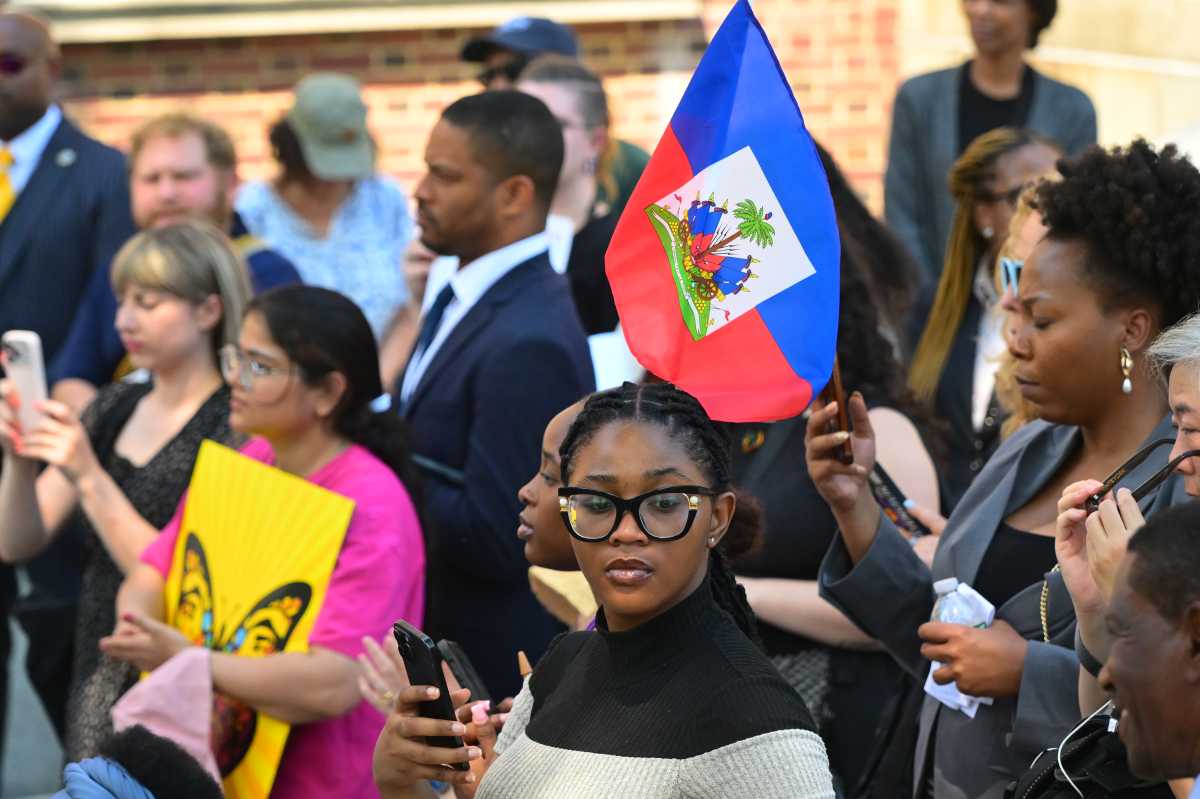 Attendees held the Haitian flag during the rally.Photo by Ramy Mahmoud
TPS is a temporary immigration status that allows immigrants from countries experiencing devastating natural disasters, ongoing armed conflict, widespread violence, severe food insecurity and other dangerous or extraordinary conditions to work in the U.S. Applicants must pass criminal background checks in order to receive TPS.
It protects holders from facing deportation, authorizes them to legally live and work in the U.S., and gives them the ability to apply for travel authorization. It does not provide a direct path to U.S. citizenship, nor does it make holders eligible for federally funded public benefits.
The status was granted to Haitian citizens following a catastrophic magnitude 7.0 earthquake that killed over 230,000 individuals. The United Nations continues to advocate for humanitarian aid, seeking $880 million for Haiti through the 2026 Humanitarian Response Plan.
There are currently around 40,000 Haitian TPS recipients in New York State, 5,400 of which live in New York City. Queens has the second largest Haitian population in the five boroughs after Brooklyn.
TPS for Haitians fleeing conditions in their country have since been extended numerous times, until the Trump Administration announced its termination in November 2025.
How do TPS holders impact the U.S. economy?
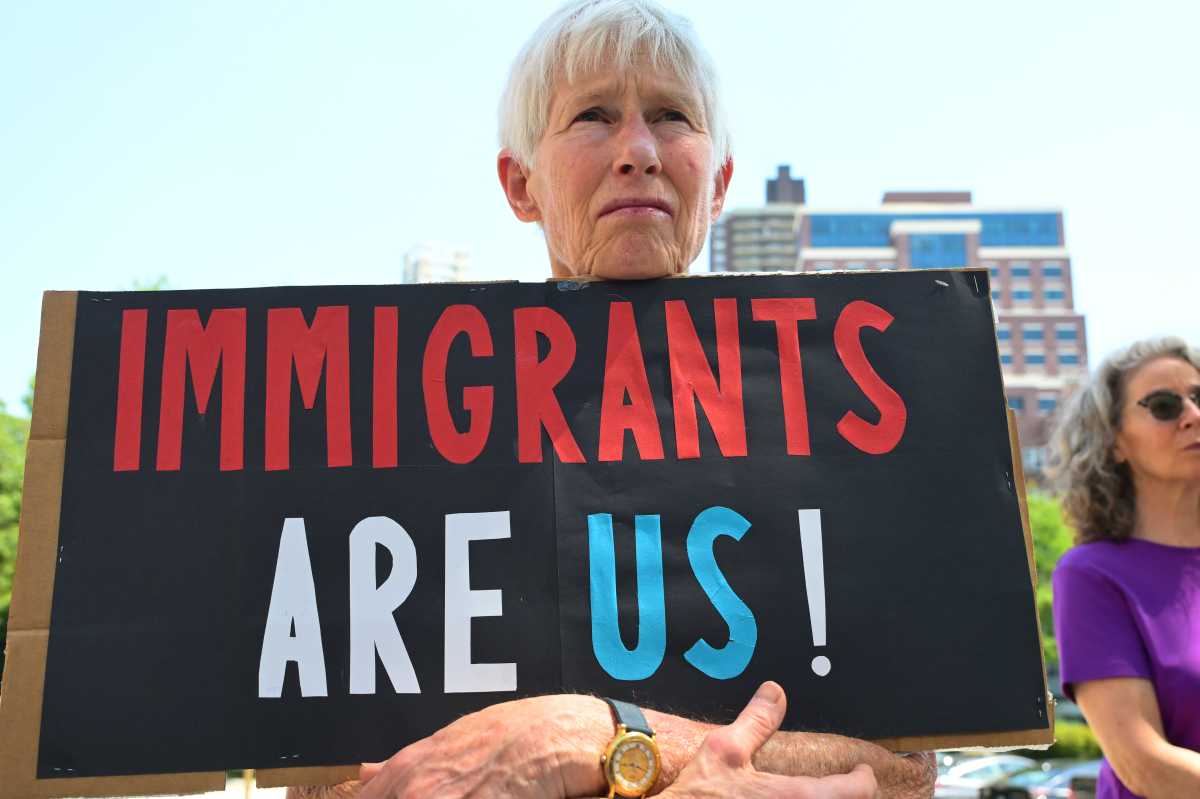 An attendee held a sign asserting that immigrants make up America.Photo by Ramy Mahmoud
The American Immigration Council (AIC) estimates that TPS holders contributed over $2.2 billion in taxes in 2021 alone — over $1 billion of which went toward state and local governments. Forward U.S. (FWD) notes that Haitian TPS holders contribute over $5.9 billion in economic activity annually.
Haitian TPS holders also hold thousands of critical jobs across New York State’s healthcare and hospitality industries, which face severe disruption should the federal government ramp up deportation efforts.
Because TPS holders pay taxes and contribute to federal programs they are unable to benefit from, numerous legal and immigration institutions have concluded that TPS recipients are a net positive on the U.S. economy since they contribute more to the economy than they take.
“These people have been here for decades and decades and decades,” Saint Louis noted. “They are homeowners, doctors, nurses, lawyers, teachers, cab drivers and health aides.”
Vanel, who is the son of Haitian immigrants, said his parents worked hard and passed those values along to him and his siblings, who all work in important fields such as law, education and medicine.
“That story is not unique to us — that’s the immigrant story,” he said. “Many of the Haitians that we represent are more than contributing to New York State and New York City. They work in our schools, our hospitals and our homes. They are paying millions in taxes to the city and the state.”
Why are TPS holders fearful of returning to Haiti?
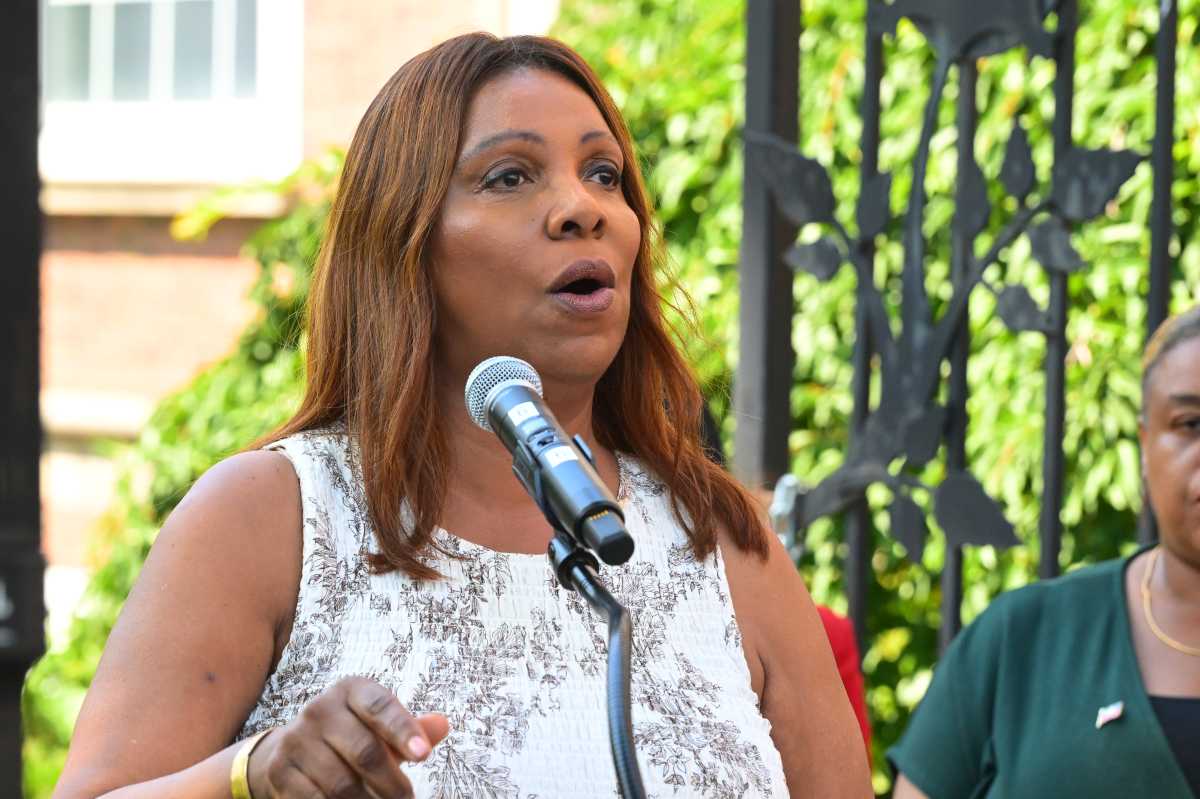 NY Attorney General Letitia James encouraged community members to protect their Haitian neighbors during the rally.Photo by Ramy Mahmoud
Haiti continues to suffer from political and economic unrest, unable to recover from the devastating impacts of the natural disaster that continues to send institutional shockwaves across the country.
With the rescinding of TPS, recipients face a revocation of their work permits and an active threat of deportation, despite many having built lives and families in the U.S. in the nearly two decades since the earthquake.
Many Haitian immigrants note that they’ve lived in the U.S. since they were children and would be returning to a country they know nothing about.
Others said they are fearful of violent crime stemming from conditions that leave many without enough resources to survive.
“We’ve got to tell the story about the reality of what’s happening in Haiti,” AG James said. “The government has been destabilized, there are gangs all throughout Haiti… It will result in death and harm to our neighbors, friends and family members.”
Elsie Saint Louis emphasized that the conditions in Haiti are not ones its citizens caused on their own but instead were created by the same powers that are attempting to send TPS holders back into the political turmoil.
According to the University of Colorado Boulder, the U.S. has a long history of occupying and seizing control of Haiti’s land and financial institutions, as well as using slave labor to rebuild infrastructure in the early 20th century.
Since then, the U.S. has been accused of intervening in Haitian elections and has even used military forces to violently suppress rebellions, as per the Council on Foreign Relations.
While Saint Louis acknowledged that TPS is intended to be temporary, Haiti continues to feel the effects of U.S. foreign intervention dating back to 1804 that greatly destabilized the country. “We also expected that crisis to be temporary,” she retorted.
What are local elected officials going to do?
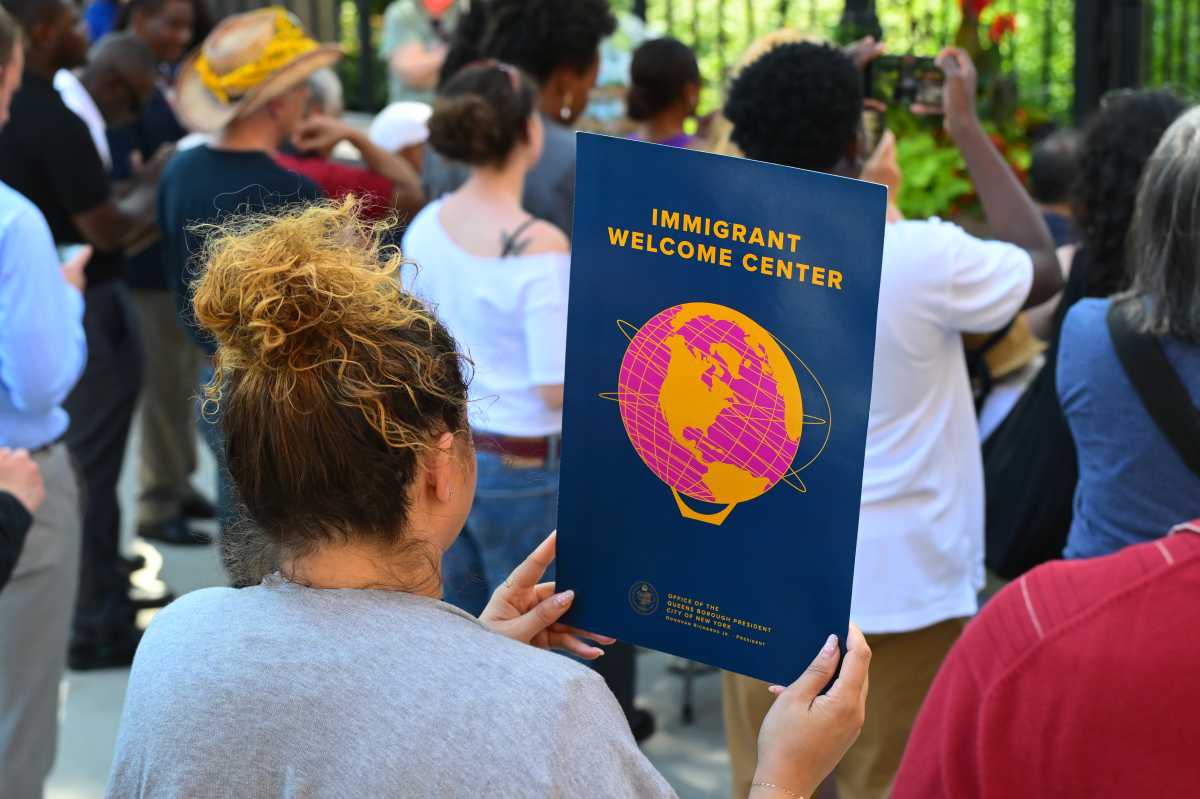 An attendee brought attention to the Immigration Welcome Center created by Richards at Queens Borough Hall.Photo by Ramy Mahmoud
James noted that she and Sen. Chuck Schumer are pushing for an extension of TPS. Schumer introduced legislation in Congress, Senate bill S.4814, on June 17 that would extend TPS until Jan. 20, 2029.
In the meantime, James said it was a time for action. She encouraged TPS recipients to consult with credible legal institutions, secure their papers and establish guardianship for their children in case they are separated.
Saint Louis emphasized that HAUP offers services not only in Queens but in Brooklyn, and she ensured their job is to protect TPS holders and rapidly respond to threats to their status.
She said TPS holders should protect their assets, carry cash and link their bank accounts to Western Union to ensure a trusted individual can send them funds in case they are deported.
“We need to protect one another,” Saint Louis said. “I don’t care if you don’t like this government or don’t like us. We need help more than ever. We need our friends.”
Salamata Diallo said MOIA offers a free and confidential legal support hotline and can connect individuals with a trusted legal assistant across the five boroughs by calling 1 (800) 354-0365. It is also working with the Haitian Response Initiative, which provides immigration legal services, support services, case management and other information.
Richards also created the Immigrant Welcome Center at Queens Borough Hall in 2021, which provides legal service referrals, social service organizations, city resources and immigrant resource fairs in partnership with community-based organizations.
As for friends and neighbors, James said it was important their work extend beyond attending rallies, asking that they call their elected leaders and help flip the House in the mid-term elections this November.
“What we have to do is contact all of those Congress members and senators in states all across this country — not just New York but Maryland, Ohio, California and Florida where you’ve got a significant number of immigrants — and flood their phones,” James said. “We must continue to stand with immigrant communities and let them know they are not alone.”
It’s everyone’s responsibility, Richards said, to stand up and defend Haitian immigrants. “When they come for one of us, they come for all of us,” he said.
While Richards said Trump has betrayed the values of his native borough — the most diverse borough in the world — it could never break the spirit of the Haitians who hail from the world’s first Black republic and fought for their independence from colonial rule over 200 years ago.
“Make no mistake — there is no Donovan Richards, no Queens and no America without the generations of Haitians who embody the American dream,” Richards said. “That is a dream that will never die in the world’s borough.”
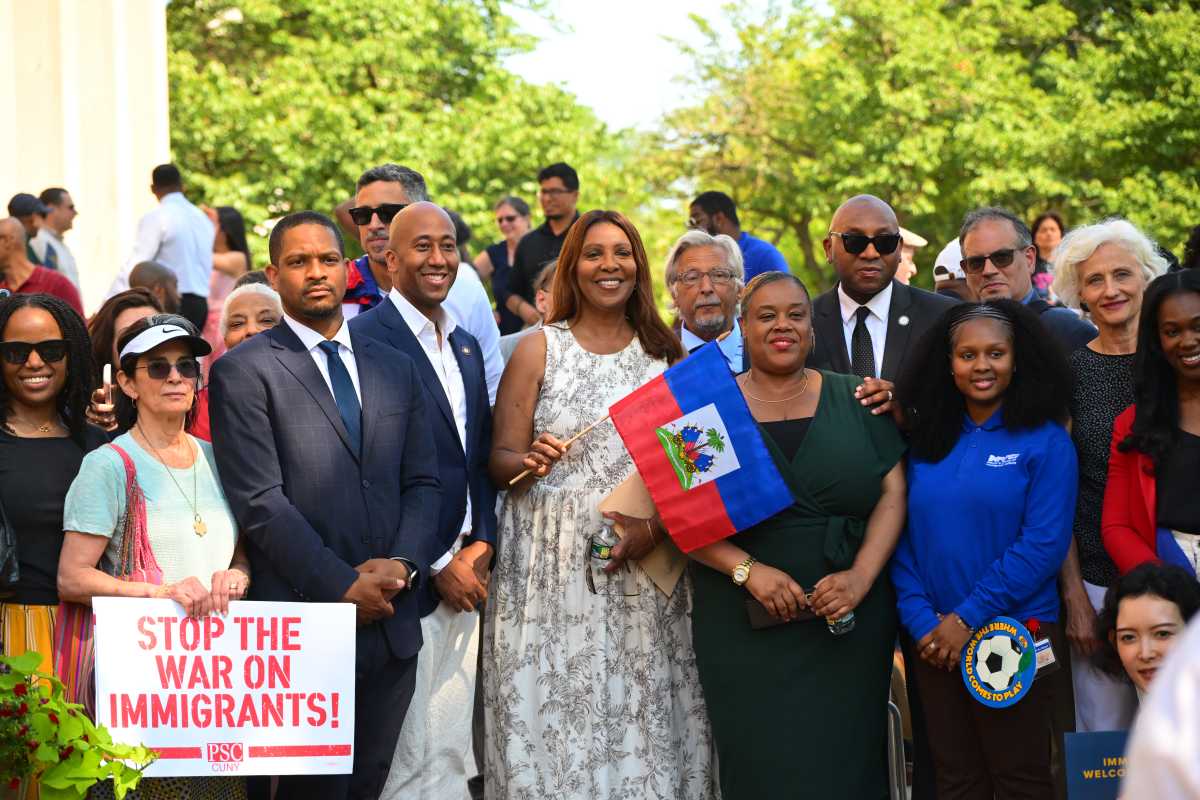 A coalition of TPS supporters, including elected officials and community leaders, rallied to protect Haitian immigrants.Photo by Ramy Mahmoud