
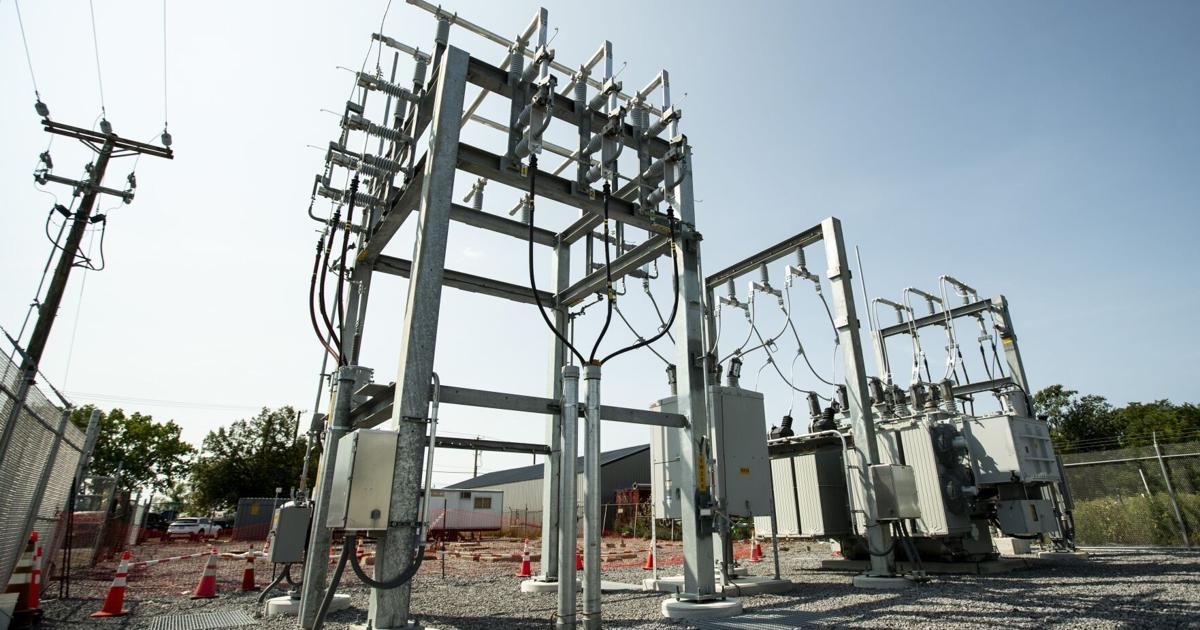

The Niagara Power Project in Lewiston. (Derek Gee/News file photo)
Derek Gee, News file photo
“Continued and accelerated deployment of renewables is essential to reducing emissions and advancing the state’s clean energy targets,” NYISO said in its report. “Simply put, New York needs more renewable generation.”
A combination of aging power infrastructure, rising demand for electricity, and a need for more energy-generating resources that can be called upon quickly pose reliability risks, according to the New York Independent System Operator.
The power cushion is shrinking
The reduced generating capacity means the state has less wiggle room to handle a spike in demand during extreme weather conditions.
The reliability margin reflects the amount of available resources NYISO can call upon during extended hot or cold stretches. NYISO has predicted that margin will shrink this summer to the lowest in recent history.
That cushion of power generation that can be called upon when demand spikes has shrunk by about 80% since 2019. And as a result, the calls for residents and businesses to reduce power consumption on high-demand days have become more frequent. It happened 22 times last year – more than the previous six years combined.
“In the past two winters, sustained cold spells pushed the system near its limits, requiring frequent emergency actions, including activation of demand response, to stabilize operations,” the organization said. “Emergency procedures were used far more often than in previous years, highlighting that the grid is under increasing pressure.”
The state Energy Planning Board adopted a plan that embraces an “all-of-the-above” approach to energy needs.
Winter peaks for demand are rising faster than summer peaks as more homes and businesses are heating with electricity.
“The planning outlook is clear: Winter reliability risks will continue to grow without timely additions of firm, flexible and fuel‑secure capability,” NYISO said.
Additional investment is needed
NYISO’s reports emphasize the need for more power generation, as well as more transmission capacity to distribute the power to users.