
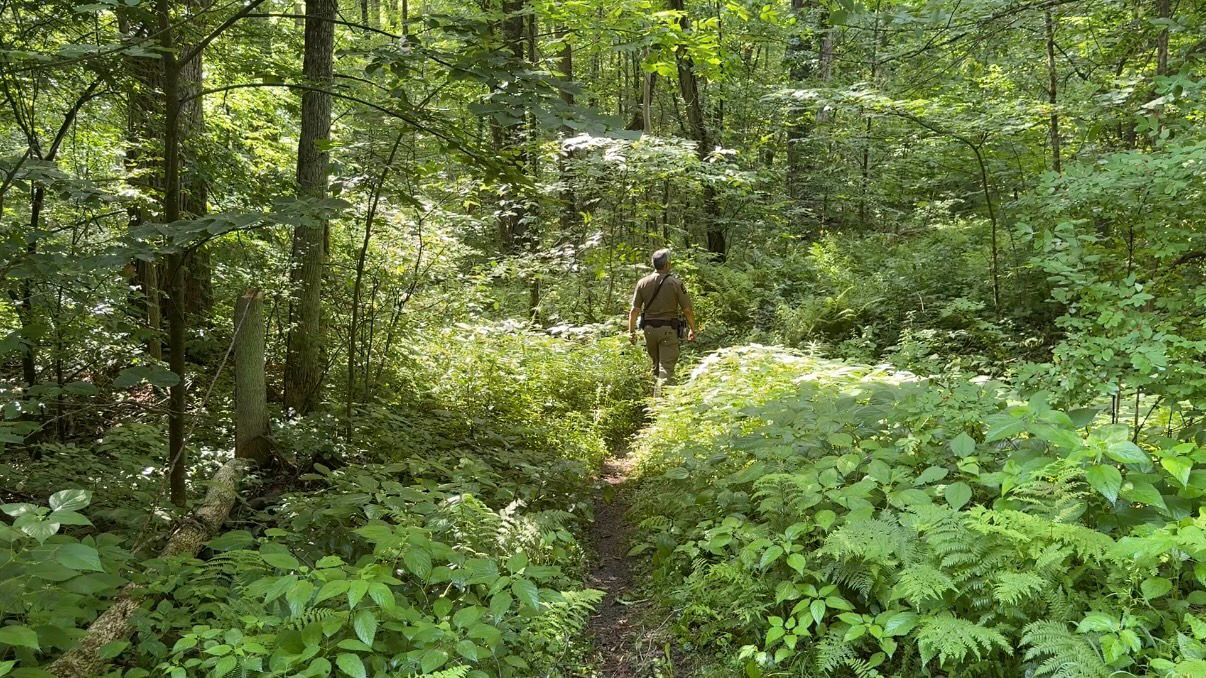
From spacious skies to amber waves of grain and even purple mountain majesties, there’s no shortage of reasons why America is beautiful. This Fourth of July, folks across America will celebrate that beauty by visiting the country’s plethora of parks and protected lands. But an idyllic day outdoors can take a turn in a flash if you’re not prepared — especially with the extreme heat.
According to the New York State Department of Environmental Conservation, search-and-rescue operations around this time are common, with a total of about 40 operations across the state between June and July each year since 2024.
Ranger Michael Chappell says he’s had to respond to a number of incidents on the Fourth of July, many of which he said would could have been avoided by proper planning.
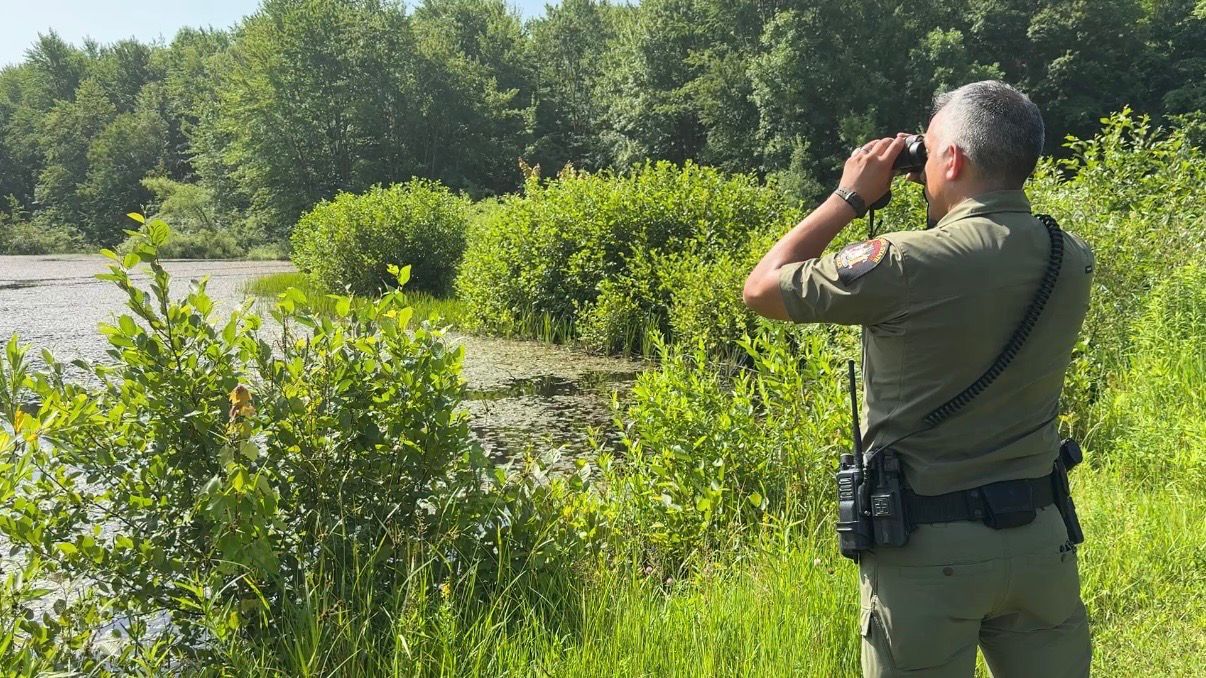
DEC Ranger Michael Chappell admires the scenery. (Spectrum News/Natalie Mooney)
“If there’s a situation that can be avoided, then by all means, let’s try to avoid it as much as we can, especially on a busy weekend like this week,” Chappell said.
One of the biggest things folks will have to plan for this weekend is the heat.
“This weather certainly is a risk,” Chappell said.
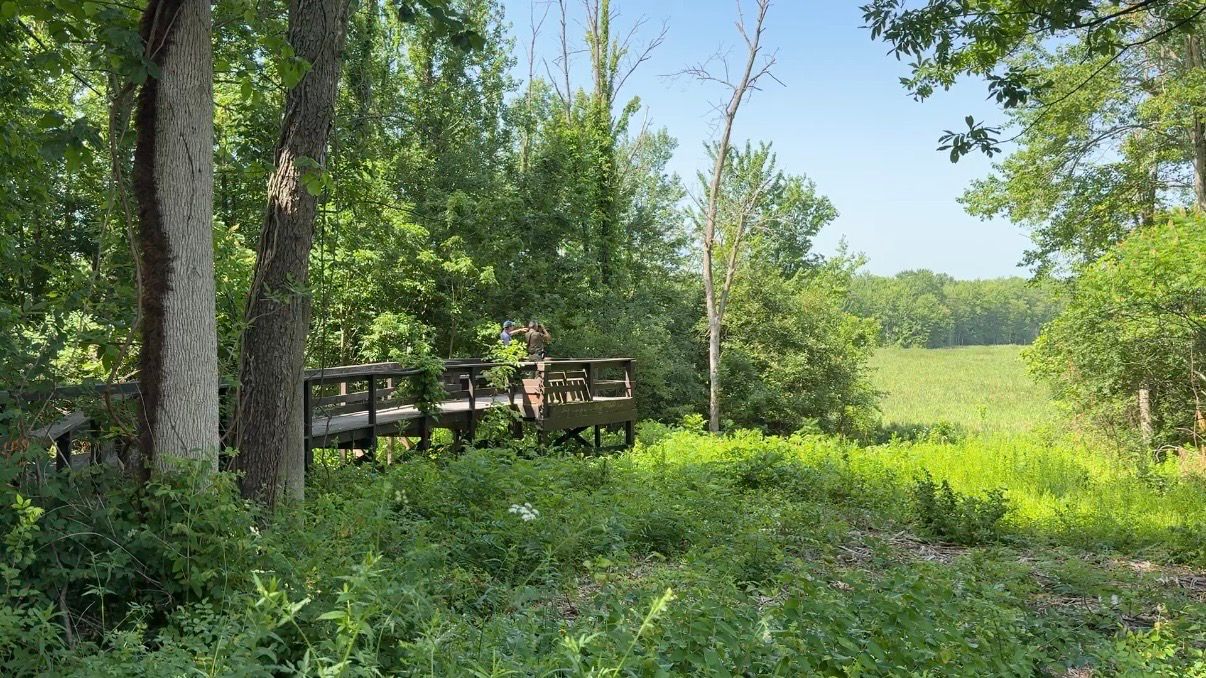
Ranger Chappell and Birder Fred Leff admire the view. (Spectrum News 1/Natalie Mooney)
Fred Leff, an avid birder, says his plan is to avoid the heat altogether if he can.
“If I do bird, it’ll be early in the morning, and I mean literally six o’clock, if possible,” Leff said.
Chappell said you don’t have to stay out of the heat to stay safe, you just have to stay smart about it.
“Hydration is key in heat like this,” he said.
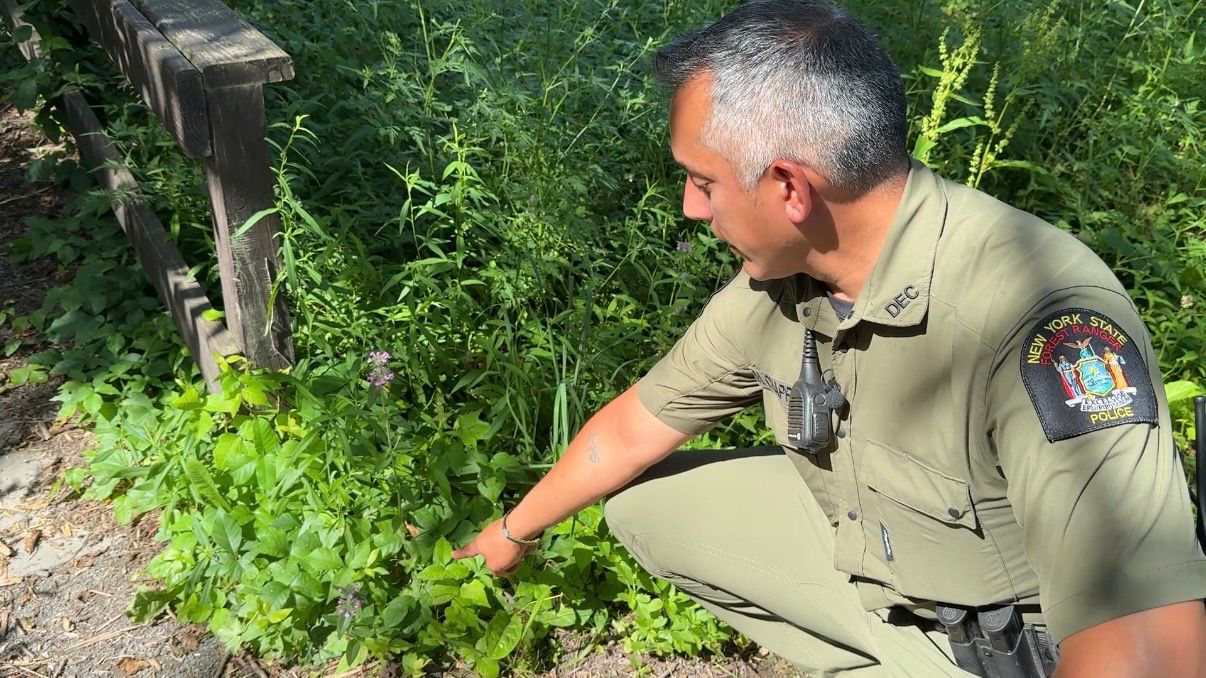
DEC Ranger Michael Chappell points out poison ivy. (Spectrum News 1/Natalie Mooney)
Wearing proper clothing is also crucial. Even though it’s hot, Chappell recommends wearing long pants and sleeves for added protection from the sun, bugs and vegetation that can be risky on its own.
New York state is home to several species of harmful plants, like giant hogweed, wild parsnip and poison ivy.
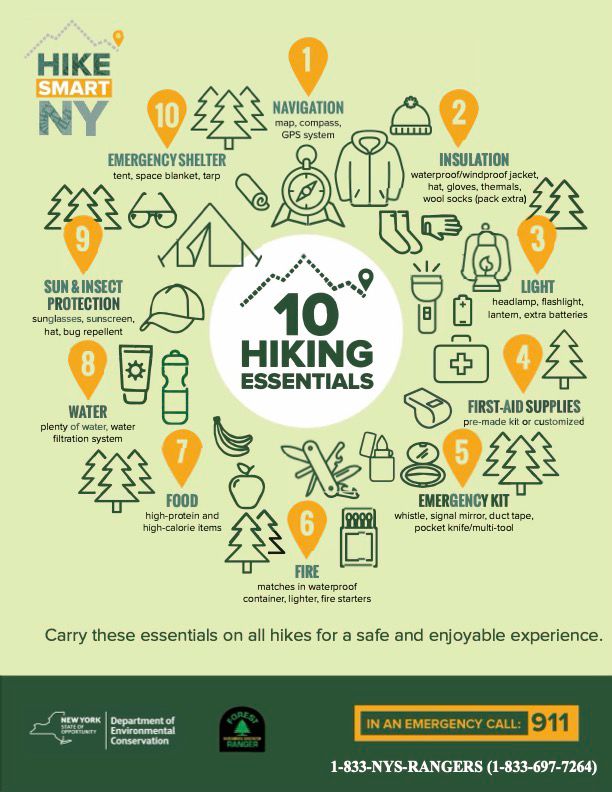
(Courtesy of the NYS DEC)
Sometimes, the threat isn’t the plant itself, but what hangs out on the plant.
“After anytime you hike, you’re doing a tick check,” Chappell said, “You’re just checking your body for any ticks that may be embedded and then removing those ticks easily.”
Bug spray also helps, and Chappell recommends packing that with your sunscreen. It’s also a good idea to keep essentials like a lighter, a first aid kit and flashlight on hand in case of emergency.
“It could be an ankle injury, it could be a heat-related incident, so we want to make sure that everybody’s prepared, and the biggest thing for preparation is really planning ahead,” Chappell said.