
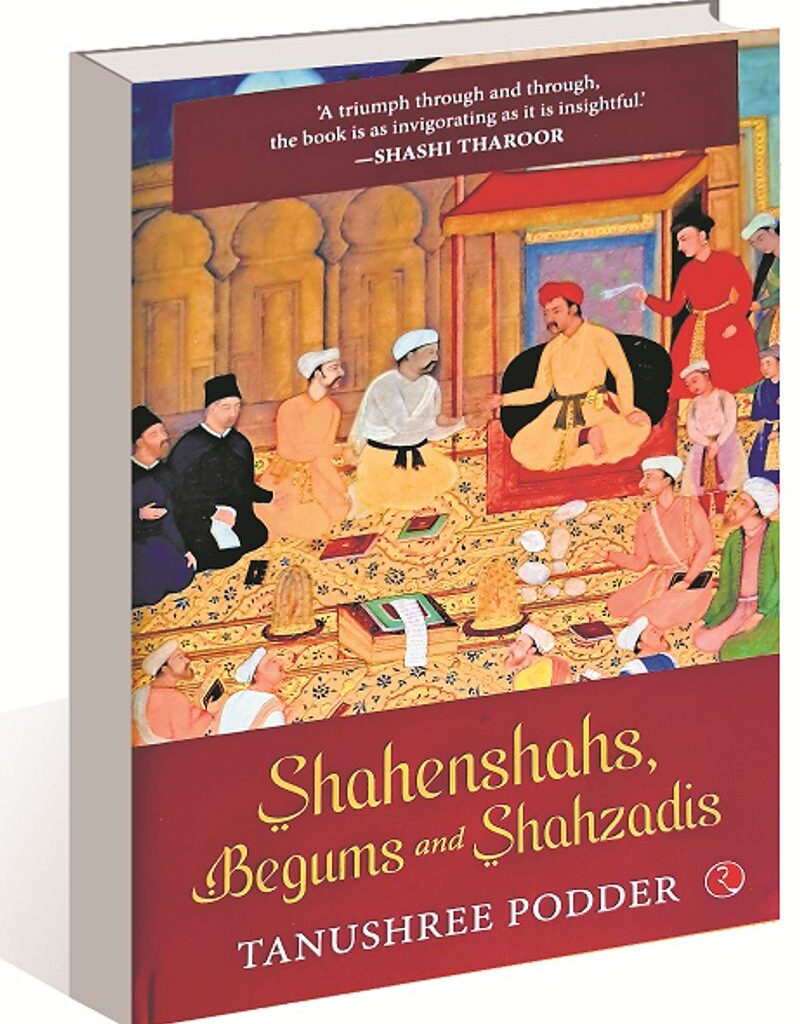
MUGHAL narratives are typically grand, featuring impressive forts, opulent palaces, and significant military victories. The quieter, more personal narratives, unfolding behind the decorative screens and within the palace confines, frequently go unnoticed, yet these conversations have been as pivotal to history as any combat. It is these hidden worlds that have been vividly brought to life in ‘Shahenshahs, Begums and Shahzadis’ by Tanushree Podder.
The emperors emerge not as distant icons but as complex individuals driven by ambition, affection, insecurity and contradiction. The book is divided into three sections. The first revisits the emperors, providing a novel understanding of their rule. The second, and perhaps the strongest, brings focus to the women of the Mughal court, and the final section explores love, rivalry, and betrayal, but remains grounded in facts.
Podder doesn’t relegate royal women to the margins, but restores them to the centre of the imperial story. Nur Jahan, Jahanara and Hamida Banu appear not merely as wives and daughters but as political stars, patrons and advisers whose influence extended far beyond the zenana. Palace life emerges as the empire’s hidden centre of power, where counsel, diplomacy, and family alliances proved as decisive as victories on the battlefield.
Drawing on memoirs, Persian chronicles, and travellers’ accounts, she fills the narrative with details that make familiar figures feel startlingly alive. We learn about emperors through their habits as much as their victories, and about royal women through their intellect, taste and resilience, as much as their marriages.
The novel balances research and storytelling, allowing characters and incidents to illuminate history. The result is a narrative that reads like an intimate portrait of Mughal dynasty, and not like a conventional chronicle. The prose is crisp and refreshingly free of academic heaviness.