
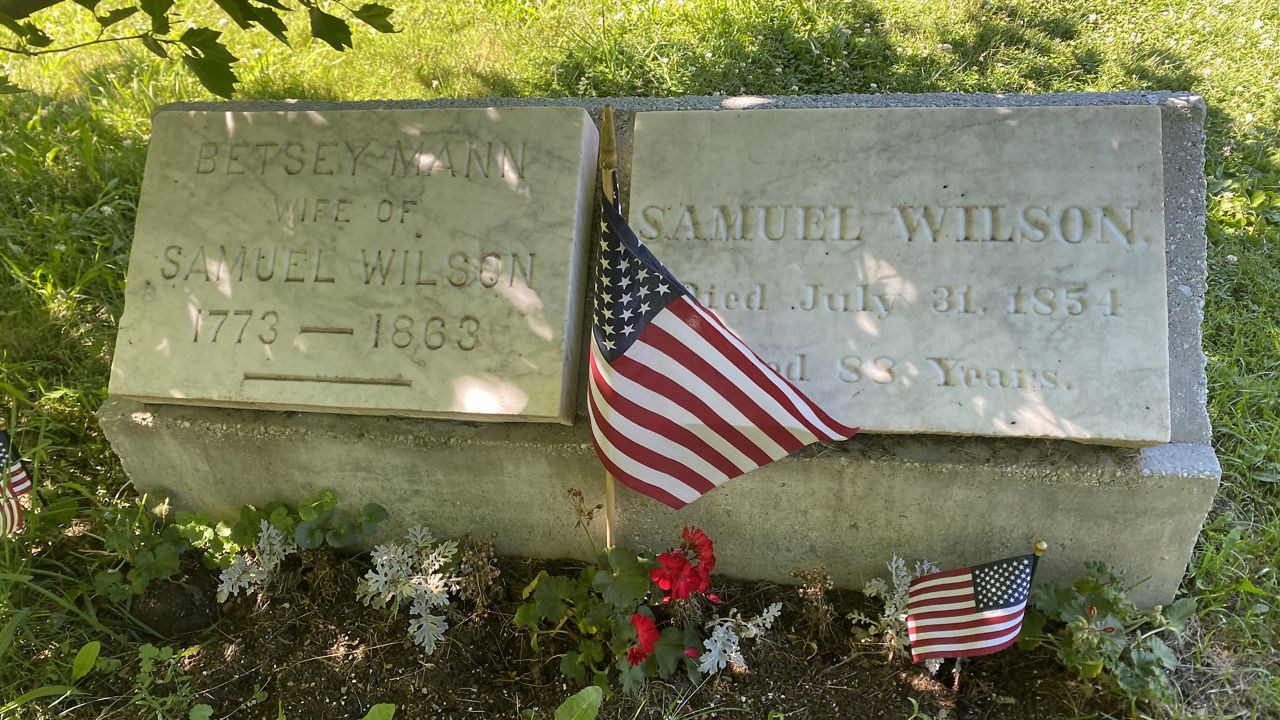
One of the most beloved and recognizable characters in U.S. history was based on Troy, New York’s most famous resident, Samuel Wilson.
A perfect storm of events led to Samuel Wilson becoming the personification of the U.S. government. The story began nearly 250 years ago and continues to this day.
What You Need To Know
“Uncle Sam” was born in Massachusetts, but spent most of his life in Troy, New York
The image most people know of Uncle Sam was actually a self-portrait of James Montgomery Flagg dressed as Uncle Sam
Samuel Wilson had a brother named Ebenezer, who lived nearly an identical life to Sam, but most people have no idea he even existed
Wilson wasn’t born in New York, he was born in Massachusetts.
However, as a young man, he and his brother Ebenezer made the journey to Troy.
“They were seeking their fame and fortune,” said historian Kathy Sheehan.
You might not recognize names right away, but you know Sam.
“Uncle Sam,” as he is known now, is buried in Oakwood Cemetery in Troy.
Most people think Uncle Sam is a fictional character, but he was a real person.
“He came in around 1793,” Sheehan said. “There’s ads in the early papers for fruit and vegetables that he’s growing. They had orchards.”
Interesting fact, the same place he had his orchards is the side of Mount Ida where a famous structure made of white rocks displays the word “Troy.” It’s one of the first things you see when you’re heading over the bridge from Watervliet into Troy.
When Sam turned from a grower to a meat packer — the legend began. During the War of 1812, a wealthy businessman named Elbert Anderson was looking for help working with the government, and the rest is history.
“Elbert Anderson is the one who puts the ad in the paper. And that’s how Sam he hires Sam and his brother Ebenezer to, you know, supply this beef and pork to the troops. So the meat that he was sending was essentially going from here, eight miles away. Eventually, obviously, it’s going farther, wherever the troops are taking it,” Sheehan said.
And the name?
“He had nephews that worked for him. They’re on the docks, they’re calling him Uncle Sam, and it kind of stuck,” she said.
People started to know this popular meat packer as Uncle Sam across the area and beyond. The barrels of meat he was shipping out were stamped EA – US. Which actually stood for Elbert Anderson, that wealthy businessman, and the US, in actuality, stood for the United States. But for the soldiers, it stood for Uncle Sam. And if they were getting Uncle Sam’s meat, they knew it was the good stuff.
There’s only one photograph believed by many to be the actual Uncle Sam out there, but it’s not the one you know.
The image we all know started with a political cartoonist named Thomas Nast.
“It’s Thomas Nast predominantly that really starts hearing some of these stories,” Sheehan said. “And we were always trying to capture what can we use as as a symbol [for this young country]. And where did that first political cartoon appear in New York City? Harper’s Weekly. Harper’s Weekly was the People Magazine.”
Even though he was known during his life, his fame skyrocketed to another level after his death. Nast heard the stories from the soldiers about this entrepreneur who represented the American spirit and ran with it in illustration after illustration after illustration. Uncle Sam is this personification of the U.S. government and or Samuel Wilson was the inspiration.
But, as you know, there’s one more step.
“Then, of course, you go to the umpteenth degree with James Montgomery Flagg and this World War I poster,” Sheehan said.
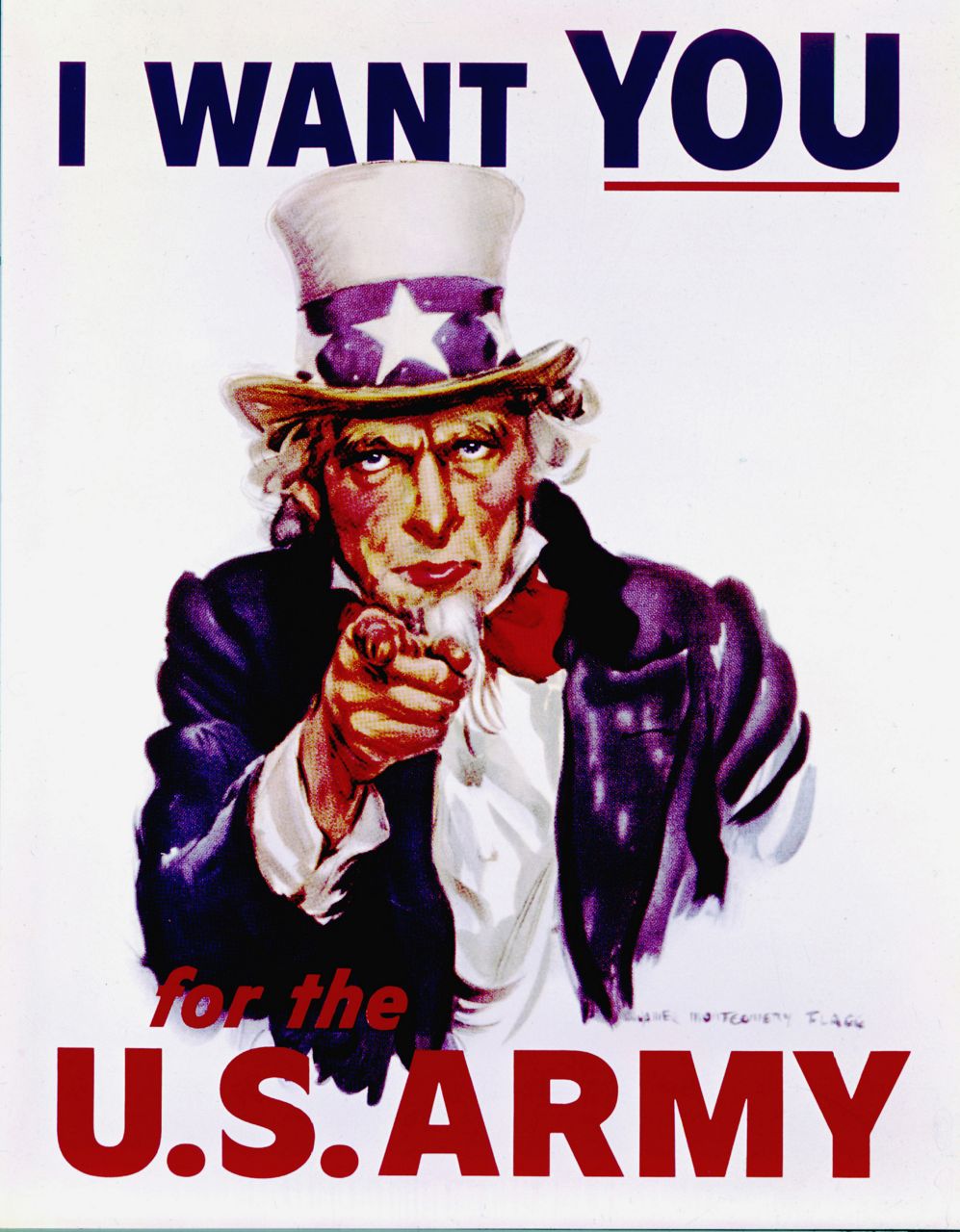
This undated file photo shows the classic World War I recruiting poster created by illustrator James Montgomery Flagg. Thursday, April 6, 2017, marks the 100th anniversary of the U.S. entry into World War I, and some of the innovations that were developed or came into wide use during the conflict are still with us today, including this iconic image of Uncle Sam pointing, with the message “I WANT YOU for the U.S. ARMY.” (AP Photo, File)
The famous “I Want You for the U.S. Army” poster doesn’t actually depict Uncle Sam, and it’s not really the Nast illustration either. It’s another artist, James Montgomery Flagg. It’s a self-portrait of Flagg dressed up as Uncle Sam.
Is your head spinning yet?
One more twist. Samuel Wilson doesn’t have any known descendants in Troy any longer, but two of his four children survived into adulthood, and the lineage continues.
Trey Hauptmann is Uncle Sam’s sixth-time great-grandson.
“It was funny because this poster used to hang in my office and people would look at it and go, ‘ Why do you have a “I Want You for the U.S. Army,” [poster]. And of course, me being in the Navy, they would go, that’s a little strange. And I would say, ‘OK, well, sit down, let me tell you a story,'” Hauptmann joked.
Hauptmann has known basically his entire life that he has this famous relative.
“I think it was in 1984 is when Fulton County, in Conway, Arkansas, said, ‘Hey, we would like you to be in the parade in the Uncle Sam parade?’ So here I am, a fourth grader riding the back of a convertible, sitting on the top, thinking I was the king of the world. But that’s really where my great-grandmother started explaining the whole story of everything.”
The family always knew who their relative was and how important he was to America. Notes from Trey’s great-great-great-grandmother are part of a baby book created in the early 1900s. It talked about Uncle Sam and his place in history.
“The whole idea [was] that he was doing something for something greater. He was doing something for America,” Hauptmann said.
In 1961, President John F. Kennedy made it official, signing a proclamation making Troy the home of Uncle Sam.