
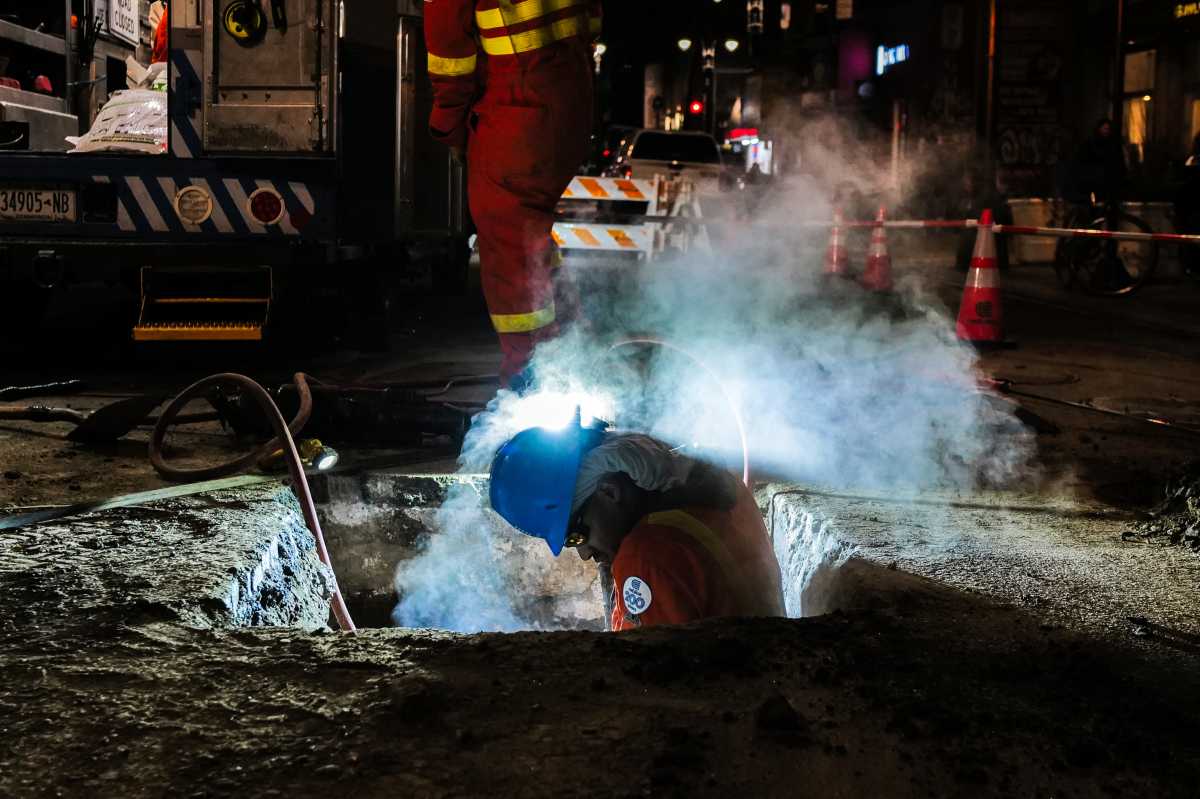
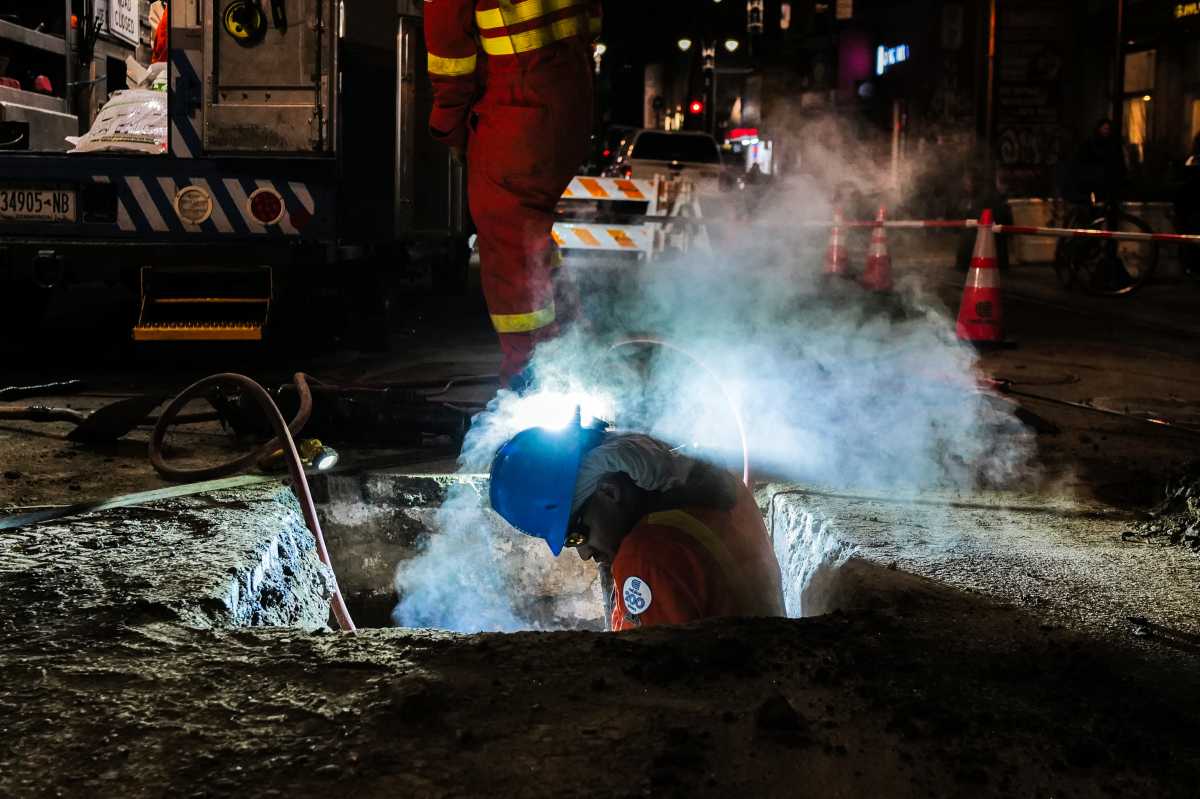
FILE – A Con Edison worker toiling in a manhole.
Photo by CHARLY TRIBALLEAU/AFP via Getty Images
The brutal heatwave that hit New York City this July 4 weekend was a reminder of just how fragile the city’s electrical infrastructure remains.
As temperatures soared to above 100 degrees and the heat index rose up to 110, New Yorkers by the millions turned on their air conditioners. Before long, Con Edison began experiencing heat-related problems with its vast network of transmission lines, transformers and underground cables, sparked by the boiling temperatures and increased demand.
At one point on July 3, Con Edison said it had cut power to nearly 10,000 customers in southwest Queens just to prevent a broader, longer outage elsewhere. Voltage had also been reduced to nearly 400,000 customers in Brooklyn and Queens in order to ease the system burden and allow crews to make necessary repairs.
While the repairs were made and the crisis abated somewhat, about 148,000 customers in Brooklyn and Queens woke up to another voltage reduction on Sunday morning, and pleas from Con Edison to conserve power.
The outages come at a time when the utility giant is set to invest nearly $30 billion over the next five years to bolster the electrical grid in New York City. This year alone, Con Edison is spending $3.9 billion on a litany of upgrades from installing four new high-voltage cables in northern Brooklyn, to energizing a new transmission line in western Queens, to adding more primary cable sections to the Bronx.
These investments are vital to keeping up with the immense electrical demand in the Big Apple.
New York is more plugged in than ever. People want more electric vehicles, electric stoves and electric heaters instead of having such items powered by fossil fuels. As necessary as Con Edison’s infrastructure investments are, more must be done to ensure the power grid not only circulates but also generates enough electricity to meet the demand.
This is where rooftop solar power comes into play. They are relatively inexpensive to install and produce not only enough electricity to power a home, but also excess electricity that can be fed back into the power grid. And they can be installed just about anywhere — residential, industrial, commercial — with relative ease and little inconvenience.
There seems to be an opportunity for Con Edison and the City of New York to explore ways to expand the use of solar power in New York. Both should consider a public-private partnership to increase solar panel installation across the city by either fully paying homeowners to install the devices atop their roofs or providing payments to help defray the cost.
Solar panels help make homes electrically independent, taking the burden off the power grid, but also expand Con Edison’s capacity to serve its customers. With cutbacks to federal grants promoting solar panel investment, it is more essential than ever for the city and Con Edison to work together and capitalize on expanding solar power here to meet the needs of our growing city — regardless of the weather.