
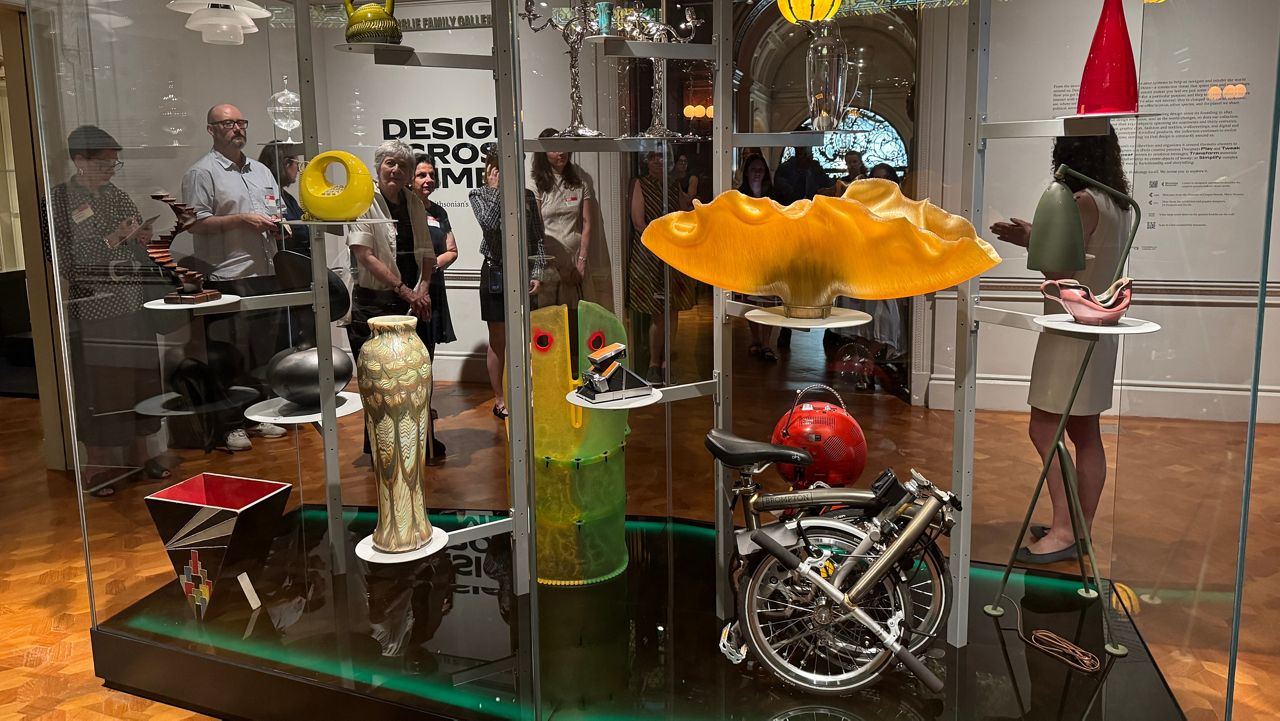
A Polaroid camera, a funky phone, lamps, chairs and a thermostat.
There are all examples of design over the years, and are all part of the collection of Cooper Hewitt, Smithsonian Design Museum on the Upper East Side of Manhattan.
What You Need To Know
“Design Across Time: Exploring the Smithsonian Design Collection” is a new exhibition at Cooper Hewitt, Smithsonian Design Museum on the Upper East Side of Manhattan
It features more than 125 items from the National Design Collection
The exhibition features some items on public display for the first time
“This is meant to be kind of a general overview of our fantastic collection of over 215,000 objects that cover about 30 centuries of design,” said Matilda McQuaid, the acting curatorial director at Cooper Hewitt, Smithsonian Design Museum.
McQuaid recently retired from the museum after 24 years. She worked on this exhibition with a team of colleagues for more than six years.
It’s called “Design Across Time: Exploring the Smithsonian Design Collection.”
The exhibition is an extended two-year display at the museum and is located inside the Gilded Age Fifth Avenue mansion that was once home to industrialist and philanthropist Andrew Carnegie and his family.
“It has been a longtime ambition for the institution to have galleries where we can show these objects more permanently where you can always come and visit your old friends and you know they are here and you can come back and back again,” Maria Nicanor, the director of the museum, said.
Objects will be rotated in and out throughout the exhibition. About 125 objects are on display, like a necklace made from pill capsules, a book made from paper towels, and a warning poster printed with oil recovered from the worst oil spill in U.S. history.
The show is organized into six themes.
“There’s play, tweak, repeat, transform, simplify and show off. And these are meant to show the designer’s process creating or making works that are in the collection,” McQuaid said.
One challenge for the team in creating the exhibition was whittling it down in order to display 125 items from the hundreds of thousands in the collection.
“I suppose the way that we dealt with that is to embrace this architecture with visibility, an architecture that allows items to be rotated in and out of storage to bring them into public view and bring them out of the darkness into the light,” said Jayden Ali, the director, of JA Projects the exhibition designers.
Plan your visit the website.