
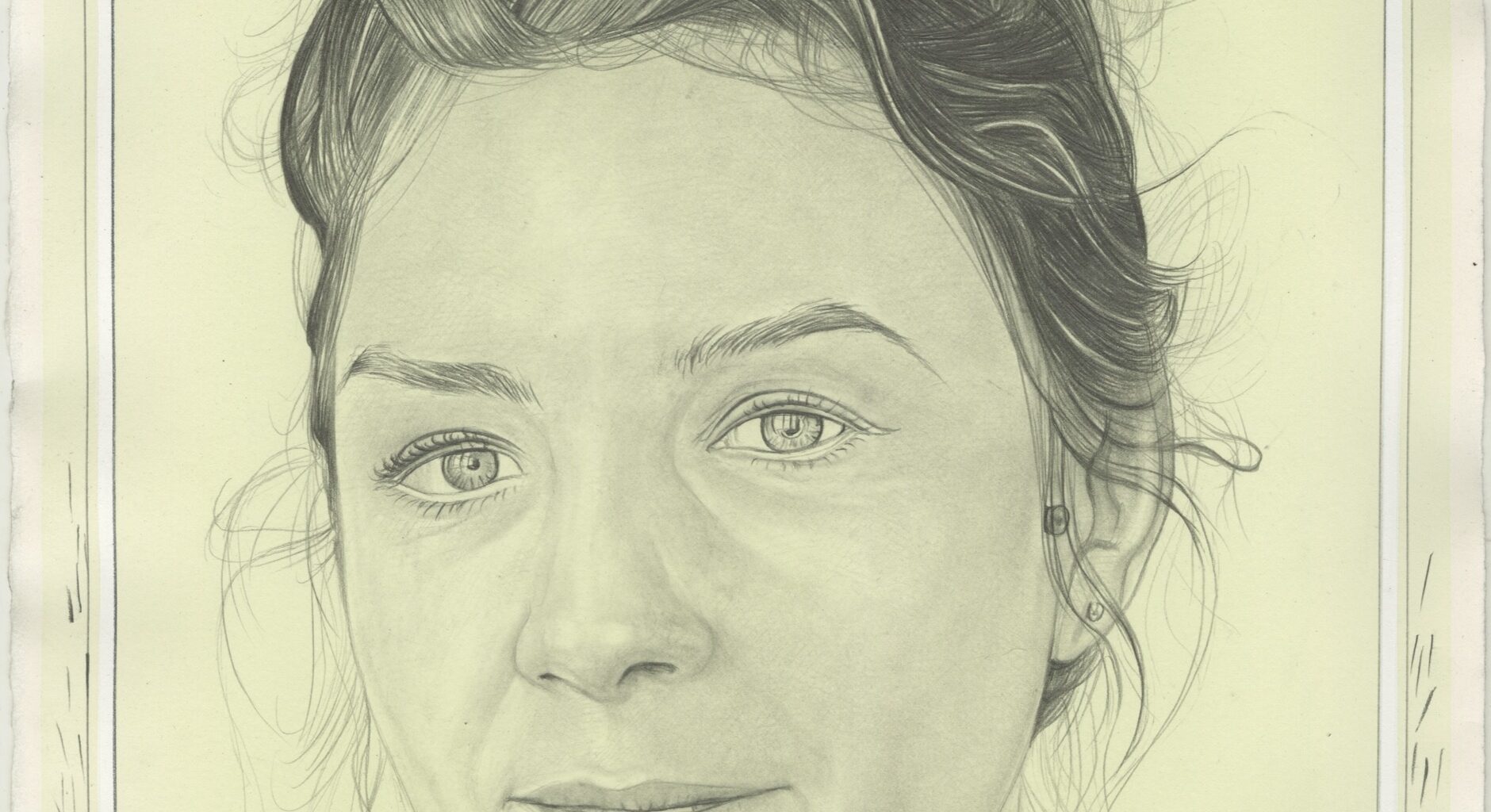
This summer, artist Maureen Cavanaugh often painted in Lois Dodd’s garden in Cushing, Maine, working the canvas on the easel of her late friend Lumin Wakoa. This edited transcript addresses friendship, painting outdoors, and the pull of Cushing’s landscape on artists across generations.
Lois Dodd: “I see in my mind, I see you out there painting. You were present in my backyard all the time.”
Maureen Cavanaugh: “I was working just outside your porch, on Lumin’s easel, and then the lilies came up in the middle of my painting. And I didn’t know what to do about it.”
LD: “They weren’t there when you started it. Well, that’s nature for you.”
Painting in Lois’s garden on Lumin’s easel became a way for Maureen to share stories of her late friend’s work, keeping her presence alive in the space of plein air painting. Years earlier, Nancy Wissemann Widrig had set up her easel there. Nancy and Lois first crossed paths in New York, but it was in Cushing that their friendship took root.
Nancy Wissemann Widrig: “We came up to visit Blackie [Bernard Langlais] and Helen Langlais some time in the ’50s, I think it was. We didn’t get our place up here until 1968 for just a few weeks, and Helen had found us this cottage to rent, sight unseen. And that’s where we still are.”
LD: “I think we arrived here kind of separately by happenstance and cheap real estate and people that we knew and all that.”
Living off the same road, they began to see each other each summer, painting side by side and gradually weaving their lives into the place.That long companionship was evident in Lois’s 2024 Caldbeck Gallery exhibition, Leslie’s Garden of Delight, in two small 1985 paintings that capture Nancy in the garden:
MC: “I was also thinking about the show that you had at Caldbeck, Leslie’s Garden of Delight, and then the paintings that you did with Nancy in them. I was just reading how, when painting Nancy among the flowers, you kind of … you felt like that gave you permission to paint flowers?”
LD: “Yes. And figures, too, for that matter.”
MC: “Oh, yeah …”
LD:: “Well, I drew the figure … but I never really painted and used it much in a painting, no. Yeah. So that was new, too.”
NWW: “Apparently I did a drawing of her…and she did several paintings of me. I think it’s the same day or at the same time. And John [Widrig] did a painting of you, painting.” [laughter]
LD: “We also used to go to Rockland at night and paint. And we went to the quarry together one night, maybe a couple nights. And then the police pass by, and the three of us are sitting at the edge of the quarry, staring at the moon, because the moon was full. That’s why we could go out and paint at night. It was good fun, and we got some nice paintings out of it.”
NWW: “My impression is that we would get out of the car and kind of disperse. You would find something to paint that I would never have thought of being an idea…we were together, but we weren’t.”
LD: “For me, to tell you the truth, it was like safety in numbers. I really was a little bit chicken to go wandering out by myself…So I used to make a date with a friend and go, and then you just feel more secure that somebody else was also there. You may not influence one another’s pictures directly…but the presence of others makes it possible to concentrate.”
NWW: “It makes you go places that you wouldn’t go by yourself.”
From the garden in Cushing to the quarry under a full moon, and now Maureen painting in Lois’s garden on Lumin’s easel, the thread holds steady. Painting may be solitary, but never entirely alone. As Lois and Nancy suggest, companionship creates both safety and surprise. In this way, Maureen working on her friend’s easel folds Lumin into the same lineage of painters in Cushing — a continuity of friendship, plein air practice, and shared ground.