
By Jacob Kaye
A highly anticipated report commissioned by the state after two incarcerated men were killed by prison officers last year found that New York’s prisons are plagued by a slew of issues that have left the state facilities dangerous for both incarcerated people and guards alike.
The report, released last week by the Department of Corrections and Community Supervision just ahead of the Fourth of July holiday weekend, found that the circumstances that led to the murders of Robert Brooks and Messiah Nantwi last year extended beyond the individual incidents and the facilities in which they occurred.
Instead, problems like an “us versus them” mentality among officers, a lack of training or supervision, poor morale, the prevalence of contraband, and persistent gang activity have made prisons throughout New York unsafe, the report from national law firm WilmerHale found.
The City Reporter first published details of the report, which DOCCS initially said would be completed and made public over a year ago.
The recently released report appeared to confirm many of the complaints advocates and lawmakers have made about the state’s prisons, which entered a period of crisis after Brooks’ killing in December 2024 and the illegal correctional officer strike that followed in February 2025.
“The deaths of Robert Brooks and Messiah Nantwi were horrific, preventable tragedies that exposed profound failures of safety, accountability, and culture within New York’s prison system,” the Legal Aid Society said in a statement. “This report makes clear that their deaths did not occur in a vacuum, documenting chronic understaffing, inadequate training, deficient programming, weak accountability, and a deeply entrenched culture of impunity among correction officers.”
“DOCCS must confront the systemic failures documented in this report and comply with the laws enacted to protect the safety and dignity of people in its custody,” the public defense firm added.
According to the report, the killings of both Brooks and Nantwi “demonstrated systemic shortcomings in oversight, accountability, and culture within DOCCS facilities.”
Brooks was killed on Dec. 10, 2024, after being transferred from Mohawk Correctional Facility to Marcy Correctional Facility.
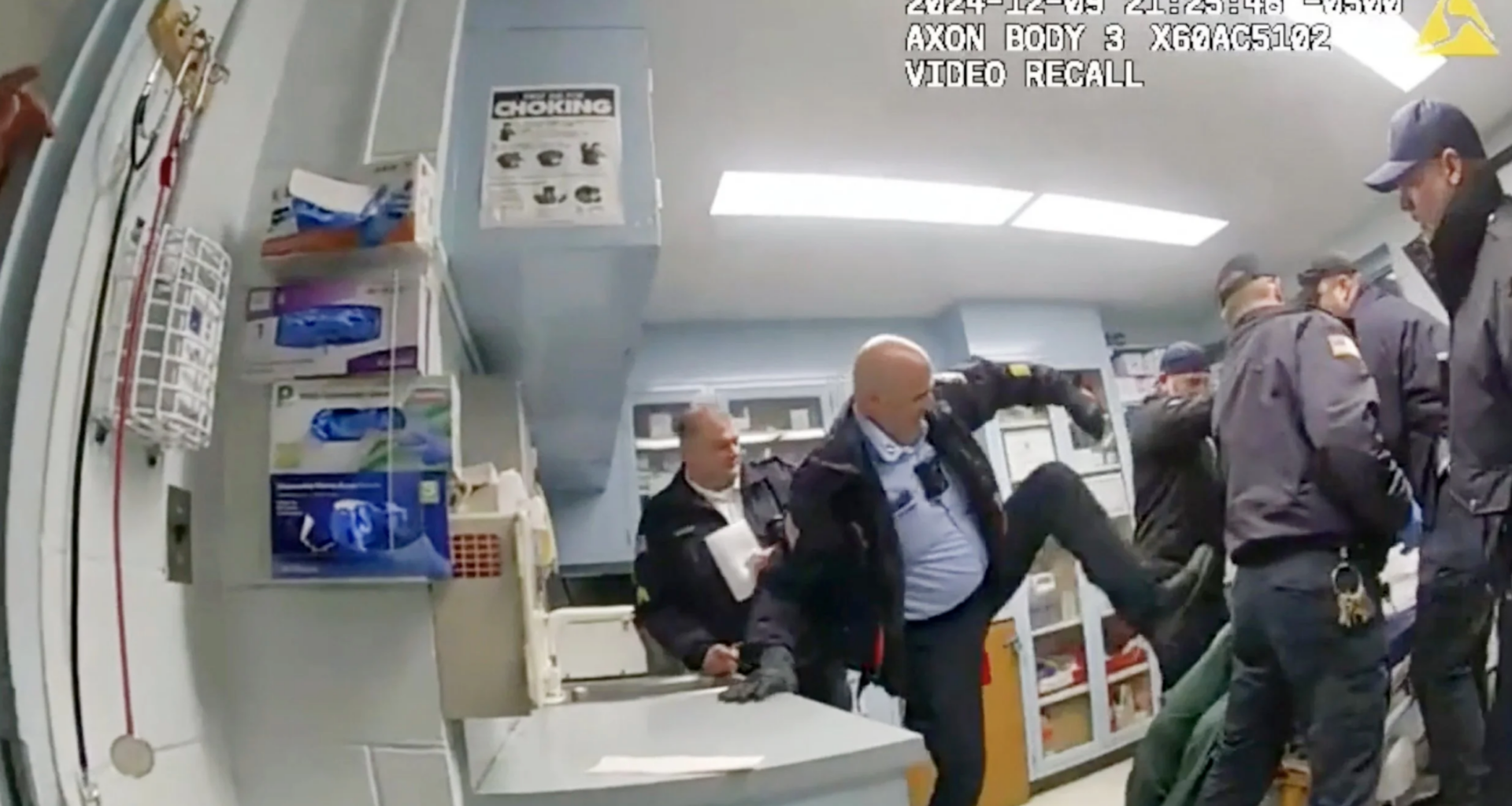
Immediately after arriving at the new facility, Brooks was beaten by a group of officers. He was then brought to the infirmary, where he was “restrained, beaten, choked, gagged, [and] forcibly moved and kicked” for no legitimate reason.
A significant portion of the attack was captured on the officers’ body-worn cameras, which they did not know were recording the murder.
More than half a dozen officers were convicted of Brooks’ killing.
Nantwi was killed during a similar incident at Mid-State Correctional Facility, which is located across the street from Marcy, on March 1, 2025, as the officers’ wildcat strike was underway.
A group of National Guard members, who had filled in for striking officers that month, allegedly said Nantwi had been causing issues when a group of officers showed up and began to beat him.
After he became unconscious, the officers began to take him to the infirmary but continued to beat him along the way. He was then taken to a hospital, where he was pronounced dead.
A review of the incident later found that the officers had turned off their body-worn cameras so that the attack wouldn’t be preserved. They also filed false reports, planted a weapon in Nantwi’s cell, and mopped up the blood in Nantwi’s cell to obscure the crime scene.
“This report lays bare the horrific violence my son endured and the efforts to cover up what happened to him,” Nantwi’s father, Patterson Nantwi, said in a statement. “Messiah was only 22 years old, and he deserved to be treated with dignity and respect, not beaten to death by the very people responsible for his safety and care.”
“Nothing can bring my son back, but I will continue fighting to make sure that everyone responsible for his death is held accountable and that no other family has to suffer the pain our family lives with every day,” he added.
The report found that many of the more troubling similarities between the beatings were not isolated.
“These incidents at Marcy and Mid-State are emblematic of systemic issues at both facilities, including excessive use of force, officer misconduct, accountability, oversight, and culture,” the report read.
According to the report, several officers behind the killings had been involved in similar incidents but were allowed to remain on the job.
“These patterns should have triggered urgent intervention at Marcy and Mid-State,” the report read.
The report also found that excessive use of force was common. Investigators with WilmerHale were told by incarcerated individuals at Marcy that they witnessed “others being dragged into vans to be beaten, or hearing screaming coming from inside vans.”
According to the report, both facilities were also afflicted by a general culture that pitted officers against incarcerated individuals.
A former officer told investigators that if an officer was kind to an incarcerated person, they’d be dubbed an “inmate lover” by their colleagues.
“If a correction officer said good morning to an incarcerated individual in [a maximum security unit], they’d call the correction officer an ‘inmate lover,’” the report read. “DOCCS executives, former staff, and current and former incarcerated individuals also stated that officers who took acts that would help an incarcerated individual—including steps to help with an investigation into officer misconduct—risk intimidation, retaliation, ostracization, and abuse by their peers.”