
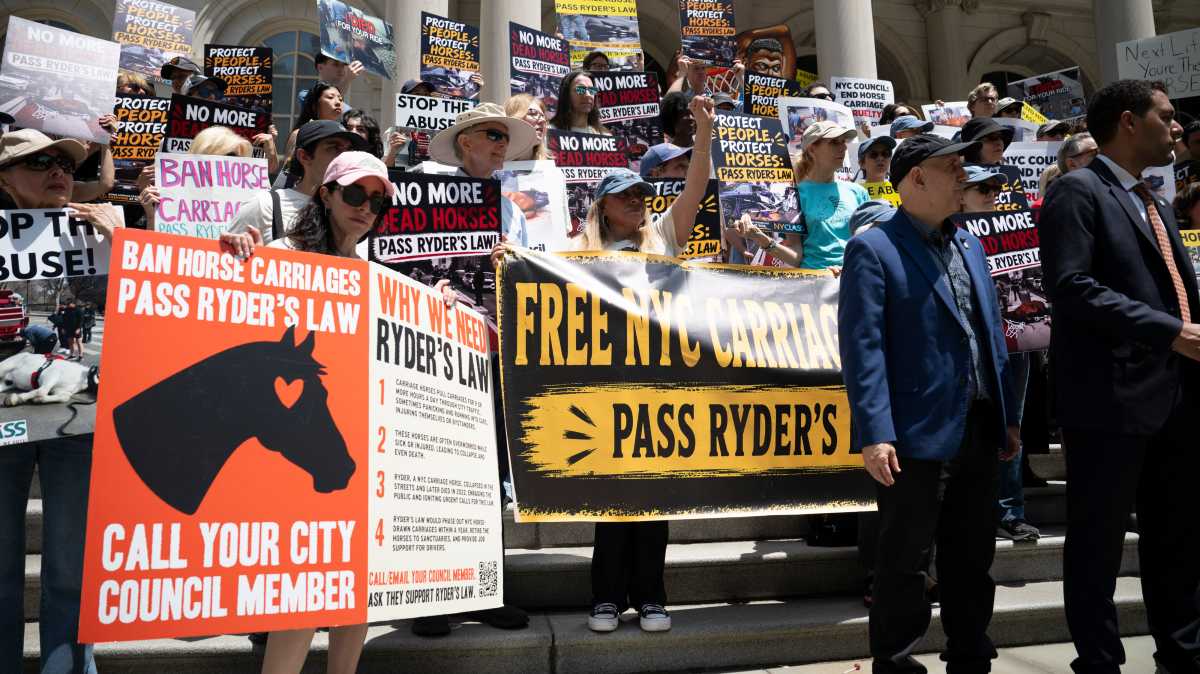
Momemtum for banning horse carriages in New York City appears to be building from a slow trot to a strong gallop this week.
City Council Majority Leader and Transportation Chair Shaun Abreu (D-Manhattan) threw his support on Monday behind long-gestating legislation — Intro 943 — to outlaw the horse carriage industry following the death of Romanch Mahajan, an 18-year-old tourist from India riding in an equine-drawn cab that flipped over last month. City Council Member Christopher Marte, who is sponsoring the legislation, renamed the bill “Romanch’s Law” following the incident.
Abreu’s support for a ban could signal that City Council Speaker Julie Menin is also leaning in that direction, as the two are close allies. Although the speaker has yet to take a position on the bill, she announced the council would hold a hearing on it this month, shortly after Mahajan’s death.
Mayor Zohran Mamdani has said that he supports banning the industry.
Abreu says horse carriage ban need to prevent ‘avoidable tragedies’
Abreu revealed his support for the ban in a July 6 social media video alongside his 11-year-old goddaughter, Jada, and in a statement released by the anti-horse carriage group New Yorkers for Clean, Livable, and Safe Streets (NYCLASS). Together, Abreu and Jada echoed the group’s central argument that the horse carriage industry should be outlawed because it is inhumane to the animals and poses a danger to them, their riders and parkgoers alike.
“Horses belong in the fields, not Central Park,” Jada says in the video. “Horses can’t speak for themselves, that’s why we’re here to help. And that’s the right thing to do.”
“Jada is right, we have seen two avoidable tragedies in the past month alone,” Abreu said, referring to Mahajan’s death as well as the collapse and death of carriage horse Denize.
“As majority leader in the City Council, I am stepping up to ban the horse carriage industry,” he added.
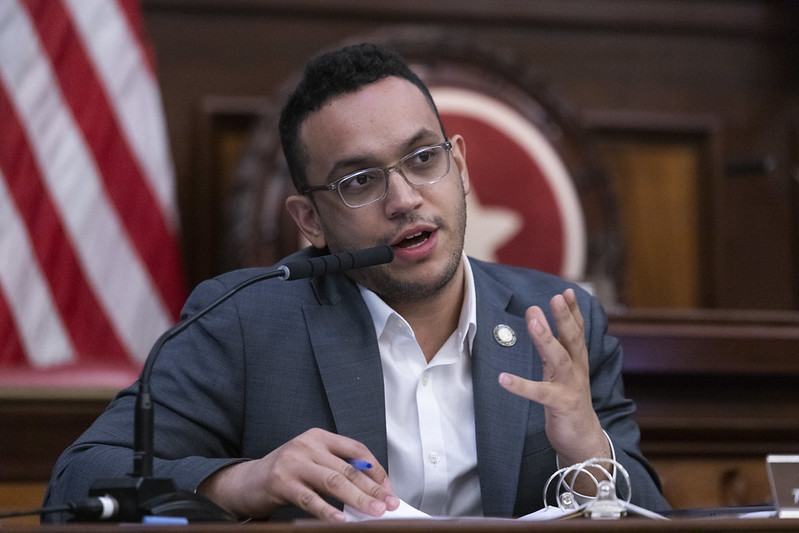 City Council Member Shaun Abreu.Credit John McCarten/NYC Council Media Unit
In Abreu’s statement, he said there is “no viable path forward” for the industry, following years of incidents in which horses collapsed, bolted, or crashed into parkgoers.
“It’s not good for the horses and it’s not good for the parkgoers who are increasingly spending their visits worried about horses running wild and crashing — concerned their kids are going to see a beloved animal collapse,” Abreu said. “After a teenager died in a carriage crash last month, the urgency is beyond clear. There’s been a long public debate on this topic, and I think it’s time to put a close to it.”
Menin spokesperson Jack Lobel referrd amNewYork to a statement she made on June 18 when reached for comment on Monday. She said she would be meeting with stakeholders on all sides of the debate prior to the upcoming hearing.
“These incidents demonstrate that it’s time to chart a better path forward that addresses animal welfare and public safety, and also ensures the livelihood and economic prosperity of the workers,” she said. “I plan to meet with labor, animal welfare groups, park advocates, and others. Horse welfare, public safety, and the economic future of carriage drivers are not mutually exclusive goals. I’m confident that we can bring all parties together to achieve a responsible solution.”
A source familiar with the matter said Abreu got the speaker’s blessing before making his announcement.
However, TWU Local 100, the transit workers union that also represents carriage horse owners and, by extension, their drivers, fiercely opposes the measure because it would eliminate the drivers’ jobs.
“We believe that ending the age-old tradition of horse carriages in the park would create no viable future for nearly 200 carriage drivers and the horses, who would have to be relocated,” Local 100 President Alexander Kemp said in a statement.
But Romanch’s Law would require the city to retrain carriage drivers for other jobs.
The union has long fought to defend the industry, insisting that dangerous incidents involving carriage horses are isolated and should not bring an end to the practice altogether. It has pointed out that Mahajan’s death was is the only known carriage horse passnger fatality during the nearly 170 years that the industry has operated.
It has also accused NYCLASS of having ulterior motives for wanting to do away with carriage horses — namely to free up valuable Hell’s Kitchen real estate currently occupied by their stables.
Following Mahajan’s death, Local 100 honchos have continued to insist carriage horses should not be banned, while simultaneously committing to a “Vision Zero” for the industry.
Their plans to achieve that included a three-day suspension of horse carriage operations immediately after the incident. During that period, the union said it held meetings with carriage drivers to review current procedures governing horse operations and to develop new protocols to prevent future deaths and injuries.
Local 100 leaders have also urged Mamdani’s administration to help them identify locations for hitching posts, which they argue will help prevent horses from bolting, throughout Central Park.
City Council Member James Gennaro (D-Queens), with Local 100’s backing, previously released an alternative bill — Intro 937 — aimed at making the industry safer last month. The legislation, among other things. calls for the city to conduct an annual survey of hitching posts in the park and to install them in response to the poll’s findings.
“We remain heartbroken by the untimely death of Romanch Mahajan, and believe there is a safer future to be had in the industry with the adoption of Intro 937,” Kemp said.
The bill would mandate oversight from the Department of Health and Mental Hygiene, the body who is supposed to be keeping tabs on the drivers,” he added. “It would also mandate more rigorous testing for drivers, refresher training, and hitching posts around Central Park, which we have been asking the city and Central Park Conservancy to provide for years.”
The Health Department, however, has insisted that it already provides such oversight.