
It’s no secret that the rise of e-commerce, and the impacts of COVID, have created challenging times for brick and mortar stores. across New York. While Lower Manhattan has made a significant post-pandemic recovery marked by rising commercial rents, a brain gain of young professionals and a growing residential population of more than 70,000, retail vacancies in parts of downtown remain stubbornly high.
In response, the Downtown Alliance decided to take a creative approach to the problem, one storefront at a time. We asked ourselves, “what can we do, right now, with what we have?” That is why we launched the RE:Store program.
The Downtown Alliance teamed up with local property owners to give small businesses a chance to set up shop in Lower Manhattan with three months of free rent. We also offered grants to help with the build-out of the spaces, marketing support, and technical assistance.
The response was overwhelming. More than 360 entrepreneurs applied from all across the city. After a thorough deliberation, we are thrilled to announce that this summer, RE:Store is converting six vacant storefronts into seasonal pop-up shops for seven unique retail concepts.
Our panel of retail experts chose an eclectic mix of businesses that will add to the neighborhood’s offerings: Local culinary bookstore Kitchen Arts & Letters brings its literary flavor to 111 Broadway; at 225 Broadway, Brooklyn Craft Company sells DIY creative supplies; popular archival record label the Numero Group sells its sweet sounds to the Seaport at 186 Front St.
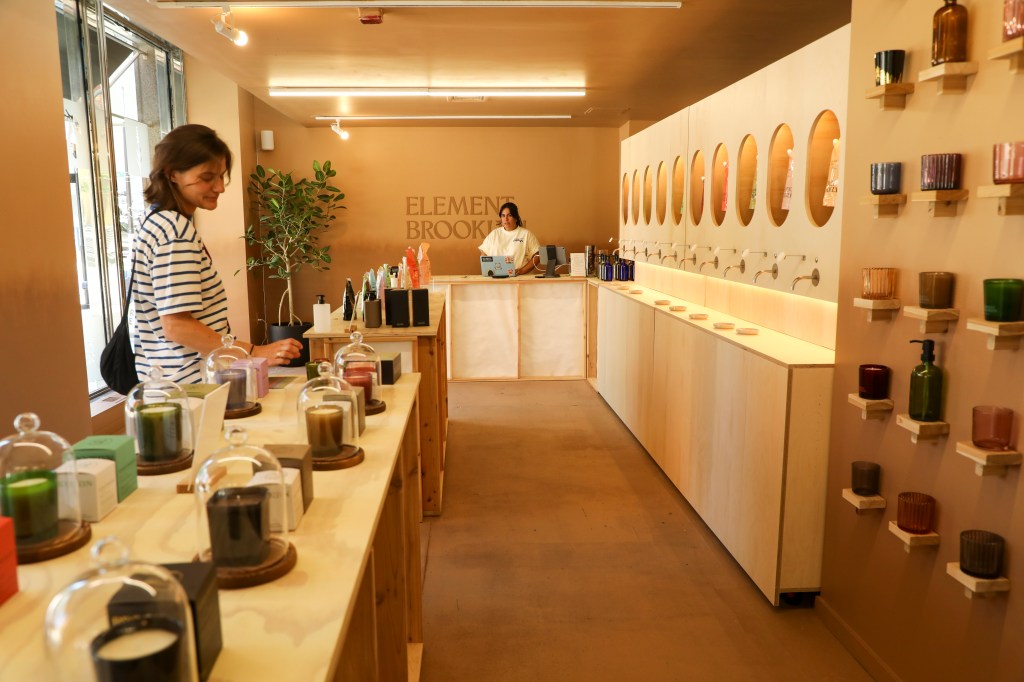
Two brands, Dimorae Home and Francis’ World, have opened a curated art, design and home goods store at 190 Front St.; Plus BKLYN sells handpicked, plus-size vintage clothing in a community-driven space at 2 Broadway; and at 192 Front St., Element Brooklyn offers refillable, luxury soaps and other scented products.
In a post-COVID world, in-person events and human connection is crucial to a retail success. A store’s programming and engagement with customers is a key part of any successful business plan. Customers today want a reason not to shop online. Real world shopping experiences must trump the convenience of the digital marketplace.
A big piece of the RE:Store program was choosing retailers that thought creatively about hosting events throughout the summer to help engage the community and activate these storefronts outside of peak business hours.
For example, Element Brooklyn hosts candle-making workshops Wednesday through Friday at 6 p.m., as well as weekend afternoons. Brooklyn Craft Company has classes most days of the week, Numero Group has hosted concerts, printmaking workshops can be had at Dimore Home and Francis’ World, Plus Brooklyn is doing “shop and sip” experiences and Kitchen Arts and Letters is regularly holding book events and conversations with some of the most important voices in New York’s food scene.
The RE:Store program crucially reframes vacancies as opportunities. This temporary model lowers the risk for emerging brands, allowing small businesses to grow, experiment and connect with new audiences in Lower Manhattan.
For property owners, busy storefronts garner more foot traffic, and activating spaces for evening events can shift how a whole block feels — affecting how multiple addresses might be used and leased for years to come. It encourages owners and brokers to think outside the box. Experiments like this demonstrate that new retail concepts might be worth backing.
For residents and commuters, property owners and entrepreneurs alike, the program has the ability to transform empty stores into discovery, opportunity and innovation. And after all, that is what New York is all about.
Lappin is president of the Downtown Alliance.