

Bill Gati, AIA, RIBA, NCARB, is a licensed architect and the Principal of Architecture Studio, PLLC, based in Richmond Hill, the neighborhood where he has lived and practiced for decades. His firm focuses on residential design, historic restoration, and DOB compliance work across New York City, earning a 2021 AIA New York State Honor Award and a 2024 AIA Queens Design Award for Historic Restoration. Bill is an active leader in the profession and the community. He serves on the AIA National Board, chairs the Scholarship Committee at AIA Queens, and holds the office of Secretary of the Queens Foundation for Architecture (QFA). He is also Vice President of the Architecture Alumni Chapter at The City College of New York, where he earned his degree in architecture.
Beyond the drafting table, Bill is an accomplished jazz musician — a tenor saxophonist and pianist who leads jam sessions and performs at beloved Queens venues including the Forest Park Bandshell and Brownson Center at Maple Grove Cemetery. His next public performance is Midsummer Night Swing with Paul Capo on July 24 at Maple Grove’s Celebration Hall.
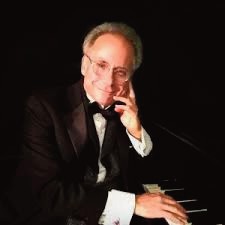
A lifelong Queens resident, Bill is a fixture in the civic life of Richmond Hill, serving on Community Board 9 and contributing to neighborhood organizations including the Richmond Hill Block Association and the Richmond Hill Historical Society. He brings the same passion for craft and community to everything he does — whether designing a home, restoring a landmark, or playing a standard at a summer concert.
QG: Other than the amazing diversity, what do/did you love most about living in Queens? How has Queens changed over the years?
BG: I’ve lived and practiced architecture in Richmond Hill for decades, and what’s kept me here is the texture of the place — Victorian frame houses, tree-lined streets, a housing stock that still tells the story of how the neighborhood was built. I’ve spent much of my career on the preservation side of that story: legalizing violations, restoring historic details, helping homeowners keep what makes Richmond Hill worth keeping. As Secretary of the Richmond Hill Historical Society and a board member of the Richmond Hill Block Association, I’ve watched the neighborhood absorb tremendous change while still holding onto its architectural identity — that’s rare in New York City, and it’s worth fighting for.
QG: How does Queens inspire you? What are some of your favorite places to be inspired in Queens?
BG: Maple Grove Cemetery is probably my most unlikely source of inspiration — it’s where I perform, at the Brownson Center’s Celebration Hall, and it’s also a landscape with an extraordinary architectural and musical history. The Forest Park Bandshell is another touchstone; it connects me to a long line of musicians who’ve played outdoors in this borough. Professionally, I find the same inspiration walking Richmond Hill’s blocks looking at cornice details and porch columns [I recently restored one by hand] as I do sitting at a piano.
QG: How important is personal connection and communication (networking) in your industry?
BG: It’s everything. Architecture is a collaborative profession — you’re constantly translating between clients, contractors, and city agencies — and the same is true of civic life. My work on the AIA National Board, as Scholarship Committee Chair for AIA Queens, and as Secretary of the Queens Foundation for Architecture is really about building those bridges: mentoring the next generation of architects, connecting them to opportunity, and making sure Queens has a seat at the table nationally. I try to bring that same connective instinct to music — leading jam sessions is its own form of networking, just with instruments instead of business cards.
QG: What is the best piece of advice you’ve ever received?
BG: The best advice I’ve received has come from my wife of over fifteen years, Kim Gati: every person you meet has a story — connect with them. Share something vulnerable, and ask for help. She’s also taught me that not every comment deserves a response, and that the oldest rule still holds: do unto others as you would have them do unto you. It’s advice that works as well in a client meeting or a community board hearing as it does at home.
QG: Who are some of your favorite artists, writers, performers, entrepreneurs, and other creatives with a Queens connection?
BG: I have enormous admiration for the muralists who’ve shaped the Woodhaven and Kew Gardens art scene — public art that’s given these neighborhoods a visual identity of their own. I’m also a great admirer of Nathan and Susan Spondike, whose art studios in a historic Ridgewood warehouse I’m currently designing; it’s been a privilege to help build the space where their work happens. And I love the exhibits at Maple Grove, curated by Helen Day and Carl Balanis, which bring real cultural weight to a place most people only think of as a cemetery.
QG: What are your favorite restaurants, coffee shops, theaters, galleries, communities, and venues in Queens?
BG: Neir’s Tavern is my favorite — I’m currently designing an extension for them, so it’s both a client relationship and a genuine favorite spot. I’m also a regular at Nick’s Bistro on Metropolitan Avenue in Forest Hills, and NTK on 80th Street in Glendale.
QG: What was the most important concert in the history of Queens?
BG: History would point to The Beatles at Shea Stadium in August 1965 — still one of the most consequential concerts in American pop culture, and it happened in Queens. But if I’m being honest about what’s shaped me personally, it’s the ongoing tradition of live music at Forest Park Bandshell and Maple Grove’s Celebration Hall — rooms and stages that have hosted generations of Queens musicians, myself included, and that carry the borough’s musical life forward one summer night at a time.
QG: What are you working on right now that you’d like to highlight?
BG: On the architecture side, I continue to focus on historic restoration and DOB compliance work throughout Queens — the kind of practice that earned Architecture Studio a 2021 AIA New York State Honor Award and a 2024 AIA Queens Design Award for Historic Restoration. I still carry the lessons of my favorite CCNY professor, Peter Gisolfi, who taught that space should facilitate flow and circulation — a principle you can see in his own design for the new building at Maple Grove Cemetery, which happens to be where I perform. On the music side, I’m preparing for Midsummer Night Swing with Paul Capo, July 24 at Maple Grove’s Celebration Hall — a performance dedicated to the memory of George Sebald. My approach at the piano still traces back to my Juilliard teacher, Richard Fabre, who taught me that a small repertoire played with real polish beats a large one played poorly — a lesson that’s shaped how I practice to this day. Between architecture and music, I think of myself as someone who restores things: buildings, neighborhoods, standards.
The Local-Express interview series was originated on July 3, 2013 by Nicollette Barsamian.