
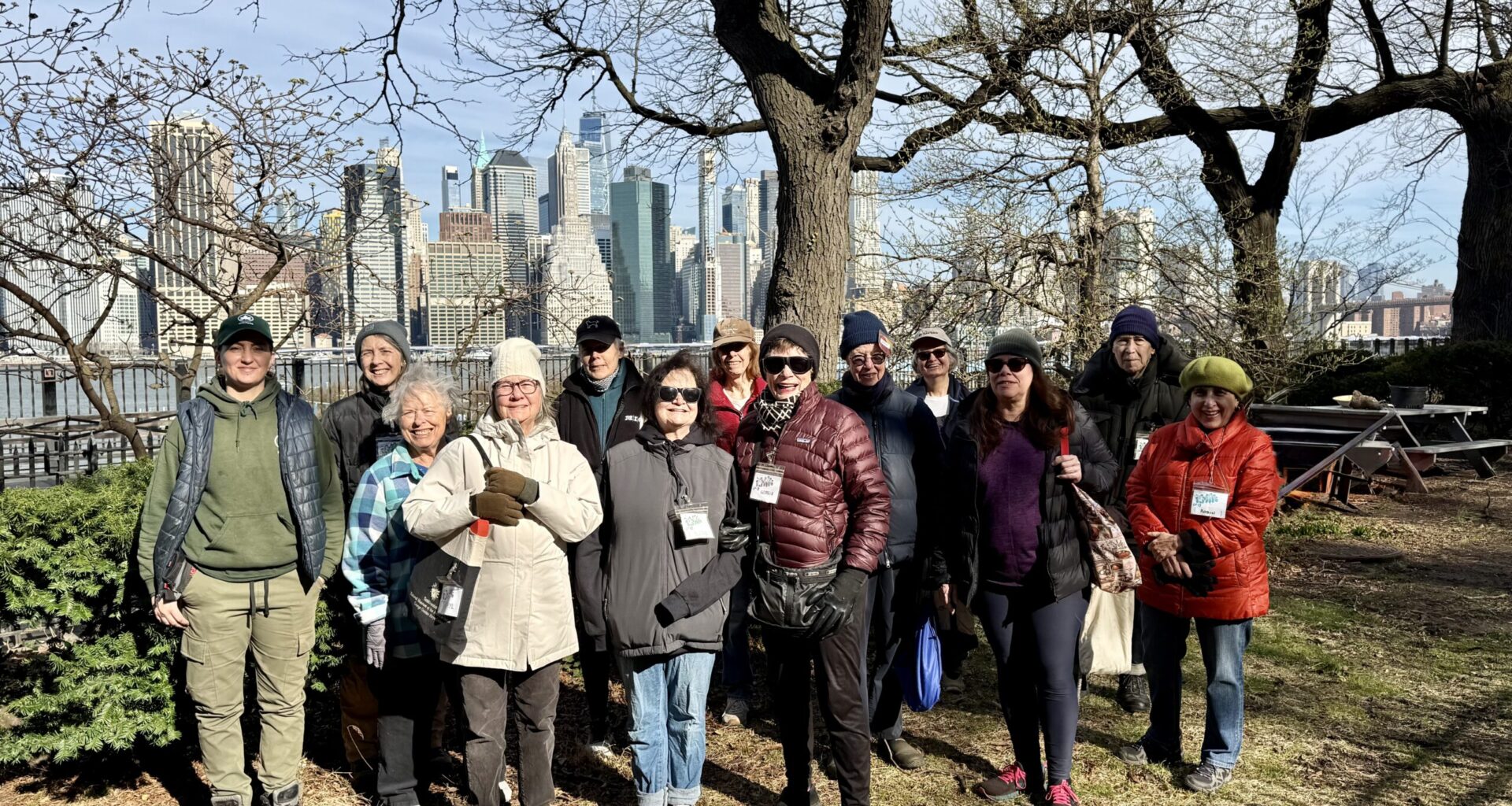
 BROOKLYN HEIGHTS — Every Tuesday morning, volunteers kneel amongst Japanese barberry and juniper on the Brooklyn Heights Promenade, pulling weeds, trimming overgrowth and watering newly planted beds. These community volunteers have been caring for the inland-side ribbon of gardens for nearly two decades.
The volunteers are members of the Promenade Garden Conservancy, a stewardship program established through partnership between the Brooklyn Heights Association and the New York City Parks Department.
In 2009, a notice in the Brooklyn Eagle invited Brooklyn Heights residents to join a new gardening initiative. Organizers hoped to attract a small group to the project.
“More than 40 people showed up to the very first session,” said Koren Volk, a longtime volunteer who joined after seeing the announcement. “For a volunteer program in a city park, you’re lucky if you get five or six people.”
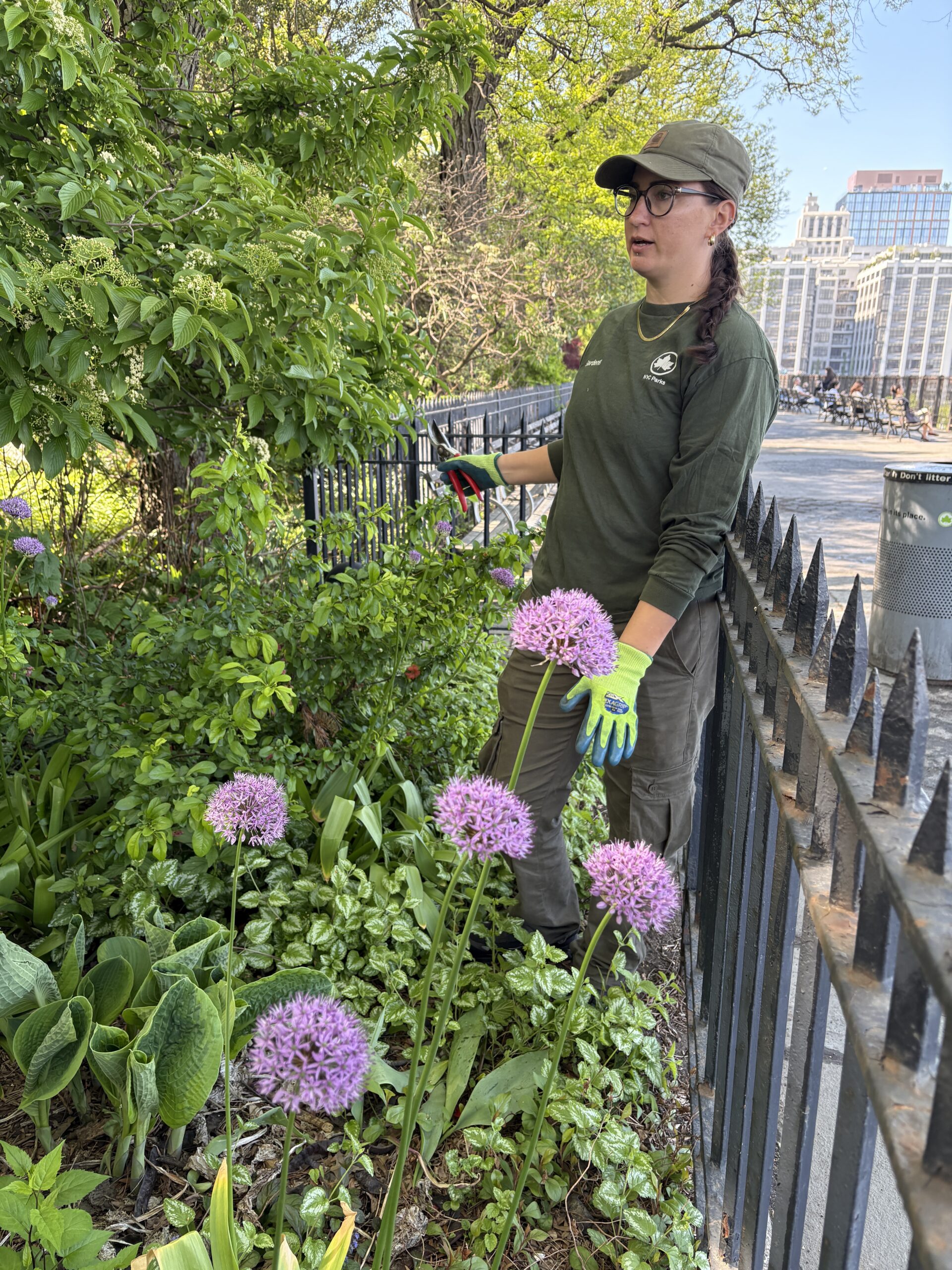 NYC Parks gardener Jessica Kulig gives instructions. Photo: Koren Volk
Now, the team boasts around 30 active volunteers, with 15 to 20 regularly gathering on Tuesday mornings.
Each session is led by NYC Parks gardeners Jessica Kulig and Nathan Grozan, who outline the day’s work before volunteers disperse throughout the gardens. While NYC Parks determines what is planted and oversees the landscape’s long-term design, volunteers provide the consistent care needed to keep the gardens thriving.
The project was born out of a growing concern for the garden in the early 2000s by community members and the BHA.
“The garden was neglected. It was unattended, weedy, and the plants needed care from knowledgeable people,” said Judy Stanton, the executive director of the BHA at the time. The shrinking NYC Parks budget at the time left the landscape increasingly difficult to maintain.
“A small team of horticultural staff rotated among parks throughout Brooklyn, often spending only a few days at each park before moving on to another assignment,” Volk explained. “It wasn’t enough care, especially for the Promenade.”
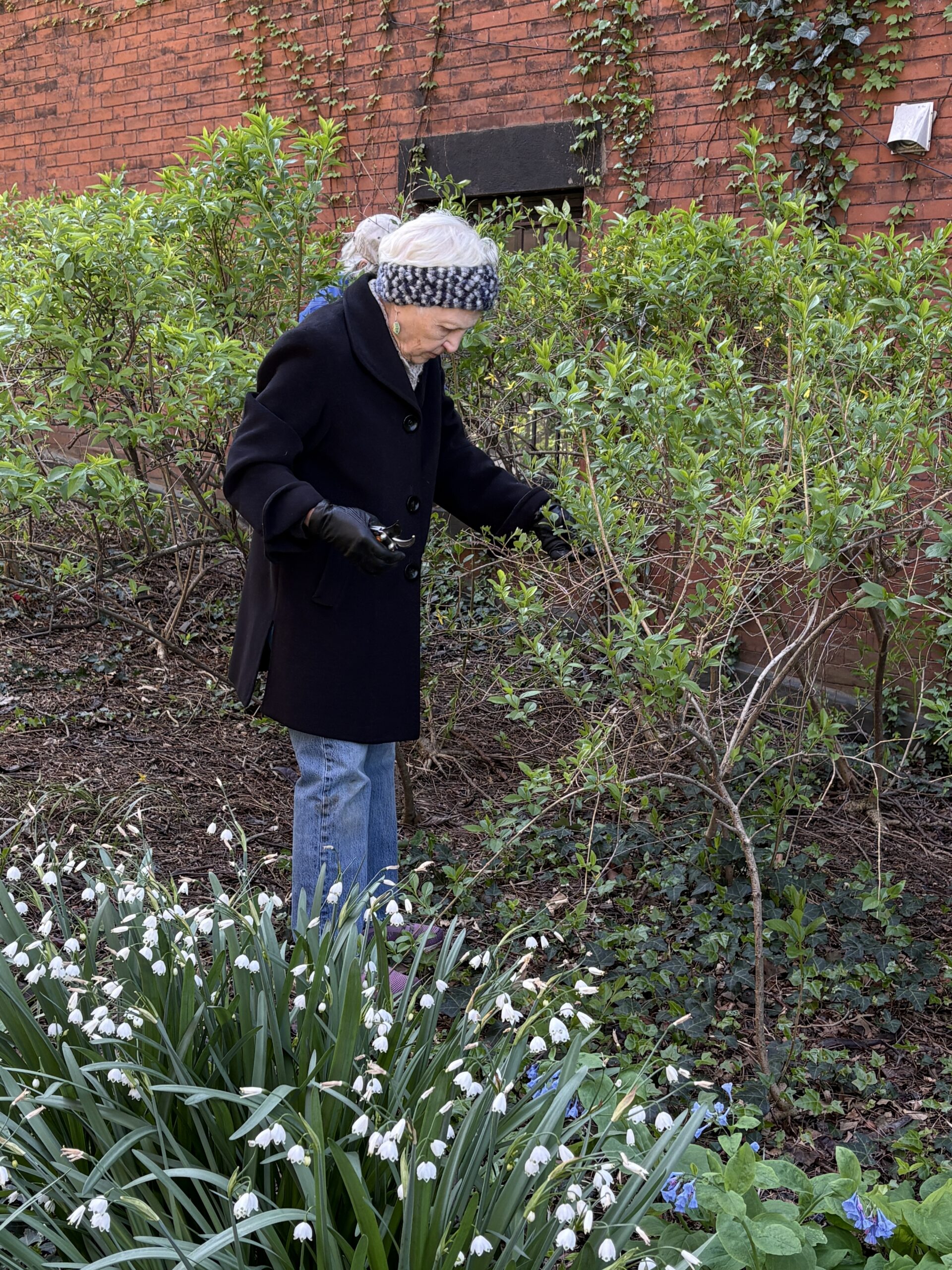 Volunteer Ellen Drexler prunes Forsythia. Photo: Koren Volk
Weeds accumulated, litter became trapped behind the garden’s fence, and plantings deteriorated, frustrating residents who remembered what the garden looked like in earlier years. In response, the BHA pitched in to hire a gardener to oversee the project and started the volunteer program.
In 2018, the New York City Department of Transportation introduced plans to reconstruct portions of the Brooklyn-Queens Expressway, which raised the possibility that the Promenade gardens might need to be dismantled. In response, several PGC volunteers launched a mapping project to document the landscape in detail.
“Some of us questioned if it would ever be restored properly, but if it’s going to be restored and if we’re going to try to hold their feet to the fire, we would have to know what was there,” said volunteer Stephen Sacks.
Working alongside NYC Parks, volunteer Maureen Healy identified the genus and species of every plant, recording each one by location. Sacks then used QGIS mapping software to plot the coordinates of every plant. Together, they built an online website that catalogs each plant’s location and includes photographs throughout the seasons.
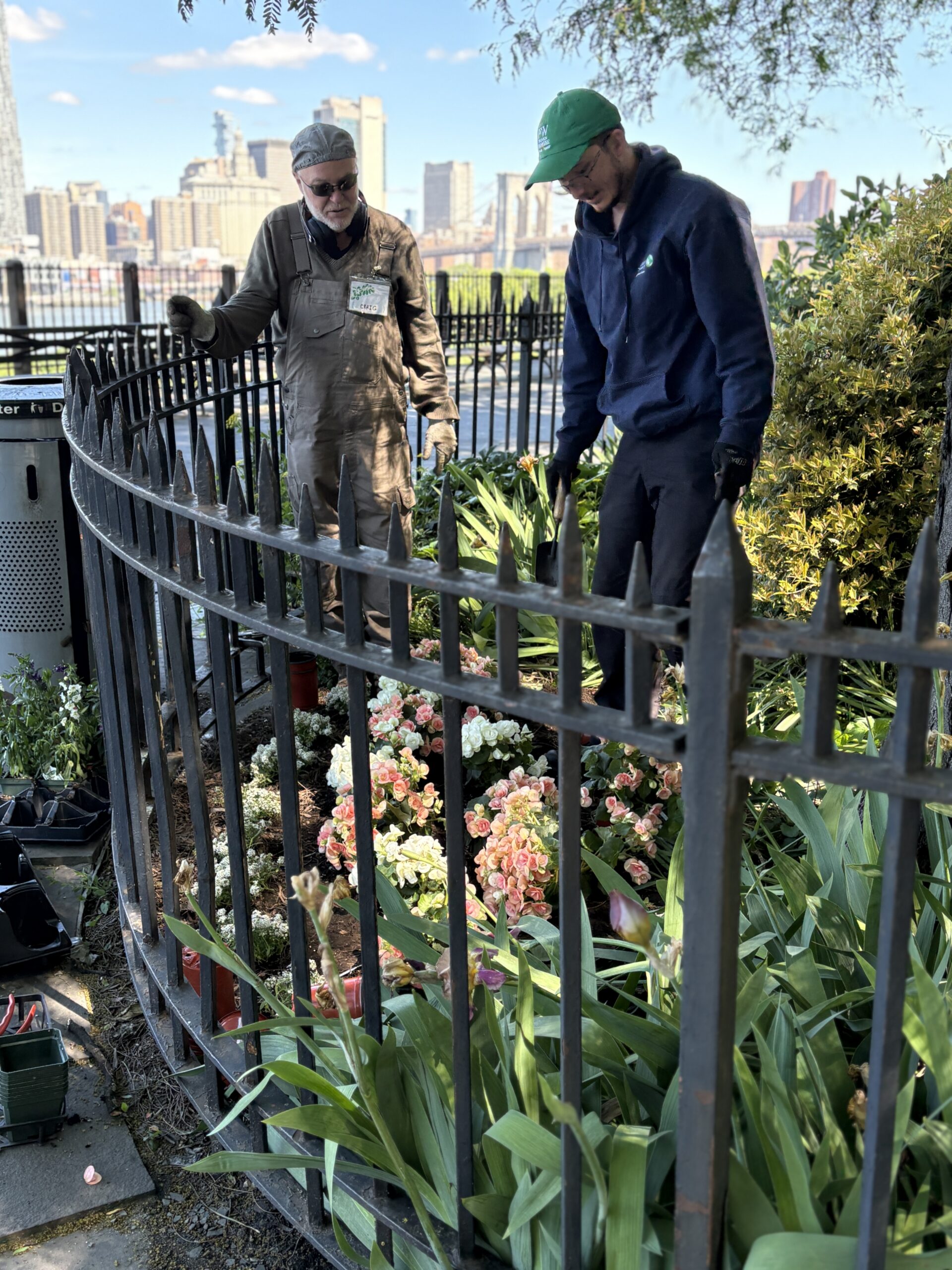 Volunteer Craig Meachen and NYC Parks gardener Nathan Grozan planting annuals. Photo: Koren Volk
The project serves as an insurance policy of sorts. If construction ever forces the gardens to be removed, volunteers hope the detailed record will allow it to be restored as true to the original design as possible.
Recently, the volunteers have expanded their work to include street tree care. In 2022, Councilmember Lincoln Restler launched an initiative to plant a street tree in every viable tree pit across District 33. With a new round of trees scheduled to be planted this September, PGC volunteers have been educating the community on how to care for young street trees, which require more frequent watering than mature trees, to help ensure they thrive after planting.
Residents continue to gather each Tuesday to care for the Promenade gardens. The work has changed over the years, but the morning gatherings have remained the same.
“You can come later, leave earlier. You can come and do no work at all, or you can just come for coffee at 11:30 a.m., and no one says you didn’t do your share,” Sacks said.