
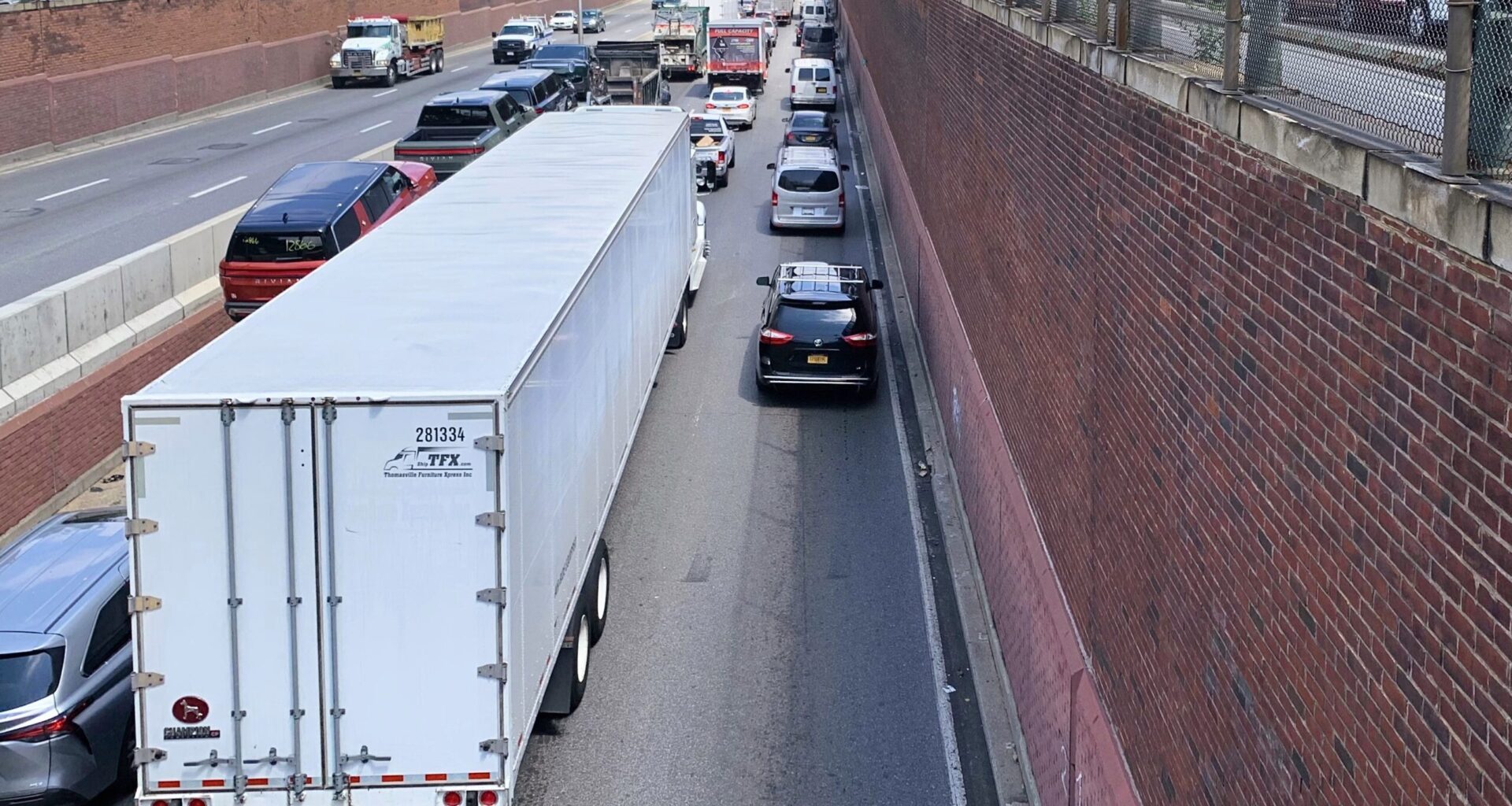
BROOKLYN HEIGHTS — New York City Transportation Commissioner Mike Flynn has posted a job alert on LinkedIn for an Assistant Commissioner to address the “aging infrastructure” on the Brooklyn-Queens Expressway triple cantilever between Atlantic Avenue and Sands Street.
“Calling all creative civil/structural engineers! Be a part of addressing the condition of the BQE Central section (aka triple cantilever) once and for all,” Flynn wrote. “This is an urgent infrastructure priority project, and leading that effort is a career-defining opportunity.” The job pays up to $250,000.
The BQE, also known as I-278, was built in the 1940s by “Master Builder” Robert Moses. The deteriorating triple cantilever has been a hot potato throughout two previous mayoral administrations.
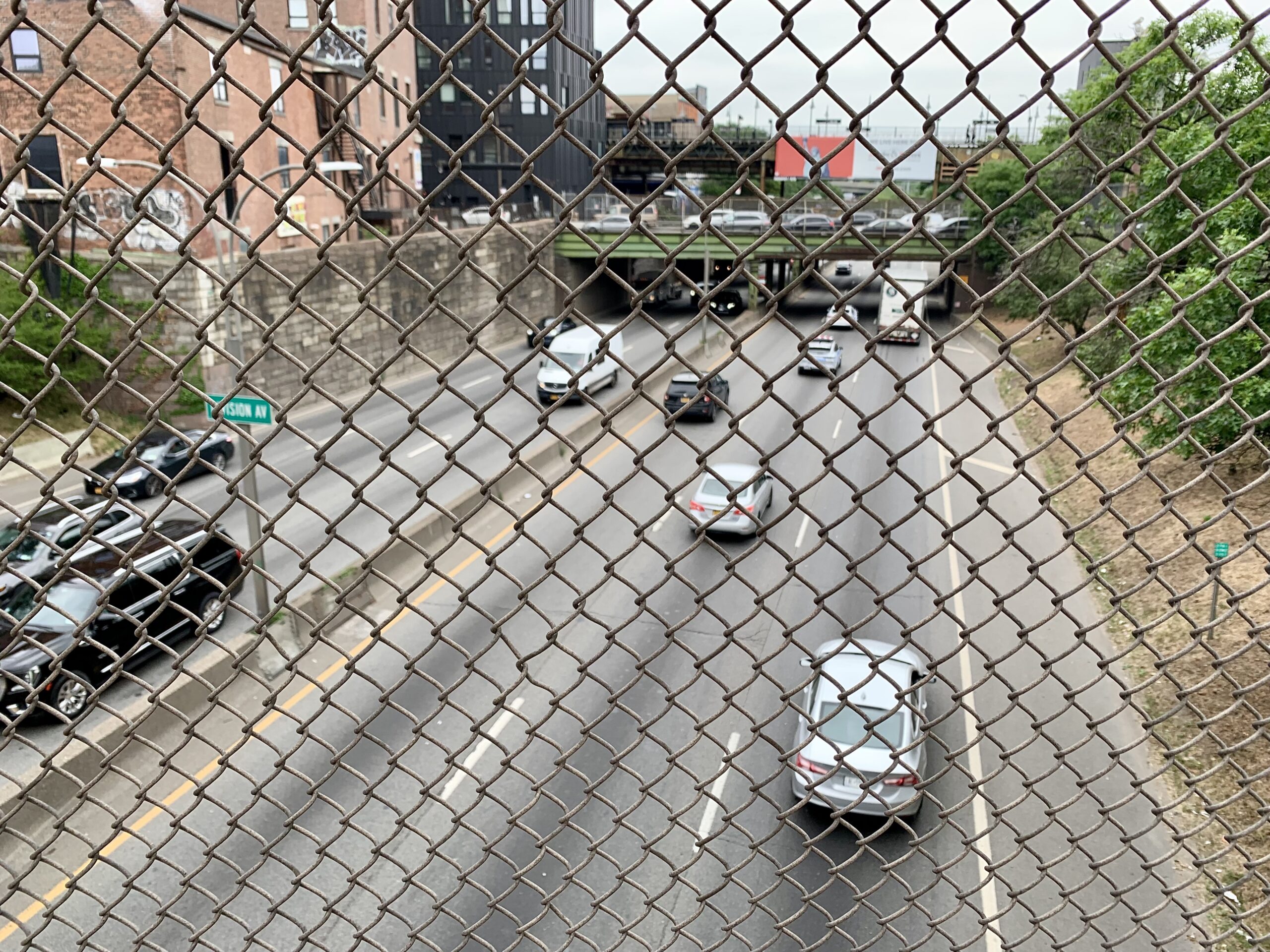 The BQE Environmental Justice Coalition is urging officials to back a plan reuniting communities long divided by the BQE, like South Williamsburg, shown here. Photo: Mary Frost/Brooklyn Eagle
Mayor Zohran Mamdani appears ready to move ahead with the complex project, though the job listing does not indicate the city’s exact approach.
According to the listing, the selected candidate will oversee a team of eight people and manage design and construction planning, environmental review processes and other regulatory requirements. They will coordinate Design-Build or Design-Bid-Build procurements and construction, lead consultant teams, be responsible for delivering project milestones, communicating challenges and opportunities to leadership, and mitigating delays.
DOT says the candidate will also support efforts related to projects along the BQE corridor north and south of BQE Central, which could include capping sections of the highway. The expressway, which carries 150,000 vehicles a day, has divided neighborhoods like Williamsburg, Carroll Gardens and Sunset Park for almost 70 years, bringing dangerous pedestrian crossings, noise and pollution.
Reach out, says Brooklyn Heights Association
In a response to Flynn on LinkedIn, Lara Birnback, Executive Director of the Brooklyn Heights Association, wrote, “Commissioner Flynn, members of the communities who live adjacent to the BQE corridor are eager to meet with you and your team to work together on reimagining the BQE once and for all for the benefit of our city and the health of its people … I hope you’ll be reaching out soon.”
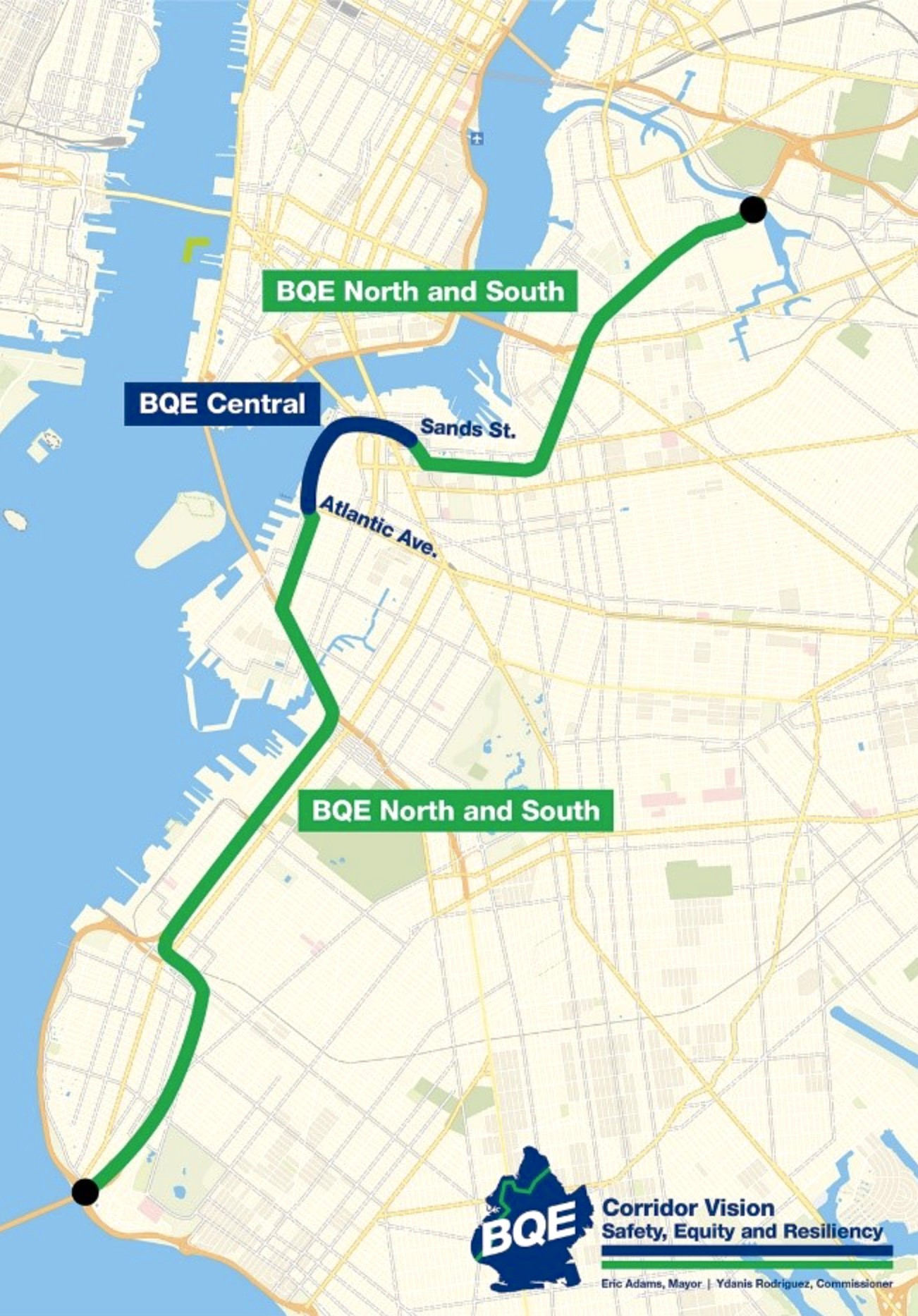 The BQE Environmental Justice Coalition says the city’s BQE proposal ignores the plight of low-income and working-class communities living north and south of BQE Central. Map: NYC DOT
In 2019, the BHA successfully fought off DOT’s original plans to build a temporary six-lane BQE “Highway to Hell” where the historic Promenade now stands. The plan would have required the teardown of the entire cantilever and the construction of a temporary “parallel” bypass highway, which would have ultimately had to be torn down. This plan would have brought the noise, pollution and vibrations of an estimated 153,000 vehicles a day to the neighborhood’s street level for years.
The BHA is a member of the Brooklyn-Queens Expressway Environmental Justice Alliance, which includes 16 organizations ranging from El Puente in Williamsburg to the Red Hook Initiative. The alliance is pushing for an equitable and more forward-thinking redesign of the entire BQE, which runs from the Verrazano Bridge to Queens. The group says the rebuilding of the BQE presents the city with a “once-in-a-generation opportunity” to undo decades of environmental racism and community harm.
Plans come, plans go
A BQE panel appointed by Mayor Bill de Blasio in 2020 recommended immediately starting emergency repairs to the highway, removing two of its six lanes, and commencing long-term planning for a transformational re-envisioning of the entire BQE corridor from Staten Island to Queens. Several of these recommendations were carried out, including lane eliminations and Weigh-In-Motion sensors, prolonging the life of the highway.
The Adams administration, however, decided to push ahead with a gigantic reconstruction project on the triple cantilever, the only section of the interstate controlled by the city, in a bid to take advantage of President Joe Biden’s bipartisan infrastructure funds.