
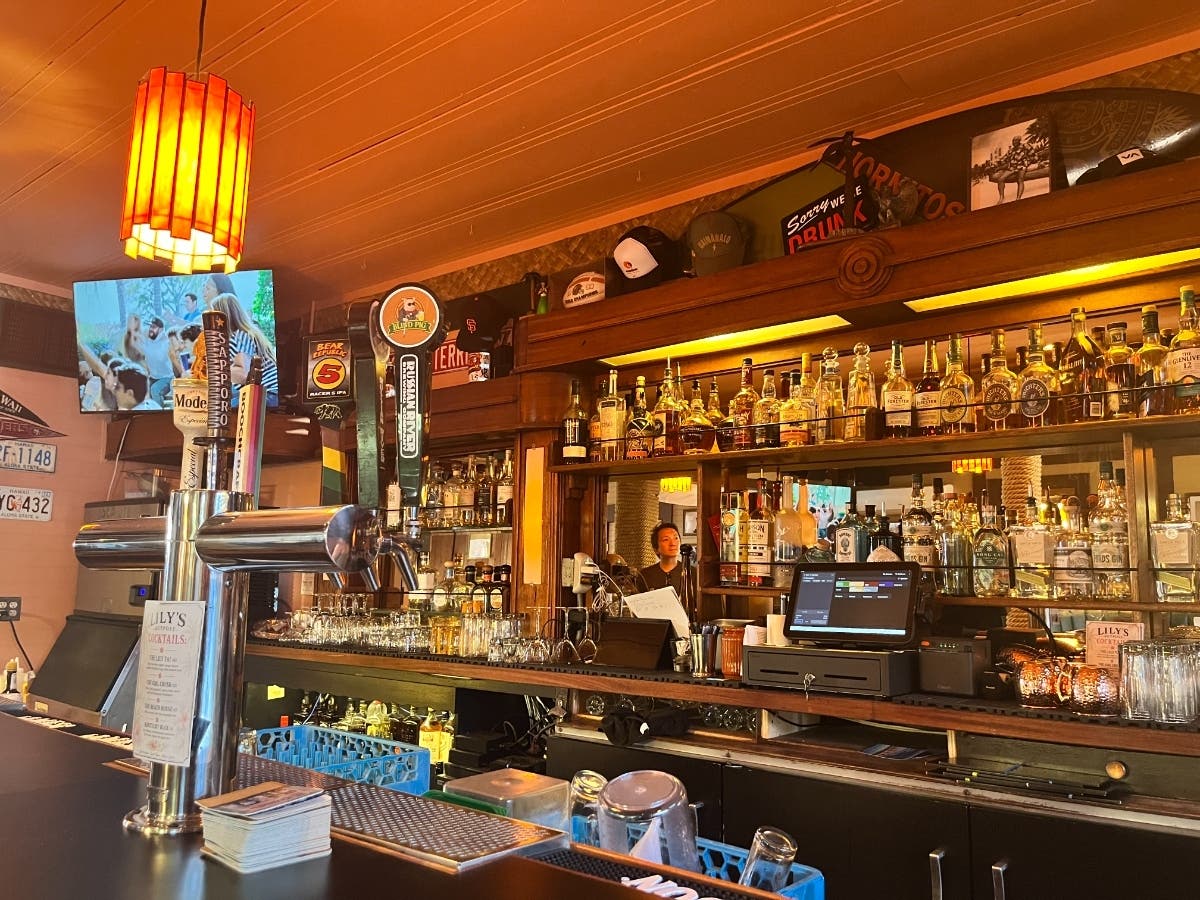
Traditional tiki bars emerged in California during the 1930s, popularized by Don the Beachcomber and Trader Vic with carved tiki statues, waterfalls, dramatic lighting, elaborate Polynesian décor, and rum cocktails served in decorative mugs.
Landrum intentionally avoided those hallmarks. Instead, Lily’s reflects what he calls a mid-century Hawaiian aesthetic blended with Sonoma wine country and California’s ranching traditions.
Lilly’s logo features a hula dancer wearing a cowboy hat, a nod to Hawaii’s paniolo, or cowboy, heritage.
In 1832, King Kamehameha III invited Mexican vaqueros to teach Hawaiians how to manage growing cattle herds. The Hawaiian word “paniolo” evolved from “Español,” and generations of Hawaiian cowboys developed their own ranching culture on the islands.
Country music naturally followed, blending with Hawaiian musical traditions and helping influence American country music through the spread of the Hawaiian steel guitar.