
Jersey City Mayor James Solomon touted the city’s proposed $886,546,594.16 municipal budget with a 15.5% tax increase in a phone interview yesterday ahead of Wednesday’s introduction by the City Council.
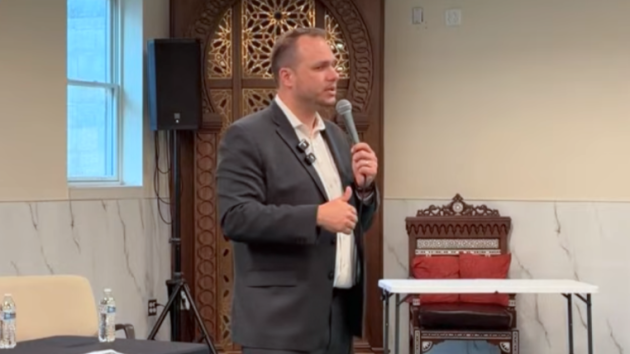 Screenshot via YouTube.
By John Heinis/Hudson County View
Off the bat, Solomon explained why the city’s long-anticipated 2026 spending plan was released at about 11 p.m. Friday night.
“We released supporting documents with it, including spreadsheets and related materials, and we wanted to make sure it was all accurate prior to the release. The budget will be introduced on Wednesday and the public and the council gets full month to scrutinize the full document,” he told HCV.
When asked to respond to criticisms about Jersey City’s financial troubles coming up at least semi-regularly on the campaign trail last year, for example former Gov. Jim McGreevey said a $150 million deficit was on the horizon, Solomon said he never shied away from the issue.
“During the campaign, I was very clear how bad I thought the city’s finances are and we have to clean house. My criticisms of the budget led Mayor [Steven] Fulop to actively work against my campaign for the final six months of the race,” Solomon stated.
“If the deficit was $100 million less [$150 million vs. $255 million], we wouldn’t have to do a $60 million tax increase. We all ended up in a historic crisis in Jersey City’s modern history.”
Solomon also stated that he understands why residents are upset and why some feel more could’ve been done to get ahead of the city’s current fiscal crisis, but he reiterated some reasons why he feels we ended up here.
“The 2025 budget was a fictional document, that was pure fiction from the former mayor to boost his gubernatorial run to make it look like the city was in better shape than it actually was and now we’re having to pay off all of his bills,” he asserted.
“We were borrowing like a family paying for goods they cannot afford, he puts tens of millions of dollars onto the city’s credit card. We’re simply correcting that and it’s just not easy when you have to rectify $109 million in unpaid bills.”
Fulop has previously called the $255 million figure “fugazi” and subsequently said that this year’s budget would not have had a tax increase if he was still mayor of New Jersey’s second largest city.
As far as the budget introduction itself goes, Wednesday’s council meeting could be a bit of a fire fight after the majority of the governing body (five members) on Friday pushed back on being blamed for the layoffs of 31 provisional employees, as HCV first reported.
Solomon said that he has been straightforward that a tax rate under 20 percent will necessitate layoffs, and while he’s not happy with having to layoff any city workers, this is a time where tough decisions have to be made.
“Our goal here been to protect core city services and employees. Our 911 system has to work, we need to fill potholes, our fire department needs to remain staffed. Moving from 20 to 15 percent … that’s a difference of $20 million,” he expressed.
“We looked for operational efficiencies and that’s how we decided how to make those cuts and certainly for those 31 folks, it’s awful.”
Additionally, Solomon clarified that provisional employees do not have civil service protections, noting that firing civil service employees require a lengthy hearing process that typically takes months, in some cases even years.
When asked directly if there was any concerns about the budget receiving five votes for introduction on the heels of the council unanimously voting down (0-9) a 15 percent rate hike for the third quarter tax bills, the mayor took a positive tone.
“From our perspective, ultimately at the end of the day, we’re gonna work with the council on this budget and the day-to-day challenges in Jersey City. In this moment, we have two simple messages: Going from 20 to 15 percent requires tough cuts, it’s going to be something that’s gonna be felt. To go below 15 percent, the only option is mass layoffs,” he declared.
“And we’re saying that to the council directly, we need to be honest with the voters. Our city has to deliver core services, we shouldn’t cut public safety, we shouldn’t cut recreation programs, we need to be able to fill potholes. Ultimately, the state is going to set terms and conditions of the loan, the state is giving us a $105 million loan and they will be mandating a tax rate as part of the conditions of the loan.”
Solomon continued that the lion’s share of the historic $120 million state aid Jersey City secured remains in negotiations with the New Jersey Department of Community Affairs (DCA) as they work to iron out a memorandum of understanding (MOU) that is currently also set for a vote Wednesday.
“The consequences of not accepting the loan document is the consequences of not being able to fund our city so I believe we’ll be able to work with the council and DCA going forward,” Solomon added.
” … We succeeded in getting a lifeline that is keeping the city afloat. I am confident that the city and the DCA will work together towards the best possible outcome.”
Further, he said that the state has been monitoring the city’s finances for months and they welcome any other oversight that is required, though that can also come with dire consequences.
“When we applied for the transitional aid, that started the process of state monitoring. The loan outlines the terms and conditions the process by which they will oversee Jersey City. What happened with Hoboken, as I understand it, was unwilling to set it’s own tax rate, so the DCA stepped in and set the tax rate,” he said of the Mile Square City’s issues in 2009.
“So if the state feels we fundamentally cannot do that, or if we pass an artificially low budget, the state can set our budget. I’ve said that they believe our tax rate is 20 percent, so anything below that is going to require a lot of work.”
Before wrapping up the call, Solomon stated that he feels this spending plan is a responsible document that shows where the city’s priorities lie, despite all the well-documented challenges.
“We did protect core services: We have to deliver a safe 911 system, it’s not acceptable that didn’t work properly for five, six, seven years,” he concluded.
“I just was not willing to consider cuts to our recreation programming in our budget, it’s just really important that we preserve that for our children.. We have to fill potholes … That speaks to our values to get through this crisis while staying on our feet.”
The Jersey City Council will convene for their caucus meeting tomorrow at City Hall, 280 Grove St., at 10 a.m. and the session will also stream live on Microsoft Teams.