
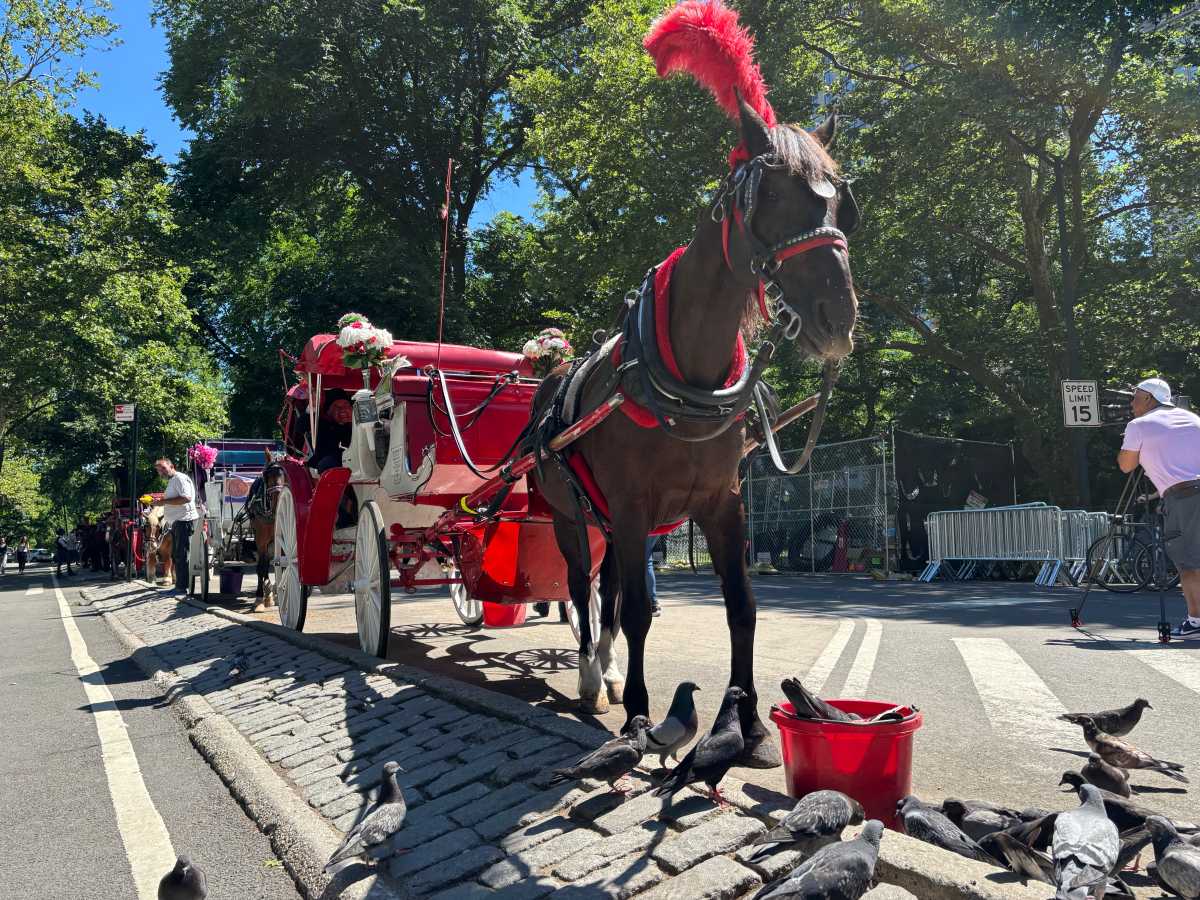
Horse-drawn carriages in Central Park moved much closer to becoming a thing of the past on Tuesday after City Council Speaker Julie Menin announced her support for a proposed ban — saying “neigh” to allowing the more than 100-year-old industry to continue operation.
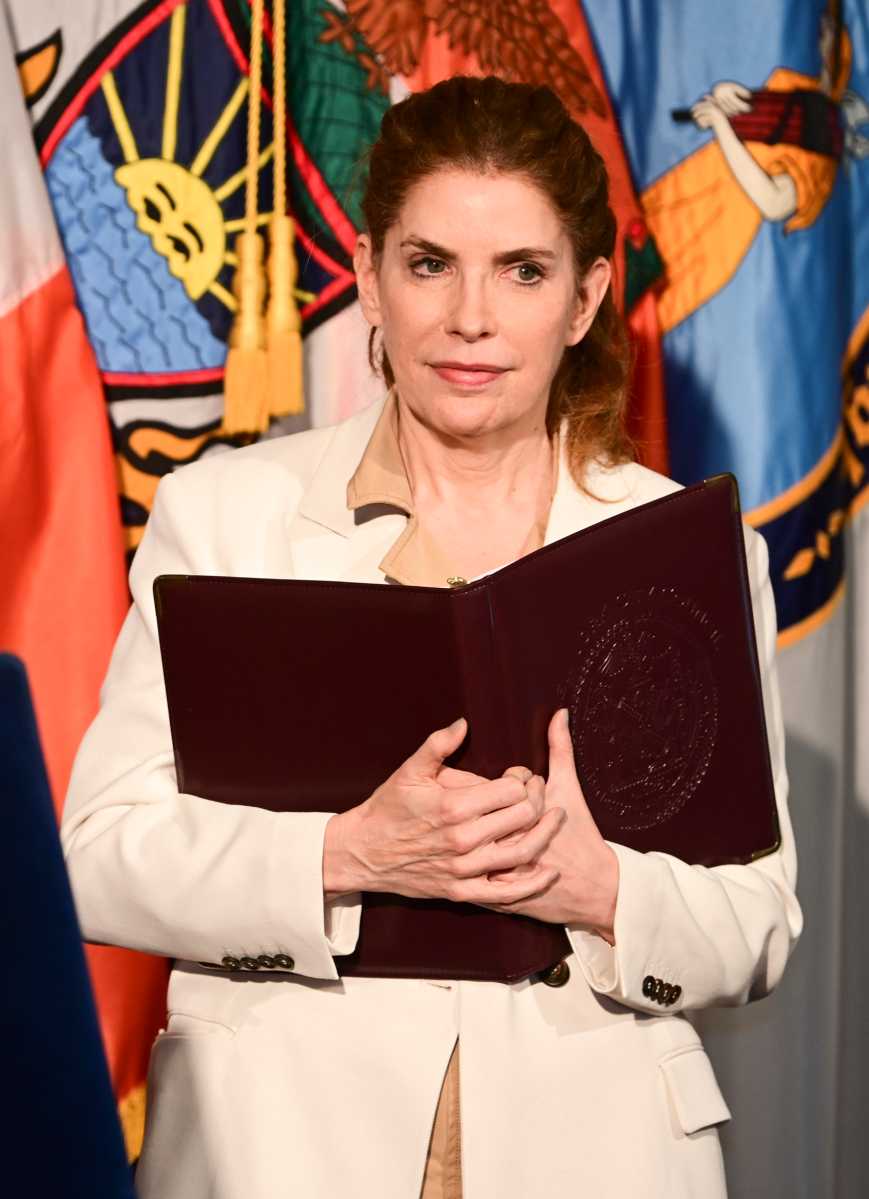
In a July 14 evening statement, the speaker said she is backing Romanch’s Law, legislation to phase out the horse carriage industry that has languished in the council for years. Her announcement comes less than 24 hours before the council’s Health Committee is set to hold a hearing on the measure tomorrow, July 15.
The bill would end the issuance of new carriage horse driver licenses and ban their operation within Central Park. It would also direct the city’s Department of Consumer and Worker Protection to provide a job retraining program for the roughly 150 carriage horse drivers who will be out of work.
Its sponsor, Council Member Christopher Marte (D-Manhattan), recently renamed it after Romanch Mahajan, an 18-year-old tourist from India who was killed last month after being thrown from the carriage of a horse that bolted. Up to that point, it had been known as Ryder’s Law, named for a carriage horse who publicly collapsed on the streets of Manhattan in August 2022 and died months later, after being retired.
“Last month, 18-year-old Romanch Mahajan was killed after he was thrown from a horse-drawn carriage while visiting New York City to celebrate his high school graduation. His death was heartbreaking, and it was preventable,” Menin said in a statement. “That tragedy is why I have decided to support Romanch’s Law, legislation that would begin the transition away from horse-drawn carriages as a tourist attraction in Central Park — for the safety of New Yorkers, visitors from around the world, and the horses themselves.”
 Horse-drawn carriages in Central Park moved much closer to becoming a thing of the past on Tuesday after City Council Speaker Julie Menin announced her support for a proposed ban — saying “neigh” to allowing the more than 100-year-old industry to continue operation.Photo by Lloyd Mitchell
Menin also emphasized that the council has a “responsibility to the hardworking New Yorkers who have built their livelihoods in this industry, and we must ensure they have access to quality employment opportunities, including within New York City’s hospitality and tourism sectors, while also guaranteeing a safe and humane future for the horses.”
Marte, in a statement, thanked Menin for her “support of Romanch’s Law and for her leadership in recognizing the urgency of this moment.”
“Romanch’s death was preventable, and the Speaker’s leadership brings us closer to finally ending an industry that has put passengers, workers, parkgoers, and horses at risk for too long,” he added.
Mahajan’s death appears to be the turning point in the debate within the City Council toward supporting a carriage horse ban, which has failed to gain traction in years past. While there have been numerous dangerous incidents involving carriage horses in recent years, which have seen horses bolt into traffic and collapse, Mahajan’s death marked the first known human fatality to result from the practice.
Legislation to outlaw carriage horses is fiercely opposed by TWU Local 100, the transit workers union that also represents carriage horse owners and, by extension, their drivers, because it would put their members out of work. They have contended that banning horse carriages would not only financially ruin the drivers but also put the horses at risk of being euthanized.
The union has argued that while Mahajan’s death was a tragedy, it is an extreme outlier that has been used by animal rights groups long opposed to the industry to finally end it.
“We all remain shocked and devastated by the tragic death of Romanch Mahajan. This was, however, the first passenger fatality in the 167-year-old industry,” Local 100 Administrative Vice President Alexander Kemp said in a Tuesday letter to the council. “I recognize the pressure Council members are feeling from the phone calls, emails and social media posts by animal rights fundamentalists. They have seized on this unprecedented tragedy to achieve their decades-long goal of banning carriages rides.”
The union has pushed another bill sponsored by Council Member James Gennaro (D-Queens) that would require the city to install hitching posts throughout the park to prevent horses from bolting, which they say serves as an alternative to ending the industry altogether. The legislation also calls for beefing up carriage driver training and city inspections to ensure they are following the rules.
“Instead of rushing to discard workers’ livelihoods and an age-old New York tradition, I urge the City Council to pause efforts to ban this industry, which would cause so much collateral damage,” Kemp wrote in the letter. “The Council can instead govern and enact new safety measures, including enhanced driver training, tougher driver exams, and installation of hitching posts.”
Meanwhile, Mayor Zohran Mamdani said on Tuesday that while he supports banning horse carriages, he does not think Marte’s bill does enough to help carriage drivers.
“We support the spirit of the bill,” Mamdani said. “We are, however, critical of the insufficiencies of the worker protections, and we look forward to working with the Council to address those concerns.”
With reporting from Adam Daly.