
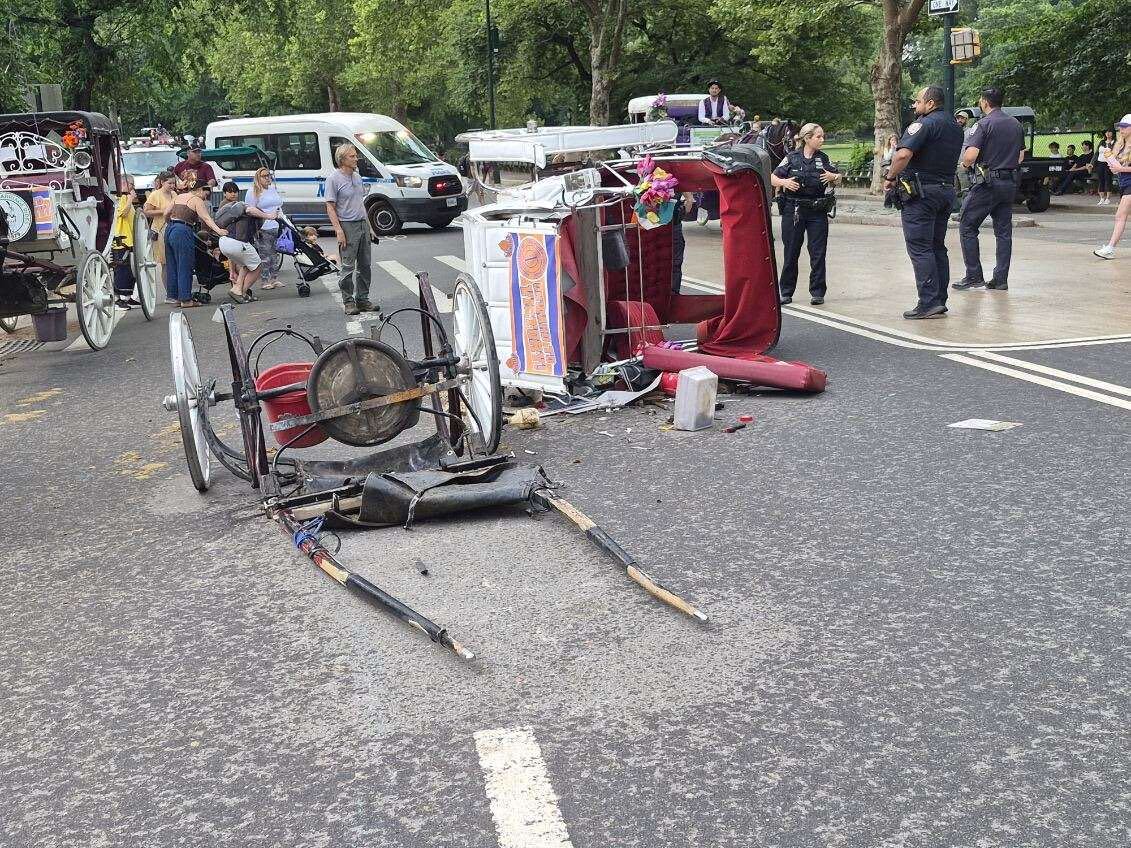
It was also a battle between past and present, of whether the charms of a carriage horse ride through Central Park could continue in the age of the automobile, and in spite of the many high-profile incidents of horses collapsing, bolting or colliding with objects while on the job.
The industry has survived such incidents before, making promises to do better and implementing changes to better protect horses on duty. Transport Workers Union (TWU) Local 100, which represents the horse carriage drivers and owners, has pushed for more legislation to further increase regulations and scrutiny to ensure safer operation now and in the future.
But the June 17 horse carriage crash in Central Park, which claimed the life of Romanch Mahajan, an 18-year-old tourist from India, thrown from the carriage he was riding in by a bolting horse, was the turning point in the debate.
Video of the incident showed the driver of the carriage inexplicably out of the hansom cab, taking a picture of the riders when the unhitched horse made a run for it.
It was evidence that further regulation and enforcement of the horse carriage industry to ensure full compliance is needed. It was a senseless, irresponsible tragedy that could have been very easily prevented.
The City Council quickly moved to reintroduce a bill to outlaw the horse carriage industry. Rebranded “Romanch’s Law” in memory of the victim, the bill is due to soon come for a vote — and with City Council Speaker Julie Menin now in support of it.
Meanwhile, City Council Member James Gennaro has introduced an alternative bill that would impose an array of new regulations and restrictions on the horse carriage industry, including mandating hitching posts around the park for horses to be tied at times when stopped.
We think that the City Council ought to seriously consider giving Gennaro’s bill a shot, as a one-last-chance measure for the horse carriage industry. At the same time, we also believe the Council should simultaneously test an idea previously pitched in the horse carriage debate: replacing horse-drawn rides with electric replicas of classic vehicles to chauffeur tourists through the park.
If proven successful, the city’s Taxi and Limousine Commission could sell medallions for its operation, with discounts and low-interest loans offered to the carriage drivers. This could also help ease an eventual transition from the horse carriage industry to electric vehicles.
Safety and enforcement must be the path forward for the horse carriage industry if they wish to avoid an all-out ban. It is now up to that industry to “take the reins” and prove they are capable of solving this safety crisis and abiding by the regulations to the letter — or risk riding off into the history books.