
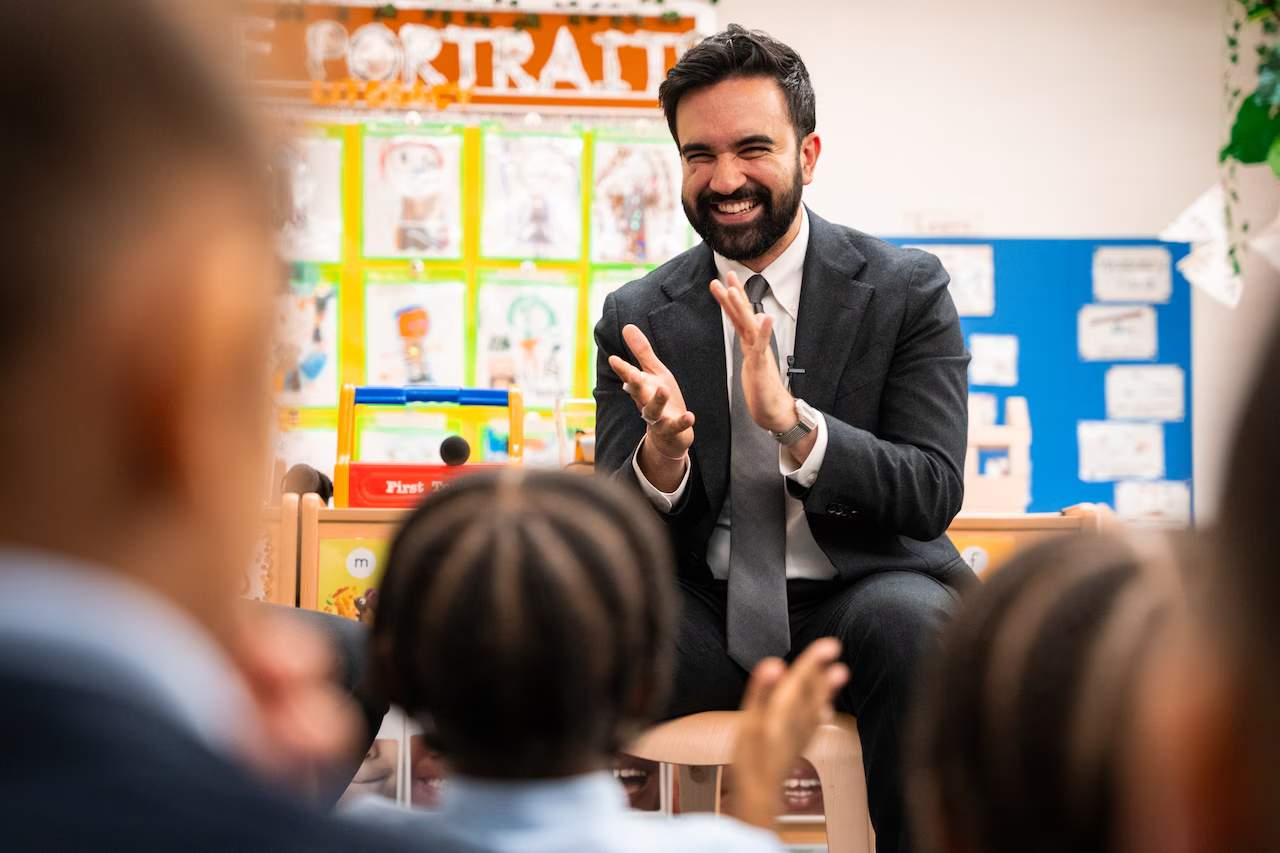
STATEN ISLAND, N.Y. — New York City will bring specialized education programs to preschool classrooms for the first time this fall, extending services that have been available to older students to younger children with disabilities.
Mayor Zohran Mamdani and Schools Chancellor Kamar Samuels announced the expansion during a press conference in Inwood on Tuesday. The initiative will place the city’s Nest, Horizon, AIMS, Path and ACES programs in 14 school districts, including Staten Island’s District 31.
The $67.5 million investment, included in the Fiscal Year 2027 Executive Budget, aims to give young children access to specialized instruction closer to their homes. The programs will serve children with autism and other disabilities, with instruction designed to strengthen both academic and social development.
“Children with disabilities should not be forced to travel across the city just to get the education they deserve,” Mamdani said. “That’s why we’re bringing those classrooms closer to home and taking another critical step toward making Pre-K truly universal.”
Programs will open at more than 30 schools, including PS 54 in Willowbrook. As of the 2024-2025 academic year, the school served 681 students.
Other schools include PS 42 in Manhattan’s District 2, PS 212 in Brooklyn’s District 21, and PS 6 in the Bronx’s District 12.
“For the first time, we’re giving young children with autism and other disabilities the same high-quality, specialized instruction that has delivered real results for our older students,” Samuels said.
The expansion includes significant staffing increases to address long-standing challenges in the special education system, with plans to hire hundreds of new staff members to assist with evaluations and assessments.
The investment also adds 35 new professionals across 10 additional Preschool Regional Assessment Centers, including psychologists, social workers, speech evaluators and occupational therapists.
The Special Education Itinerant Teacher program will also place special education teachers in general education preschool classrooms to help children with Individualized Education Programs learn alongside their peers. An additional 29 therapists and specialists will also support children in community-based 3-K and Pre-K programs.