
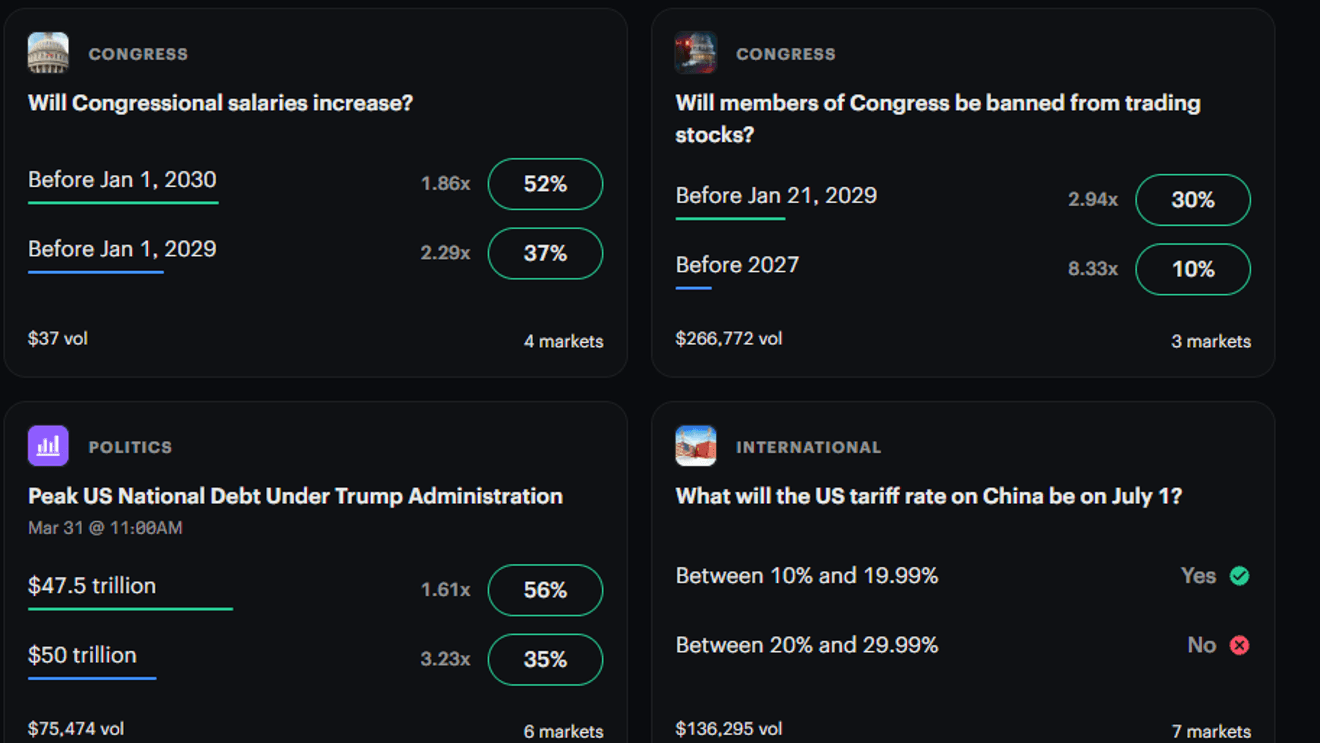
A federal judge’s ruling on July 8 cleared the way for New York to enforce its gambling laws against Kalshi, an online prediction market where users bet money on outcomes tied to real-world events such as sports, elections, and pop culture.
The decision rejected Kalshi’s lawsuit arguing that federal regulators — not New York — have authority over its sports prediction markets. The ruling also denied Kalshi’s request to block the state from enforcing its gambling laws against the app, leaving the company’s future in New York dependent on whether it complies with state gambling regulations.
State Assemblymember Carrie Woerner, a Democrat representing the 113th District, praised state officials for taking action.
“I very much appreciate the attorney general’s leadership on pursuing action against the prediction market companies that are operating in our state,” Woerner said. She added, “They are unregulated under state law and really not, I think, need to not operate in New York.”
The New York Gaming Commission declined to comment beyond referring questions to the governor and attorney general.
“We defer to the Governor and Attorney General’s statement,” the commission said.
In that statement, the governor and attorney general said, “New York’s gambling laws are designed to protect consumers. Kalshi tried to ignore them. They lost in court.”
The statement added, “We will continue to hold all gambling platforms accountable to the law — and that includes prediction markets.”
The ruling and Kalshi’s business model have drawn concern from lawmakers and the New York State Council on Problem Gambling, which says the platform’s reach could expand gambling access to new audiences.
“The fact that this involves pop culture, it involves politics, it involves sports betting — we certainly see that it is reaching a wider audience,” said Michelle Hadden, executive director of the New York State Council on Problem Gambling.
Hadden also raised concerns about age limits, noting that Kalshi’s minimum age requirement is 18, while New York’s legalized mobile sports betting requires users to be 21.
“We have concerns, obviously, about the minimum age requirement only being 18, where in mobile sports betting that’s legalized here in New York, the minimum age is 21,” she said.
Hadden said the accessibility of prediction market apps can make it harder for people with gambling addictions to avoid betting.
“That ability to roll over and make a bet in the middle of the night, to not have to leave your home to be able to do it for one cent or 99 cents — it just broadens the ability for people to get engaged in the activity in the first place. And once we have engagement and accessibility, we oftentimes see that there are going to be more problems,” she said.
Woerner said Kalshi’s next step, if it wants to continue operating in New York, is to seek state approval.
“That option is open to them, and they need to take that option. But if they’re not going to take that option, they can’t operate in New York state,” she said.
Kalshi has not announced whether it plans to apply for a license in New York. Lawmakers say that if the company wants to continue operating in the state, it will have to follow the same rules designed to regulate gambling platforms and protect consumers.