
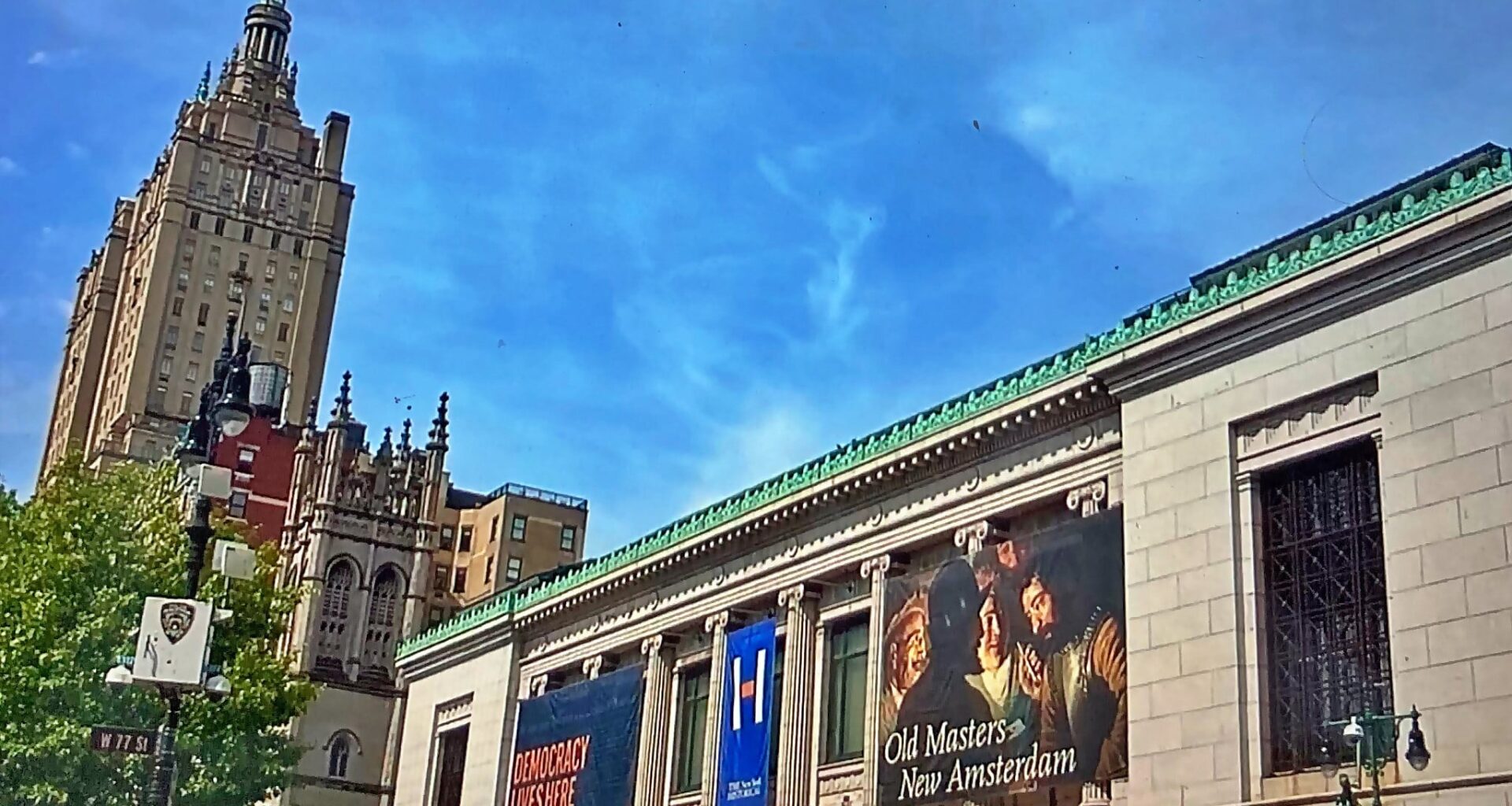
OLD MASTERS, NEW AMSTERDAM Exhibition Review at The New York Historical
Engaging concept and vision
Celebrations of the 250th anniversary of the USA have been carried on widely and at many levels this year, with a varying degree of success, interest among the public, taste and quality standards.
But one exhibition among these special events, concerts and fairs certainly stands on its own, both due to its concept by the organizers and vision of its curators, and the quality of art it presents to the public.
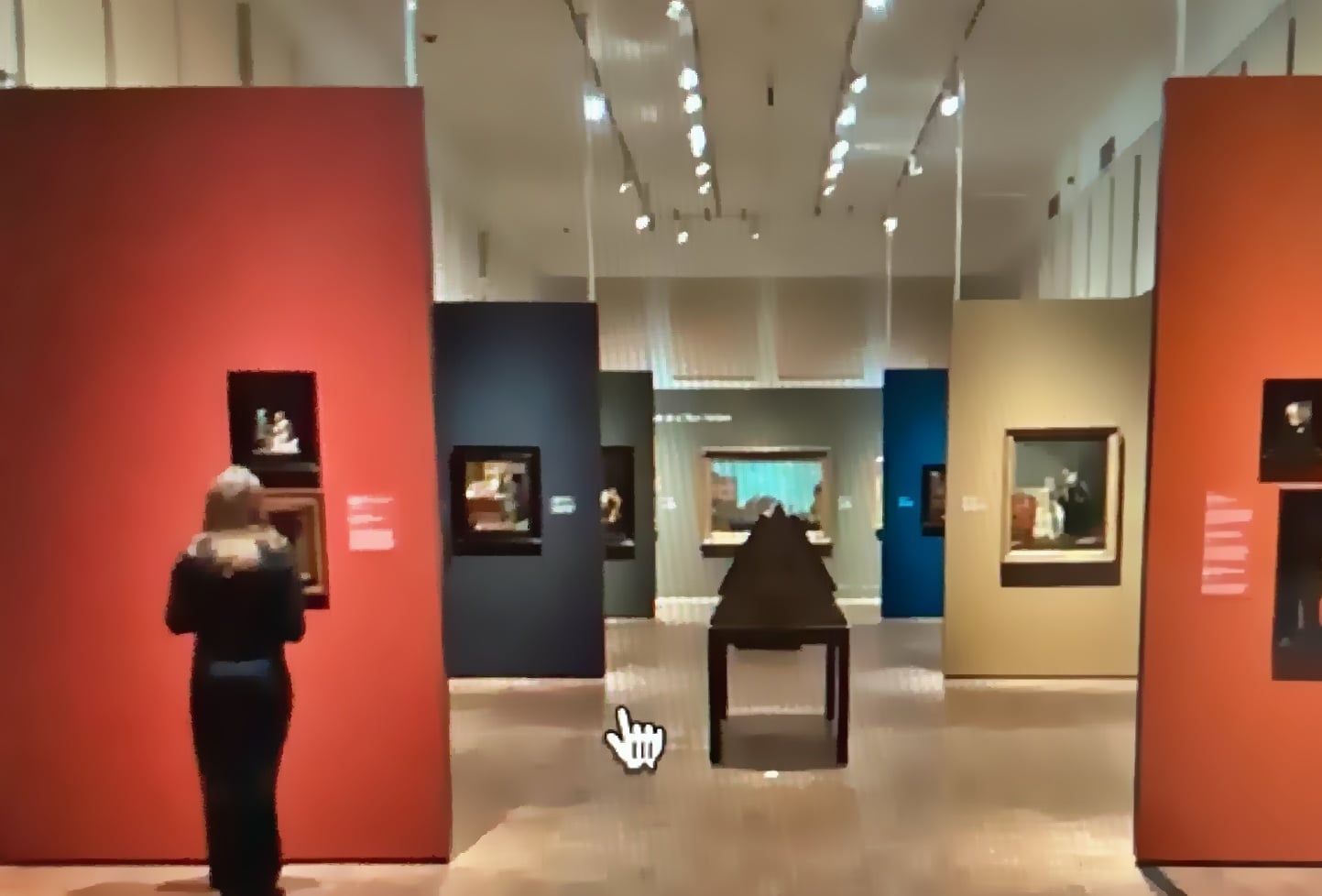
Old Masters, New Amsterdam exhibition at The New York Historical. Summer 2026. Courtesy: The York Historical. With kind permission.
Old Masters, New Amsterdam exhibition at the New Historical New York (on display until August 30th, 2026 ) was elaborated with a special intellectual twist which paid off in full measure, and enriched the exhibition essentially. That twist was a simple but fundamental historical fact of the timing and circumstances of the first settlers who came to the place known as Manhattan Island 150 years before the USA was founded as a sovereign territory on July 4th, 1776, and later on as a country with the US Constitution adopted 12 years later.
Those first settlers and pioneering colonists were the people from the Netherlands. Supported by the mighty player of the day, the West Indian Dutch company, these people who were obviously looking for an adventure but at the same time were motivated by the powerful stimulus of developing unprecedented trade routes and establishing permanent trade posts in the New World, landed at the nearby area in 1624, and in two years, after successful negotiations with the indigenous Lenape tribe that had been original inhabitants of Manhattan , had acquired the place and settled there. The Dutch settlers named their new permanent trading point at the southern tip of Manhattan New Amsterdam. They were living at the place for 40 years, until the English military fleet had seized the island in 1664 renaming an already well-developed spot as New York.
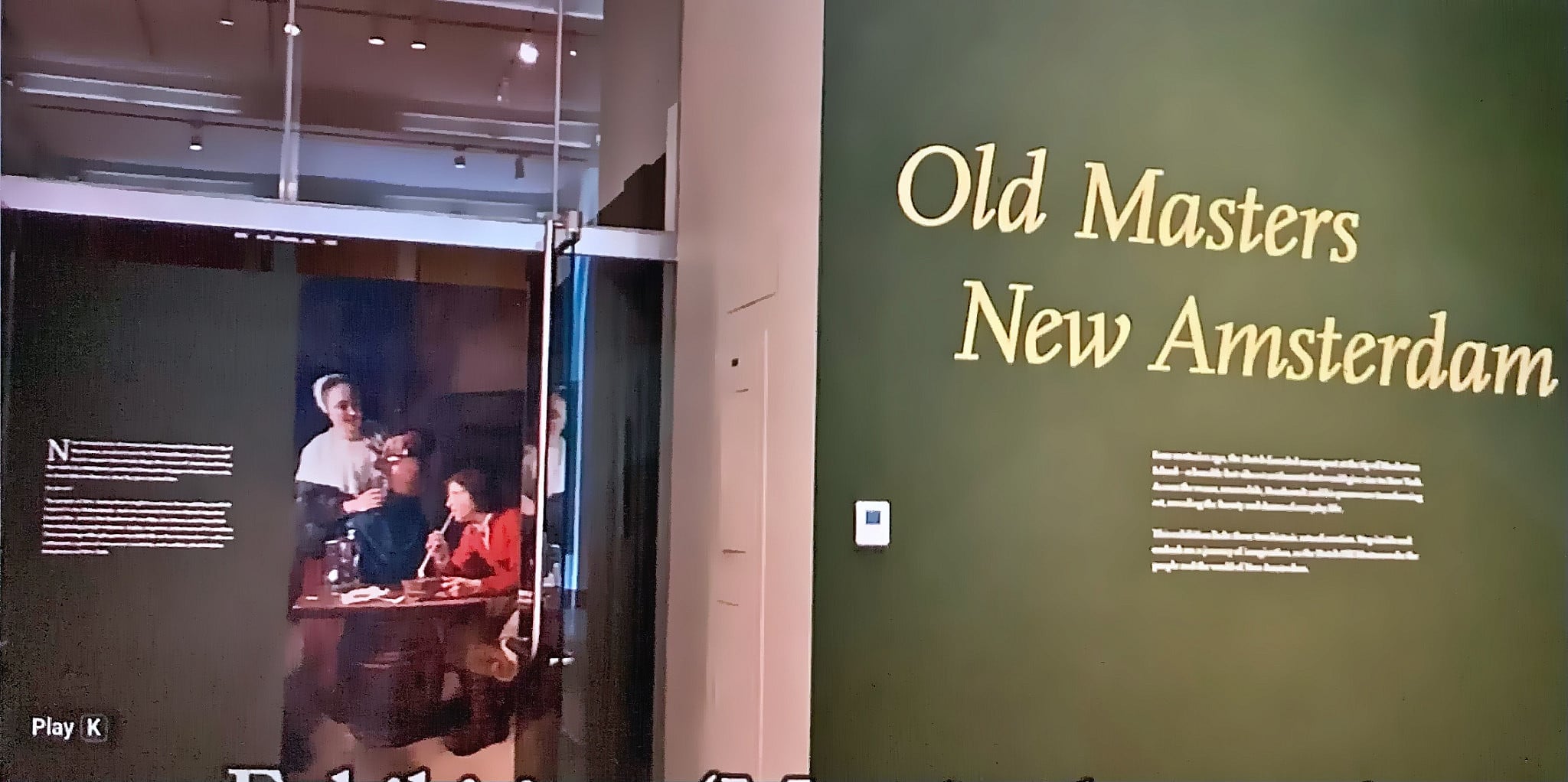
Old Masters, New Amsterdam exhibition. The New York Historical. Summer 2026. Courtesy (C) The New York Historical. With kind permission.
The current Old Masters, New Amsterdam, a truly rare in its approach and quality and exceptionally well-researched exhibition at The New York Historical addresses that initial stage of existence of what is known now as New York, the most vibrant city of the United States, a legendary place in generations, for so many for many different reasons.
The exhibition has its two main lines: the life of the Dutch settlers, the first Europeans at the Northern part of the American continent as it was reflected in an outstanding art of the period, the period of Rembrandt and his contemporaries, and an anthropological vision of the first settling of New Amsterdam before it has become New Work. Those two lines have been brilliantly curated by two masters in their correspondent fields: Arthur K. Wheelock, the Senior Advisor for The Leiden Collection who was responsible for a mighty presence of the brilliant art of the period at the exhibition from this rare collection, and well-known historian Russel Shorto, director of The New Amsterdam Project within The New York Historical.
Following my ongoing work on the Rembrandt Today Project, I concentrate on the artistic line of the very impressive exhibition in this review.
Inter-connection of art and life in a Rembrandt-period Netherlands
The most characteristic trend of life in the Netherlands of the 17th century was the mass consumption of art in the way in which it was felt by people at the time and place as a natural part of their life and environment. This was the phenomenon that has prompted an unprecedented blossoming and development of art as a pattern of life in the Netherlands in the 17th century.
The phenomenon was a two-way development as it is happened in these cases: while the habits, aspirations, interests and market for art has been rocketing in the Netherlands at the time, prompted by the wide general desire to have as many paintings in one’s house as possible, that unprecedented, giant stimulus of massive art consumption had not devalued the quality of art produced by many outstanding masters in a large quantities. Instead, it had become the criteria for excellence in art, prompted by high and intense competition between the great artists, and their natural desire to demonstrate their craft and skills in the atmosphere of intense competitiveness. The last phenomenon was also known for the masters of the Italian school in a previous period of Renaissance when the number of almost genius artists had exploded at the same period of time.
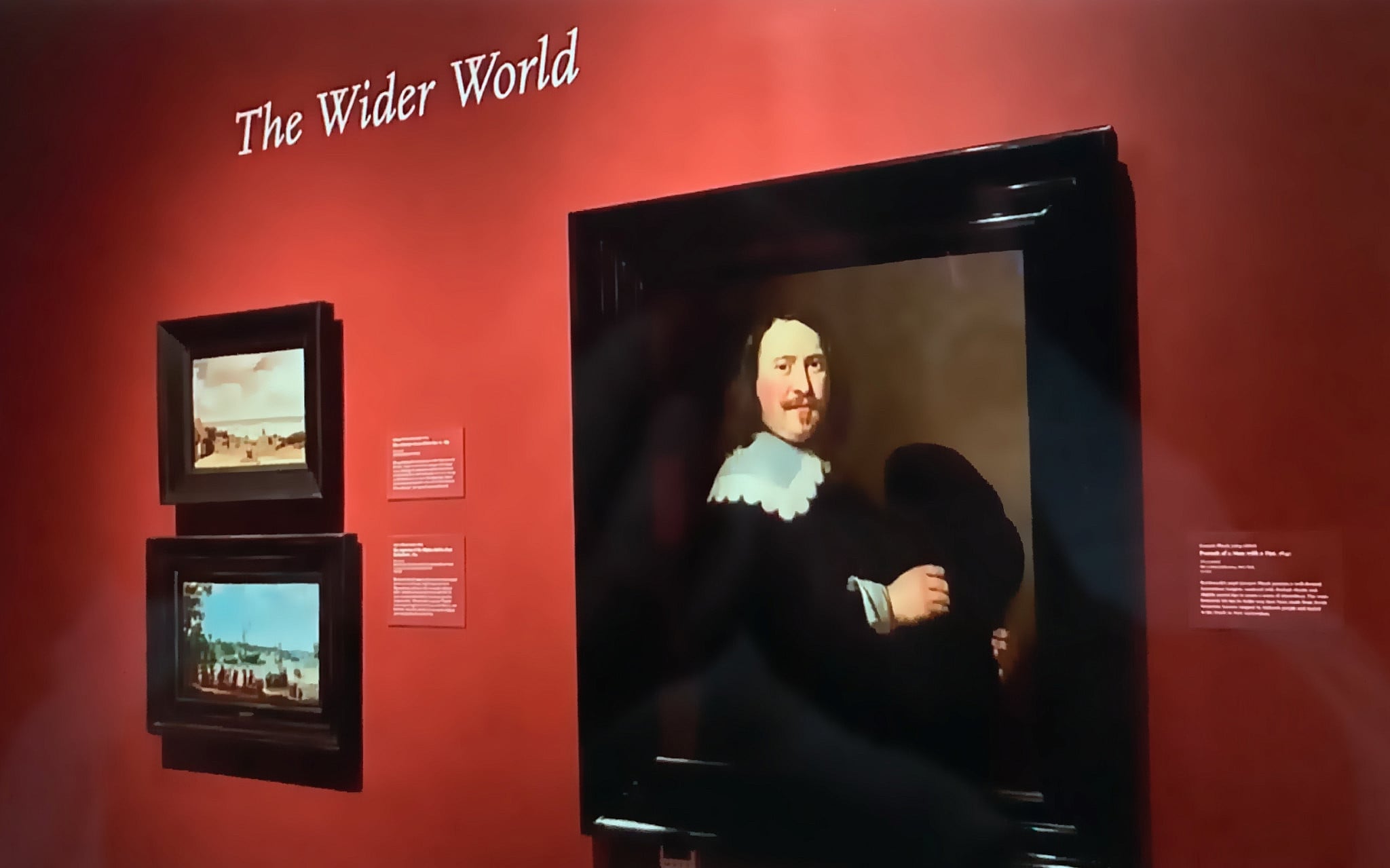
Old Masters, New Amsterdam exhibition. The New York Historical. Summer 2026. Courtesy (C) The New York Historcial. With kind permission.
In a difference with Italy, the phenomenon of the art as a natural pattern of life was unique in the Netherlands, due to the fact that in the country, with its specific architecture and way of housing and living habits, the art works were covered the walls of the houses, sometime from ceiling to floor and back, not in the cases of aristocracy and rulers, but at the level of a middle-class and even below it. Art was as naturally required part of life in the 17th century Netherlands as furniture, and more.
Would Rembrandt, his contemporaries in art and his many pupils become the masters as we know them without this formatting circumstance in their lives? He himself most likely yes, because he was infused with a super-natural talent and vision which still be as fresh, deep and ultimate as it could be in an immediate post-Renaissance and throughout 18th and a half of the 19th centuries as well. But for the other great artists who were living at his time and many of his pupils, the fact of the perception and role of art in the life of the wide Dutch society had been the factor of a primary influence.
The interconnection between art and life in the 17th century Netherlands borne another special phenomenon, a very widely spread in the masterpieces of the Northern Baroque themes of a daily life: food, markets, a variety of leisure at people’s homes, from writing letters and reading books to music and art lessons, conversations, things mundane, such a haircut or trying new dresses or footwear. Covering their houses with art pieces in huge quantities, people were keen to see such vivid scenes on their walls. The whole speedily developed direction of genre scenes as a pattern of art was the direct consequence of public demand. It has enriched world art with gems of Vermeer, Dou, Lievens, Mieris brothers’ and many other their contemporaries throughout the 17th century.
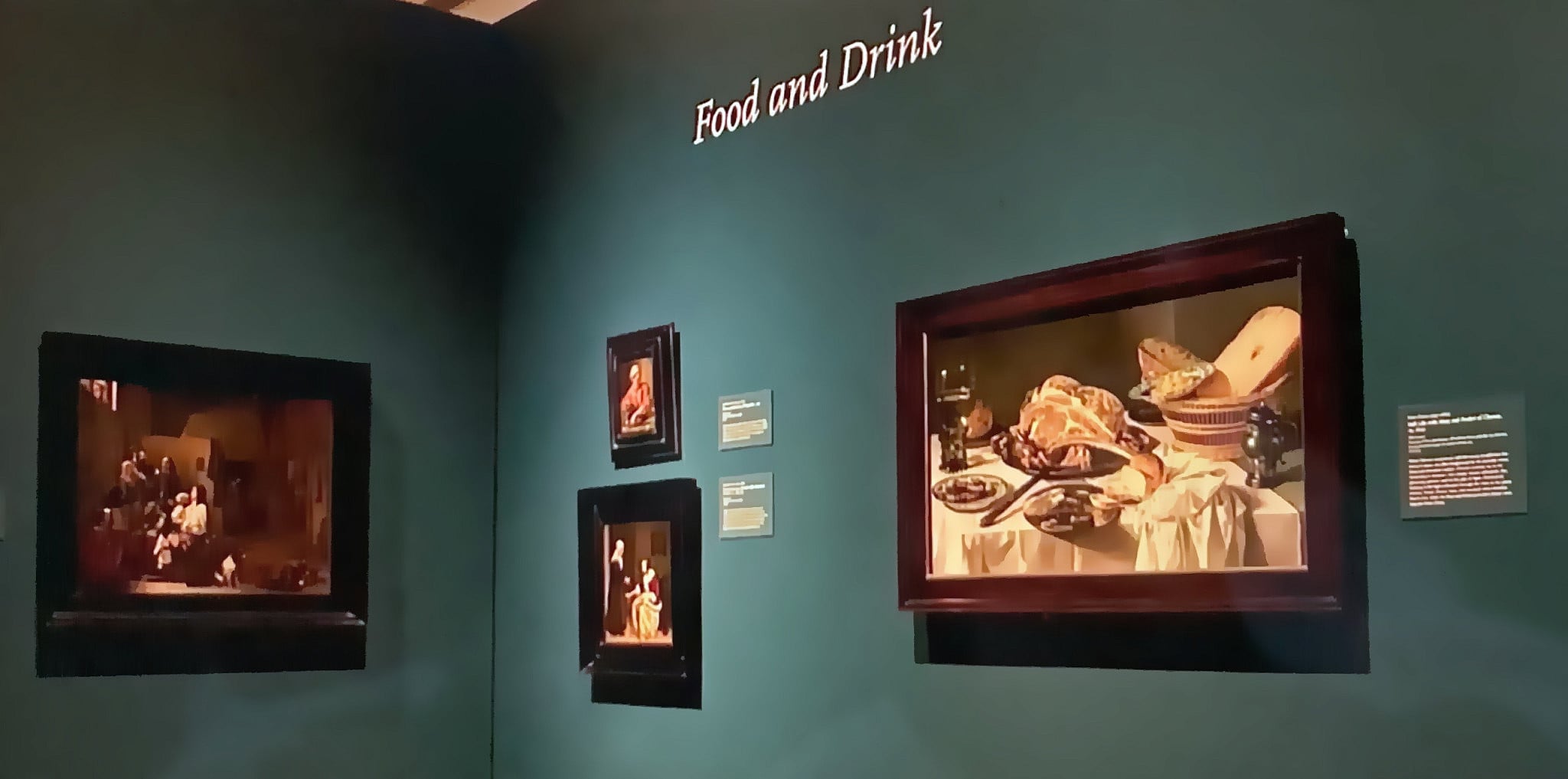
Old Masters, New Amsterdam exhibition at The New York Historical. Summer 2026. Courtesy (C) The New York Historical. With kind permission.
Unprecedented presence of Rembrandt and his contemporaries in New York
Besides being an interesting, unusual, well-thought-of, and highly intellectual exhibition of a superb quality, the Old Masters, New Amsterdam at The New York Historical champions an unprecedented presence of Rembrandt and his contemporaries at one exhibition in New York.
Another amazing fact of the exhibition in which many famous American art and culture institutions participated in a joined efforts , including the National Gallery of Art in Washington, DC, Museum of Fine Arts in Boston, and the Virginia Museum of Fine Arts, as many of 45 out of 60 presented paintings by the old masters did come from one institution, The Leiden Collection.
The Leiden Collection has the largest privately owned collection of Rembrandt in the world, with 19 of his works and 8 attributed to his school present there, and an outstanding collection of the over 170 incredible works of more than 50 of his contemporaries and pupils.
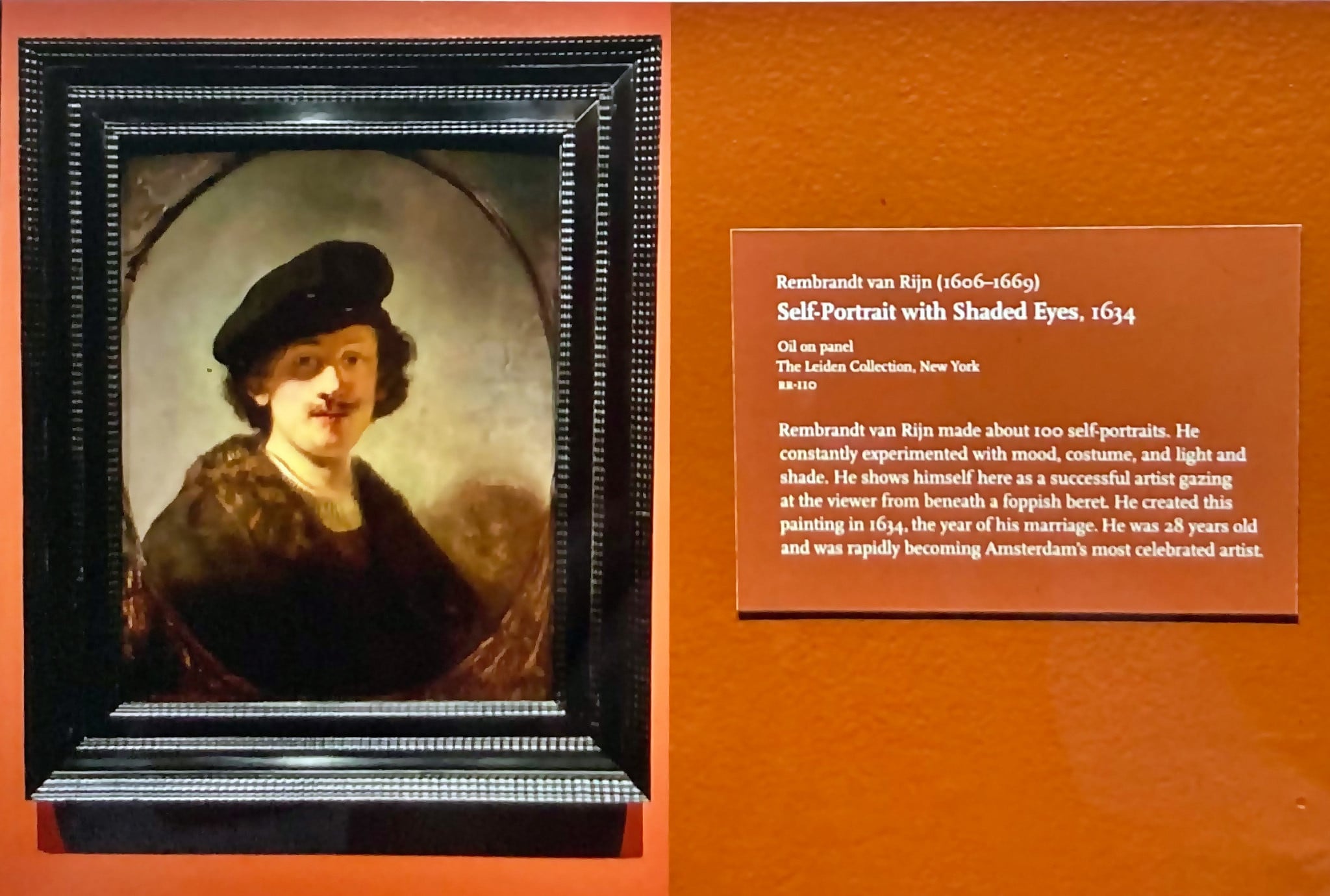
Rembrandt van Rijn. Self-Portrait with Shaded Eyes ( 1634) at the Old Masters, New Amsterdam exhibition at The New York Historical. Summer 2026. The Leiden Collection. With kind permission.
The Leiden Collection is an unique artistic, cultural and educational institution led by a well-known philanthropist and outstanding art collector Thomas S. Kaplan and his wife Dafna Recanati-Kaplan. The institution differs from many private collections by their credo, the vision of their mission, and their activities. They share their incredible cultural treasures with people and institutions in different countries, from France and the Netherlands to the leading museums on American soil. In several of my reviews, I have analyzed and described their ongoing effort in detail. At the exhibition, such indisputable treasure as Godfrey Kneller’s Scholar in His Study can be seen by the wide public to everyone’s delight.
In the premises of The New York Historical, The Leiden Collection not only participated in the leading role by loaning as many of 45 priceless artworks to the exhibition celebrating the 250th anniversary of the country putting it into the context from the 400-year historical perspective , but also curated its artistic content in a whole.
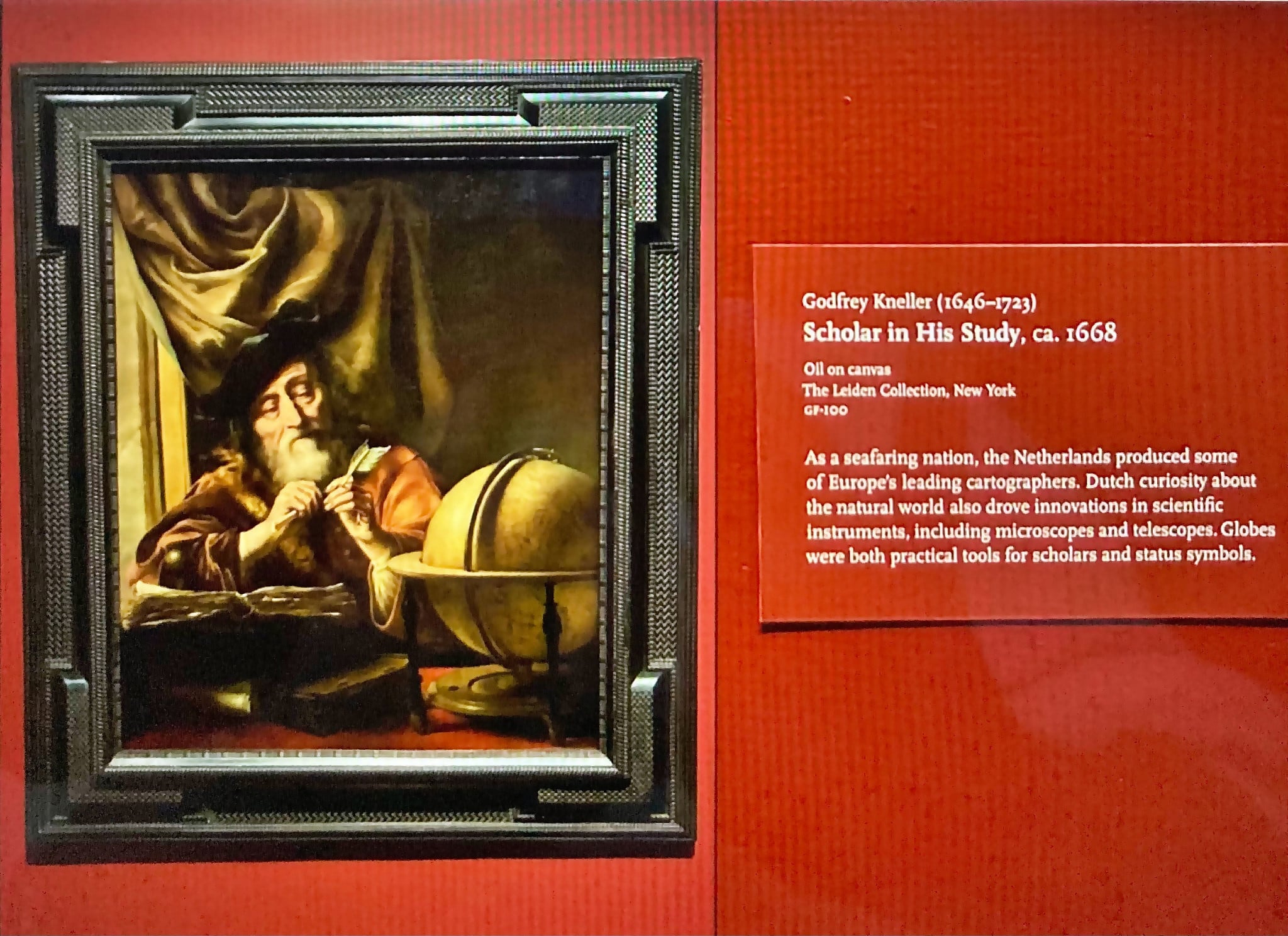
Godrey Kneller. Scholar in His Study ( ca 1668 ) at the Old Masters, New Amsterdam exhibition at The New York Historical. Summer 2026. The Leiden Collection. With kind permission.
In the vision brought in by a legendary Arthur K. Wheelock, the world’s top authority on Vermeer, and the head of the Northern Baroque at the National Gallery of Art for over 40 years, before becoming the senior adviser to The Leiden Collection.
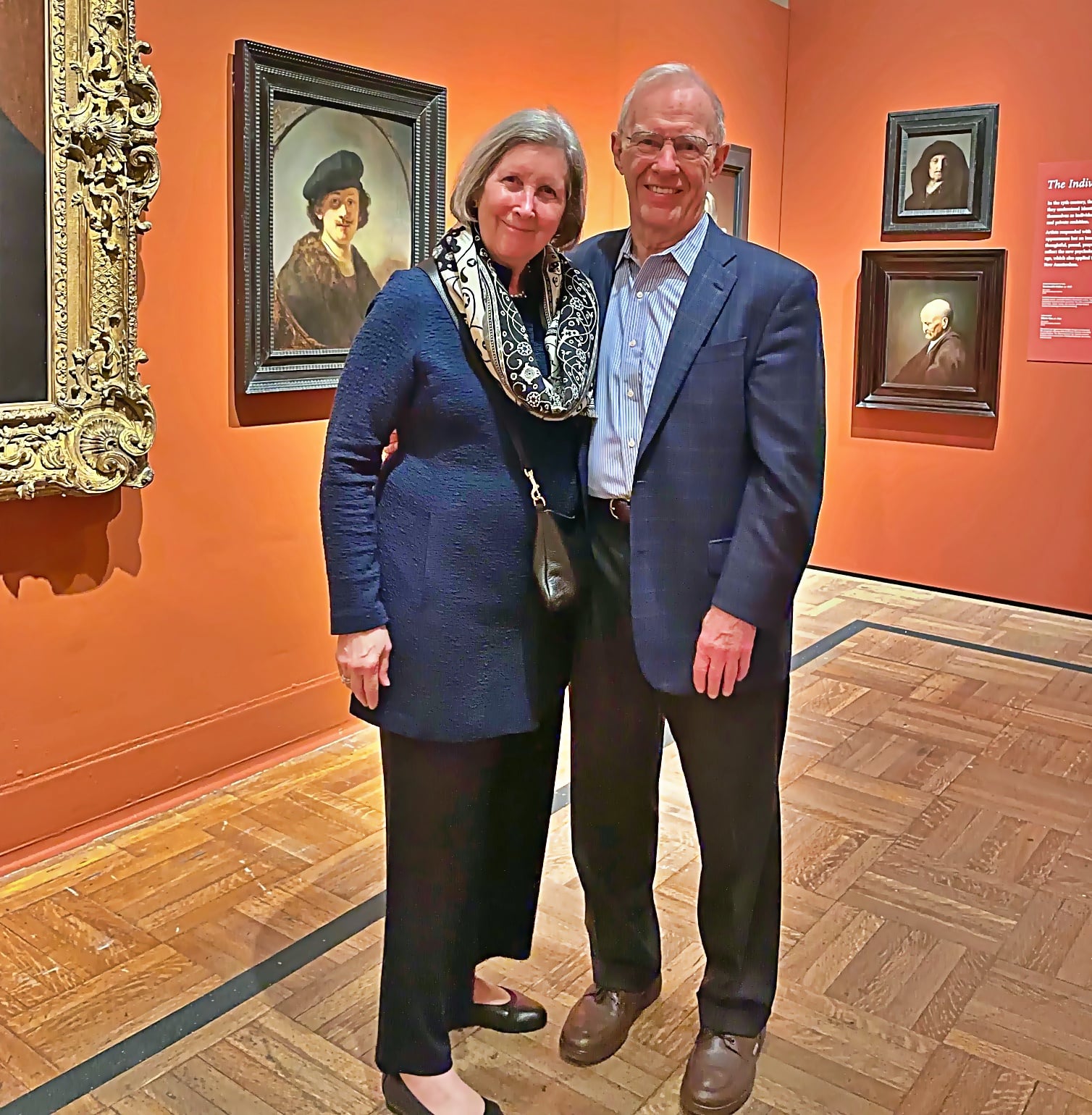
Senior Adviser to The Leiden Collection, co-curator of the Old Masters, New Amsterdam exhibition Arthur K. Wheelock Jr. with his wife Perry at the exhibition at The New York Historical. Courtesy (C) Arthur K. Wheelock Jr. With kind permission.
In his curatorial vision for the Old Masters, New Amsterdam that Dr Wheelock kindly shared with me, he laid out the ideas behind an unusual presentation of the art there: “ We are speaking and showing, for the first time in New York, at such central, well-known and highly respected place as The New York Historical, the story of the first pioneers who landed here near Manhattan four centuries ago. Who were those people? How did they look? What were they wearing? What were their manners, the way and style of life? What was their main motivation in such a risky and full of unknown enterprise as crossing the ocean from Europe to a place largely unknown for the first time ever, to settle and live there? That motivation was undoubtedly a new horizon , in a wider and more metaphorical meaning of the term.
But then they came and started to settle here, and we are very lucky that thanks to the scope of genres in The Leiden Collection, we are able to show, importantly, via the authentic works of art that had been created by the contemporaries of those people four centuries ago, by hand, no virtuality there, so many sides of their lives here. Starting from their homes, what did they look like? Their leisure, what they were interested in doing? Their work and their habits, their food and their drinks, with those magnificent Old Dutch School still-lives. We also were able to show those people themselves as individuals, via their portraits which, as you know, are truly outstanding and world-famous in The Leiden Collection.
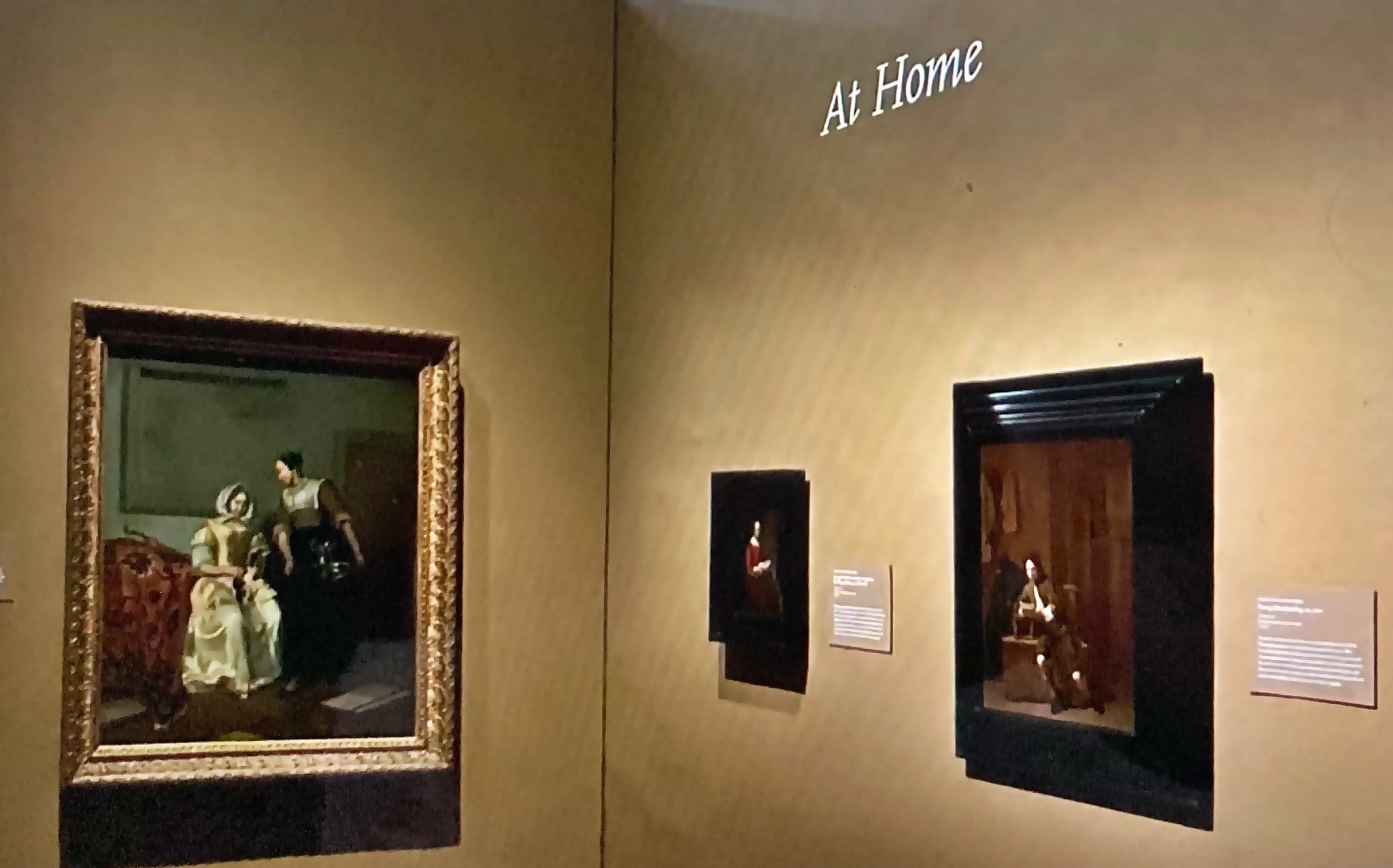
Old Masters, New Amsterdam exhibition at The New York Historical. Summer 2026. Courtesy (C) The York Historical. With kind permission.
From those thematic segments, in each of which the gems of the collection are shining, we were able to reconstruct, to a rather comprehensible degree, the panorama of life of those people who came here with all enormous difficulties from the Netherlands four hundred years ago, and have settled here on Manhattan a hundred and fifty years before the adoption of the Declaration of the US Independence and 162 years before the acceptance of the American Constitution.
Those settlers, whom we were able to show in their faces, their expressions, their work and leisure, and their way of life, have also brought with them the European culture here to the Manhattan Island and in a wider meaning, to the American soil four hundred years ago, in the acts of the real pioneers in this respect, for sure. This was the beginning of the formation of American life , and thanks to these unique works of art, we know and can see what it did look like, sometimes in a small and telling detail.
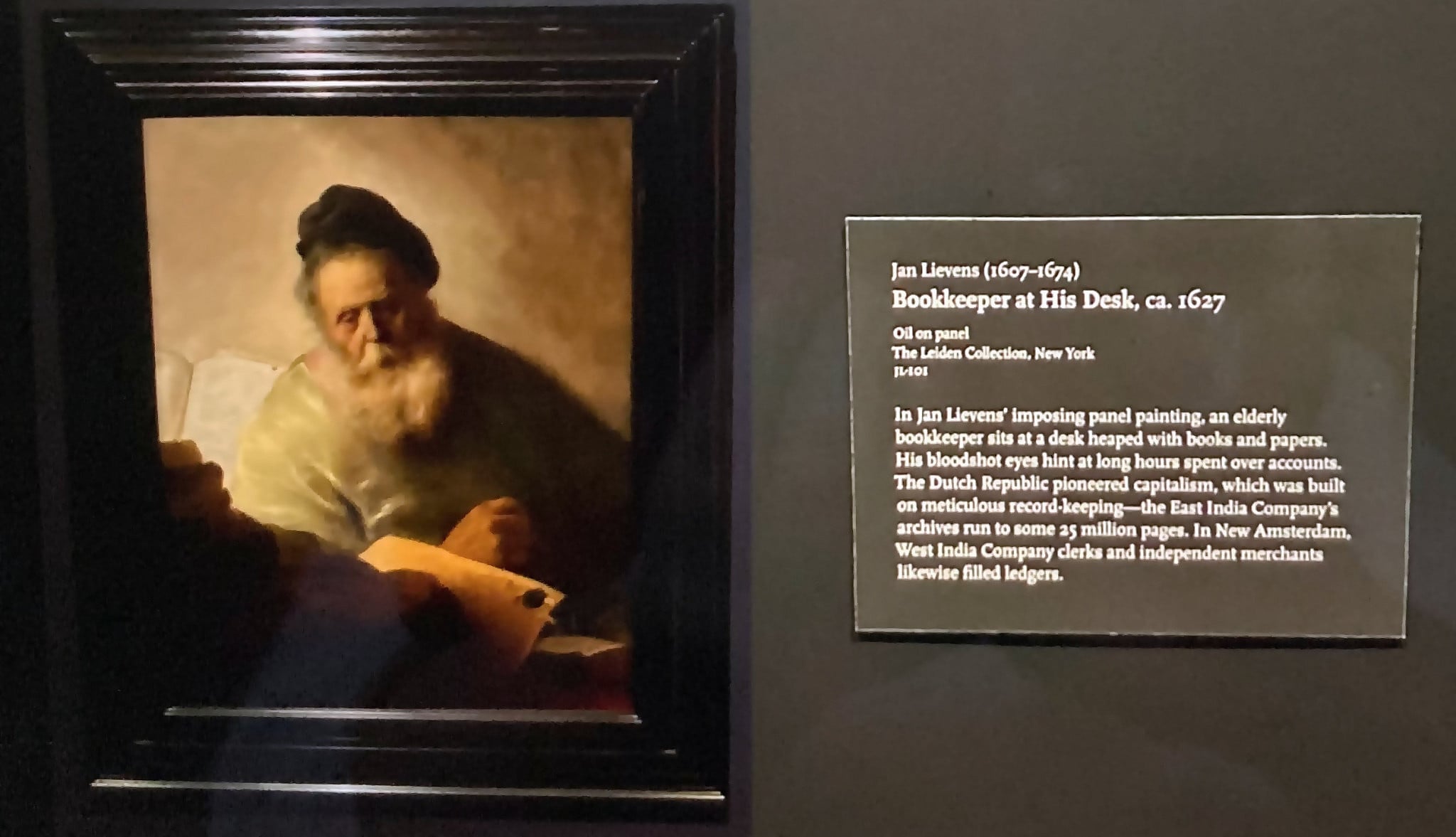
Jan Lievens. Bookkeper at His Desk (ca. 1627) at the Old Masters, new Amsterdam exhibition at The New York Historical. Summer 2026. The Leiden Collection. With kind permission.
From this point of view, the Old Masters, New Amsterdam is not only an artistic journey from the very roots of the future American society, but it is also the important educational survey to the very beginning of the American life, for which I am very grateful to my colleague curator , highly respected historian Russel Shorto and to the organisers, the leadership and the team of the New York Historical. I can add that we at The Leiden Collection are very happy to be able to contribute to the celebration of the mile-stone of the 250th anniversary of our great country in this way, with the largest collection of the Old Masters from The Leiden Collection shown in New York to the date”.
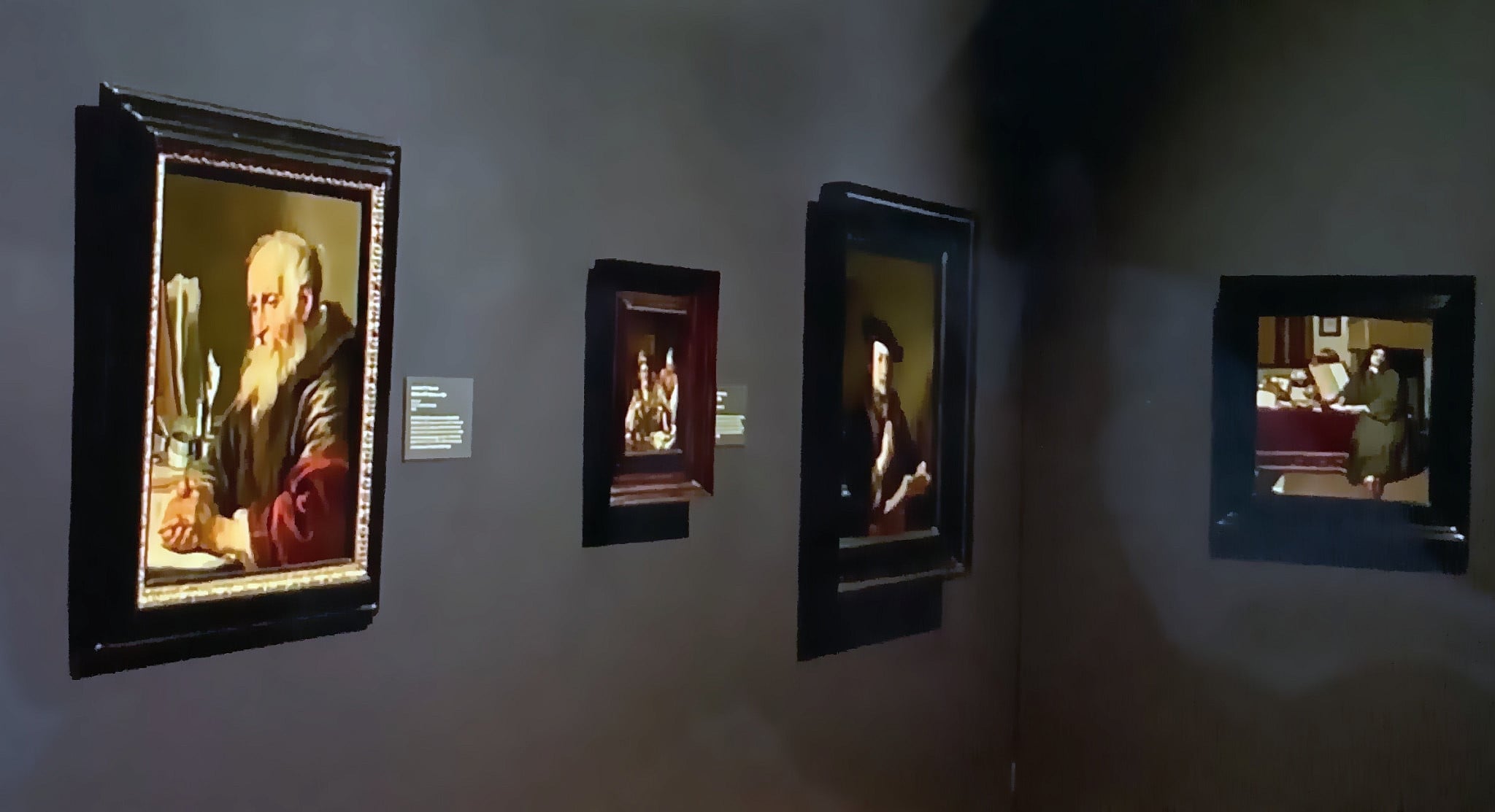
Old Masters, New Amsterdam exhibition at The New York Historical. Summer 2026. Courtesy (C) The new York Historical. With kind permission.
Extremely well-done in the matter of its architecture and the way of presentation unique exhibition in the heart of New York during the entire summer 2026, indeed brings the rare nowadays sense of authenticity throughout its story about the people who came there four hundred years ago from Europe and whose life and faces we are able to see today from the extraordinary works by the Old Masters, including Rembrandt himself, thus encompassing the time and bringing the sense of an unique time-journey in the halls of the famous building of The New York Historical in the middle of the New York down-town. This is a superb and fine gift of civility and also a long-lasting contribution to it.
Old Masters, New Amsterdam exhibition. The New York Historical, New York, until August 30th, 2026.
July 2026
New York
Inna is internationally acclaimed public figure, writer, scholar, artist, art historian, curator and film-maker, the author of widely prized film on Simon Wiesenthal: The Lessons of Survival and other important documentaries on modern history. Inna Rogatchi is author of War & Humanity and co-author of POST-HARMONY special projects originated in the aftermath of the October 7th, 2023 massacre in Israel. She is an expert on public diplomacy and was a long-term international affairs adviser for the Members of the European Parliament. She lectures on the topics of international politics and public diplomacy widely. Her professional trade-mark is inter-weave of history, arts, culture, psychology and human behaviour. She is the author of the concept of the Outreach to Humanity cultural and educational projects conducted internationally by The Rogatchi Foundation of which Inna is the co-founder and President. She is also the author of Culture for Humanity concept of The Rogatchi Foundation global initiative that aims to provide psychological comfort to people by the means of high-class arts and culture in challenging times and situations. Inna is the wife of the world renowned artist Michael Rogatchi. Her family is closely related to the famous Mahler-Rose musical dynasty. Together with her husband, Inna is a founding member of Music, Art and Memory, M.A.M. international cultural educational and commemorative initiative which runs various multi-disciplinary projects in several countries. Inna and Michael Rogatchi have been also founding members of the European Leonardo Art, Science & Humanity cultural and educational network ( Italy). Her professional interests are focused on Jewish heritage, arts and culture, commemorative art and education, history, Holocaust and post-Holocaust, October 7th and post-October 7th challenges. She is author of many projects of the commemorative art, and of several projects on artistic and intellectual studies on various aspect of the Torah and Jewish spiritual heritage. She is twice laureate of the Italian Il Volo di Pegaso Italian National Art, Literature and Music Award, the Patmos Solidarity Award, the New York Jewish Children’s Museum Award for Outstanding Contribution into the Arts and Culture (together with her husband), and the other recognitions. Inna Rogatchi was a member of the Board of Trustees of the Jewish Community of Helsinki and Finland, member of the Board of the Finnish National Holocaust Remembrance Association, member of the International Advisory Board of the State Vilna Gaon Museum ( Lithuania), and is member of the International Advisory Board of The Rumbula Memorial Project ( USA). Her art can be seen at Silver Strings: Inna Rogatchi Art site – www.innarogatchiart.com