
19.07.2026
20:30
source:
StadiumDB.com ;
author:
Kuba Kowalski
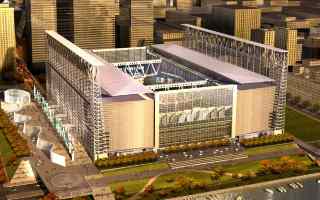
Spain and Argentina meet today in the FIFA World Cup final at New York New Jersey Stadium. But the story of the final venue has a forgotten alternative ending: before MetLife Stadium existed, the New York Jets nearly built their own stadium on Manhattan’s West Side.
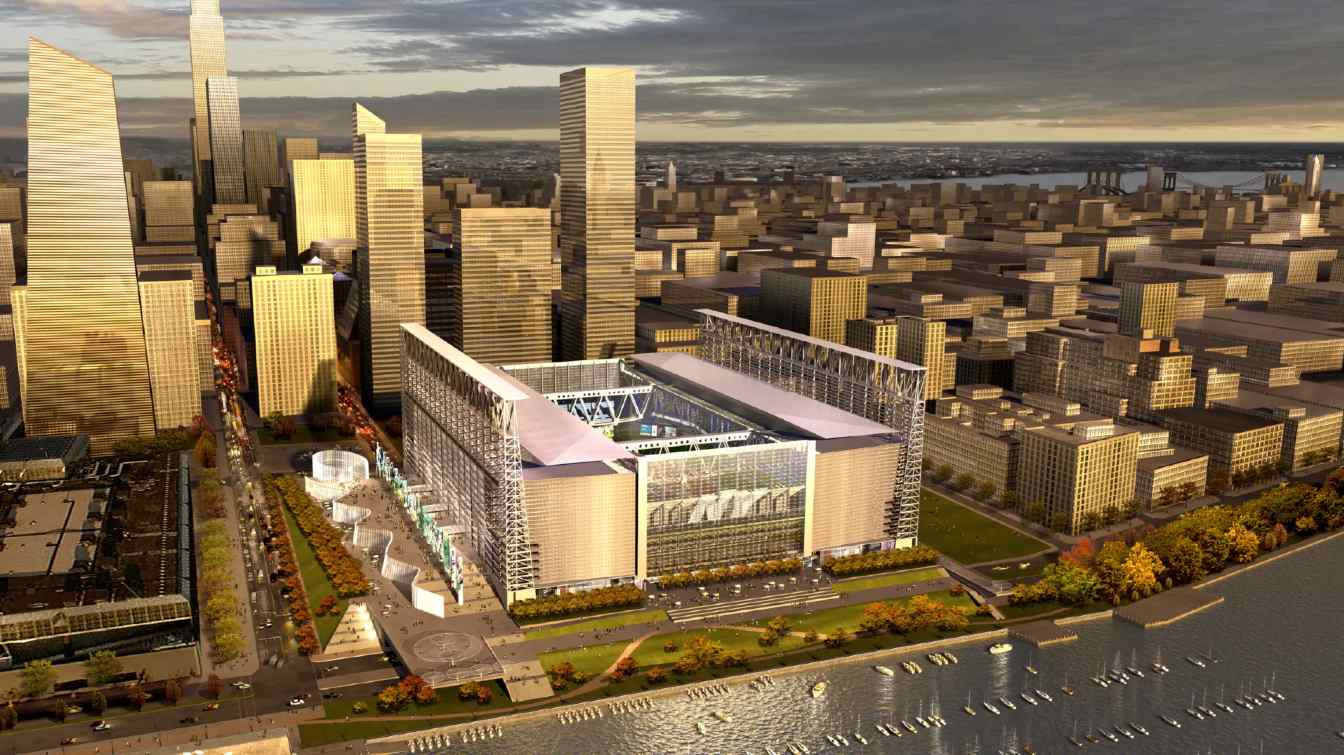
The idea sounds like a piece of urban fantasy, but it was a serious political, architectural and financial project. The proposed stadium was known as West Side Stadium or the New York Sports and Convention Center. It was planned above the rail yards between West 30th and West 33rd Street, close to the Hudson River, the High Line and the Jacob K. Javits Convention Center.
In another timeline, the biggest match in world football might have been played beside Manhattan’s skyline rather than across the river in East Rutherford.
The Manhattan stadium that nearly happened
The Jets’ Manhattan plan was designed as much more than a football stadium. It was supposed to become a multi-use venue with a retractable roof, a convention hall, Olympic capability and a major role in the redevelopment of the Far West Side.
For Jets games, the venue was expected to hold around 75,000 spectators. For Olympic use, it was often discussed at around 85,000 seats. The project was also meant to support New York City’s bid for the 2012 Summer Olympics, hosting ceremonies and athletics events if the city had won the Games.
The location made the idea powerful. A major NFL stadium in Manhattan would have given the Jets a unique identity, a direct New York address and access to one of the world’s most valuable urban markets. It also made the project expensive and politically explosive.
West Side Stadium was not rejected because it was technically impossible. It failed because the political and financial coalition behind it collapsed in 2005.
 © KPF
© KPF
Why the Jets wanted Manhattan
The Jets had spent decades without a true stadium of their own. After leaving Shea Stadium in Queens, they moved to Giants Stadium in New Jersey in 1984. It solved the practical problem of where to play, but it also left the Jets as tenants in a building branded around their local rivals.
By the early 2000s, Giants Stadium was aging, the Jets wanted stronger identity, and the Manhattan site promised something no other option could match: a return to New York City with a stadium built around their own business, premium seating, sponsorship and year-round event revenue.
The wider pitch was even bigger. Supporters argued that the stadium would help expand the Javits convention district, bring major events to the city and trigger development in Hudson Yards. Critics saw something else: public money, traffic, political pressure and a private NFL team receiving enormous help on some of Manhattan’s most valuable land.
The fight that killed West Side Stadium
The project needed hundreds of millions of dollars in public support for the platform over the rail yards, infrastructure and roof. That made it vulnerable. Cablevision, then owner of Madison Square Garden, became one of the loudest opponents because a new stadium and convention venue only a few blocks away could threaten MSG’s events business.
The decisive moment came on June 6, 2005. The New York State Public Authorities Control Board failed to approve the required state funding. Without unanimous support, the plan could not move forward. Within weeks, New York’s 2012 Olympic bid lost momentum, and the Games were eventually awarded to London.
The Jets did not get Manhattan. Instead, they turned back across the river.
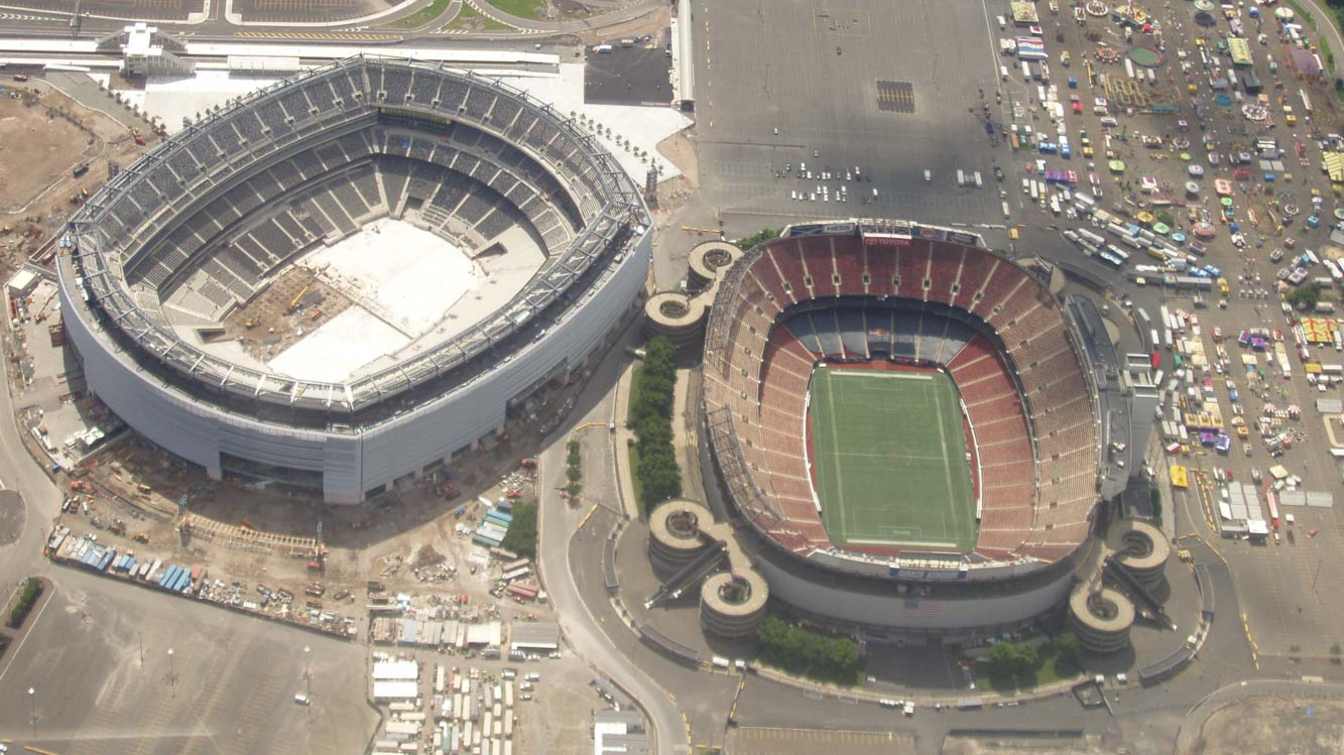
The result: the failed Manhattan stadium pushed the Jets toward a 50/50 partnership with the Giants. That partnership produced the current Meadowlands venue, known today as MetLife Stadium.
 © Gregory J Kingsley (CC BY-SA 3.0)
Why FIFA chose the Meadowlands
From FIFA’s perspective, the choice made commercial sense. MetLife Stadium offered huge capacity, modefrn NFL-scale operations, premium hospitality, strong security infrastructure and experience with mega-events, including Super Bowl XLVIII, Copa America matches, major concerts and the FIFA Club World Cup.
The New York region also brings something few markets can match: global recognition. Even though the stadium is physically in New Jersey, the New York name carries enormous media value, international visibility, tourism appeal and commercial pull. The East Coast time zone also works well for both American and European audiences.
It was not a perfect choice. The stadium had to be adapted for football, with natural grass installed and the lower bowl modified to meet tournament requirements. But for a World Cup final, FIFA needed scale, infrastructure and a world-facing stage. The Meadowlands could provide all three.
Three stadiums, one story
CategoryGiants StadiumWest Side StadiumMetLife Stadium
Status
Demolished in 2010
Cancelled in 2005
Current World Cup final venue
Location
East Rutherford, New Jersey
Manhattan, West Side
East Rutherford, New Jersey
Main idea
Shared NFL home
Jets, Olympics and conventions
Equal Giants-Jets home
Capacity
78 148
75 000-85 000
82 500
Role in the story
Old home of Giants and Jets
The Manhattan alternative that failed
The stadium that inherited the final
The twist: the failed stadium still changed New York
West Side Stadium disappeared, but the broader redevelopment did not. Hudson Yards continued, the No. 7 subway extension opened, and platforms over active rail infrastructure became one of the defining engineering stories of modern Manhattan.
That is the strange legacy of the plan. The stadium that could have put the Jets on Manhattan’s West Side never broke ground, yet the fight around it helped shape the district that rose in its place.
So when the World Cup final kicks off today at New York New Jersey Stadium, it is worth remembering the alternate ending: not Spain and Argentina in the Meadowlands, but the biggest match in football beside Hudson Yards, on a stadium that New York almost built and then walked away from.