
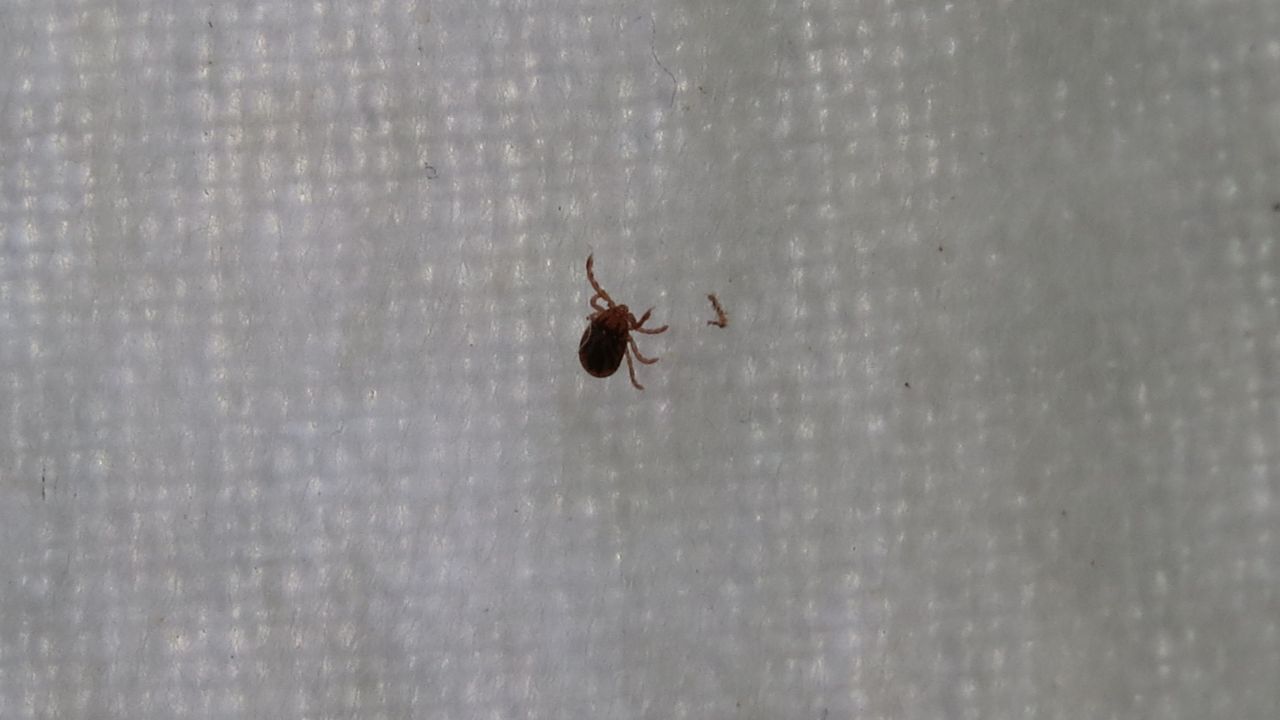
The Asian longhorned tick was first noticed in New Jersey almost a decade ago. Now, it is quickly spreading to cattle herds, impacting some Hudson Valley farmers.
Joellen Lampman, the tick integrated pest management coordinator with the Cornell Integrated Pest Management Program, says that a large population in a Columbia County cattle herd is the furthest north the Asian longhorned tick has been found.
Cornell IPM suggests farmers check new animals before adding them to a herd, manage pastures to reduce ticks, and use pesticide on animals’ full bodies.
Lampman said the blood loss from Asian longhorned ticks can be a detriment to cattle health, in addition to a parasite the ticks carry that can’t be treated.
“They are also capable of transmitting a cattle-borne disease. It’s a parasite that there is no treatment for. And we have seen cow deaths from this parasite in New York. So we’re very concerned about tracking not only the tick, but also this particular disease called Theileria,” said Lampman.
Lampman said the tick spreads fast because they lay 2,000 eggs.
“The Lone Star ticks have been migrating north with our warming winters. It took three decades for them to become the predominant tick on Long Island. It took the Asian longhorned tick three years to become more populous than any other tick down there,” said Lampman.
Lampman said a group of experts has been meeting monthly to discuss solutions to the Asian longhorned tick since 2019.
“Last year, we were looking at 20 farms. Of those 20, two of the farms had the Asian longhorned tick that we were able to find. This year we’re finding it on all of those farms that we have been monitoring for the last few years,” said Lampman.
According to Cornell IPM, the Asian longhorned tick typically doesn’t bite humans. But the same prevention measures apply as do for other types of ticks – perform a tick check after time outside, tuck your pants into your socks, and use permethrin to treat clothes.