
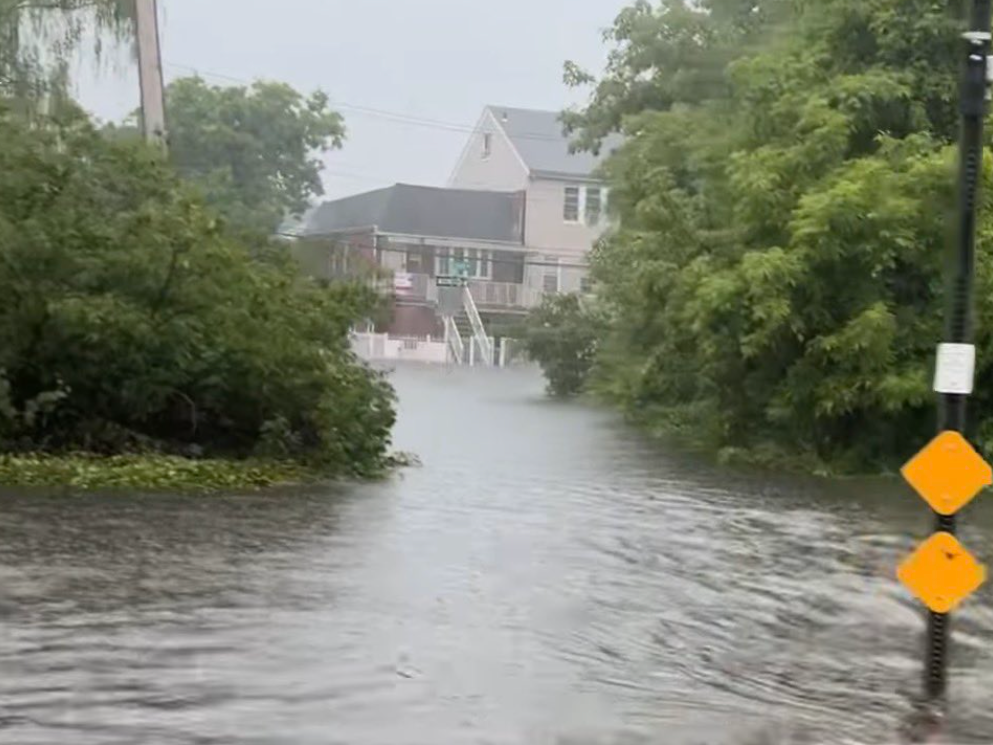
Queens officials including Congressman Grace Meng, Councilmember Phil Wong and Assemblymember Nily Rozic posted videos of people sitting on top of trucks half-submerged by flood water.
“This seems to happen with every heavy rain,” Rozic said on social media. “Until the city fixes its outdated infrastructure, clogged drains, and insufficient sewers, the least they can do is warn drivers and keep roadways clear.”
City Councilmember Jim Gennaro said the flooding was bad in his Eastern Queens district this weekend, as it often is.
As the longtime chair of the City Council’s Committee on Environmental Protection and Waterfronts, a five-person committee where he is the only Queens member, Gennaro has pushed for legislation related to floodzone maps and catch basin maintenance – smaller fixes to address the wider issues.
“This is not a problem that lends itself to short-term significant reductions in impact from storms,” he said.
Gennaro said the city’s inability to pursue the bigger infrastructure fixes was due to a lack of funding. He blamed a 40-year-old provision in the city’s budget framework that sees millions of dollars from city residents’ water payments go directly to the citywide general fund. The money could instead be used to fund infrastructure projects, he said.
“[The Department of Environmental Protection] is literally being robbed of money that it needs to get us out of this flooding crisis,” he said. “The agency is money starved by virtue of the fact that a significant chunk of what people pay in water and sewer bills, which they think is going to water and sewer, is going elsewhere.”
He said the Mamdani administration should eliminate the provision, which stems back to the city’s debt issues in the 1980s but was briefly ended by the de Blasio administration and then put back into effect by Mayor Eric Adams.
“To more quickly get out of the flooding situation, we need more money,” he said. “Everything costs money.”
Queens Borough President Donovan Richards has long-referred to Queens’ flooding issues as a game of “Whack-A-Mole.”
After the city appeared to make some progress addressing flooding in its coastal communities, its inland communities are now struggling with pooling water.
“Flushing wasn’t a place where I woke up in the morning and wondered if they were going to be flooded,” he said. “Rockaway doesn’t even keep me up as much anymore.”
Richards said there are currently around 100 flood-mitigation infrastructure projects underway in Queen.
“I am very encouraged with all of the work,” he said. “There’s billions of dollars being invested across Queens.”
In addition to infrastructure fixes, Richards said that it is time to explore home buyouts in at-risk communities, like the areas around Kissena Park.
“I think if the city is willing and the state is willing to look at that solution, then that’s an effort that I would be willing to explore with that community, because it’s going to happen again,” he said. “How many times are you going to repair your basement and then another storm comes and then it happens again?”
But Richards admits that long-term fixes are hard to hear for residents like Ahmed, whose headaches are a lot more immediate.
“In a perfect world, all of these projects would have been done 40 or 50 years ago, but we’re here, and most importantly, the money is in the bank,” he said. “But that doesn’t do much if you’re a homeowner who, unfortunately, his basement is flooded again.”
On Monday night, Ahmed said she was worried about what Tuesday will bring.
“It’s only going to get worse,” she said. “I’m very worried. I’m worried about tomorrow. I feel like we just went through hours and hours of cleaning, and I’m like, ‘Are we going to have to start all over again tomorrow?’”