
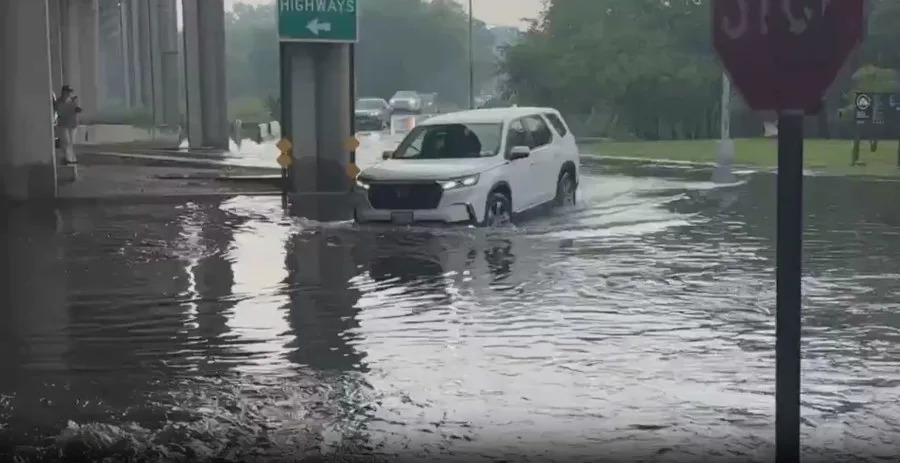
NEW YORK CITY (PIX11) — After back-to-back storms left many New York City neighborhoods under waist-high water, officials are working to better prepare for future storms.
A “multi‑layered approach to stormwater management” is being built out for the city’s most flood-prone neighborhoods, according to the New York City Department of Environmental Protection.
Stay connected with community stories that matter: Visit our homepage
A spokesperson for the agency says they’re working to combine sewer upgrades with “underground stormwater storage, rain gardens, and bluebelts that capture and hold rainwater before it enters the sewer system.”
“These improvements will help reduce inland flooding and protect nearby homes and streets,” the spokesperson said.
The statement comes after multiple neighborhoods in Brooklyn, Queens and Manhattan had nearly impassable flash flooding on Saturday and Tuesday, forcing emergency teams to rescue some drivers from their vehicles.
Councilmembers Grace Meng and Phil Wong, who represent some of the hardest neighborhoods in Queens, reported flooding that closed the Long Island Expressway and destroyed some homes.
Discover more stories shaping your neighborhood on our homepage
“Sewage backed up through toilets and showers, manhole covers erupted, and hardworking families are now facing thousands of dollars in damage,” wrote Wong in a social media post. “We work hard, obey the law, pay our taxes, maintain our homes, raise our families, and ask for very little in return other than the basic functions of government: infrastructure that works and streets and sewers that don’t fail every time we get a major storm.”
 Why does New York City seem to flood easily?
New York City’s sewer system is designed to handle up to 1.5 to 1.75 inches of rainfall per hour. As a result, when short but intense periods of rainfall happen, the system can become overwhelmed.
For more on what’s happening in your area, head to our homepage
Overwhelmed and flooded sewers can also contribute to flooding in subway stations, as it leaves the MTA with nowhere to pump water out of its system.
According to Zach Iscol, the former commissioner of the Office of Emergency Management, the city’s infrastructure was designed for a continental climate 50 years ago, whereas the city has since transitioned into a subtropical climate with heavier and more frequent rain.
Dominique Jack is a digital content producer from Brooklyn with more than five years of experience covering news. She joined PIX11 in 2024. More of her work can be found here.
Copyright 2026 Nexstar Media, Inc. All rights reserved. This material may not be published, broadcast, rewritten, or redistributed.
For the latest news, weather, sports, and streaming video, head to PIX11.