
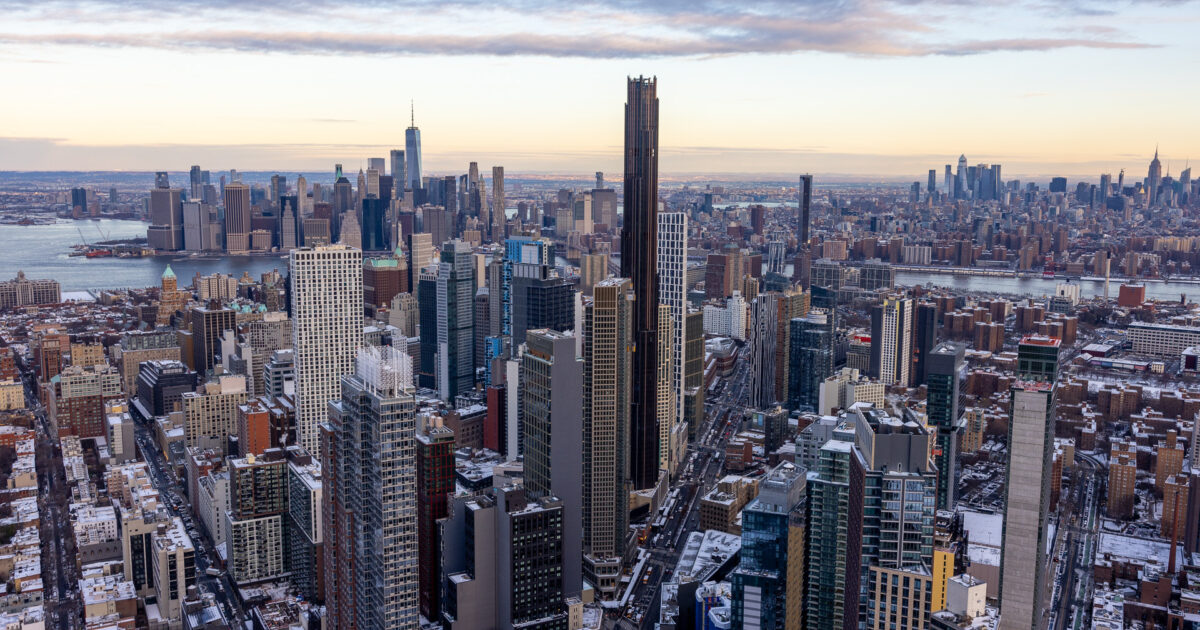
Brooklyn Commons, formerly known as Metrotech, was opened in the early 90s as one of the last urban renewal-style superblock developments. Intended as a research and development campus, its initial tenanting strategy instead relied on attracting large corporations and government agencies in need of “back-office” space in a place that was transit accessible but less costly than Midtown Manhattan. This strategy has struggled, especially as the Financial District’s office market has softened, and Brooklyn Commons currently has 1.4 million square feet of vacant office space with occupants mainly being public sector tenants and the expansion of the NYU Tandon School of Engineering. A new strategy is needed for the campus.
The answer is to embrace it as what it is – a campus. True campuses are few and far between in New York City, as are opportunities to create them. As such, institutions that need this environment have a scarcity of options. Brooklyn Commons, in conjunction with the City of New York which holds the land-lease to much of it, should explore partnerships with educational or other institutions which need a campus-like environment. Because Brooklyn Commons benefits from a strong public-private partnership structure – one private entity as the owner/manager, a strong municipal presence in the form of a ground lease and major tenants, and a high-capacity Business Improvement District – a comprehensive and long-term campus strategy can be developed and pursued.
This could take many forms. One idea would be a return to the campus’s original intention as a research and development base, embracing the idea of an “Innovation Campus” put forward by the Downtown Brooklyn Partnership. It could also follow the “Eds and Meds” framework that NYC DCP had proposed for downtown Brooklyn in 2023, or pursue more of an Arts and Culture focus as illustrated above.
Notably, this does not necessarily mean that only a single institution should occupy the entire campus. For instance, Brooklyn Commons could build on the existing presence of the NYU Tandon School of Engineering, while also bringing in the nearby CUNY CityTech College. This could potentially include even more institutions with a STEM focus, such as an NYC DOE High School.
This campus approach could also mean embracing a more mixed-use environment, including looking for residential, institutional, and/or hotel conversion possibilities. For instance, faculty and dormitory housing could be located above classroom facilities. Additional hotel capacity could provide the needed visitor capacity to turn the campus into a nationwide or even worldwide hub connected to other cities and regions as well. Notably, Brooklyn Common’s Urban Renewal Area designation expires June 30th, 2027, meaning that special controls related to the area, including the inability to convert existing office space to residential use, will sunset as well.
In all circumstances, the key is to create a place which has a distinct identity and a campus-like environment that fosters connectivity. Key to this is an open environment shared by all buildings and public space. Institutions that require additional security measures currently impede upon this environment and should be relocated. To the extent that public agencies locate in Brooklyn Commons, they should ideally be agencies that are willing to invest in the surrounding public realm and prioritize an open campus-like environment, while agencies needing or desiring additional security and isolation should be located in areas where this would not impede on the experience of workers, students, visitors and residents.