
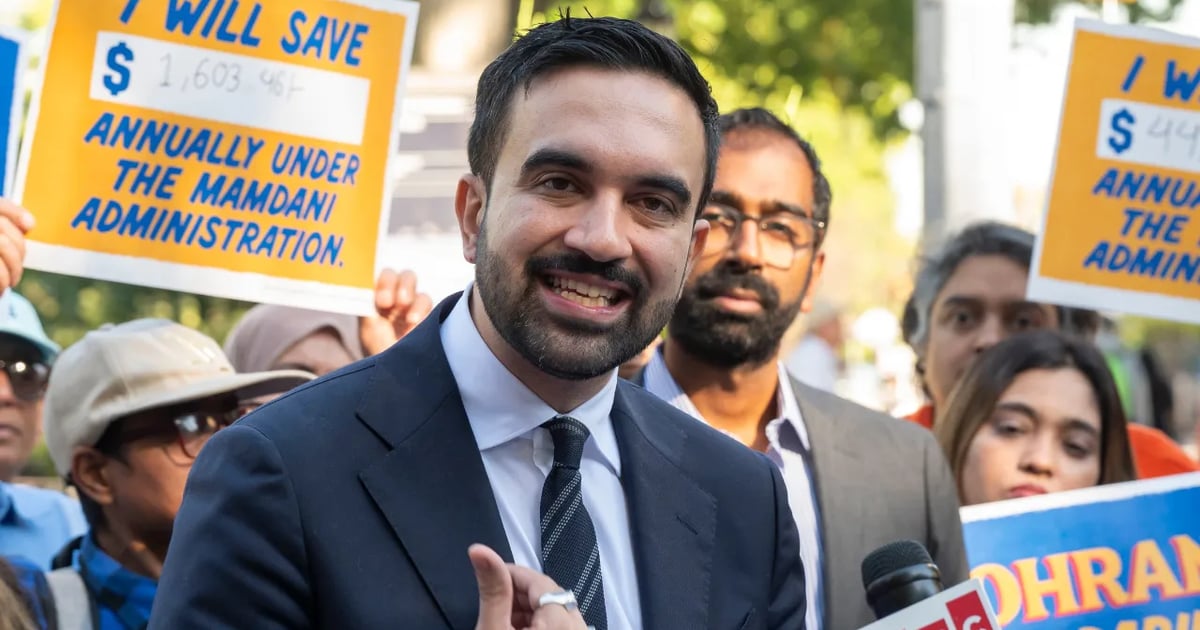
The city-run grocery stores proposed by New York City Mayor Zohran Mamdani will price certain items, including produce, meat, bread and milk, at 30% below average market prices, the city announced on Monday.
Other items that will be offered at a 30% discount include seafood, pasta, yogurt, butter, nuts, rice and beans, the New York Times reported. The remainder of the products in the stores will be priced at market rates. In a press conference on Monday, Mamdani said the discounts could save shoppers about $90 per month, or more than $1,000 per year.
In addition, he announced that the city has issued a request for proposals (RFP) seeking a local grocery industry partner to run the stores.
“Our vision for affordable, well-run, city-owned grocery stores can only be accomplished with experienced operators who know how to source products, stock the shelves and help answer shopper questions,” Mamdani said.
He said plans call for the city to secure the locations for the stores and waive the rent and taxes on the sites, leaving the operator to handle the day-to-day operations based on detailed requirements outlined in the RFP. These include providing store workers with “family-sustaining wages and benefits,” he said.
In addition to offering the 30% discount pricing on everyday items, the stores will also be required to re-evaluate the prices each month and maintain them at that level for the entire month to provide some predictability for shoppers.
During the press conference, Mamdani also decried the use of dynamic pricing, a customer-specific pricing strategy that has been banned in Maryland, Connecticut and New Jersey and has come under widespread criticism amid the rollout of electronic shelf labels.
As previously reported, New York City is planning to open five city-owned stores, one in each of the city’s five boroughs. The first location is slated to open next year in the Bronx, and another site has been selected in Manhattan’s Harlem neighborhood.
Each of the five locations will share similar store branding and will also have a similar look and feel, said Jeanny Pak of the NYC Economic Development Corporation during Monday’s press conference. She also explained that the stores would likely require some proof of NYC residence and have other systems in place to prevent bulk purchases of discounted items for resale.
Asked by reporters about complaints from local supermarket operators and bodega groups that the city-owned stores will have an unfair competitive advantage, Mamdani said there is more than enough business for both city-owned and privately owned stores to co-exist.
“We see this as a city that is big enough for 1,000 [privately owned] grocery stores, plus five city-owned stores,” he said.
In addition, the city-owned stores would not offer hot prepared foods or sell items such as lottery tickets, which are both big sales drivers for a lot of bodegas, Mamdani said. He also noted that lowering the cost of living in New York could help retain more working-class families in the city, which in turn could help retain customers for the privately owned stores.