
By CARTER MYERS-BROWN
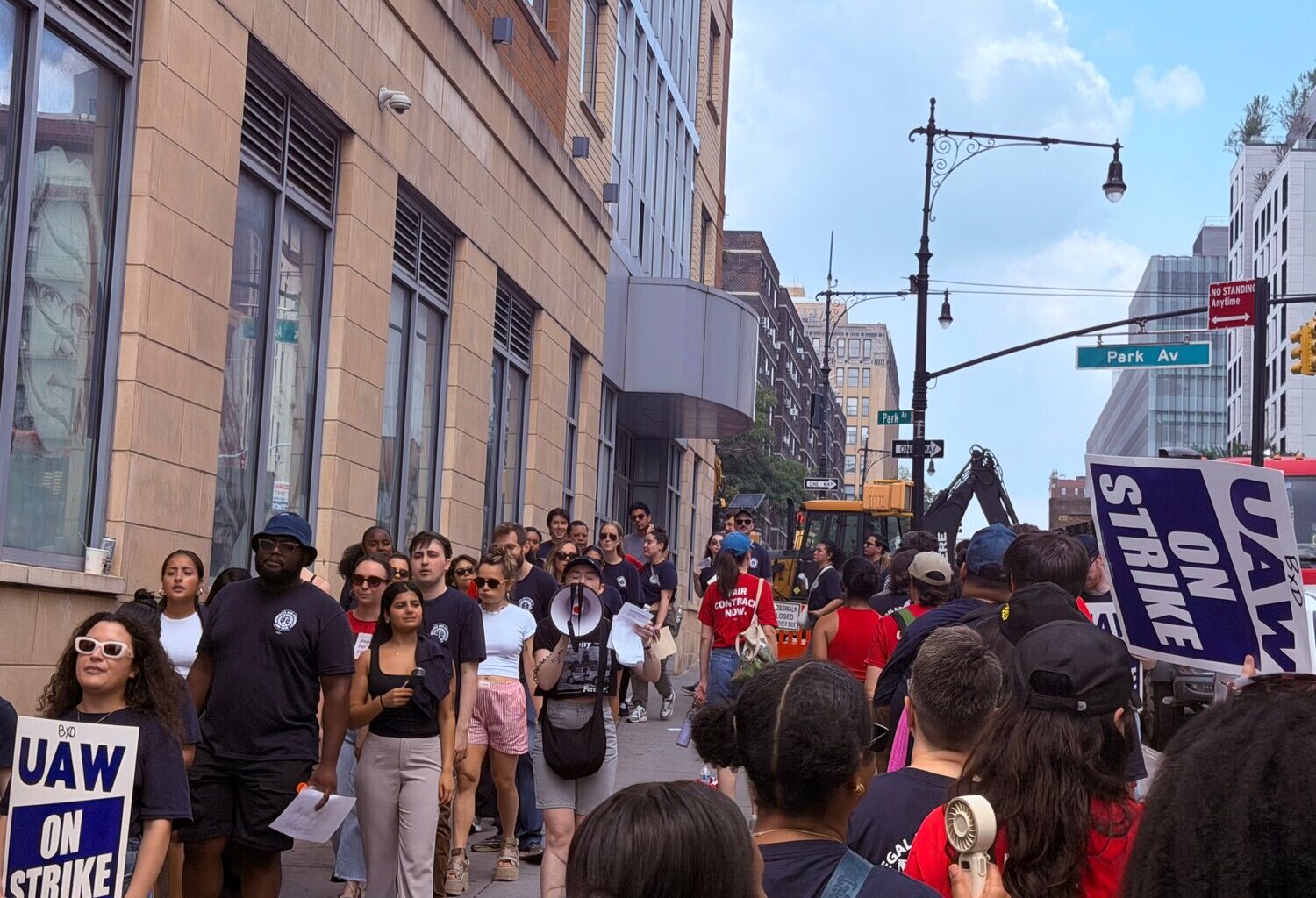
More than 300 attorneys, social workers, investigators, advocates and administrative staff at The Bronx Defenders walked off the job Monday, becoming the third public defender union in New York City to strike this month as labor disputes and stoppages continue across the city’s legal services organizations.
Members of the Bronx Defenders Union, part of Local 2325 of the United Auto Workers, launched the strike after failing to reach a new collective bargaining agreement with management by the union’s deadline. The union said it remains prepared to return to negotiations but accused management of refusing to make progress on key demands, including compensation, workplace protections and pay equity among different professions.
Michael Gradess, an immigration practice administrator and member of the union’s bargaining committee, said workers ratified their demands internally on March 27, giving management months to review their proposals before the contract expired.
“The number one thing that led to the strike is management’s insistence on not making progress,” Gradess told The Chief on the picket line Monday.
Intentional ‘obstinance’ by management
The union’s first formal bargaining session with management took place April 30, but Gradess said workers repeatedly encountered what they viewed as a lack of engagement.
A major point of contention involved proposed contract language intended to protect undocumented workers, including assistance with visa issues and protections related to federal immigration enforcement. Gradess said the language mirrored provisions already included in contracts at other legal services organizations, including the New York Legal Assistance Group.
Despite receiving the proposal months earlier, Gradess said management did not raise concerns until June 29 — one day before the union’s contract expired — when BDS claimed the union’s proposed provisions were illegal. The union disputes that interpretation, noting that its bargaining team includes immigration attorneys.
He said the behavior of management reflected a recurring pattern during negotiations.
“That’s the level of obstinance that we’re dealing with,” Gradess said.
Seek to defend salary scale
The dispute also centers on wages, and the structure of employee pay scales. According to the union, management proposed raises of three percent for investigators, advocates, administrators and social workers while seeking to separate social workers from the attorney salary scale.
Union members argue that the existing combined salary scale, negotiated in previous contracts, recognizes the equal value of different roles within the organization’s interdisciplinary model.
Flora Sugarman, a social worker in The Bronx Defenders’ civil action practice and a bargaining committee member, said maintaining pay parity between attorneys and social workers is key.
She told The Chief the structure was intentionally designed to “break down hierarchies in public defense” and recognize the emotional labor and expertise required of social workers.
Sugarman said separating the scales would weaken solidarity among workers and make it easier to divide employees during future negotiations.
“The more scales we have, the weaker our union becomes,” she said.
Beyond wages, workers have raised concerns about workplace conditions, including longstanding issues with mold, roaches and mice in office spaces where employees meet with clients.
Bronx Defenders Executive Director Juval O. Scott said management had bargained in good faith and offered substantial salary increases despite financial constraints.
Scott said the organization’s latest proposal would increase starting salaries for administrators, investigators and advocates by 11.4 percent, raise entry-level attorney and social worker salaries by roughly 5.5 percent, create a $3,000 annual longevity increase after eight years of service and provide additional compensation for attorneys handling arraignments.
“We are deeply concerned about the impact a strike will have on the thousands of people we represent,” Scott said, adding that staff “deserve to be paid their worth.”
“We are deeply concerned about the impact a strike will have on the thousands of people we represent,” Scott said, adding that staff “deserve to be paid their worth.”
Jessica Coffrin-St. Julien, an immigration attorney and member of the Bronx Defenders union, disagreed with Scott’s assessment of bargaining, saying the union submitted a proposal last weekend, but management declined to meet before Monday’s strike deadline, leaving workers feeling they had exhausted all other options.
“No one wants to go on strike, particularly for the work that we do,” Coffrin-St. Julien said. “But at this point we’re really left with no other choice.”
July strike wave
The strike at Bronx Defender Services is part of a broader wave of labor activity among public defender organizations across the city. Brooklyn Defender Services workers ended their four-day strike last week after reaching a tentative agreement with management for a new contract.
The BDS union said the deal included significant gains, including the creation of a salary step scale for all workers, limits on management authority, and the defeat of a proposal to use geolocation tracking to monitor employees during and outside of work hours.
And at Neighborhood Defender Service’s Harlem office, 120 attorneys, social workers, paralegals and other legal professionals at walked off the job on July 24, arguing that management had refused to move beyond a one percent annual cost-of-living increase since bargaining began in April. Workers also accused management of seeking to roll back healthcare benefits they had secured in previous contracts.
Sugarman said the simultaneous actions have allowed all three unions to coordinate strategies and increase pressure on employers.
She said workers have compared contracts across organizations and shared successful bargaining language as part of a broader effort to improve conditions throughout the public defense system. The unions’ approach, she said, extends beyond workplace benefits and includes pushing city leaders to address courthouse conditions and other issues affecting clients.
“We’ve been actively coordinating, and it’s been a really wonderful part of this year’s negotiations,” Sugarman said. “There is a lot more power when we’re able to put things to a halt across multiple boroughs.”