
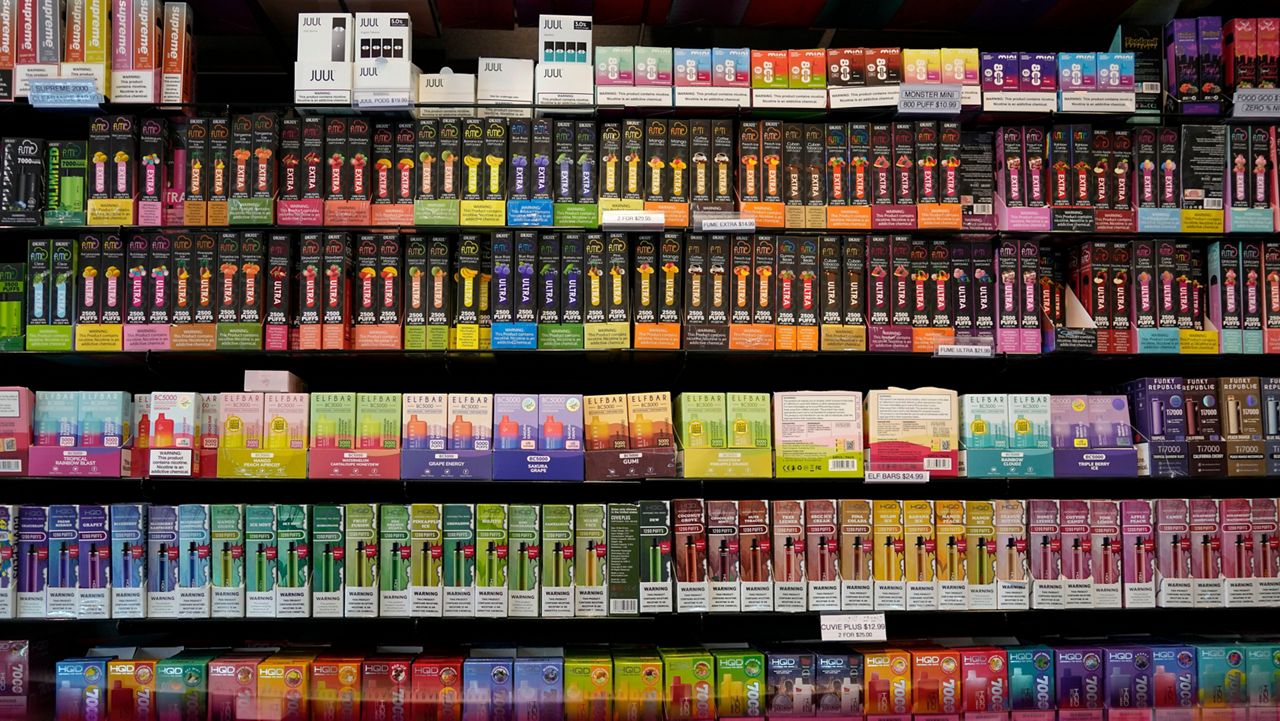
BUFFALO, N.Y. — With a new school year right around the corner, there are efforts to curb tobacco and nicotine use in kids. Turns out, peer pressure isn’t the only thing they’re facing. There’s growing concern about how movies and television continue to normalize and glamorize the use of tobacco and nicotine. Even though adult tobacco use is at an all-time low, there’s an indication that nicotine use in kids is going up.
Like his tennis games, 16-year-old Ved Deshmukh has been taking the health of his peers into his own hands.
“There are obviously kids and students who are vaping and smoking, and it’s leading to a lot of bad choices, health, bad lifestyles and overall behavioral issues that are impacting the school and our society,” said Deshmukh, who is a Reality Check ambassador.
What You Need To Know
One in four middle and high schoolers said they’ve tried a nicotine product
Truth Initiative found eight of the 10 films nominated for Best Picture at the Academy Awards had ‘tobacco imagery’
For teens and young adults, there’s a free program called Drop the Vape
The Rochester-area teen started a training program called Clear Lungs, Bright Futures.
“What the program teaches is some of the ways to recognize nicotine and tobacco use, what it actually does to the body on a fundamental level, and who is actually being affected,” Deshmukh said.
That eventually led him to become a Reality Check ambassador. It’s a program part of Tobacco Free NYS, where teens from across the state take on big tobacco head-on.
“One of the biggest groups of people that they actually profit off of the most are teenagers like myself,” he said.
An easy way to do that is Hollywood. Deshmukh points to James Bond.
“James Bond is obviously a very influential figure in Hollywood, and actually in a lot of his movies, you can see him smoking,” Deshmukh pointed out.
In fact, a study done by Truth Initiative found eight of the 10 films nominated for Best Picture at the Academy Awards had “tobacco imagery.” A survey highlighted in the same report showed 85% of young people saw tobacco use in what they’re watching, and 43% of those who wanted to quit said seeing the images makes it more difficult.
“It’s disappointing, but it’s not new,” said Maansi Bansal-Travers, associate professor of oncology at Roswell Park Comprehensive Cancer Center. “We’ve been talking about smoking in the movies for decades.”
Bansal-Travers is also a mom to two teenagers. But she says the issue of imagery and how it leads to kids using tobacco or nicotine is starting before they hit their teen years.
“There’s a study from many, many years ago that showed that as many 3-year-olds recognized Joe Camel as they recognized Mickey Mouse,” Bansal-Travers said.
It’s no secret that kids are impressionable. So, when they see tobacco and nicotine use in their favorite shows, Bansal-Travers says it normalizes it. On top of that, she says the increase in diversity of certain products makes it easier for them to get their hands on it.
“You’ve got these vapes, you’ve got pouches, you’ve got more products than just cigarettes, and they are easier to hide,” Bansal-Travers said.
Bansal-Travers says one in four middle and high schoolers said they’ve tried a nicotine product. One in five, she says, is willing to try. One in six is a current user.
“So those are really high percentages when we’re talking about a 9% smoking rate in adults,” Bansal-Travers said.
Besides the impact it has on the lungs, it’s the brain she worries about.
“We know that brain formation really continues until about 25,” she said. “So when you’re talking about an 11-year-old who’s using a nicotine product, it is damaging to their developing brain. And it is also so addictive.”
She says it can only take once to get addicted. So, Deshmukh will keep educating his peers on false information — such as vaping is just flavored water — and the dangers of what’s inside.
“Vaping and smoking are almost like two sides of the same coin,” Deshmukh said. “They’re different in their own ways. But at the end of the day, they’re still doing the same bad thing to your body.”
The New York State Quitline is a free resource for anyone who wants help. There are two ways to take part. You can talk to someone on the phone or use the text line. For teens and young adults, there’s a free program called Drop the Vape.
Mansal-Travers has some at-home advice she passed along to help young people who want to quit but have a tough time dealing with the urges.
She said to eat a mint instead of popping a pouch. For vaping, she suggests carrying around pretzels or carrot sticks and putting those in your mouth at a time when you feel like you might vape.t vape.