
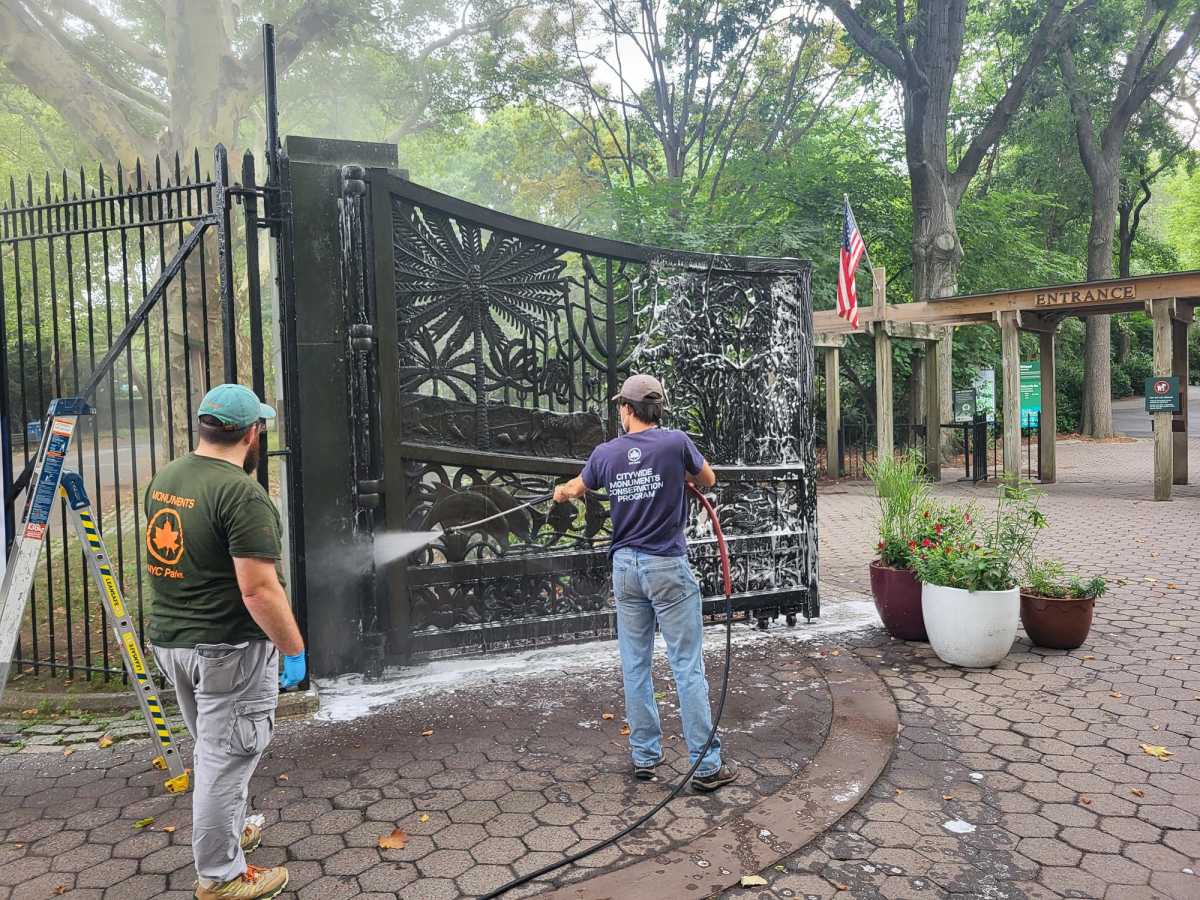
The Citywide Monuments Conservation Program (CMCP) returned to Flushing Meadows Corona Park in Queens Tuesday morning to care for and preserve some of the park’s historic monuments, many of which have been in place since the 1964-65 World’s Fair.
The annual maintenance at the flagship park in Corona focused on a diverse array of structures, including Marshall Frederick’s Freedom of the Human Spirit, Jose de Rivera’s Free Form, Albina Manca’s Gates of Life and the Vatican Shrine.
The CMCP, a public-private partnership through the NYC Department of Parks and Recreation that works to preserve the city’s rich cultural heritage, is celebrating its 30th anniversary this year. It provides conservation apprentices with professional training through hands-on work on the nation’s leading collection of public art.
This year’s team, consisting of professional conservation technicians and four summer interns, the latter of whom come from all parts of the country and the world, worked from 8 a.m. to 12 p.m. on July 28 to clean each of the four statues — which are made of materials like bronze, stainless steel and stone — and replace some of their wax finishes.
The program strives to ensure structural integrity and consistent aesthetic appearance of these art pieces, encouraging interns to serve as stewards of the NYC parks outdoor art collection.
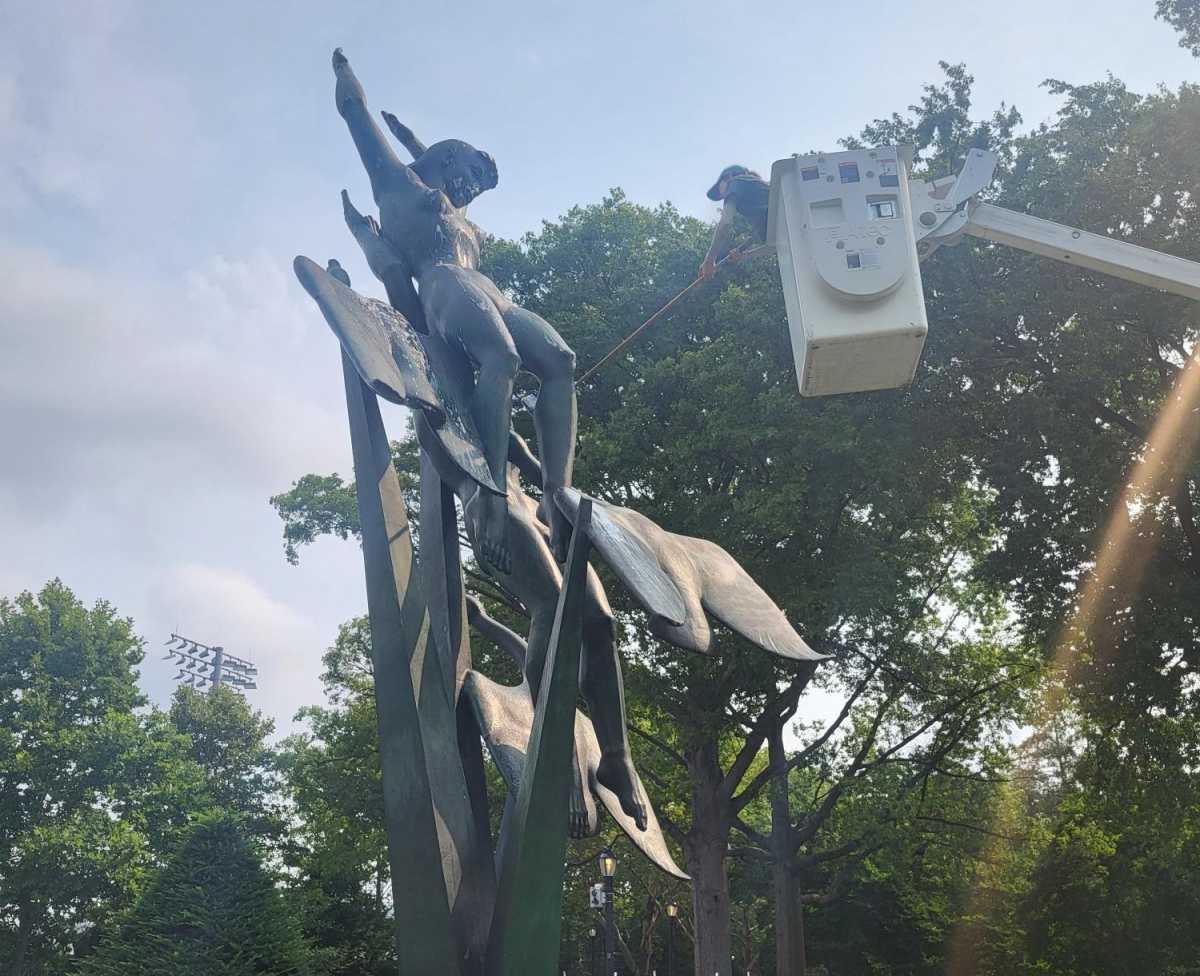 An intern stood on a lift and cleaned the Marshall Frederick’s Freedom of the Human Spirit.Photos courtesy NYC Parks
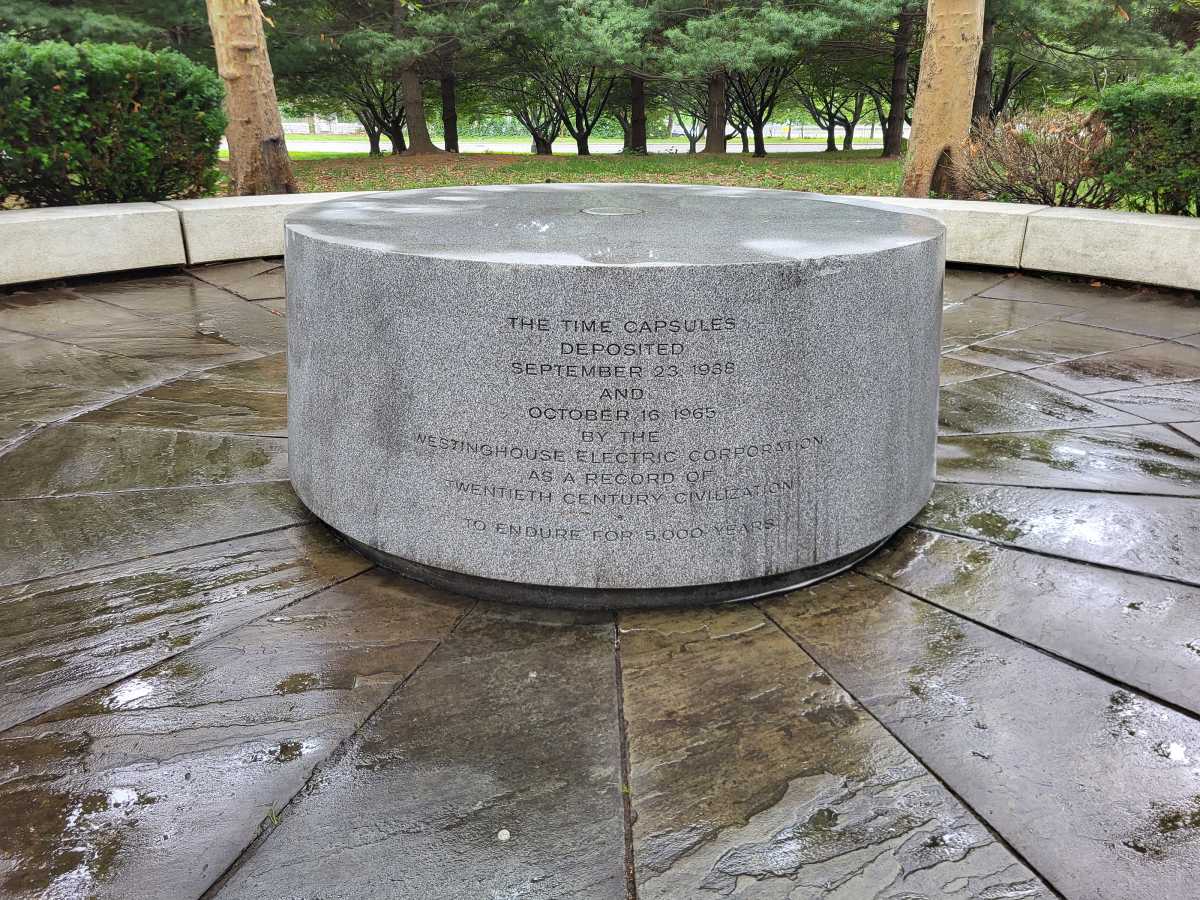
“Many of the monuments here in the park are connected to the World’s Fair from both 1964 and the 1930s,” said John Saunders, the public art conservator for the Parks Department. “They sort of form a time capsule that brings that part of New York City’s history to life. Keeping that stuff around keeps the memory of that time right here in place for people to experience.”
Saunders explained that the CMCP operates year-round in all five boroughs in NYC, but it enlists the help of four interns for a 10-week summer program to give them hands-on experience caring for parks like Flushing Meadows.
In the past, Saunders said they’ve completed more comprehensive repairs on larger structures, including the Unisphere after it sustained damage during an intense windstorm. For those larger-scale repairs, he said the crew will bring in special lifts or a crane.
“The park has all kinds of issues — it’s not the most well-funded park,” Saunders noted. “Maintenance is a little more deferred here. We’re funded by the city, so we come and make sure the park is well cared for.”
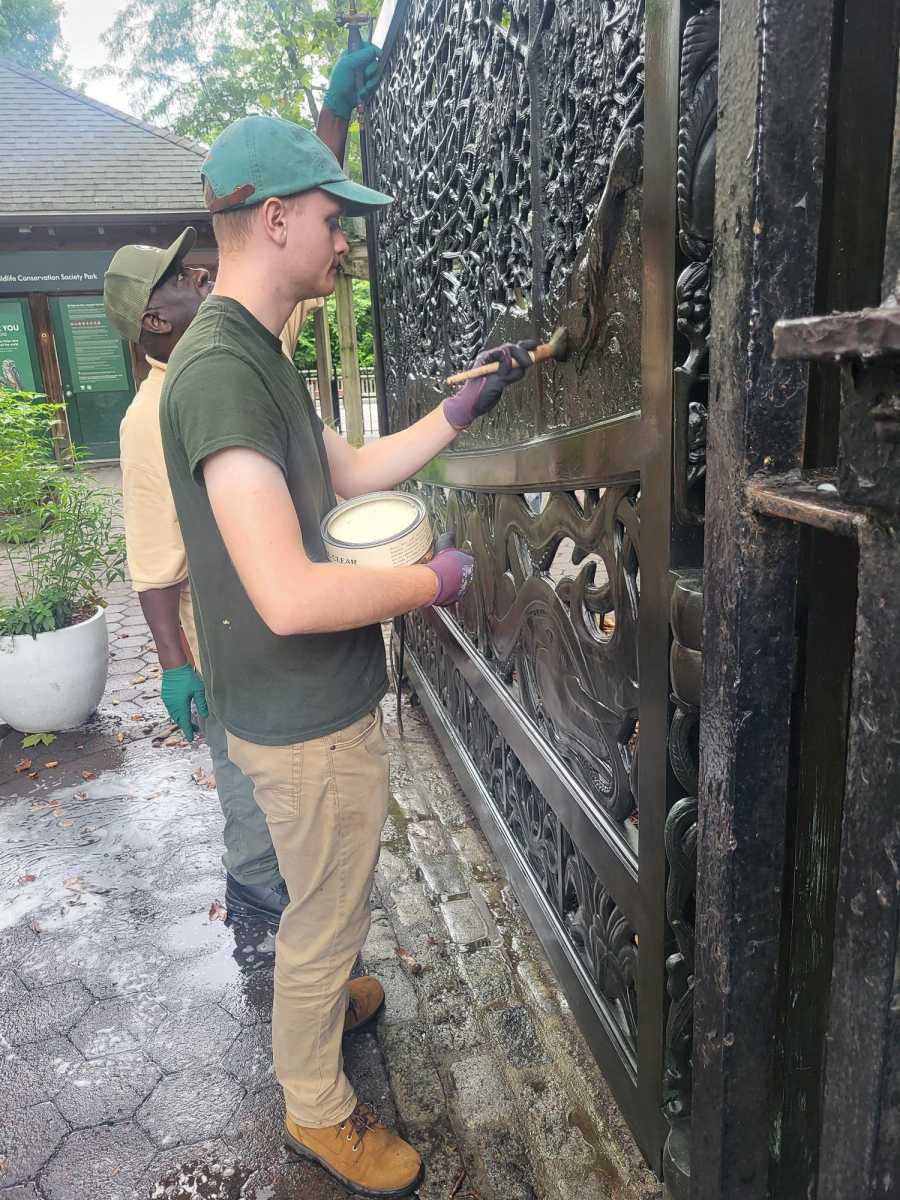 CMCP members applied a new wax finish to the Albina Manca’s Gates of Life.Photos courtesy NYC Parks
The interns said their experience with the CMCP is both educational and personally meaningful, noting that they’d never visited Flushing Meadows until enrolling in the program. All four of them are pursuing careers in art and historic preservation, making this work an invaluable experience for them.
Ian Komorowski, a North Dakota native and graduate student at the University of Vermont, explained that historic preservation is a wide-ranging discipline, spanning roles in administration, law and technical work. He himself is interested in the tactile parts of preservation, which is what led him to apply for the internship with the CMCP.
When he first saw Flushing Meadows, Komorowski said he was amazed by the design of the park and its Parisian influences. He’d never heard of the Unisphere until the day before he participated in the maintenance event, but was utterly impressed once he saw it and learned of its history.
“I see myself as preserving a very significant portion of American history,” he explained. “The 60s were a very chaotic time, and to see it preserved for future generations is something I find meaningful.”
Sara Abrahamsson, who is from Los Angeles, Calif., and graduated with her bachelor’s degree in art history from the University of California, Los Angeles in 2024, said her undergrad studies contributed to her interest in the field of art conservation.
She said the work she is doing for the CMCP is at a much larger scale than the work she’d been doing with oil and acrylic paintings in college.
“There’s just a lot of different questions that go into conservation of sculptures and monuments,” Abrahamsson said. “I was really interested in getting my hands on that kind of work and working with materials like metal and stone.”
Since arriving in New York, she said there is a noticeable difference in housing density compared to her native city, which she noted isn’t quite as crowded. That is why she feels parks like Flushing Meadows are so important to NYC residents.
“From my perspective, it seems people use the park almost like a backyard that they don’t have,” Abrahamsson said. “I love that part of the culture — people sharing space and coming together. The monuments are, of course, a huge part of that.”
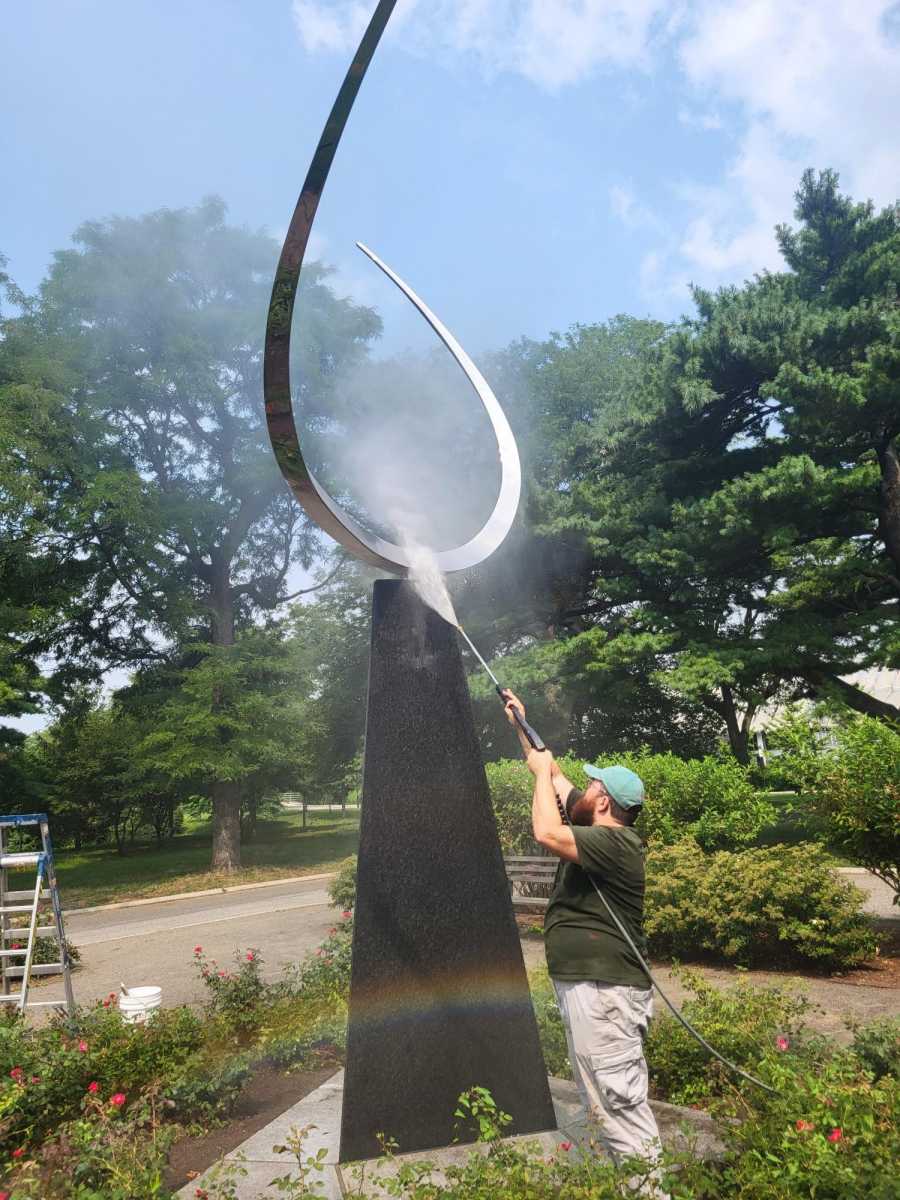 A CMCP member cleaned the Jose de Rivera’s Free Form.Photos courtesy NYC Parks
Sasha Galbraith — who was born in England, grew up in Los Angeles, and moved back to England to attend both Bath Spa University and the University of Lincoln for art conservation studies — said she greatly appreciates public art and the people who maintain it. She thought the CMCP would be the perfect opportunity to contribute to the cause.
Similar to Abrahamsson, she said the scale of the work they’re completing through the CMCP is much larger than the smaller objects she and her classmates worked on in her college’s lab.
“Here, we’re up on lifts trying to reach everything,” Galbraith explained. “Everything’s been scaled up.”
Galbraith said if it weren’t for the internship program, she might have never visited Flushing Meadows or other iconic parts of the city.
“It was amazing to have the chance to come here and learn about something I’d never heard of before and knew nothing about,” she said.
Alex Michener, who is originally from St. Louis, Mo., and moved to Brooklyn 10 years ago, said in all the time he’d spent merely one borough over from Flushing Meadows, he’d never visited the park until he began working with the CMCP.
“I was awed by the Unisphere, and just the scale of it,” he said. “I’d seen photos, but I just don’t think that quite does it justice.”
A graduate of Ohio Wesleyan University with a bachelor’s in painting, Michener said he’s seeking a graduate program in fine art conservation so he can do more of the work he has been completing through the internship. He said the more he immerses himself in the work, the more he realizes how important it is.
“One of the things I found really rewarding is talking to members of the public who’ve shared stories about how they come here every day or have a special connection to a piece we’re working on,” Michener said. “That makes it feel deeper for me, you know? I’m sort of working in service to these things that people have this connection to.”
A map to all NYC Parks monuments and public art can be found at NYCGovParks.org/Art-Map.
 Photos courtesy NYC Parks