
Get the Popular Science daily newsletter💡
Breakthroughs, discoveries, and DIY tips sent six days a week.
By signing up, you confirm you are 16+, will receive newsletters and promotional content and agree to our Terms of Use and acknowledge the data practices in our Privacy Policy. You may unsubscribe at any time.
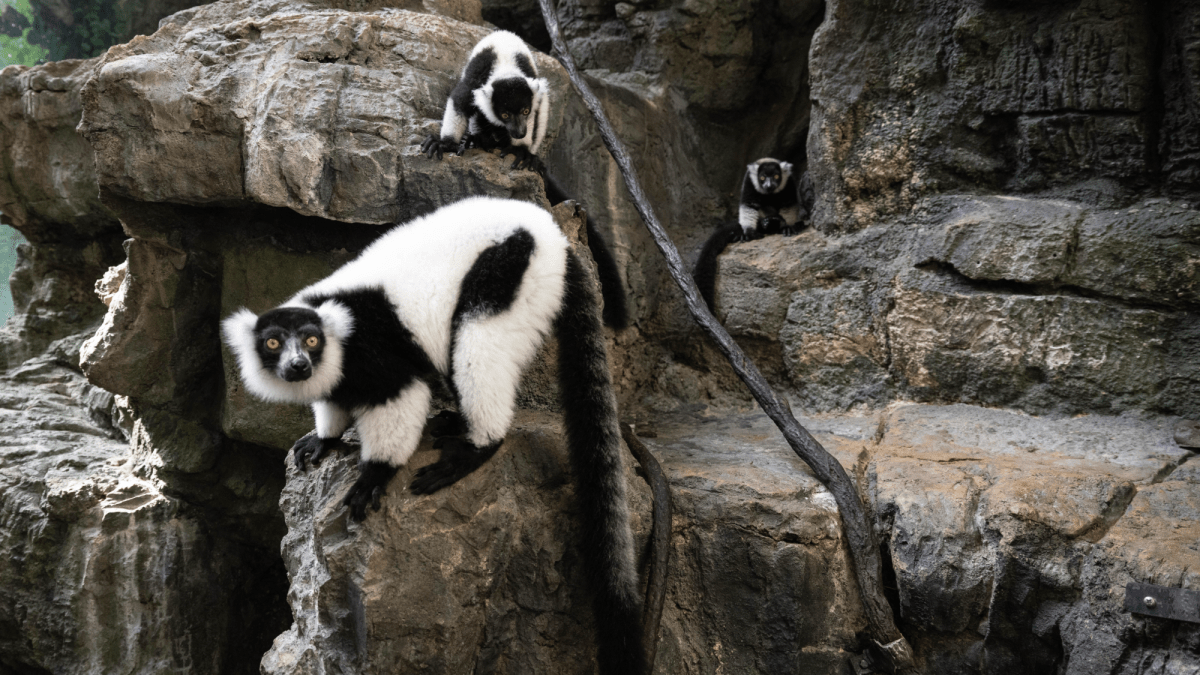
New twin black-and-white ruffed lemurs (Varecia variegata) are bringing hope for a Critically Endangered species in the middle of New York City. The fraternal twins, Masco (a male) and Tonga (a female), were born April 5, and are officially making their debut at the Central Park Zoo.
Black-and-white ruffed lemurs are native to the tropical rainforests of eastern Madagascar. There they play an important role in the ecosystem that is mostly associated with bees. They are among the largest pollinators in the world. When they eat the nectar of the Madagascar-native Traveler’s tree, the pollen clings to their faces and then goes with them from plant to plant.
“Lemurs play important roles in protecting plant species and maintaining healthy ecosystems
through seed dispersal,” Central Park Zoo Animal Curator Susan Cardillo tells Popular Science. “In addition to the spread of pollen from their snouts, they are highly frugivorous and pass seeds in their feces across forest landscapes. They are sometimes called the ‘rainforest gardeners.’”
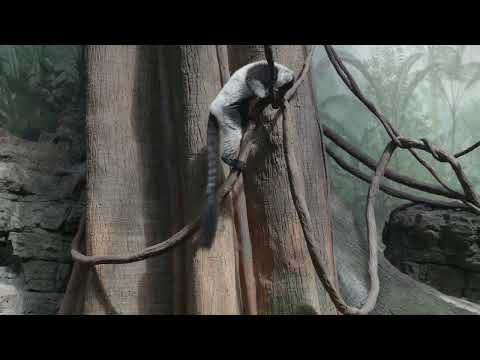
Rare twin black-and-white ruffed lemurs at the Central Park Zoo
The International Union for Conservation of Nature (IUCN) classifies them as Critically Endangered. Their primary threats are habitat loss and poaching, and wild populations have declined by at least 80 percent over three generations. The Wildlife Conservation Society’s (WCS) Madagascar Program is working to protect Madagascar’s biodiversity, including in Makira Natural Park. This over 1,000 square mile protected reserve is the black-and-white ruffed lemur’s primary habitat.
For highly endangered animals like these, the Association of Zoos & Aquariums (AZA) may recommend that accredited zoos begin breeding programs as part of a Species Survival Plan. Breeding programs can increase their population numbers, while also maintaining genetic diversity. Since the Central Park Zoo first acquired black-and-white ruffed lemurs in 2008, a total of eight monkeys have been born. The twins’ mother is named Koa and this was her second pregnancy.
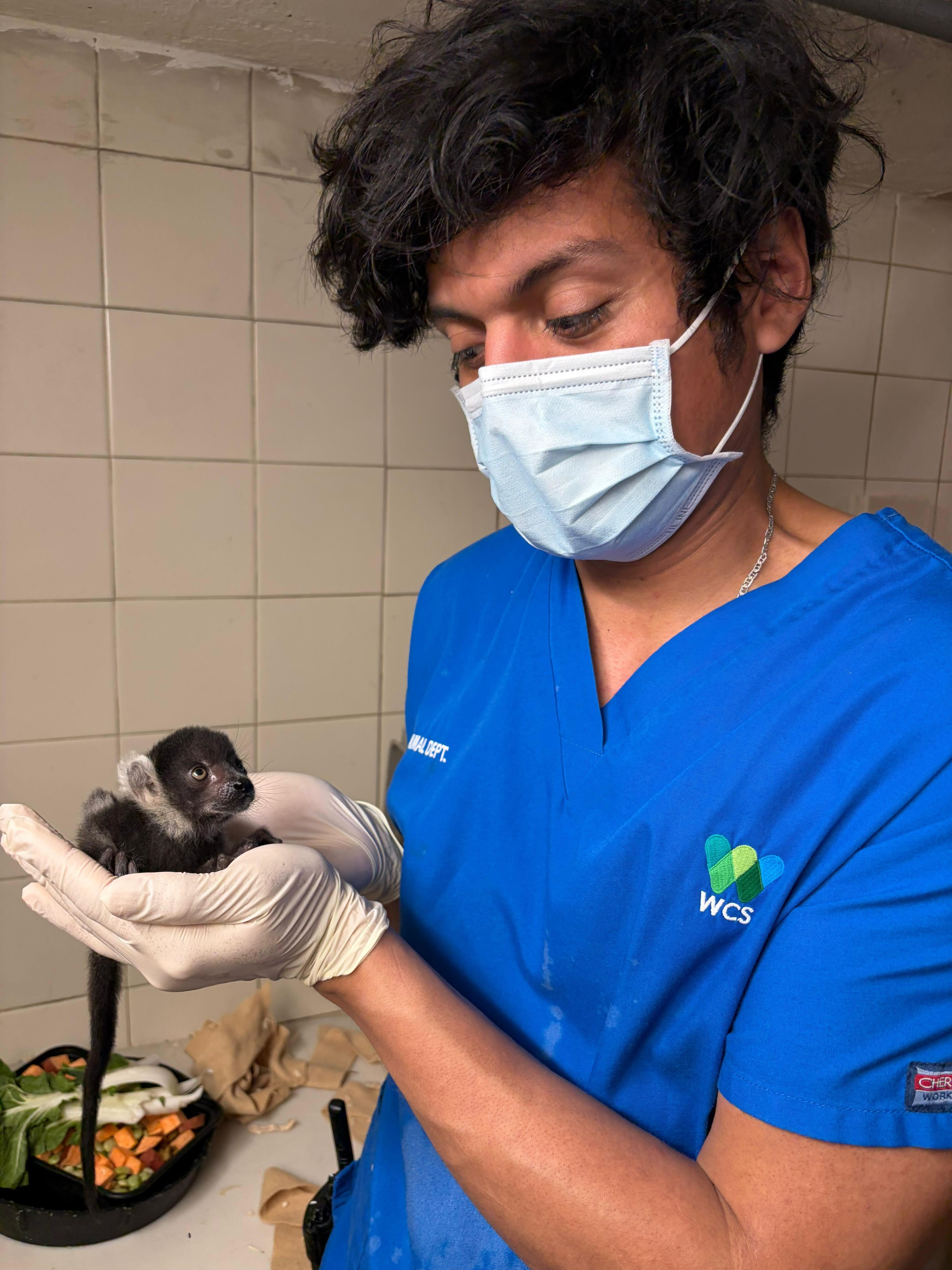 Black-and-white ruffed lemur pup is held during a routine veterinary exam at Central Park Zoo in April 2026. Image: ©WCS.
“This [second pregnancy] enabled our animal care staff to accurately predict important milestones of the breeding season such as estrous cycle, mate choice, and early signs of pregnancy,” says Cardillo.
Ruffed lemurs typically birth multi-infant litters, unlike other primate species. Mothers will “park” their pups in tree canopy nests as they forage, instead of carrying them on their body like most primates. Lemurs also have complex social hierarchies and are uniquely matriarchal for primates. Each group of lemurs (called a troop) has a core female group that dominates mating, territory, and resource distribution. Koa is the leader of Central Park Zoo’s troop, and the twins’ father Milo is her chosen dominant male.
According to animal care staff, bananas are Masco and Tonga’s favorite treat. The twins can now be seen at the Central Park Zoo’s Tropic Zone exhibit.

2026 Popular Science Home of the Future Awards
39 products that will improve your everyday life.
Laura is Popular Science’s news editor, overseeing coverage of a wide variety of subjects. Laura is particularly fascinated by all things aquatic, paleontology, nanotechnology, and exploring how science influences daily life.