
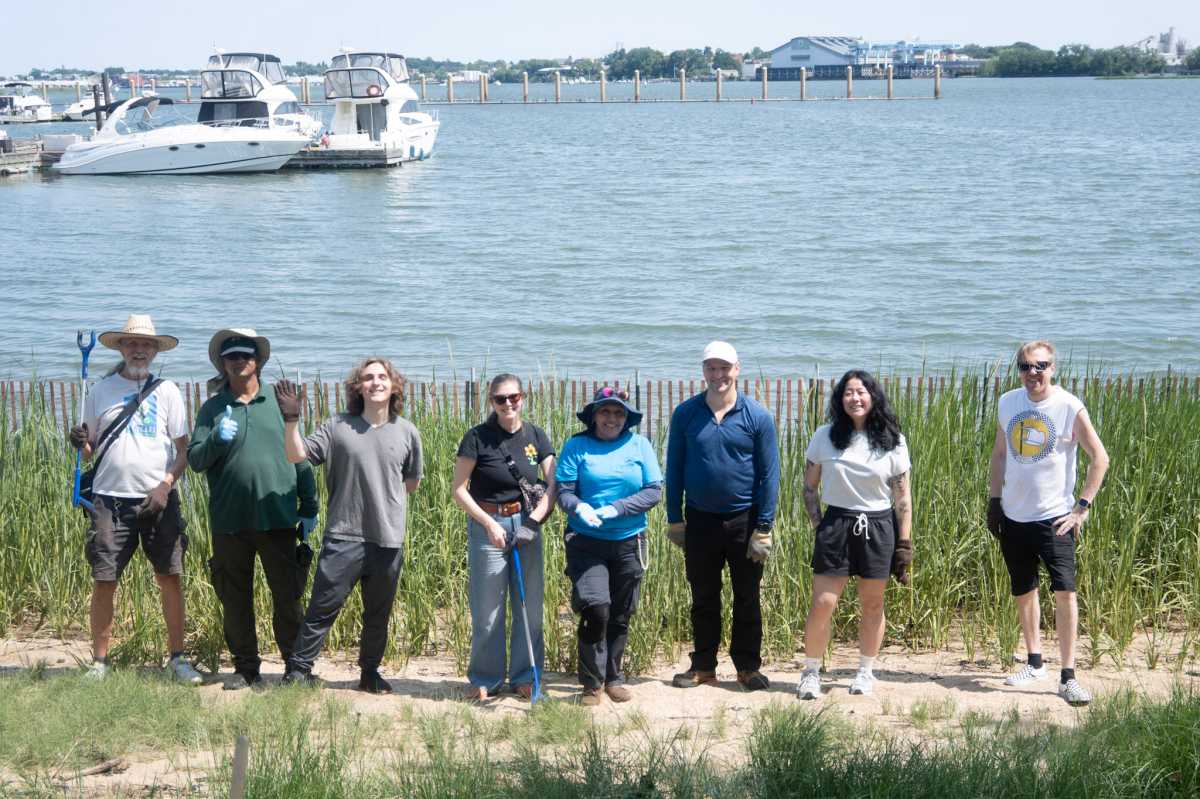
According to an email sent by Guardians of Flushing Bay, “Our goal with hosting shoreline cleanups is to reveal Flushing’s Waterways’ pollution problem and connect participants with solutions. At a cleanup, volunteers experience the magnitude of the problem firsthand and what it feels like to begin to help fix it. In addition to learning about the pollution issue, volunteers will learn more about PPNYC’s process of reclaiming and processing plastic to turn it into usable material.”
Guardians of Flushing Bay usually begins hosting shoreline cleanups in April and wraps up in September. Whenever a big storm comes, the sewer overflows, bringing in large amounts of plastic trash and trash from the streets and buildings. It overflows into the waterways, which ends up on the shoreline.
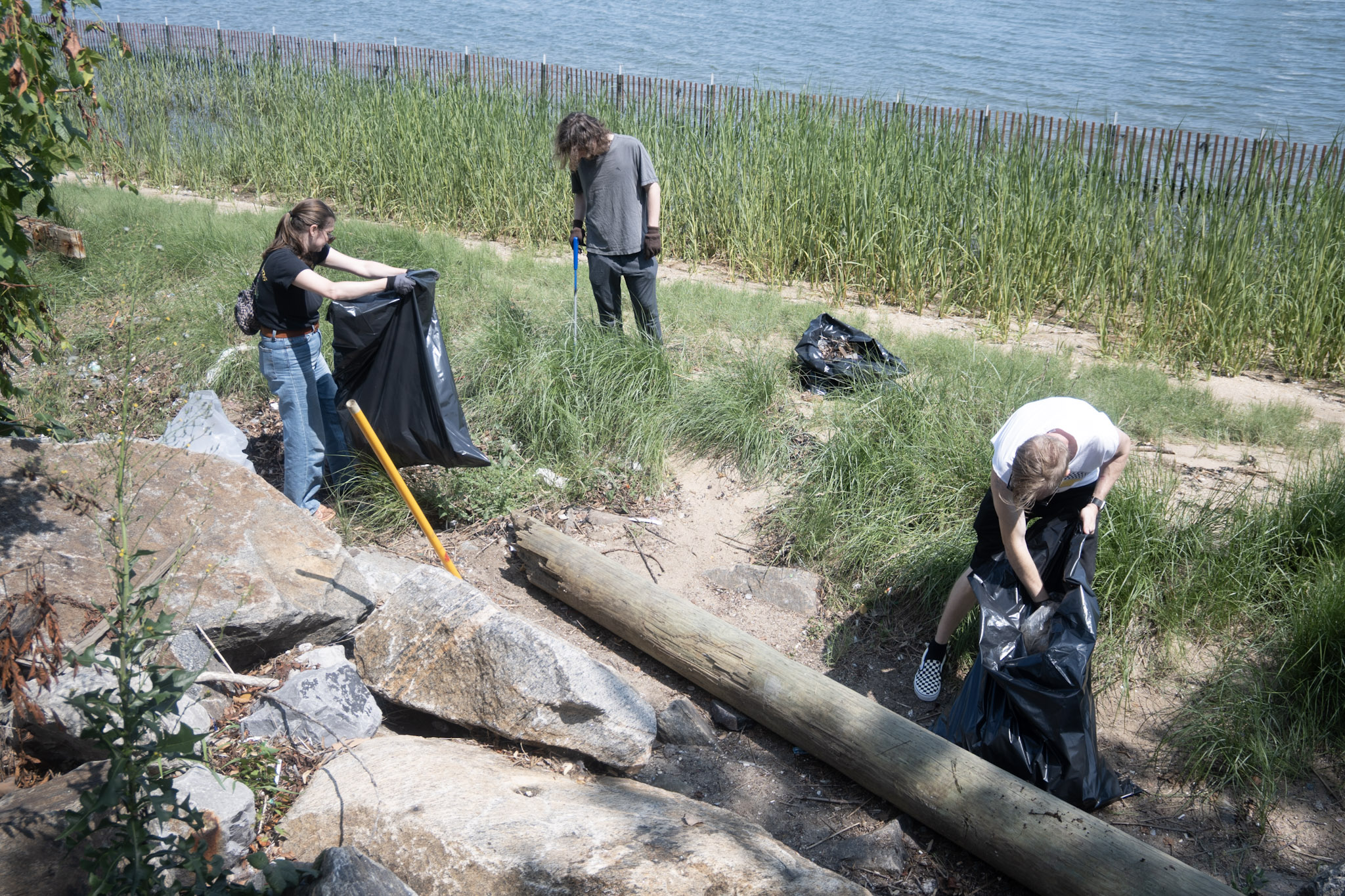 Photo by Alice Moreno
“We use this analogy,” said Rachel Wu, community engagement manager of Guardians of Flushing Bay. “Picking up trash out of shoreline cleanup is like scooping water out of a bathtub with a spoon while the tap is still running. There’s always going to be more trash.”
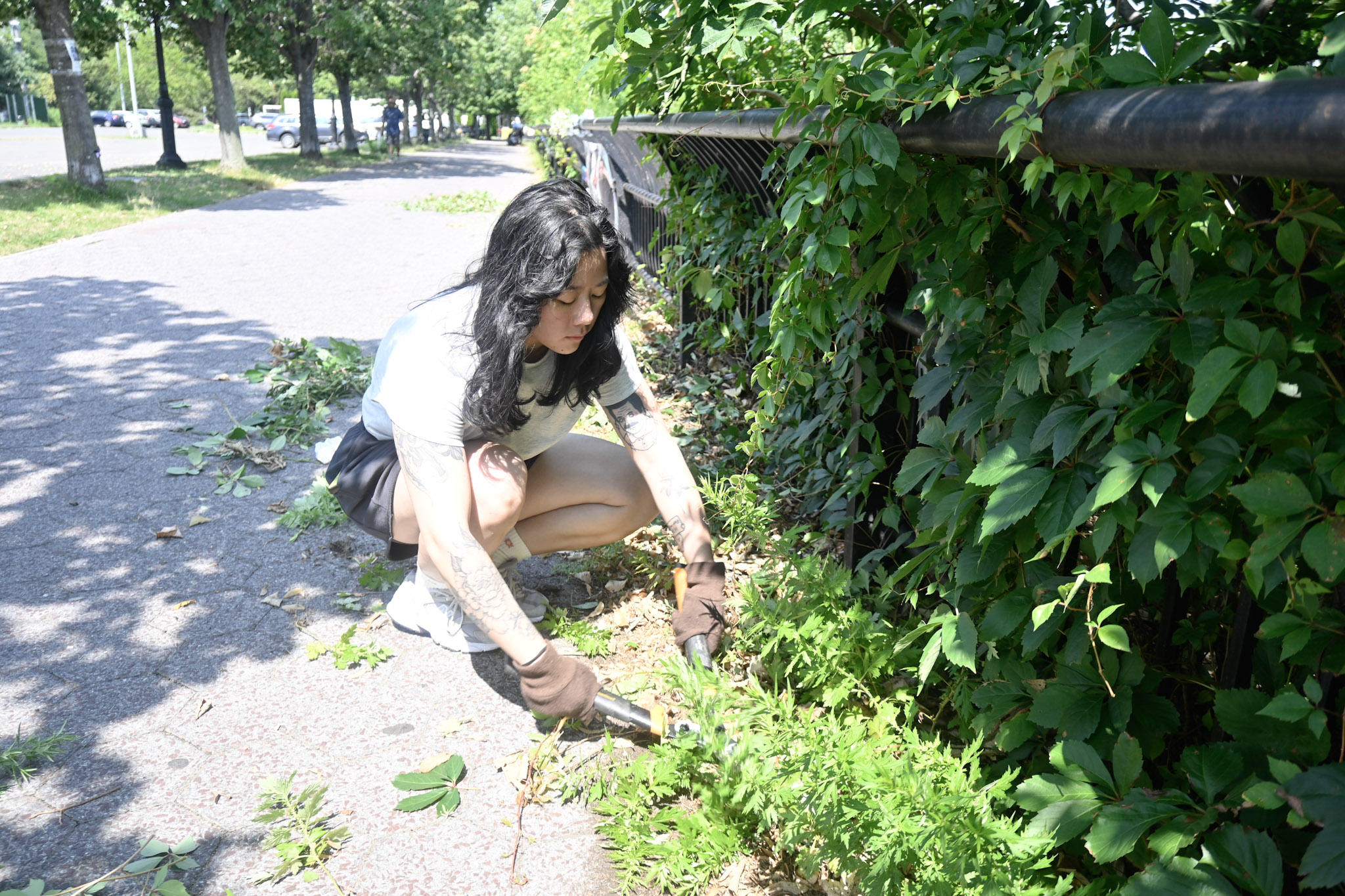 Rachel Wu of the Guardians of Flushing Bay trims plants. Photo by Alice Moreno
Through this cleanup, volunteers get to witness firsthand the pollution issue on the Flushing Bay shoreline, becoming a part of the solution by helping clean up the trash.
“I like beautification,” said Sasha Kovalev, a volunteer with Guardians of Flushing Bay. “Doing stuff that needs to be done because it’s not something that is heavily invested in.”
The event was in collaboration with PPNYC, a South Bronx-based organization with which the Guardians of Flushing Bay have a two-year partnership. PPNYC’s mission is to recover some of the plastic waste and transform it into usable materials. These materials include furniture, artworks, interior design objects, light switch covers, coat hangers and more.
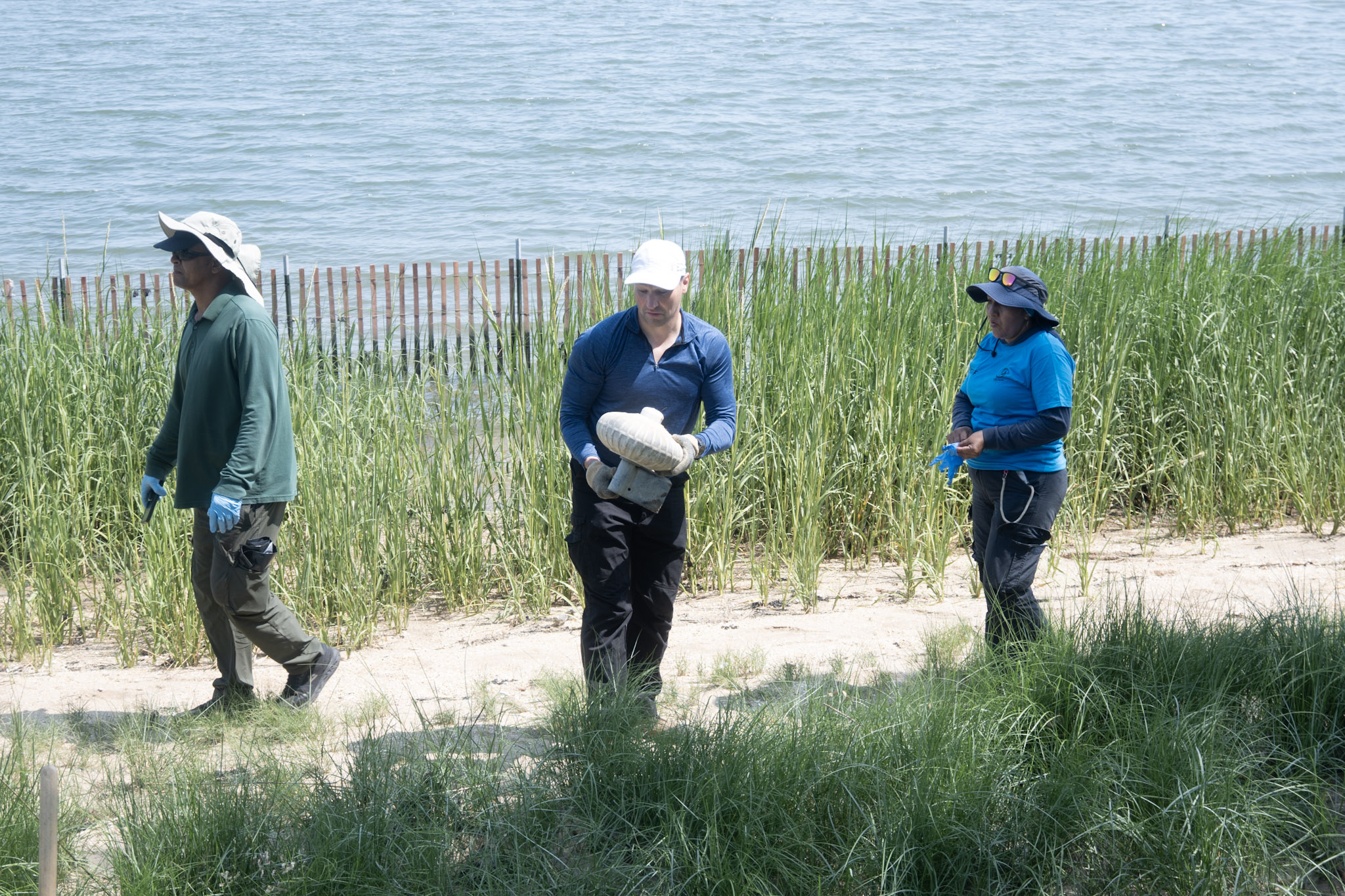 Photo by Alice Moreno
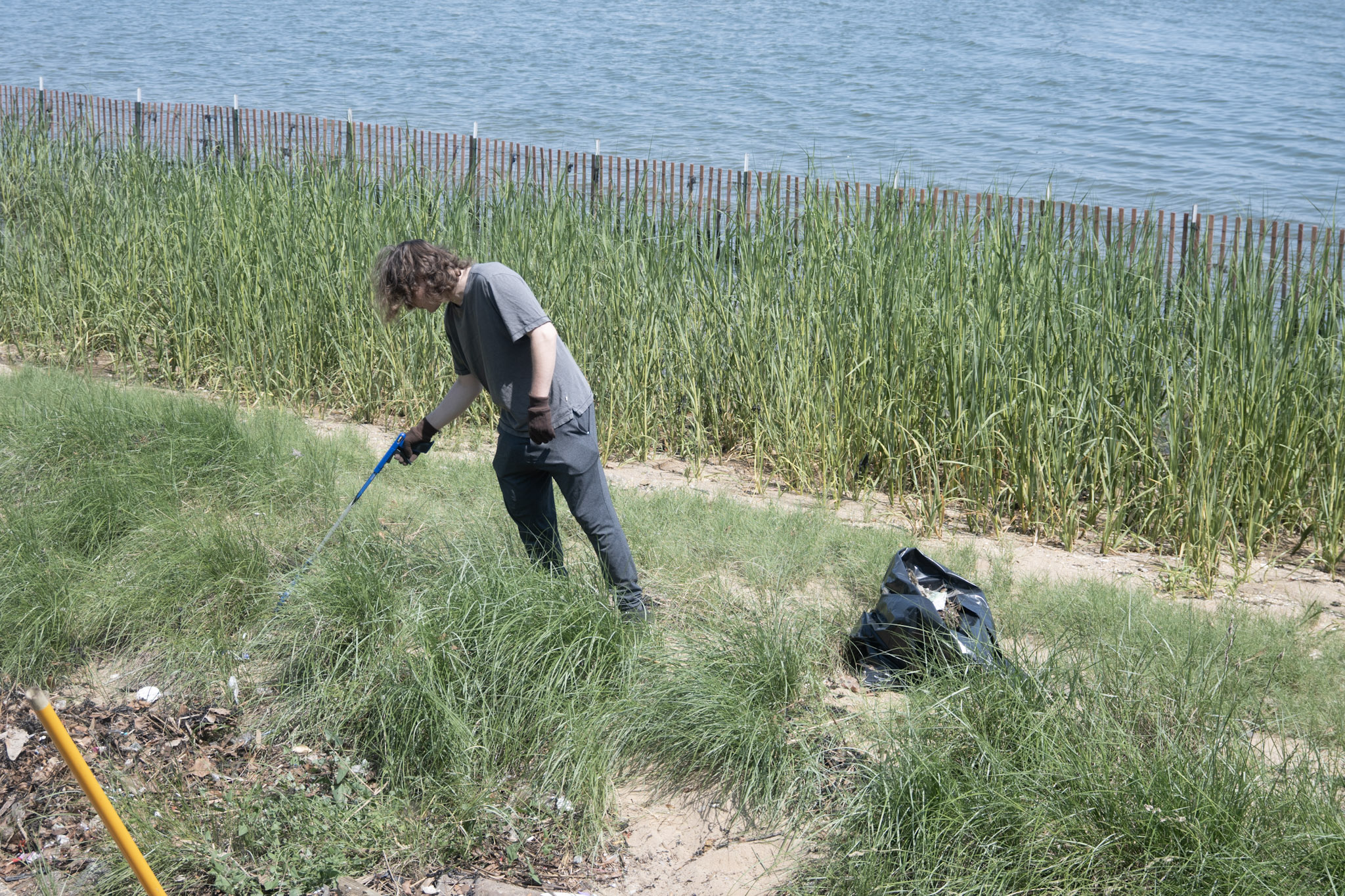 Photo by Alice Moreno
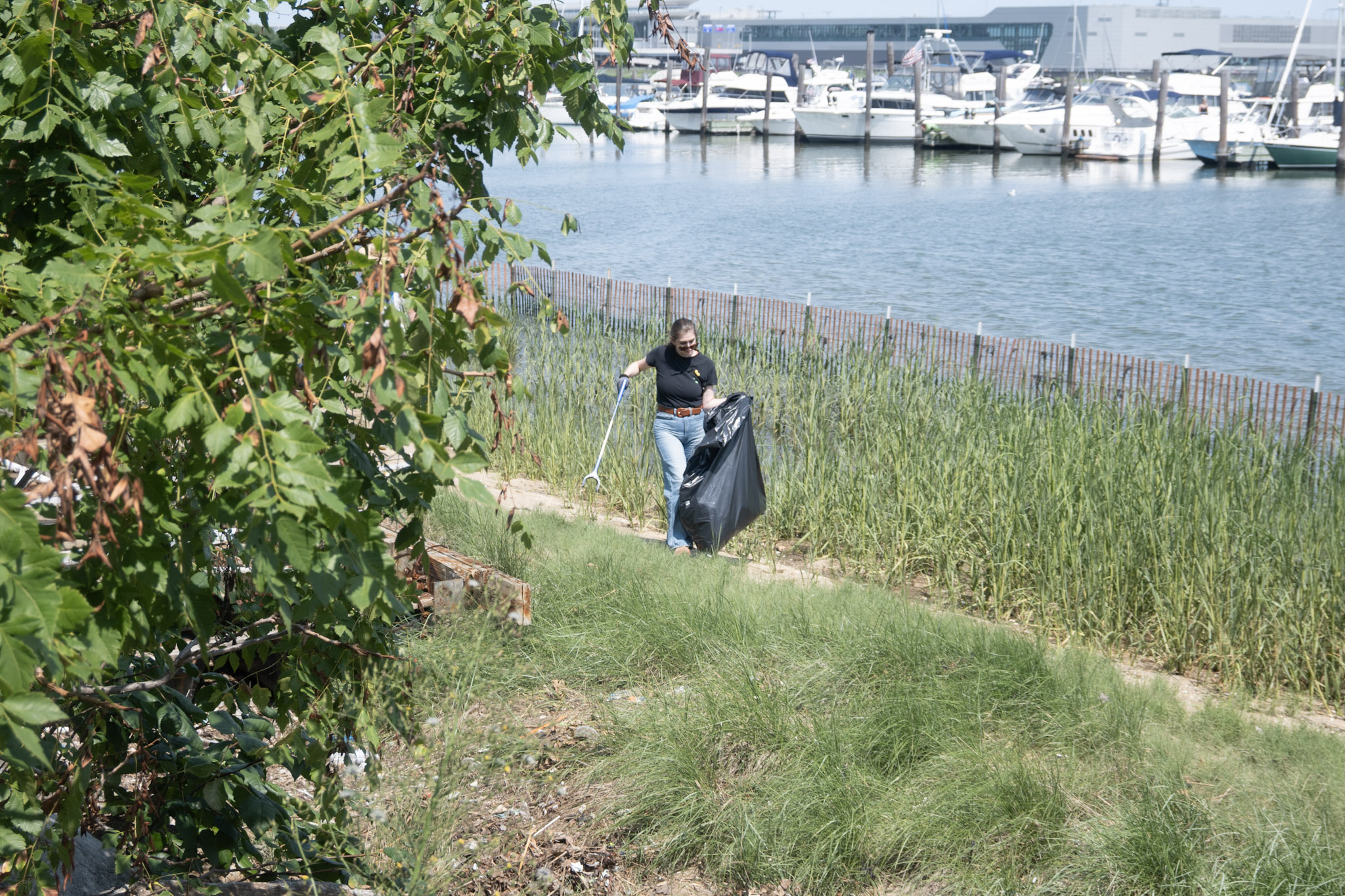 Photo by Alice Moreno
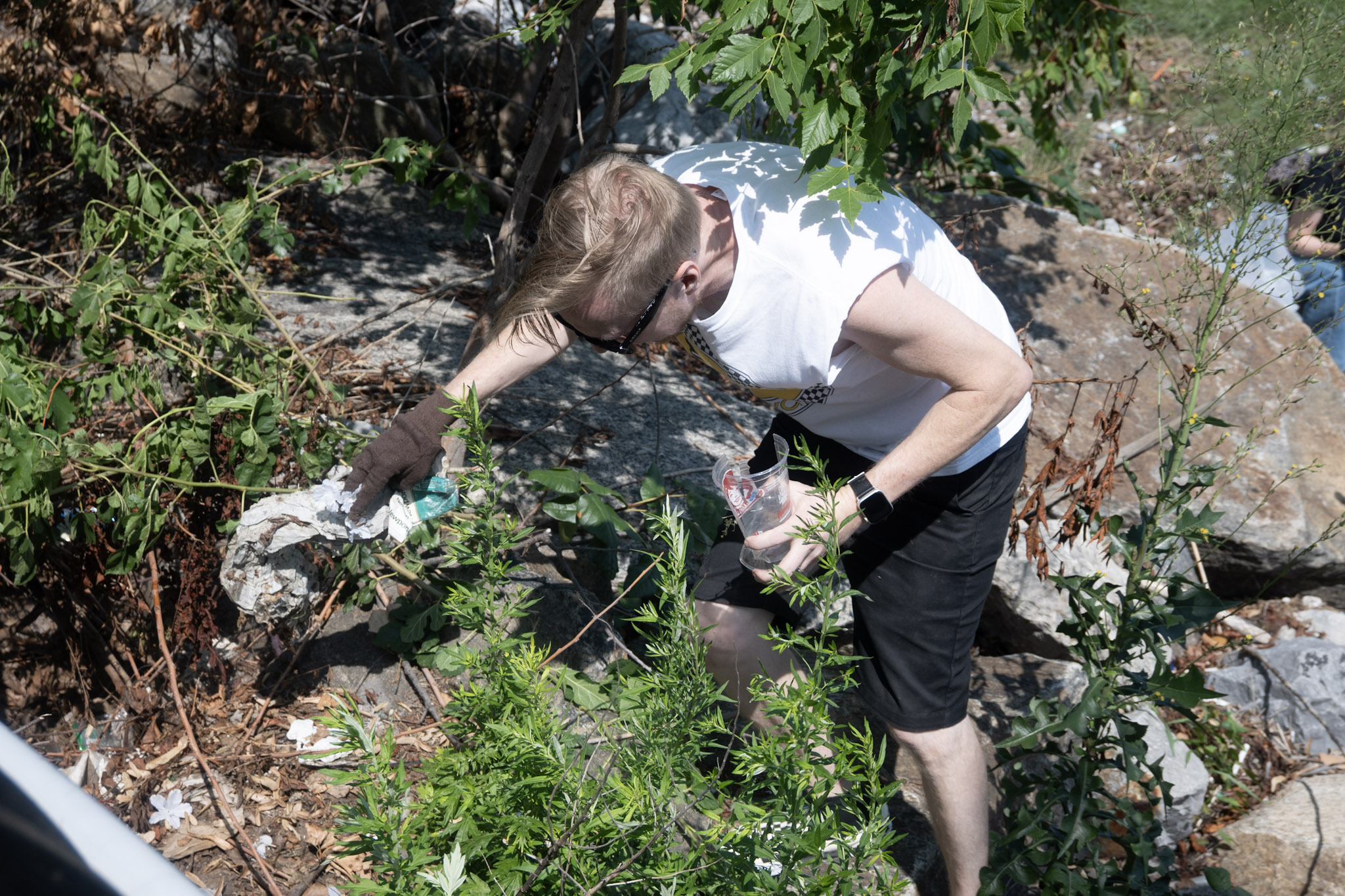 Photo by Alice Moreno
“[Guardians of Flushing Bay and PPNYC] talked about a lot of cleanups around the city, [that] don’t have the bandwidth, or the people power, to actually separate the MGP from the cleanup, so it does go into landfill,” said Gary Dusek, of PPNYC. “So what we wanted to do is offer up our services as a support to their efforts, to actually recover some of that material and make stuff out of it for them.”
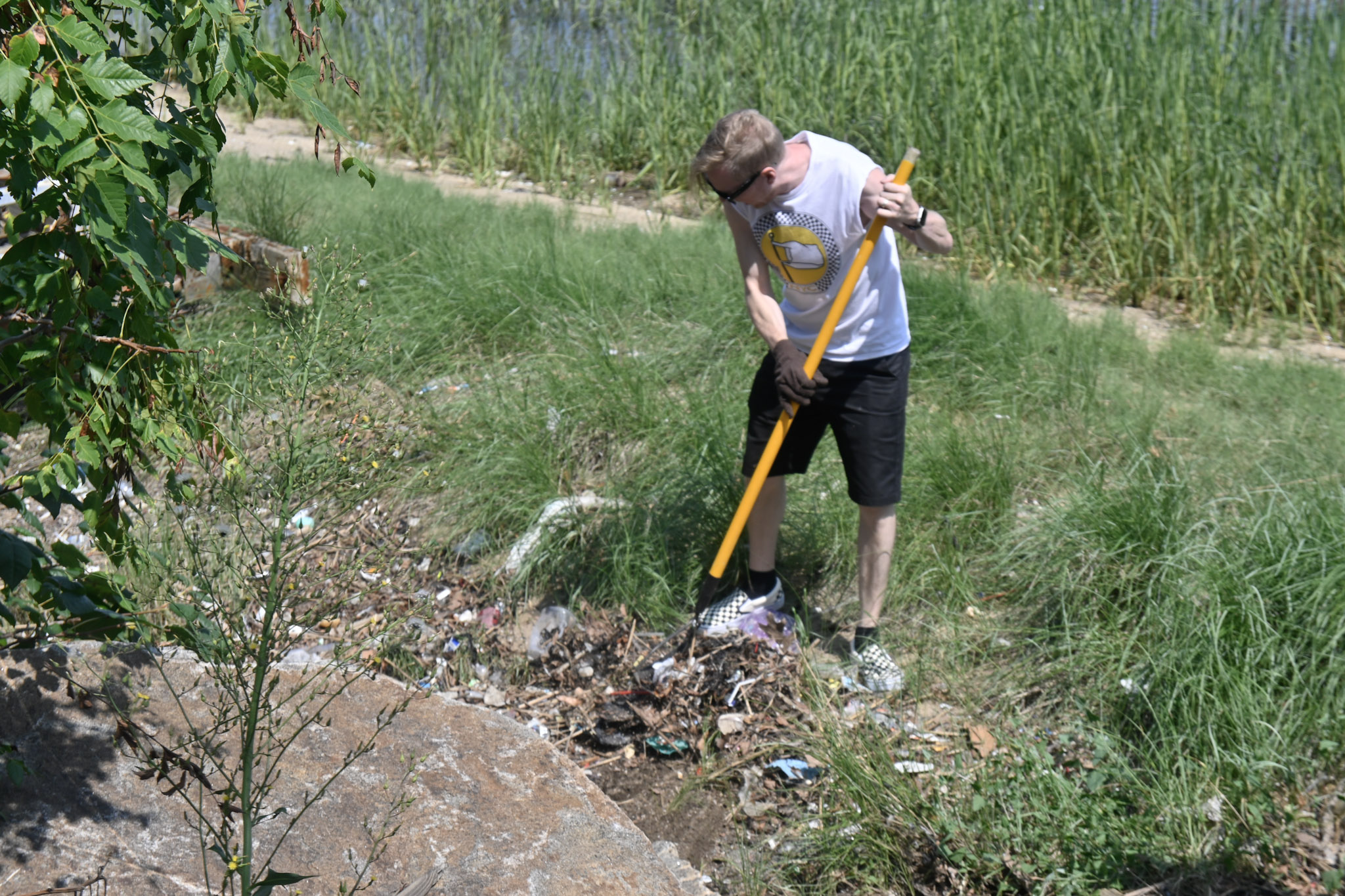 Gary Dusek of PPNYC working on cleaning up the shoreline of Flushing Bay. Photo by Alice Moreno
PPNYC had a miniature shredder on site, where one can put plastic and shred it into pieces, to be converted into various objects. Dusek describes this as “reclamation,” rather than recycling. Within 10 minutes, plastic from the shoreline can become a piece of artwork.
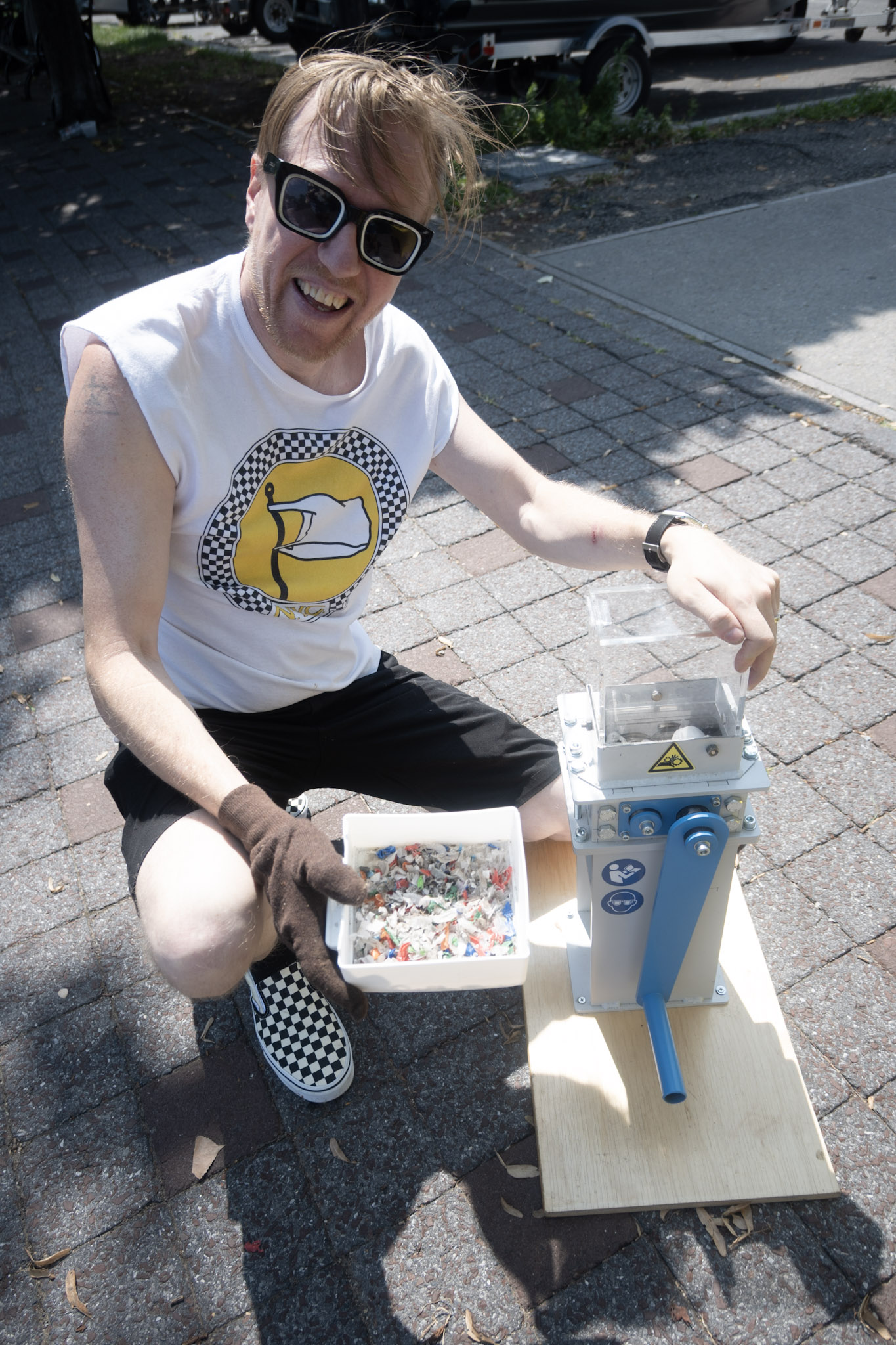 The miniature shredder. Photo by Alice Moreno
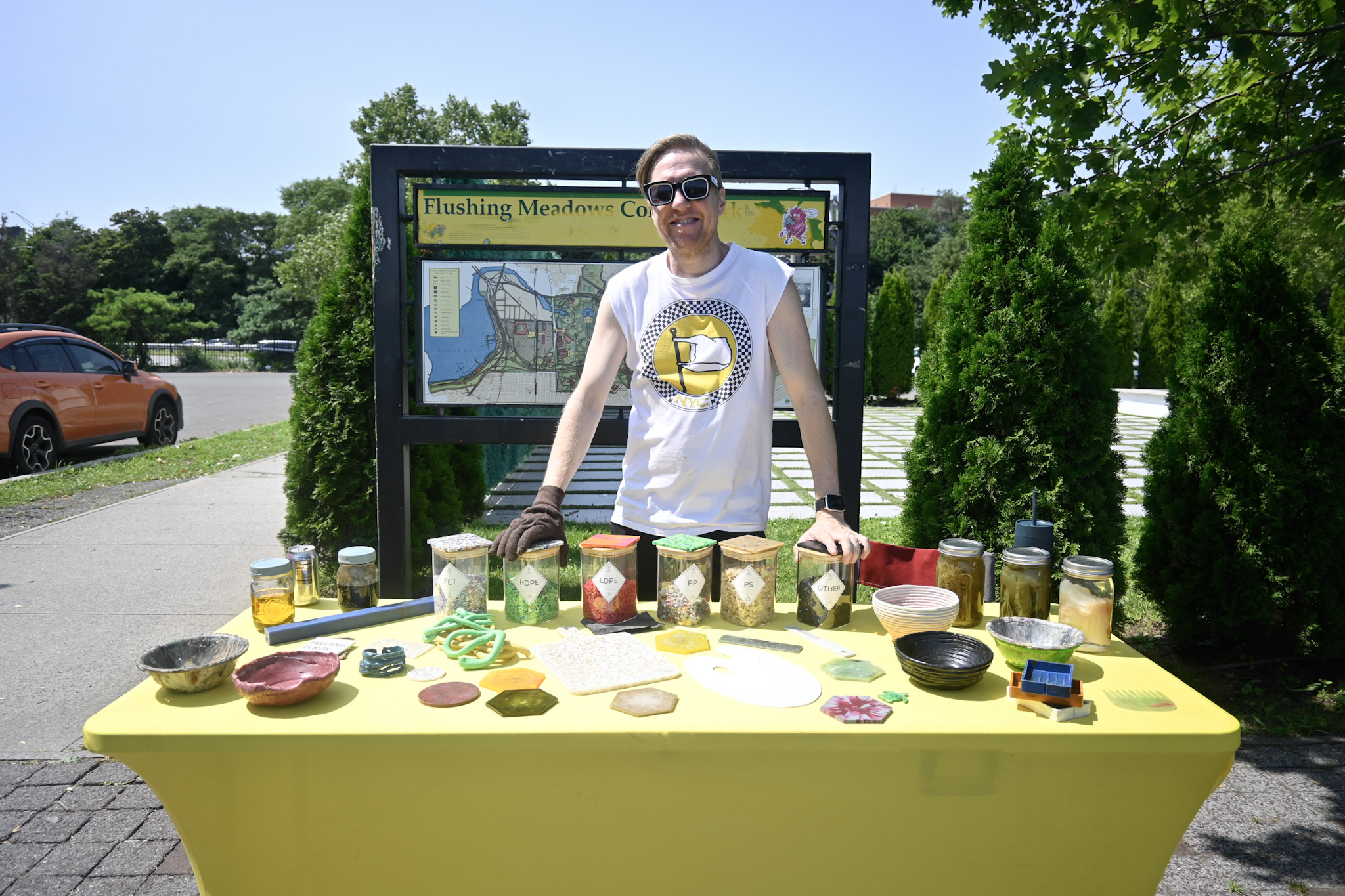 The plastics from the shoreline can be transformed into pieces of artwork. Photo by Alice Moreno
The Guardians of Flushing Bay was founded by a group of dragon boaters (synchronized team paddlers on a human-powered watercraft that is designed to look like a dragon) who relied on Flushing Bay to practice their sport. The coalition began in 2014, and by 2015, it evolved into the Guardians of Flushing Bay. By 2018, they were incorporated as a 501 (c) (3) nonprofit. According to their website, “We accomplish our goals using three key strategies: 1) building and sustaining grassroots coalitions, 2) bonding residents with local ecology and 3) repairing local habitats.”
For more information on the Guardians of Flushing Bay and PPNYC, visit guardiansofflushingbay.org/ and preciousplastic.nyc/.