
This transcript was created using speech recognition software. While it has been reviewed by human transcribers, it may contain errors. Please review the episode audio before quoting from this transcript and email transcripts@nytimes.com with any questions.
archived recording 1
Love now and always.
archived recording 2
Did you fall in love last night?
archived recording 3
Just tell her I love her.
archived recording 4
Love is stronger than anything you can feel.
archived recording 5
[SIGHS]: For the love.
archived recording 6
Love.
archived recording 7
And I love you more than anything.
archived recording 8
(SINGING) What is love?
archived recording 9
Here’s to love.
archived recording 10
Love.
anna martin
From “The New York Times,” I’m Anna Martin. This is “Modern Love.” And today, on the show, I’m talking to Dr. Eli Sheff.
[MUSIC PLAYING]
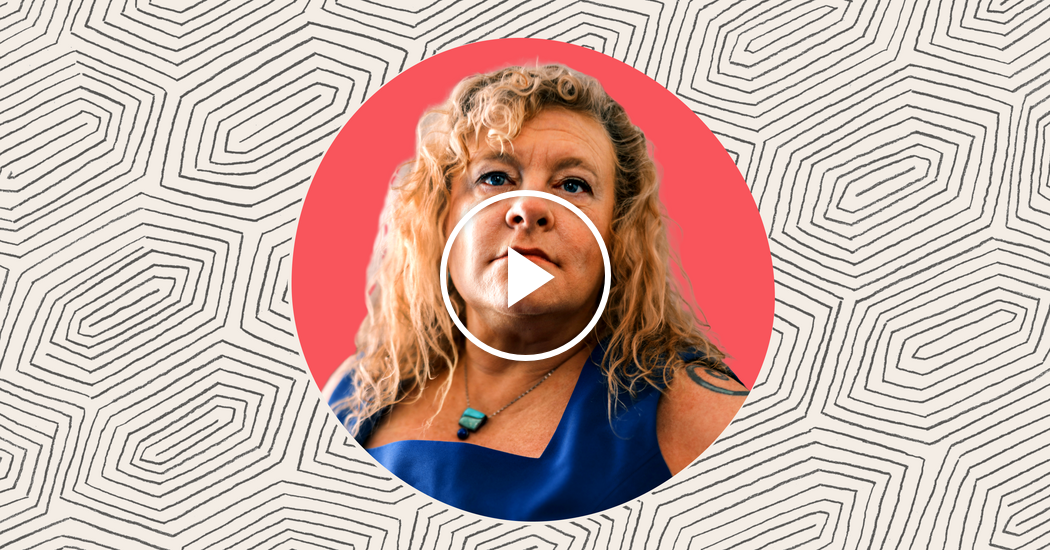
Dr. Eli is an expert in polyamory. For most of her career, she’s been studying the ins and outs of what it means to be in poly relationships. And for the past 30 years, she’s been studying the lives of kids who grew up in poly families. OK, so as a single woman in her early 30s living in Brooklyn, I hear the word “poly” a lot. It feels like everyone wants to be poly, or went on a few dates with someone who’s poly, or had a poly phase in college. It feels like we’re at peak poly saturation.
But Dr. Eli first heard about polyamory in the early ‘90s, when barely anyone even used that word. And once she learned a little bit about it, she had to understand it, not just as a researcher. Dr. Eli had to decide whether polyamory was right for her. In our conversation, Dr. Eli tells me what she’s learned from talking to the kids who grew up with polyamorous parents, kids who are now old enough to make their own relationship choices. Plus, she has advice for people trying to figure out if poly is right for them.
[MUSIC PLAYING]
Dr. Eli Sheff, welcome to “Modern Love.”
eli sheff
Thanks so much for having me. I’m thrilled to be here.
anna martin
We’re thrilled to have you. How did polyamory first come on your radar?
eli sheff
I was 22. And I was in college, dating this woman that I was super crushed out on. And she was not that interested in me, so I was kind of heartbroken and thought, all right, I’m going to just dabble in relationships with men for a little while because it’s just so much easier to find a man to date. Like, they’ll come on to me, whereas if I’m going to find a woman, I’ve got to be the one doing all the work.
anna martin
You’re like, ah, I’ll give men a try. They’re easier. Yeah.
eli sheff
Exactly, and kind of disposable, you know. I was like, I’m going to just dabble with these dudes until I get back to real relationships with women. And so, I meet this guy, and I’m thinking, of course, he’s disposable, so when he tells me on our first date that he never wants to be monogamous, and he never wants to get married —
anna martin
Ah.
eli sheff
— I’m like, whatever, freak. I don’t care.
anna martin
You’re like, so I’m in love with this woman. Yeah.
eli sheff
Yes, and you are going to be going away in five minutes —
anna martin
You’re a distraction, yeah.
eli sheff
— so you and your weird — whatever, I don’t care about that.
anna martin
And wait, can I ask, did he use the word “monogamous,” if you can remember, in that conversation?
eli sheff
Yes.
anna martin
He did? OK.
eli sheff
He was very clear.
anna martin
And you knew what that was? OK. Yeah, yeah, yeah.
eli sheff
Yeah, but I had never heard the word, “polyamory.” He hadn’t. He was just like, I don’t want monogamy.
anna martin
I don’t want one partner and just one partner.
eli sheff
Right, I want multiple partners. And I was like — I mean, I had kind of a negative reaction to it from the get-go. Like, OK, that’s weird. That doesn’t sound good to me. That sounds like a lot of work.
anna martin
Yeah, I was going to say, and why did it seem your gut reaction — again, this is many years ago, but what was underneath that feeling?
eli sheff
At first, it was just rejection of, that does not sound like fun to me. That sounds like a hot mess. And that is not appealing.
anna martin
Lots of logistics.
eli sheff
Yes, and then, as we got to know each other and I fell in love with him, which totally shocked me —
anna martin
Aha.
eli sheff
— I, like, I think, many other monogamously oriented people, I was like, well, wait a minute, does this mean I’m too fat? I’m bad in bed. I’m boring. And what is the lack in me that you need other partners? And he kept saying, no, no, no, it’s not about you. It has nothing to do with you. No matter who he was with, he would need to be with multiple partners. And I was like, really? That just sounds weird.
anna martin
Bring me into that moment. Was there a conversation you remember having with him where you were grappling with this desire of his and this insecurity it was bringing up for you?
eli sheff
10 years of conversation —
anna martin
Wow, OK.
eli sheff
— around that, and he just couldn’t seem to let go of it. He brought it up all the time — all the time. And he —
anna martin
And was he acting on it? Or was he —
eli sheff
No, he really wanted me to find us a woman that we could share. So we didn’t this term yet at the time, but there’s a term for a female-male couple that is looking for a woman that they can both be with, and that is unicorn hunter, because this kind of free-floating bisexual woman who’s not in other relationships and just wants to attach herself to a couple and move to their goat farm in North Dakota and raise their children for them, she is so rare that she’s mythical. I’m picking up what you’re putting down. The goat farm really put it into stark relief. I got you. I guess, were there some conversations that made you feel like, maybe I should give this a try? Maybe I’m being too resistant. I’m curious about that side.
Definitely, in part that he wanted a really big family.
anna martin
Ah.
eli sheff
And we had two children. And that was really as much as I felt like I could handle.
anna martin
You’ve had kids at this point. OK, yeah.
eli sheff
Yes, and that I didn’t want to bear any more children, and I didn’t feel like I could manage any more children. I was working on my PhD, teaching at night, trying to write my dissertation during the day with two small children. He would work during the day, take care of the kids at night while I was working.
anna martin
It does seem like a lot.
eli sheff
It was a lot. And he was like, you know what? If we could have another woman who really wants to take care of kids —
anna martin
Ah.
eli sheff
— and you could be, like, the 1950s dad, that you just come home from work, read your newspaper, while other people take care of the kids and make food and clean the house and stuff. And so, not only is this mythical unicorn woman going to want to be equally attracted to both of us, she’s going to have a house cleaning fetish.
anna martin
When you put it that way, I want to take us back in time just a bit, maybe even before kids, to the earlier conversations about his desire to have multiple partners. When do you remember hearing the word, “polyamory,” for the first time? Because you said he wasn’t using that word. When did you first hear that word?
eli sheff
So I was driving home from grad school in the snow on this really slick road. I’m feeling kind of nervous. So I’m listening to National Public Radio, as I always did when I was in the car. And the host was interviewing this person, Ryam Nearing, who —
anna martin
I remember the name.
eli sheff
Yeah. Oh, yeah, she’s a big deal in the polyamorous community, and especially at the time. She had started this organization called Loving More.
anna martin
Ah.
eli sheff
And they were talking to her about her organization and how this organization was having an open house, a meeting in a public room in the library that anyone who wanted information could come to. And I was just like, oh, my god, that’s it. That’s the thing he’s been talking about.
anna martin
Do you remember how she defined polyamory at the time? What about that word and its definition clicked for you? Like, oh, my god, that’s what my partner has been talking about this whole time.
eli sheff
Loving openly and honestly, loving multiple people at the same time, having multiple partner relationships, but not hiding it from anyone.
anna martin
Gotcha.
eli sheff
And that’s exactly what he had been talking about.
anna martin
So you’re mentioning a kind of — or you’re describing, rather, a kind of aha moment, like, oh, my god, there’s a name for this thing that he’s been talking about and that we’ve been grappling with as a couple. Did it make you more curious about it?
eli sheff
Absolutely, and especially hearing that they were having this meeting, public meeting coming up. So I was like — I went home, and I was like, honey, we’ve got to go to this thing because —
anna martin
You and your partner.
eli sheff
Yes, because this is driving me nuts. I feel so riled up about it all the time. And I want to find out from people, how do they do this? How do they manage this in their lives without just feeling awful all the time? Because it really was — I was feeling just awful about it —
anna martin
I’m sorry.
eli sheff
— that he wanted these other people and wouldn’t let it go. He kept bringing it up over and over. So I was like, all right, let’s just go talk to these folks and find out what’s going on.
anna martin
You come home. You’re like, we got to go to this meetup. Tell me about it. I’m so curious.
eli sheff
It’s this big room in a library stuffed with people, like standing room only.
anna martin
Wow.
eli sheff
I know. I was shocked, how many people were there. And there’s people talking about having been in relationships for 20 and 30 years, very happy relationships together.
anna martin
With multiple partners?
eli sheff
Yes, and I’m like, how does that not just kill your heart? So they’re like, it’s the opposite. Their heart opens and blooms with all of these additional people. They really do experience it as more love.
anna martin
And were you just listening? Were you asking questions? What was your presence in that meeting in that room?
eli sheff
During the meeting itself, I only listened. And then after the meeting, I went up to a person who later participated in my study, and I was just like, you say that you’re so happy with this. And when I think about this, it just feels terrible to me. How do you manage that? And of course, her answer was long and complicated and hard to put into a nugget. But basically, she was like, I get a lot out of it. Sure, it comes with some costs, but she said it benefits her far more than the costs associated with it.
anna martin
It also, I think, is a very open-hearted question for you to ask a stranger who you’ve just seen talk in a room, to go up and be like, listen, when I think about this, I feel hurt and scared — me paraphrasing what you said. That’s a quite vulnerable thing to approach someone with, I think.
eli sheff
Thanks. Interestingly enough, I guess, the polyamorous people in general, they’re very used to talking about their feelings. They’re used to having challenging conversations. They’re used to looking inside and seeing what part of this is insecurity on my part. They’re introspective folks, so it wasn’t unusual for them to have this conversation. It certainly felt exposing to me, but I was fine with it.
anna martin
After this first meeting, are you like, well, that’s it, I’m not going anymore, or are you like, I got to know more?
eli sheff
Not only I’ve got to know more, but these people, these humans are delightful.
anna martin
Did your feelings about polyamory start to change?
eli sheff
Absolutely. I felt much less afraid of it. It seemed much less — I don’t know — “sinister” is the word that occurs to me. And I hate to use that word because it makes it sound so scary, but it definitely felt very heavy to me to be caught in this “I really want to be with this man.” He’s really important to me, but I really don’t want to do this thing that’s really important to him.
And that felt very uncomfortable. And the more I came to learn about polyamory, the less threatening it felt, and the more comfortable with it I became. And I wondered, is this something I would want?
[MUSIC PLAYING]
anna martin
We’ll be right back.
[MUSIC PLAYING]
Well, let’s get into the study. So it’s like, at a certain point, going to these poly meetups, polyamorous meetups, it started off as for your personal exploration, trying to understand your relationship. But at a certain point, you decide to actually study this, like write your dissertation on it. Tell me how that happened.
eli sheff
So for about three years, I was a civilian, more approaching it, how does this impact my own life? But by then, I was in graduate school, and I was learning all of these research methods. And one of the research methods classes I had said do an interview with someone, practice interviewing skills. So I interviewed a polyamorous person, and the class was like, oh, my god, this is amazing. This is your dissertation right here. And I was like, really?
anna martin
[GASPS]:
eli sheff
Oh, but nobody’s done research on it yet, you know? And at the time, I wasn’t aware there were two other researchers looking into this, and that was it worldwide. And none of us knew about each other at first. We all thought we were the only person doing this. And I mean, the community had been around, but the word hadn’t been around for as long. And now, in 1996 — what year is it?
anna martin
[LAUGHS]:
eli sheff
2026?
anna martin
2026, so just 30 years, [LAUGHS]: or whatever. Yeah.
eli sheff
Now in 2026 —
anna martin
Yeah, yeah, yeah. [LAUGHS]
eli sheff
— polyamory and other forms of consensual non-monogamy are fairly well-known.
anna martin
Totally.
eli sheff
People know they exist. But in 1996, it wasn’t as much of a concept. It wasn’t as widely known.
anna martin
I think it’s such a good reminder that this is a word we hear — I hear casually as a single 30-something in Brooklyn all the time. But at the time, this was not spoken about. Some people didn’t even know the word for this. But you were here studying people who were living this way. And you decide to focus your study of polyamory specifically on kids raised in polyamory —
eli sheff
Not at that point.
anna martin
No. Oh, gotcha, OK.
eli sheff
Not yet. I started out talking to the adults. And the method I chose was ethnography, which is primarily interviewing, but also, participant observation, meaning going places —
anna martin
Embedding.
eli sheff
— and just hanging out. Exactly.
anna martin
But eventually, you decide to focus a long-term study on the kids in polyamorous families. And I’m really curious about that choice. Why did you decide you were interested in studying children of poly families?
eli sheff
Partially, it was when I would talk about my research findings at conferences or other places, people would say, well, how does this impact the children? People kept asking about it, and I wondered, how are those kids doing? What is happening with them?
anna martin
How did you set up the study? How many participants were there?
eli sheff
I would say, it’s kind of hard to count because some people participated only once, and some people let me interview them multiple times across the years. So, I’m going to say about 213 people.
anna martin
Wow. Wow, OK.
eli sheff
And about 33 of them were children under 18, which are now some of them are in their 30s.
anna martin
How often did you talk to these kids as the study went on? Because it’s now a 30-year-long study.
eli sheff
Some of them I’ve spoken to four or five times. Some of them I’ve only interviewed once. Some of them I hung out with quite a bit before I even interviewed them in that participant observation phase of going to campouts and things with polyamorous families and observing how the children would have their own little social structure. They would play in a group and tell the adults, OK, we’re going over here now. And the adults would be like, OK, come back in 20 minutes or —
anna martin
And you’d be like, I’m going with those kids because I’m studying those —
eli sheff
Yes, exactly.
anna martin
What kinds of questions were you asking? What were you curious to know?
eli sheff
I would ask them all sorts of different things — how it felt to have multiple adults in their lives, what those adults did for them, how interacting with their peers, if it was ever an issue with that. And I would always ask them three different questions — one, did they think they would be polyamorous themselves when they grew up? And most of them said, I’m not sure. It depends on who my partner is and what they want.
One was, if you could choose, would you have chosen a different family to grow up in? And all of the children said no. They learned so much from this family, even though it was hard sometimes, and even though some of the things, they maybe wouldn’t replicate in their own lives. It really said to me that these kids had their needs very well met.
anna martin
Ah.
eli sheff
That their need for attention, affection, structure, all that — and that’s not even talking about the practical needs of food and shelter, clothing.
anna martin
And then what was the third question you would always ask, in addition to many other questions?
eli sheff
I would always ask, so are there any of your parents’ partners that you really miss, that your parents broke up with, and you really miss them? And finally, one kid said, you ask that all the time, and you seem like you have an agenda around that. I do miss people. I miss all sorts of people. Very low down on the list are my parents’ partners.
And I was like, not only you are right. I totally had an agenda coming from the outside thinking, oh, this must be a big impact on these kids’ lives, having parents’ partners leave when the parents break up. And the kid was like, that’s coming from you. That’s not coming from us.
anna martin
Interesting. Wow.
eli sheff
I know.
anna martin
Was that across the board, people were like, they do leave, and maybe I’m sad, but that missing, that deep missing of the partner was not so much a factor in general for these kids? I’m surprised by that.
eli sheff
Yes, in part because the parents put a lot of effort into having the children — if the children were attached to someone, that relationship could outlast the romantic relationship between the parents. And I saw that so much in these families. It was the non-sexual relationships that made the biggest difference.
anna martin
I want to make sure that we understand because it’s really interesting, what you’re saying. And I almost — I wish I had a flowchart, but this is a podcast and largely non-visual. So, maybe you could describe for me like, how are these poly families generally organized? Because you’re saying non-sexual partners. So it’s like two parents, biological parents, and then what? Each parent has their own partner. Talk to me about the structure of these poly families.
eli sheff
Frequently, there will be — so it often is the biological parents who are together. And frequently, when they very first come to polyamorous relating, many of them are coming, thinking, we want, much like my partner, my ex did, we want to be all together in one relationship. Many people realize that doesn’t work that well. Like, you may be attracted to someone who may be attracted to you, but it doesn’t mean they’re attracted to your partner —
anna martin
Huh, yeah.
eli sheff
— or that you are always having a three-person relationship. That, really, what I find is that many people have their sexual relationships in dyads, two-person sexual relationship. But the social relationships are knit together, in a way. The polyamorous people call that a polycule —
anna martin
Aha.
eli sheff
— like a molecule, only a polycule.
anna martin
Polycule — this is a word, again, that we hear. So we’re talking about this idea that kids can maintain emotional relationships with their parents’ partners, even if the parent and the partner break up, correct?
eli sheff
Yes, absolutely. And perhaps, even more importantly, that it is the emotional relationships at the core of the polyamorous family, that, to the outside people, it’s the sex that really stands out, because that’s what distinguishes a polyamorous family from a monogamous family, is that the parents can have sex with other people. And so, the outside of that arrangement, the sex really stands out. But from the inside, the emotional relationships between and among people who are not sexual partners, that is the real backbone of the polyamorous family.
anna martin
Can I ask in a zoomed-out way, what did kids tell you was the best thing, some of the best things about growing up in poly families?
eli sheff
It really depended on their age. When they’re little, they think all of the attention is great. When they’re tweens, which is, like, 9 to 12 maybe, they think the practicality of getting a ride or —
anna martin
Totally.
eli sheff
— one kid, yeah, makes — it’s really nice for them. One kid was also telling me how he had gone to his mom and been like, Mom, I want some money to go to the store and get some candy. And the mom was like, no, did you do your chores? I’m not giving you money. He goes to Mom’s sweetie. Mom’s sweetie is like, I have $10 and a Snickers. Do you need a ride to the store?
[laughs]
Because the partners —
anna martin
That is so sweet.
eli sheff
I know, so sweet. The partners don’t want to be —
anna martin
Oh.
eli sheff
— the heavy part of parenting. They want to be, like, the fun aunt or uncle, where they don’t want to deal with the kids’ bad grades or something, or —
anna martin
Because they don’t have to, you know?
eli sheff
— make them clean their room. Exactly.
anna martin
Whoa. Oh, I love that. So when you’re a tween and you’re looking to, perhaps, get your way or bend the rules a little, it’s nice to have a person that’s like, yeah, I got $10. Want a Snicker? It’s nice to have a person that’s not going to be super-disciplinarian. And then when teens — what did teens or young adults say was the best part of growing up in poly families?
eli sheff
They found that the emotional and communication skills they learned in their families and the ability to be open-minded and interact with a wide range of people really helped them in their lives to navigate a constantly changing world and to be able to shift and see different angles and talk to new people in a way that they didn’t see some of their peers successfully navigating.
Especially I remember this one kid went to college and got a dorm mate. And his dorm mate had had a very sheltered upbringing. So this kid could not manage his own schedule, could not get up and get to class on time, was not doing homework because there was no one telling him to do it. He had come from this very sheltered, highly directive household, and he came out into the world and just floundered.
anna martin
Ah.
eli sheff
The child from the polyamorous family had come from a much more, “let’s think about it, let’s talk about it.” What are your boundaries? How do they fit with the family’s boundaries? Much more self-responsibility to an age-appropriate extent.
anna martin
Of course.
eli sheff
They weren’t like, OK, you four-year-old, go grill up some steaks. But they were like, OK, you four-year-old, you know if you don’t wear shoes, your feet are going to hurt.
anna martin
Huh. It’s like, the communication that’s necessary for a polyamorous family to work seeps into the kids’ consciousness and becomes a way that they operate in the world, interface with other people in, of course, as clearly as we can see in this dorm room example, a really — a beneficial way. This person can talk about what they need, prioritize. I mean, and of course, let’s just say, kids who grew up in monogamous families can also have boundaries —
eli sheff
Absolutely.
anna martin
— and communicate or whatever. But the fact that this is just a sort of de facto way of communicating between all of the members of a polycule, whoa, how else were they finding that their background influenced the way they move through the world or their own relationships?
eli sheff
In part, it was their ability to interact with all sorts of different people who weren’t like either themselves or the people they grew up with because they grew up interacting with a wider range of people, not only multiple adults, but also, frequently, members of the polyamorous community.
anna martin
Interesting, yeah.
eli sheff
So they had a high-communication upbringing, which translated into being able to talk to their professors at college, for example, without feeling incredible anxiety about, oh, my god, I’ve got to talk to this adult. They could go in and talk to their professors in office hours or something. They could make new friends in a way that if they had lived there for a while and had established this community, and then they got sick, for example, they had people they could call on to bring them soup or Kleenex, or whatever.
anna martin
It’s like natural community makers, yeah.
eli sheff
Exactly. Oh, I love that. Yes, natural community makers, because they’re coming from this community-based, high-discussion origin, and that they didn’t necessarily love all those family meetings when they were 13. They got really sick of the constant discussion.
anna martin
Of course.
eli sheff
They were tired to death of the family meetings. But looking back on navigating, for example, who does the chores, moving forward in life, if we look statistically at reasons for divorce right now, conflict over unpaid labor is among the top three. So, coming from a family where the family could discuss we’re having some hard feelings about this unpaid labor. How do we address this? Let’s make a chore wheel that everyone has a different chore, and the kids were sick to death of the talk about the chore wheel. But then, fast forward 15 years —
anna martin
It’s really beneficial.
eli sheff
Yes, they know, first of all, that they should not put up with a partner who expects them to do all the unpaid labor. And second of all, that there are ways to negotiate how do we spread this unpaid labor around, besides gender.
anna martin
Of course, everything — nothing can be all good or all bad, so I’ll just, on the other hand, say, what were some of the things you heard from kids that were the worst things about growing up in a poly family?
eli sheff
There were some things that stood out to me as greater disadvantages, such as the stigma of being in a family that other people look at and think, that’s a weird family. I had expected to hear a lot more of that, and that they did, certainly, experience that to some extent. But because polyamorous families, especially at that time, but even now, they often fly under the social radar — a lot of kids have multiple parents because their bio parents divorced and remarried other people —
anna martin
That’s so true.
eli sheff
— or split up and remarried. So, the presence of multiple adults is not unusual at all.
anna martin
I’m also thinking, just from my own teenage experience, that there’s a benefit to having multiple parents you can ask for $10 from or whatever, but there’s a really negative spin to that, where it’s like, when I was saying I was doing one thing, but I was really going to a party, if I had to [LAUGHS]: keep that lie going to multiple adults, and not just two or whatever, that would have been tough for me. I feel like there would have been a thing where, when I’m a teen, having a lot of parents around actually wouldn’t be a good thing anymore.
eli sheff
And you nailed it. That was their number one complaint —
anna martin
Was it really?
eli sheff
— actually. The number one was that they couldn’t get away with anything. If they were trying to sneak out, somebody was still awake. Somebody was a night owl and was gaming at 3 o’clock in the morning and sees them trying to sneak back in.
anna martin
Oh, my god. These kids, you’ve been talking to some of them for 30 years, not all the time, but you’ve been checking in with them over the course of 30 years. Have you gotten attached to some of them? I know this is your job, and you’re a scientist and these types of things, but have you developed affection for these kids?
eli sheff
Absolutely. One of the kids that I know the best, I have watched her from the time she was a small child to, now, she is partnered and has her own baby.
anna martin
Wow.
eli sheff
But just so sweet to see her go from about that age, about four, when I met her, to, now, she’s an adult. She’s got this education.
anna martin
Is she in a polyamorous relationship?
eli sheff
She’s got this partner. She is in a polyamorous relationship —
anna martin
Look at that.
eli sheff
— actually, with her husband that she just adores. And they are doing great.
anna martin
So, Eli, then you talk to the kid, and now you have the grandchildren of polyamorous families, correct?
eli sheff
That kid is too small for me to talk to, but I would love to —
anna martin
[LAUGHS]: In five years.
eli sheff
— find out.
anna martin
In five years.
eli sheff
Yes. Wow.
anna martin
That’s the future of your study.
[MUSIC PLAYING]
Stay with us.
[MUSIC PLAYING]
So when you start writing your dissertation, which, again, starts with interviewing polyamorous adults. You still are undecided on the question of your relationship, but then as you continue to do this work, where did you land?
eli sheff
Well, I would say that as an intellectual, things that frighten me, I feel like if I can understand it, it won’t scare me anymore. And actually, the idea of polyamory doesn’t scare me anymore.
anna martin
Anymore.
eli sheff
But it took me 30 years to realize that being afraid of something is different than not wanting to do it.
anna martin
Whoa.
eli sheff
I’m not scared of it anymore. But I still don’t want to do it. When I’m in love with someone, I have literally no interest in other people. Even if I have the full permission to go out with other people, it’s like, I can’t — what I think of it as, you know those power strips —
anna martin
Yes.
eli sheff
— where that they have multiple plugs?
anna martin
Yes, uh-huh, uh-huh.
eli sheff
I have one plug, and that’s it. And I have tried to bud another plug. I’ve tried to solder one on. I’ve tried to expand my plug.
anna martin
Do an extension cord. Yeah, whatever.
eli sheff
Exactly. I just have the one plug, and it’s something I cannot change about myself. And I think the people with multiple plugs, that is something they can’t change about themselves. I think most people have an indeterminate number of plugs. I think that’s where the majority of humans fall.
anna martin
We’re all just a bunch of power strips running around. And to overextend your wonderful metaphor or visual, do you think that someone might have one plug for one part of their life, but then, perhaps, have a few more plugs later on? Can the number of plugs change?
eli sheff
Absolutely. I think for some people, it can. And I found I have different plugs for romance and sex. My sex power strip has more plugs than my romance power strip.
anna martin
I think this question of, is polyamory for me, is one that a lot of people have. And so, I would love to get your insight as to how we can begin to ask this question to ourselves, what we should consider. What are the questions someone should ask themselves if they’re considering polyamory?
eli sheff
I think one of the main questions — a lot of people start with, do I want multiple partners? And that, I think, is a smart one. But it’s only half of the equation. Not only do you want multiple partners, but imagine yourself at home with the kids, folding laundry, making mac and cheese, while your partner is in Mexico at a beach resort with their sweetie. How does that land with you? Can you share — lots of us can think, oh, yes, I would like multiple partners, but one of the biggest issues around a successful polyamorous relationship is, how do you feel when your partner is out with someone else?
anna martin
That is a really interesting reframing of where we should put the focus. It’s like, yeah, of course, I’d love to have another partner, but it’s like, how would you feel if your partner was out with their sweetie? Are there qualities that make someone a good fit for polyamory? And the converse — are there qualities that make someone a bad fit for polyamory?
eli sheff
For this, I really did a deep dive into the relationship satisfaction literature. For non-monogamy in general, there’s a few things, characteristics, that people who like novelty tend to be better-suited for non-monogamy, people who have what they call a faster life history. That’s a social science term, meaning they’ve probably moved around a lot. They’ve probably had a whole bunch of different kinds of jobs.
anna martin
Interesting, yeah.
eli sheff
They started dating younger, and they’ve dated more people. They’re more likely to be interested in polyamory or non-monogamy than the people who have never left their hometown, who like to have one job and really stick with it, a more —
anna martin
Steady — steady way of life, yeah.
eli sheff
Yes, exactly. And not that any either of those are better than the other, but just what kind of wiring tends to make you enjoy polyamory.
anna martin
We’re talking about the kinds of people that will be drawn to polyamory that would make for a good, as it were, polyamorous partner. But I wonder, on the flip side of that, is there a type of person who just should not do polyamory at all?
eli sheff
Absolutely. I think about jealousy now as like nodes in the brain, kind of. And some people have very few of those nodes, and they get activated by very few things. That person is a much better fit for an open relationship. If people know themselves and they know that they get really jealous about a lot of things, and it’s very painful for them, then trying to share a partner with someone else might not be a good choice.
The other thing is, it might vary by relationship. So, if they’re in a relationship where everything is really good, and it’s this one thing they’re having a mismatch around, but — so they’re having a mismatch around exclusivity or openness. But in other ways, they’re on the same page about whether or not they want children, how to spend money, religion, work, free time. If they click on all those other things, and this is the only thing that they’re out of alignment on, it’s much easier to manage than if they’re out of alignment on exclusivity or openness, as well as disagree about whether they should have kids or not and have conflicting religious beliefs, and one of them wants to save, and one of them wants to spend. Then it’s going to be the kiss of death for that relationship.
anna martin
I mean, I wonder, when your partner, when you were married to this guy, when you were with this guy who wanted to have multiple partners, and you were resistant — he was more into it than you were.
eli sheff
By far.
anna martin
By far. This might be a situation other people find themselves in. One partner is more interested in polyamory than the other. And what is your advice on how to navigate that divide, as it were?
eli sheff
Generally, in that kind of what I think of as a mixed dynamic, where one person wants an open relationship and another wants an exclusive relationship, generally, if they can meet in the middle, where it’s going to be probably more open than the exclusive person wants, but more closed than the polyamorous person was
anna martin
What would that look like?
eli sheff
So for some people, it looks like a hall pass, for example —
anna martin
Ah.
eli sheff
— that they can’t have lovers in their home environment, but if they go on a trip, they could hook up with someone in Jamaica and not be in trouble for it, as long as don’t bring any sexually transmitted infections home, don’t get anybody pregnant, nobody gets to move in. For another folks I know, one of them really wants an open relationship, another one is certain that they want exclusivity. They have an agreement that they are exclusive, except for this one convention that the open person goes to.
anna martin
Interesting.
eli sheff
And at that convention, they can hook up with other people, but not outside of that. For other people, they can’t find that middle ground. If someone is truly monogamous and not only wants monogamy for themselves, but wants to be in a monogamous relationship with their partner, that might not work. But what I found is when the monogamous person in that setting, when their needs are filled to overflowing, it’s much easier for them to say, OK, honey, I don’t want to connect with anybody else, but you go out and do your thing. I’m going to go do my own thing.
The monogamous person isn’t sitting there in the dark, chewing on their nails, freezing and sad, but they are actively engaged in something else. And they feel like they get enough attention and affection and sex and goodies, emotional yumminess from their partner. It’s much easier for them to give their partner room to go be with other people.
anna martin
That is so interesting. It’s like, compromise where possible, and if not, then maybe it is not a fit. And we’re in the place where one person has one plug, and there are multiple plugs, and it might not work. I mean, I guess, one maybe last question is, is there one thing — if you were to say one thing to people that they should know before trying polyamory, the thing in all caps, what would it be?
eli sheff
I would say, it’s no more evolved than monogamy. And there’s a lot of polyamorous propaganda about polyamorous relationships being more mature and more evolved and superior to monogamy. And I would say, maybe some of them are. But some of them are a hot mess and certainly not superior to anything.
There are monogamous people who are quite insightful and evolved, having very mature relationships, and there are polyamorous people having very mature relationships. There are monogamous people who are small and grasping and jealous, and there are polyamorous people who are small and grasping, and their jealousy may express in a different way.
But according to polyamorous propaganda, it is, really, everyone should be polyamorous, could be. And if they would just put their big girl panties on, they could also be polyamorous. And I think that is not true. I think some people, you can be fully evolved and still not have the spoons or the time or the space in your life for multiple partners, that the people who do best in polyamory not only want multiple partners themselves, but they look at relationships as a skill that they can learn and get better at communicating, at meeting their partner’s needs, at understanding their own boundaries, almost so that relationships become their hobby.
anna martin
Coming at the heels of discussing how well-adjusted, by and large, these kids of polyamorous families are, I just, again, think it’s really important to tether ourselves to — and yet, still, it’s not more evolved. It’s like, and it strikes me that one of our foremost experts on polyamory, you are someone who’s wired for exclusivity. You know what I mean? You understand it so well, and still, this is not the way that your brain and your heart works.
eli sheff
Precisely.
anna martin
OK, I’m going to close this here, Dr. Eli. When you were younger, what did you imagine your love life, your romantic life would look like?
eli sheff
I thought I would be a monogamous lesbian. And it turns out I am primarily a lesbian. I had that one dude thing. And I mean, I’m single right now, but if I ever get in another serious relationship, it’s going to be monogamous.
anna martin
Future partner, if you are even interested, what are you looking for? Knowing all that you know about the ways that different types of relationships can work, what are you looking for?
eli sheff
I crave autonomy in closeness.
anna martin
Oof.
eli sheff
I like to have a lot of freedom, and I like to give my partner a lot of freedom. If I ever do get in another relationship, I want all their attention. But I want freedom within that attention — autonomy.
anna martin
I love autonomy in closeness. Put that on a T-shirt. I’m looking for autonomy. And if you want, I hope you find that. I hope you find autonomy in closeness.
eli sheff
Thank you.
anna martin
And I hope I find it, too, actually, I’ll just note. [LAUGHS]
eli sheff
Here’s to everyone finding whatever relationship works well for them.
anna martin
No better way to close the interview. Dr. Eli Sheff, thank you so much for this conversation.
eli sheff
Thank you for having me. I really enjoyed chatting with you.
[MUSIC PLAYING]
anna martin
The “Modern Love” team is Davis Land, Elisa Gutierrez, Lynn Levy, Reva Goldberg, and Sara Curtis. This episode was produced by Sara Curtis. It was edited by Lynn Levy and Davis Land. Our mix engineer was Sophia Lanman. Original music in this episode by Rowan Niemisto, Marion Lozano, Pat McCusker, and Dan Powell. Dan also composed our theme music.
The “Modern Love” column is edited by Daniel Jones. And Miya Lee is the editor of “Modern Love” projects. If you’d like to submit an essay or a Tiny Love Story to “The New York Times,” we’ve got the instructions in our show notes. I’m Anna Martin. Thanks for listening.