
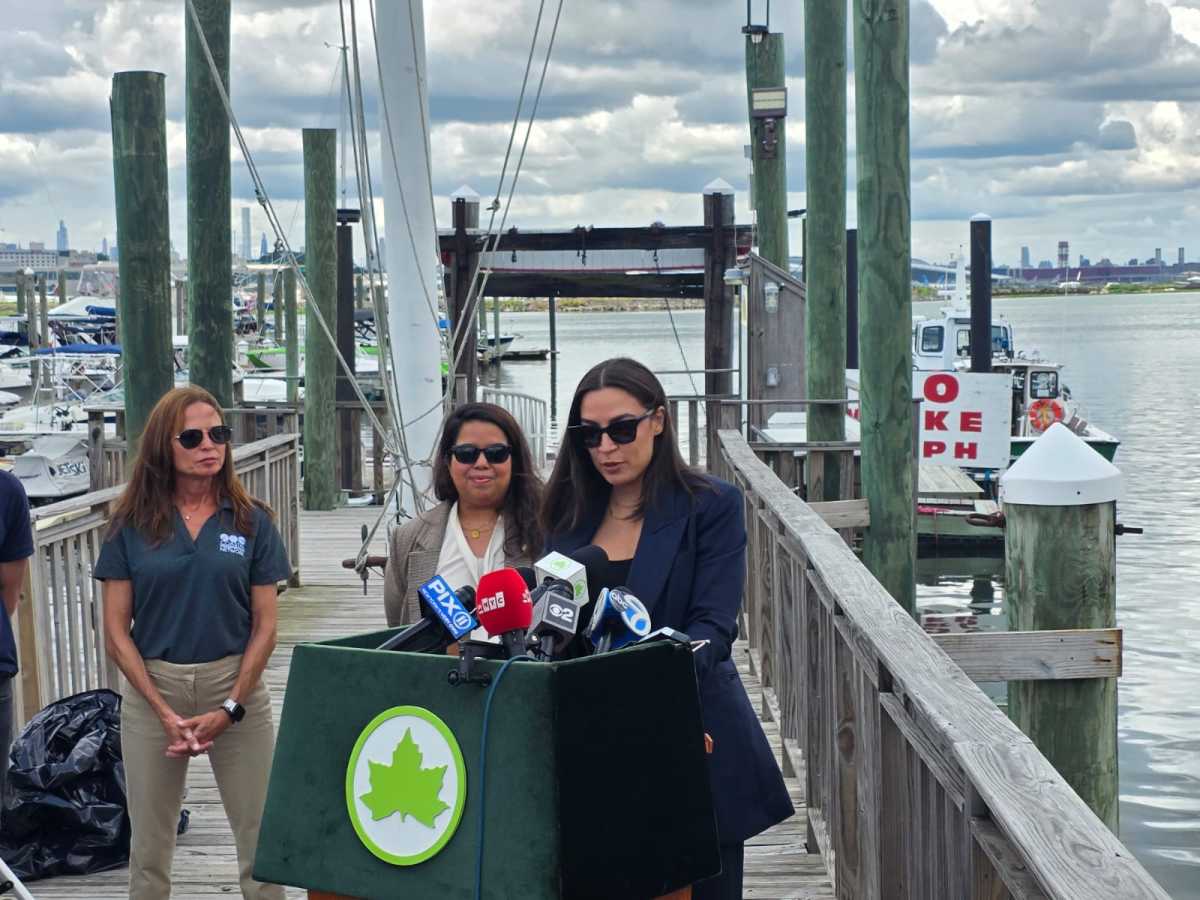
U.S. Rep. Alexandria Ocasio Cortez joined Parks Commissioner Tricia Shimamura on the shores of Flushing Bay in College Point Wednesday, July 29, to announce over $2 million in federal funding to remove abandoned vessels from the South Bronx, northern Queens and Brooklyn
The $2.3 million grant, made available by the National Oceanic and Atmospheric Administration (NOAA) Marine Debris Program with the support of Ocasio-Cortez, will support the removal of 1 million pounds of abandoned vessels and marine debris across the city.
The NYC Parks Office of Marine Debris Disposal and Vessel Surrendering, a first-in-the-state office formed in April 2024 with the support of Council Members Joann Ariola and Selvena Brooks-Powers, has already removed over 500 tons of abandoned vessels and debris since its formation.
The federal funding will also facilitate a new vessel turn-in program, allowing boat owners to surrender their vessels to the city before they become derelict, making them much easier to remove from the water.
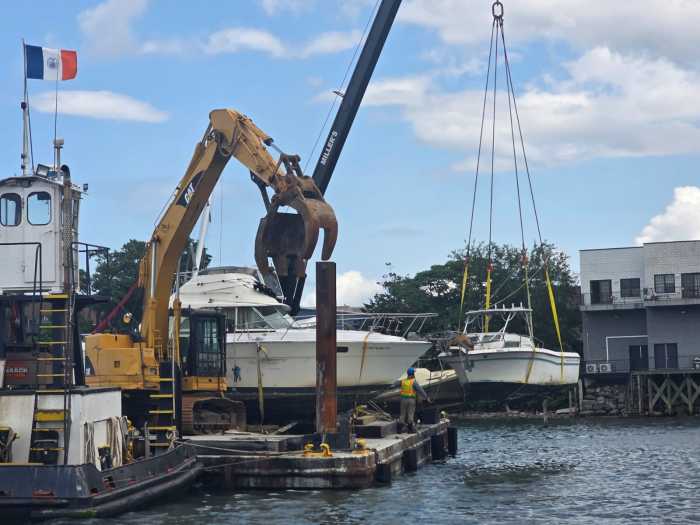 An abandoned vessel is removed from Flushing Bay. Photo by Shane O’Brien
Shimamura said abandoned vessels pose a significant public safety hazard by releasing microplastics and oil into the city’s waterways, while they also pose a substantial navigation hazard for vessels traveling throughout the city.
“All New Yorkers deserve to enjoy a healthy and safe natural environment, whether they’re taking a boat out into the bay or simply taking in the views,” Shimamura said at the event near Big Rock Beach.
She said the federal funding will help the Parks Department expand its “critical work” in making the city “safer, greener and more welcoming.”
“It doesn’t take a rocket science to see that this is what we should be doing,” she added.
Ocasio-Cortez, meanwhile, said abandoned and half-sunken vessels also create an “eye-sore” for local residents, pointing to the half-sunken vessels in Flushing Bay near College Point.
“These vessels are not just unfortunate to look at; they pose serious risks to our community safety and the marine life we all depend on,” Ocasio-Cortez said. “When these boats decay, oil, rust, and fiberglass break off, and our waterways are polluted with chemicals and microplastics.”
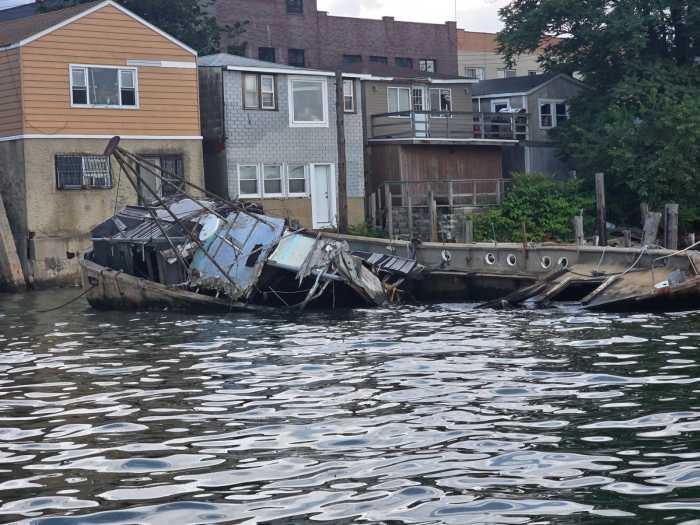 An abandoned vessel near Big Rock Beach in College Point. Photo by Shane O’Brien
Ocasio-Cortez said NYC Parks’ efforts to clean the city’s waterways, including removing abandoned vessels and introducing new oyster populations, has already had tangible results, pointing to the return of dolphins in the Bronx River.
“People are noticing that wildlife is coming back,” she said. “You take a look at some of the boats (being removed), you have no idea how long some of them have been there.”
NYC Parks Marina Manager Nate Grove said there are as many as 600 abandoned vessels along the city’s 520-mile coastline, adding that some vessels will never be removed because they have become a habitat for local wildlife. Others, however, must be removed because of the threats they pose to the same wildlife, he added. Abandoned vessels can also cause property damage if they are moved during stormy weather and pose navigation hazards for other boats in the water.
“Some of these may get submerged, you can’t see them. You get property damage during extreme weather events,” Grove said. “Then you’ve got the environmental components: the leaching of resins, toxins that hold these boats together. The leaking of microplastics into our marine ecosystem, and then fuels and oils that leak as well.”
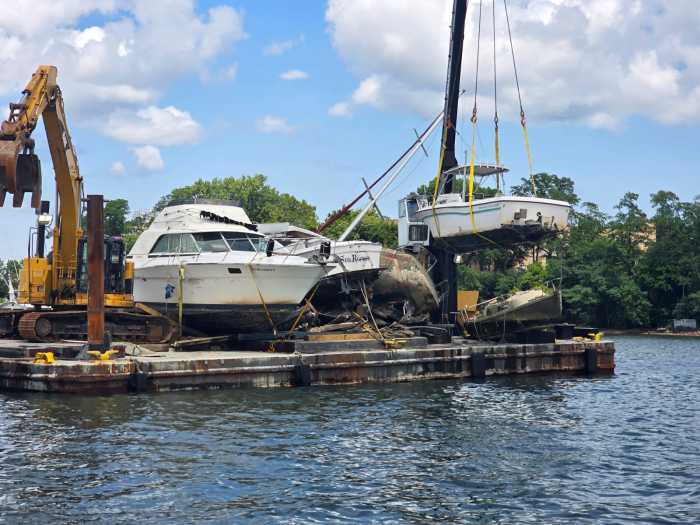 An abandoned vessel is removed from Flushing Bay. Photo by Shane O’Brien
NYC Parks is partnering with local non-profit Coastal Preservation Network to carry out the initiative.
Kat Cervino, the organization’s president and co-founder, said the non-profit has been doing “great work” in rehabilitating the local coastline in College Point over the past 25 years but added that it can “only do so much.” She said the initiative was about showing respect to the local working-class community.
“Respect for a community is inherently tied to respecting its environment,” Cervino said. ” For many years, it has seemed to us in College Point that the more affluent communities in Manhattan and Brooklyn, where there’s high-end developments, have gotten a lot of public investment in their waterways. Our time has come, and we’re thrilled that the working-class community of College Point is finally getting the environmental respect it deserves.”