
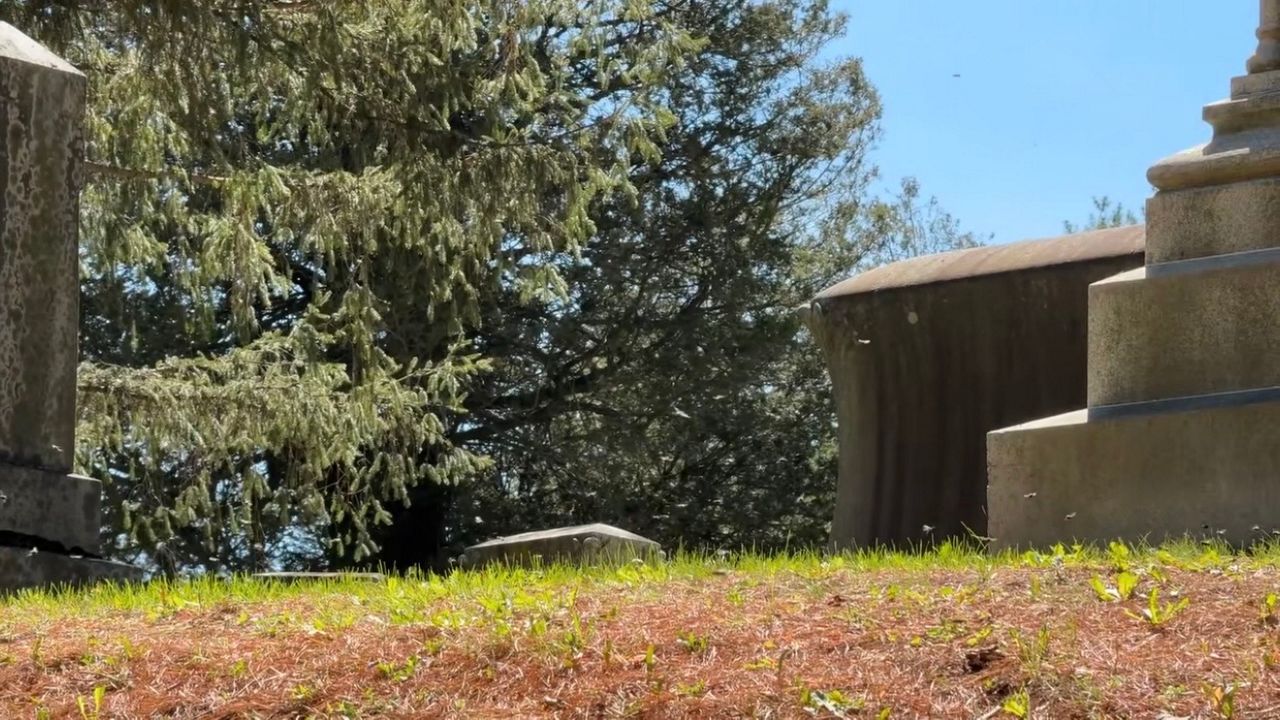
Millions and millions of bees have made a home at the East Lawn Cemetery in Ithaca, just outside of Cornell University.
They’re called Andrena Regularis, a solitary nesting bee that lives in holes dug in soft, sandy soil — something the East Lawn Cemetery has plenty of.
“I guess it’s great for the bees, this is home to them,” Kevin Morse said, the cemeteries superintendent.

Bryan Danforth at East Lawn Cemetery with a collection of bees. (Spectrum News/Natalie Mooney)
In 2023, Cornell University entomology professor Bryan Danforth and his crew of researchers conducted a series of tests to determine an understanding of the population size.
This year, they published their findings: 5.5 million bees — a number Danforth says is likely an underestimate.
“We did some statistical manipulations where we kind of permuted the data and looked at how that changed the numbers and we came up with a range of 3 to 8 million bees,” Danforth explained.
Even if it isn’t 8 million, Danforth says a bee aggregation of this size could very well be the largest in the world.
“I’m certain that there are larger aggregations of bees out there,” Danforth said, “But if you just take the published literature that people have done, the thorough study of estimating population size, this is the top, 5.5 million bees.”
While so many bees may sound scary to some, it’s important to note that Andrena Regularis don’t sting.
“I’ve never gotten stung once,” Morse confirms.
Danforth says it’s because, unlike social bees, they don’t have a queen, hive or honey to protect. Instead, these solitary bees live alone in their burrows, lay eggs, and spend the days collecting pollen for their nests.
“These are hardworking, single mothers, these are bees that are going to work,” Danforth said. “Work as hard as they can for the month or so of the adult lifespan that they’ve got.”
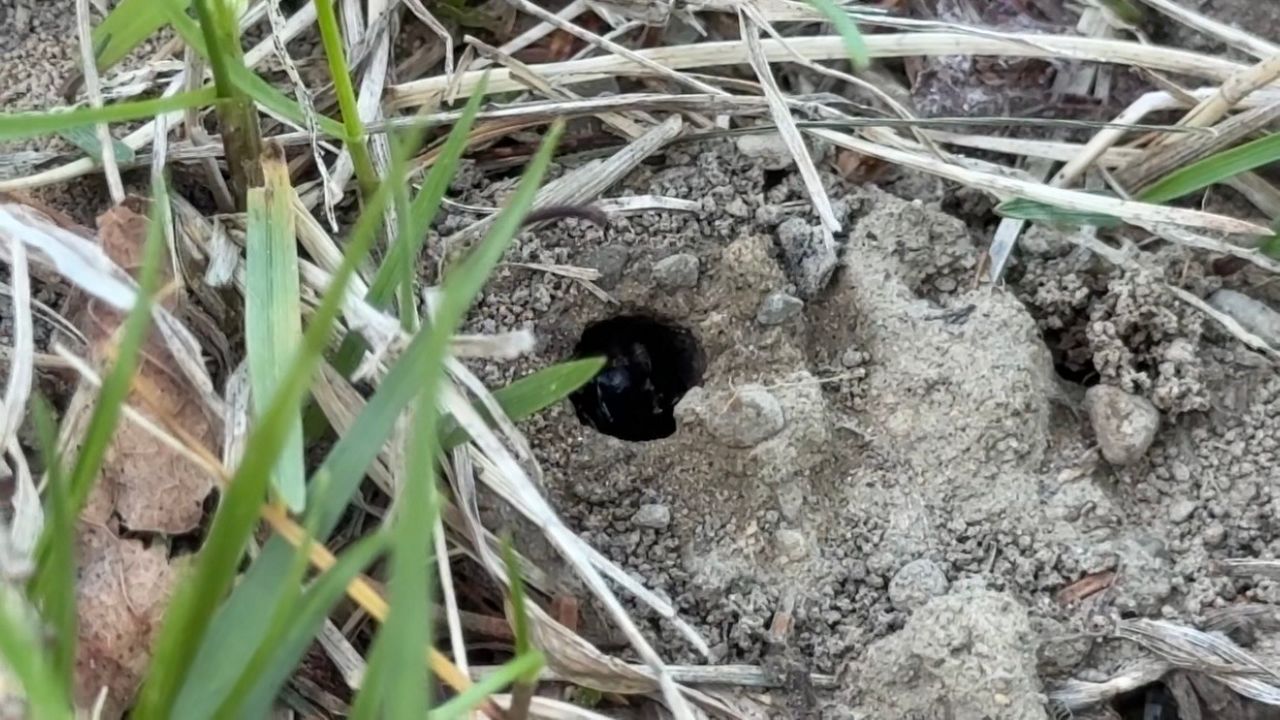
A ground nesting bee peeks out from her burrow. (Spectrum News/Natalie Mooney)
Their lifespan is short, but in that time, they make a big difference. Andrena Regularis are crucial spring pollinators.
The Xerces Society for Invertebrate Conservation says protecting them is key to protecting ecological health.
“All of our wild flowers, all of our native flowering trees, it’s not honey bees doing that, it’s native bees,” Executive Director of the Xerces Society Scott Black said. “And ground nesting bees are one of the main groups, so they’re really important.”
Both Black and Danforth say that cemeteries are ideal places for conservation efforts. Though they may be places for the dead, they’re often found to be teeming with life. Danforth says it’s because they’re protected from development by property, zoning, and preservation laws — which keeps them widely undisturbed and in many cases pesticide free.
“We’re not going to develop this place. This is not going to become a, you know, shopping center,” Danforth said, “So it’s protected, and it’s protected mostly by the dead.”
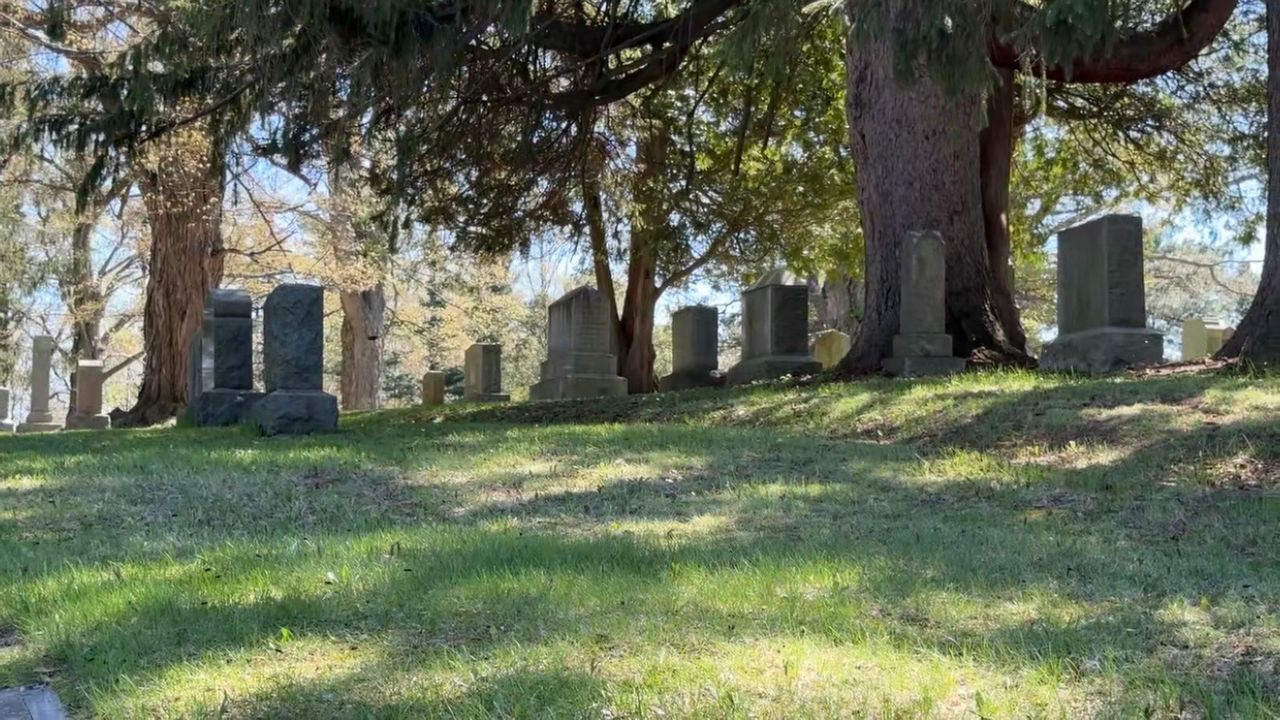
5.5 million bees call a cemetery in Ithaca home. (Spectrum News/Natalie Mooney)
Cemeteries are just one place where these large aggregations of ground nesting bees can be found. Danforth says his team are engaging the public in a community science project to document bee nesting aggregations and individual bee nests so experts can identify the bees and add the nesting sites to a database.
Once they know where they’re nesting, Danforth says they can then begin to protect and study them.