
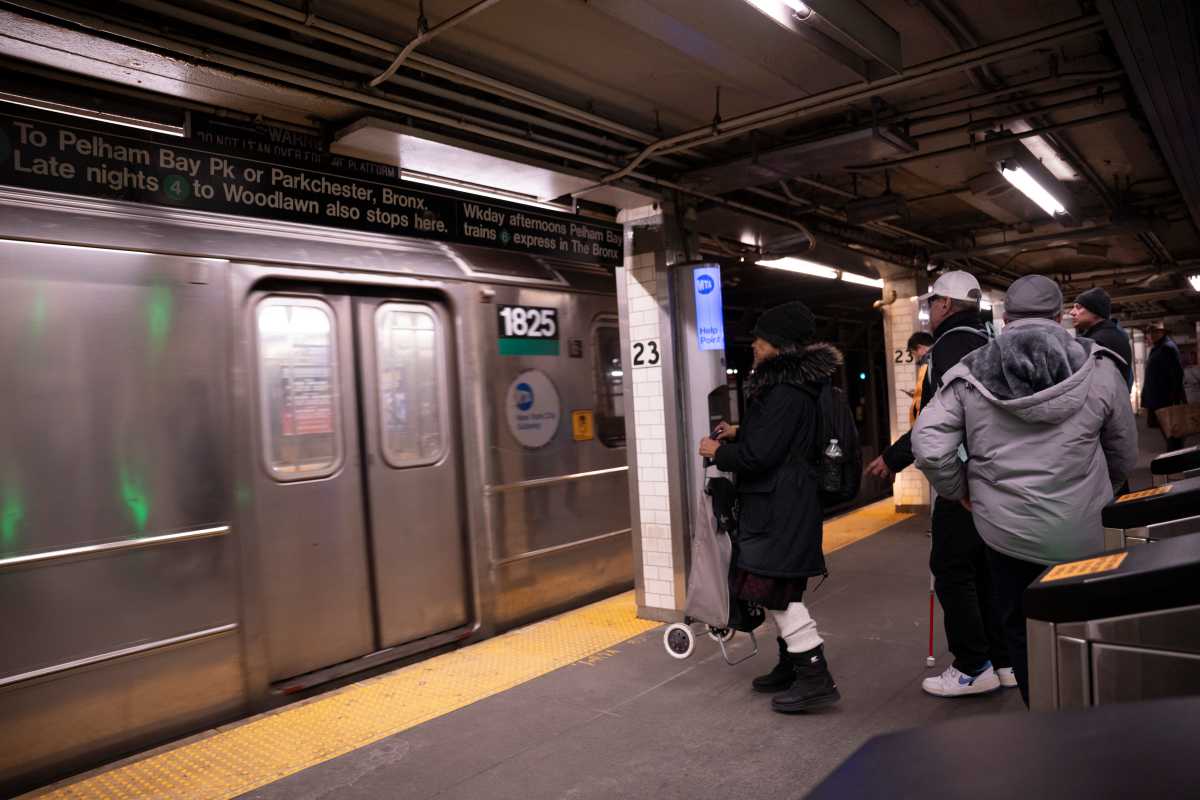
Every New Yorker hates to hear the dreaded words “train traffic ahead.” We at the MTA don’t like saying them either. That’s why we’ve come up with a first-of-its-kind plan to untangle some of the worst bottlenecks in our system.
Often these delays are not caused by anything broken, but by the layout of our physical infrastructure — complicated interlockings where the tracks and switches look like a mess of subway spaghetti, terminal stations that constrain capacity, sharp curves and switches that restrict speeds, and old signals that force us to run trains farther apart for safety.
Don’t forget — our system was designed more than a century ago, when the subway was run by three different companies that were later stitched together. Pain points were inevitable. Now we have examined 70 such locations, identifying 25 as the most promising candidates for upgrades in the MTA Capital Plan.
One of them is DeKalb Av in Brooklyn, where 18 switches (first installed during President Franklin D. Roosevelt’s administration) allow 300,000 daily riders to pass through on five routes: the B, D, N, Q and R trains. It’s all very analog — when delays happen, crews sometimes need to use paper maps to direct traffic. In 2026!
Fortunately, we’ve already started upgrading signals on the B and D lines. We’re also working with contractors on designs to straighten out the curves on the interlocking tracks so that trains can pass through faster.
But sometimes the fix doesn’t have to be so labor intensive. Last December, we swapped F and M lines to eliminate a merge at Queens Plaza that was snarling service for all the lines running along Queens Boulevard.
Since then, trains have been moving faster in key segments. At Roosevelt Island – where folks often had to let multiple trains pass before they could actually squeeze onboard – trains are 25% less crowded on average. Ridership at other local stations in western Queens has also increased. We want to replicate that success all over the City.
New Yorkers deserve a subway that works as hard as they do. By targeting the biggest choke points in our system, we can improve reliability where it matters most so that “train traffic ahead” is no longer a daily nuisance on your commute.