
The NYC Taxi and Limousine Commission has sworn in 22 new peace officers — welcome additions to the small force charged with protecting drivers and passengers alike in a sprawling for-hire transportation system that carries about a million New Yorkers and tourists a day.
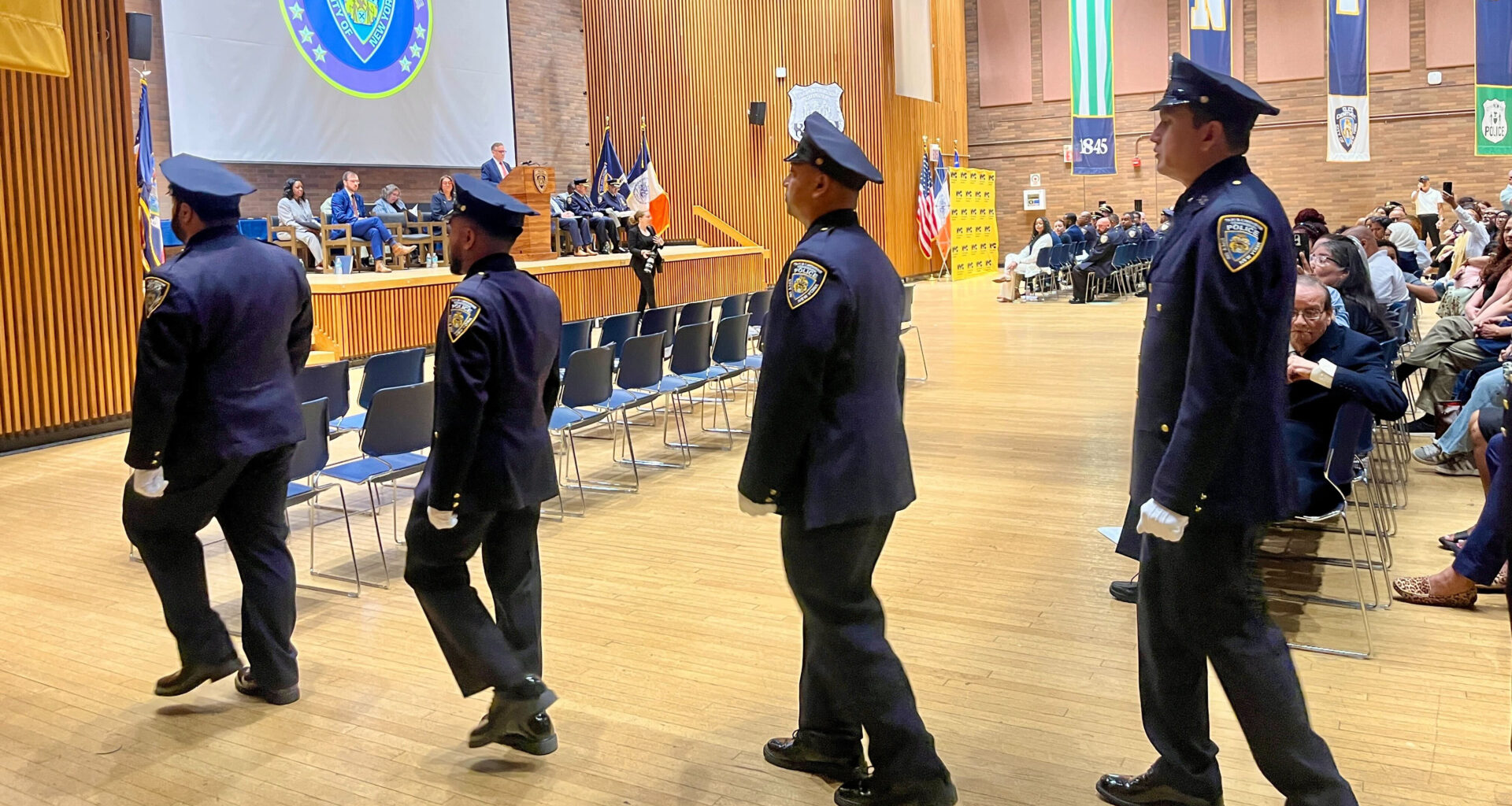
Standing at attention in their dark blue uniforms Tuesday at One Police Plaza, the unarmed officers prepared to police Gotham’s complicated world of yellow cabs, Lyfts, Ubers, liveries and limos — the culmination of their five-and-a-half months of training.
“There’s an immense difference between today and when these cadets first reported to the academy,” Ira Goldapper, TLC’s Deputy Commissioner for enforcement, said from the lectern.
“Rather than succumbing to fear, apathy or cynicism about the world around them, they chose public service. They chose to help their fellow New Yorkers.”
Evan Simko-Bednarski / New York Daily News
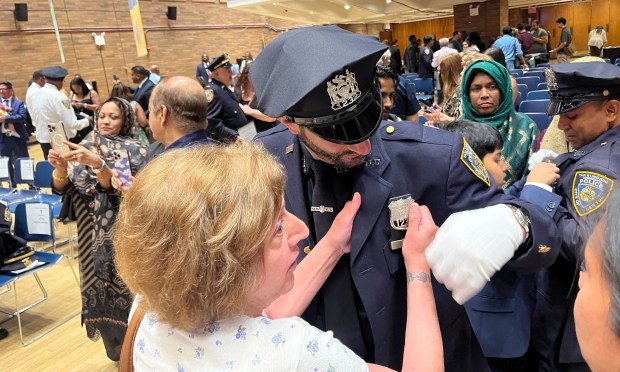
The new cadets join a small force that the Mamdani administration has tasked with cracking down on unlicensed cabs and for-hire vehicles. (Evan Simko-Bednarski / New York Daily News)
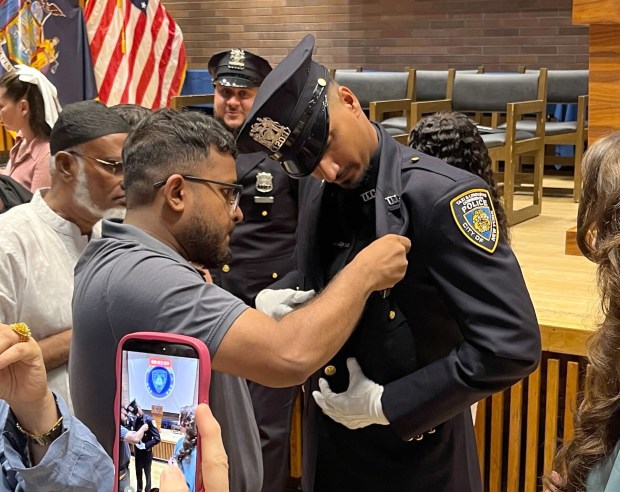
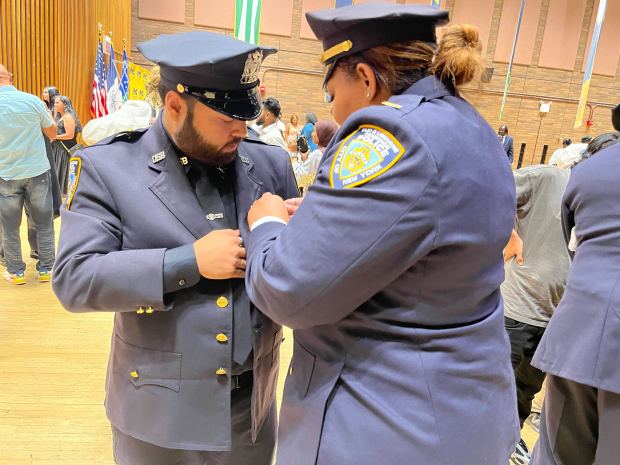
After a short ceremony, the not-quite two-dozen new officers received their shields — many pinned to their chests by loved ones who’d come to cheer them on.
“I always loved taxis,” newly-minted TLC Officer Avenash Balram, valedictorian of his cadet class, told the Daily News. “My father actually got me a toy taxi once, that stuck with me.”
“I have friends and family that ride in Ubers,” said Balram, 24, a South Ozone Park resident. “The main reason I decided to become a TLC officer is to protect the community.”
Syed Abdullah, of Woodlawn, said he came to the job after driving a TLC-licensed limousine for eight years.
“It’s a life-changing day for me,” Abdullah said, his shield freshly pinned to his jacket. “This is a huge change, from driving TLC to now working as a TLC officer.”
“I saw the other side — what the driver sees. Now it’s time to see it from the inside,” he said. “I’ll be able to help the drivers, to know them and help them out.”
The new class of cadets comes in as the Mamdani administration, through recently appointed TLC Chair Midori Valdivia, seeks to pivot the focus of the agency’s enforcement wing away from the kinds of traffic stops the NYPD also conducts, and toward the kind of operations that will crack down on unlicensed drivers trying to take advantage of unsuspecting passengers — or unlicensed apps trying to operate outside of the TLC’s rules and regulations.
“Our focus is primarily on unlicensed for-hire activity. That’s the greatest threat to public safety — they’re unlicensed cabs, they’re uninsured,” Goldapper told the Daily News. “We’re moving from this concept of patrol-based enforcement to operations-based.”
“In years past we’ve always been sort of saying, ‘Hey, we’re going to hit these two or three precincts and patrol.’ And that’s good for general enforcement.
“But since our target is unlicensed for-hire operations,” he said, “The idea of just driving around looking for it, it’s just not as efficient.”
Evan Simko-Bednarski / New York Daily News
Family members pin a shield on Officer Ashik Chowdhury at the ceremony on Tuesday. (Evan Simko-Bednarski / New York Daily News)
Unlicensed for-hire drivers take many forms in Gotham. The TLC crackdown will look to rein in the so-called dollar vans on Flatbush Ave. in Brooklyn, as well as unregulated drivers operating through Empower, the unregistered app that claims to handle more than 100,000 trips in the city per week.
For Goldapper, unlicensed drivers represent a public safety threat — they don’t undergo TLC background checks or drug tests. Their vehicles don’t carry the same kind of insurance that the TLC requires. They don’t get the same refresher courses, and their vehicles may not be required to get the same inspections. Trip records aren’t logged.
For Bhairavi Desai, head of the New York Taxi Workers Alliance, unlicensed drivers also represent a threat to the business of those drivers who do everything by the book.
“To watch those passengers walk into unlicensed vehicles operated by unlicensed drivers is very painful,” she said. “Here you are playing by all the rules and paying all the fees.”
“The (enforcement) shift is long overdue,” Desai said. “We’re talking about thousands of dollars more (to be made) per driver.”
One of the highest-profile problems — and one that licensed drivers had asked the TLC to address for years — is “taxi hustling” at city airports.
TLC joined with the Port Authority in June to carry out a weeks-long operation at Kennedy Airport, placing officers in visible locations during the World Cup to deter unlicensed taxi drivers from gouging unsuspecting tourists on the price of a ride to Manhattan.
Goldapper said the operation was a success.
“We had a massive presence at Terminal 4,” he said. “We were there nearly 24 hours a day.”
Taxi hustlers, he said, “would wait and wait, waiting for us to leave.”
“It worked, to prove a concept,” Goldapper said. But the TLC enforcement honcho said the operation was “incredibly resource intensive,” adding, “a lot of overtime was put in to that.”
Sources told the Daily News that the majority of the TLC’s enforcement squad — which at the time numbered roughly 120 officers in total — was tasked to the airport crackdown.
“The problem is, they all know we’re a tiny agency,” Goldapper said of the hustlers. “We just have to keep staffing up.”
Evan Simko-Bednarski / New York Daily News
TLC cadets receive their shields on Tuesday at One Police Plaza. (Evan Simko-Bednarski / New York Daily News)
But given the city’s budget woes, staffing up may not be possible.
City budget documents show that City Hall cut 52 full-time budgeted positions for the TLC this year — down from 546 in the 2026 adopted budget to 494 in the current modified budget.
Sources tell the News that those cuts are to enforcement.
TLC officials at Tuesday’s cadet graduation acknowledged that, unlike recent years, which saw two classes of cadets, the 22 officers sworn at the ceremony would be this year’s last.
Asked about the effect the cuts would have on the administration’s priorities for the agency, a spokesperson for Mayor Mamdani referred the Daily News to the TLC.
In a statement, TLC press secretary Jason Kersten pointed to the agency’s recent successes and said the focus on targeted enforcement made the agency’s police force more efficient.
“By pivoting to targeted operations at hustler hotspots and partnering with fellow enforcement agencies, we’ve become more efficient, almost doubling the number of summonses against unlicensed operators so far compared to all of last year,” he said. “We’re working smarter, and our latest cadet class can only help bolster those efforts even more.”
To that end, Kersten said, the TLC issued more than 3,500 summonses for unlicensed operations in the first six months of 2026 — compared to 4,369 such summonses issued during all of 2025.
The TLC also seized 73 unlicensed for-hire vehicles in the first six months of the year, up from seven in the first six months of 2025.
Desai, the Taxi Workers head, told The News her drivers want to see more enforcement.
“I think the TLC is right that the World Cup enforcement was a tremendous success,” she said. “The irony is it’s even more necessary on the regular days, when you’re already struggling for a fare.”
“This is a good TLC initiative,” she added. “City Hall should really find a way to finance more of it.”
With Josephine Stratman