
Time to read [4 minutes]
A 2006 gas explosion destroyed a landmarked town house at 34 East 62nd Street, injuring four bystanders, ten firefighters, and owner Dr. Nicholas Bartha, who eventually succumbed to severe burns.
The blast followed a bitter divorce battle in which a judge had ordered Bartha to sell the house, and he’d sent his ex-wife a threatening email just before the explosion, vowing to leave the house only “if I am dead.”
Investigators probed whether Bartha deliberately triggered the blast as a suicide attempt tied to the divorce, citing his history of depression and prior attempts.

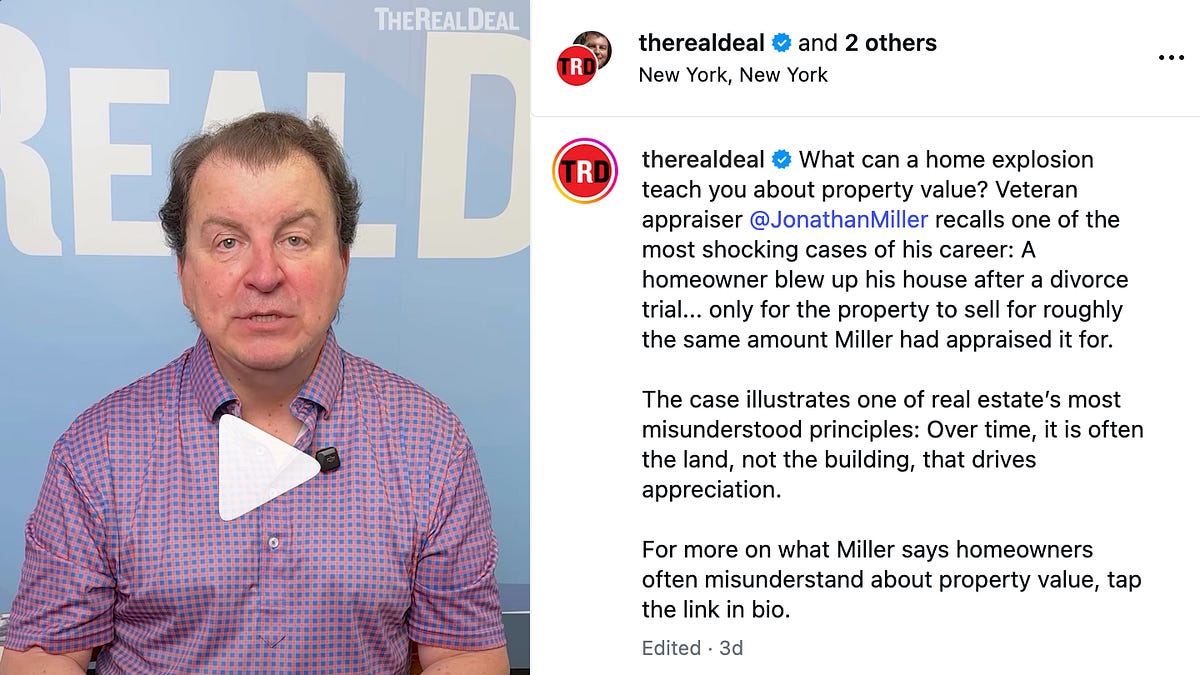
I was interviewed by The Real Deal for a social media post on my exploding townhouse story, which garnered a lot of interest. I thought it would be a good idea to turn that into a post here on Housing Notes, with links to more detail from my previous posts, and tie it into a commentary on land value.
Since I changed my Housing Notes format to single topic 3-4 times a week a couple of years ago, one of my most popular posts has been the piece I wrote on May 27, 2026: Land Appreciates. Homes Depreciate.
I originally wrote a short piece on the same topic, “Housing Bust Wasn’t About the House,” for Bloomberg Opinion. I was hired to write weekly columns, and while I was deeply appreciative of the opportunity, I only lasted about a year, as I couldn’t quite get comfortable writing in the required Bloomberg style. Yet it ended up being one of the top ten most-read articles on the Bloomberg terminals that day by its 350,000 subscribers.
Here’s the original chart from my research for Bloomberg Opinion, with a headshot that makes me look about 15 years old.

The pattern in the chart is very clear. Land prices were much more volatile over time, and the price pattern seen in land prices would look familiar to most consumers as the trajectory of the US housing market.
Instead of using a land versus building analogy, I got to use the real thing after testifying as an expert in a matrimonial action representing the wife while the husband committed suicide, blowing up the house I inspected with him.
This is a good 2006 New York Times recap with video in the aftermath of the explosion of 34 East 62nd Street: Blast Levels Manhattan Town House; Inquiry Focuses on Injured Owner (gift link).
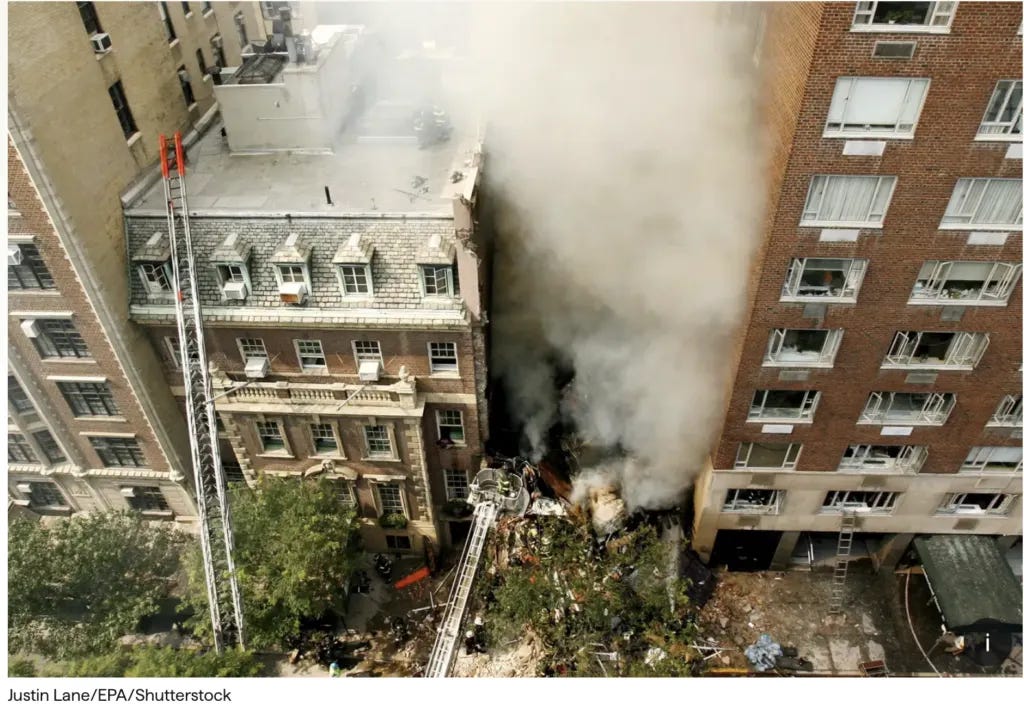 Source: Gothamist/WNYC
Here’s a recap article I wrote a few years ago, which is full of details about what happened next: A Townhouse Exploded, But The Value Was In The Land (And A Book). Some of the details I get into include:
About 3 weeks after the explosion, the Wall Street Journal interviewed me standing in front of the pile of rubble that formerly was 34 East 62nd Street. It was a surreal experience to stand there in front of the former building blown up by the person I had walked through it alone several years prior.
I learned that two colleagues of mine, a former real estate brokerage executive and a commercial appraiser, happened to be next door and across the street, respectively, when it blew up.
A few years later, well-known author Gay Talese interviewed me at my office to turn this story into both a magazine article and a book. He did!
Bartha’s wife ended up selling the 20’x100’ lot for $8,350,000 in 2007.
A 2006 gas explosion destroyed a landmarked townhouse at 34 East 62nd Street and killed owner Dr. Nicholas Bartha. I inspected the house a few years earlier with Dr. Bartha and testified on behalf of his wife as an expert witness in the couple’s divorce. The wife’s attorney (my client) told me he effectively said something like “you’ll get this house over my dead body” during the proceedings. The building was reduced to rubble, but the underlying lot held its worth, selling for $8,350,000 in 2007. The situation became a real-world case study that land, not the structure on it, drives long-term housing values.
The Actual Final Thought – Sometimes, it doesn’t have to be sophisticated.

My Housing Notes column also appears several times a week over at The Real Deal!
