
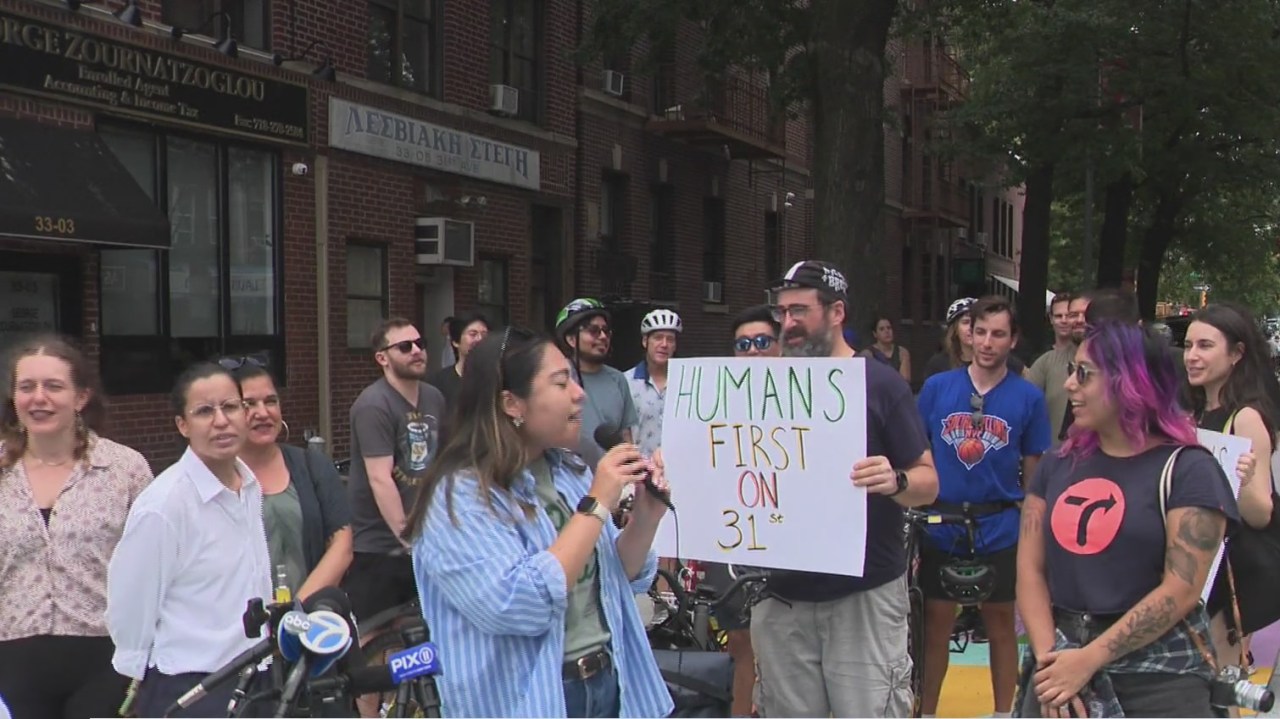
ASTORIA, Queens (PIX11) — A years-long campaign to make Astoria’s streets safer hit a major milestone Sunday as a new protected bike lane on 31st Street officially opened, drawing a crowd of neighbors, cyclists and elected officials to celebrate.
The celebration unfolded at the corner of 31st Avenue and 33rd Street, where residents chanted “Safe Streets, save lives” and “Whose streets? Our streets” as cyclists rolled up with signs reading “Humans First on 31st.”
Stay connected with community stories that matter: Visit our homepage
Organizers described the scene as a turning point after years of fear, with parents once reluctant to let children cross and drivers and cyclists alike navigating a corridor known for blind spots and high crash rates.
Elected officials underscored that the project is about more than bikes; it’s about reducing deaths and serious injuries for everyone using the street.
State Senator Kristen Gonzalez said it’s clear everyday New Yorkers want streets and infrastructure that keep all users safe.
City Council Member Tiffany Cabán noted that on the 31st Street corridor alone, there have been about 500 injuries and three deaths in recent years.
Discover more local reporting on our homepage
A Transportation Alternatives representative called it “a safety project, not just a bike lane,” pointing to citywide data showing protected bike lanes cut fatalities and severe crashes for all road users.
For years, 31st Street was classified as a Vision Zero priority corridor and priority area because of its high number of pedestrian deaths and serious injuries.
Cyclists and advocates said the street had become one of the most dangerous in Queens, with residents describing a climate of fear for families, drivers stuck with limited visibility, and cyclists forced into traffic with no protection.
The solution, advocates said, came through relentless organizing: testifying at hearings, rallying, attending community board meetings, and refusing to let the corridor become another preventable tragedy.
Not everyone supported the redesign. In May, some Astoria residents rallied against the 31st Street plan, voicing concerns about safety for children and families walking in the area.
Mayor Zohran Mamdani helped push the project forward, backing an expanded design that extends the protected lane the full length of Astoria and links it to the broader Queens Waterfront Greenway.
The updated plan creates a continuous bike boulevard from Northern Boulevard to 20th Avenue, connecting to existing cycling infrastructure on Crescent Street and the waterfront greenway along the East River.
The greenway itself is a planned 16-mile corridor that will eventually link Gantry Plaza State Park to Fort Totten, with new protected bike lanes forming a major part of the route.