
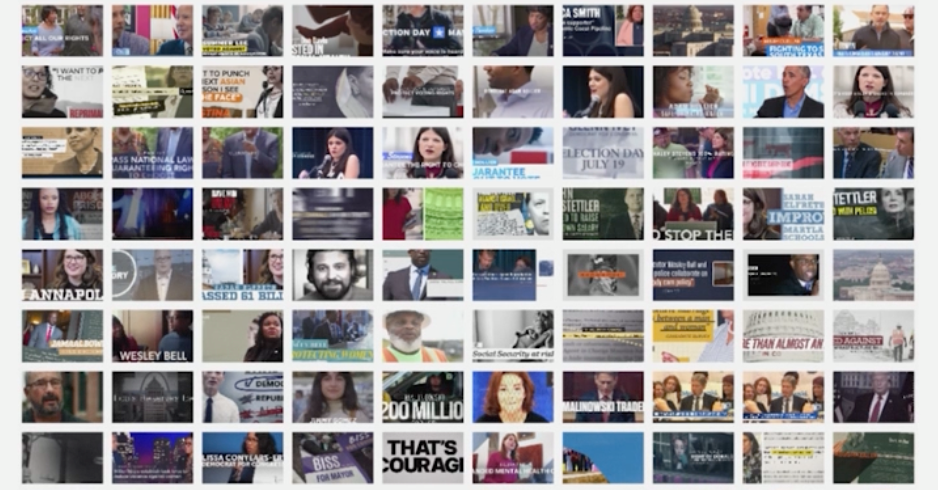
In less than five years, the American Israel Public Affairs Committee has become one of the biggest spenders in American elections, flooding the airwaves in congressional races across the country.
Since its first involvement in elections, the amount of money AIPAC-affiliated political action committees have spent on campaign advertising and outreach to voters has more than doubled, from $29.3 million to $67.2 million, with much of it spent in Democratic primaries.
The group’s biggest test yet will come in Tuesday’s Democratic Senate primary election in Michigan. AIPAC has spent more than $30 million on ads and outreach promoting Representative Haley Stevens over her opponent, Dr. Abdul El-Sayed, according to the Federal Election Commission. Dr. El-Sayed, who has run a sharply anti-Israel campaign, has made the group’s involvement a key part of his criticism of Ms. Haley’s candidacy.
The spending — in Michigan and across the country — marks a significant shift for the group, which for decades was a bipartisan lobbying organization focused on influencing federal legislation and sending members of Congress to Israel. But, alarmed by what it saw as a rising tide of anti-Israel sentiment from Democrats, the group quickly became a major player in federal elections.
In 2022, AIPAC created a super PAC that has spent more money on TV, radio and digital ads in federal elections over the past three election cycles than any other special interest group not linked to a political party, according to a Times analysis of data collected by AdImpact, a media tracking firm. AIPAC’s rapid growth in election spending, both through its super PAC and other new affiliated organizations, makes clear how significant the issue of Israel has become in American politics — but also how complicated.
Some of the campaign advertisements produced for AIPAC are aimed at supporting candidates the group sees as pro-Israel. Others are designed to defeat candidates the group views as out of step with its policy agenda.
But one factor unites them: Almost none of the ads mention Israel.
Between April 2022 and the end of last month, AIPAC funded 109 TV and digital ads in American elections, according to a New York Times analysis.
But only six of those ads refer to Israel.
The ads financed by AIPAC-related groups have most commonly focused on issues that polling suggests are bigger priorities for many voters — including abortion rights and the economy — even though they were specifically intended to boost candidates who support Israel. The strategy, which is used by other political groups too, has at times allowed AIPAC to obscure its involvement in campaigns.
When AIPAC supporters moved to create their super PAC, called United Democracy Project, in 2022, they were keenly aware of both the rising cost of political campaigns and the growing number of candidates who were critical of U.S. support for Israel. After the Hamas attacks on Israel on Oct. 7, 2023, donations from individuals to United Democracy Project spiked, helping it to ramp up its political efforts. So far in primary elections this year it has outspent various super PACs funded by the A.I. and cryptocurrency industries, two other powerful groups, on campaign advertising.
Much of AIPAC’s money, through the United Democracy Project and other smaller political action committees, has been spent in Democratic primaries. Because it views itself as bipartisan, the group has rarely spent money in general election races where it would be forced to pick between a Democrat and Republican.
AIPAC spending in primaries and general elections
Total spending in the 2022, 2024 and 2026 election cycles.
Primary races
$138 million
General elections
$4.65 million
“Our goal is to elect the largest bipartisan pro-Israel majority,” said Patrick Dorton, a spokesman for the United Democracy Project. “The pro-Israel community is energized,” he added.
Mr. Dorton said that many other super PACs employ a similar messaging strategy: creating ads about the top issues for voters in the district, rather than the specific issue the group cares most about.
“In most races affordability issues are much more important than Israel,” he said.
Even though its ads rarely mention Israel, by spending so much in primaries, AIPAC has attracted significant attention to itself and U.S.-Israel policy, said Brendan Glavin, director of insights at OpenSecrets, which tracks campaign spending. “Whether or not they are trying to hide behind the content of the ads, it is coming out who is behind the money, and ensures that this stays a hot-button issue,” Mr. Glavin said.
In the past three election cycles, the group has mostly succeeded in its efforts, helping to elect 15 members of Congress considered allies. It has placed some of its largest bets yet on several races this year — most notably in Michigan, Illinois and Maryland.
In all, AIPAC-affiliated groups have spent more than $67 million so far this year. In Michigan, United Democracy Project has spent more than $10 million supporting Ms. Stevens’s Senate bid and more than $20 million attacking her opponent, Dr. El-Sayed, through ads and voter outreach, according to F.E.C. filings. Only one outside group has spent more on television, radio and digital ads in a primary race so far this year: a political action committee formed to oppose Tom Steyer’s unsuccessful run for California governor.
The Michigan race is the first time United Democracy Project has spent in a Senate contest, but with $80 million in cash on hand, it may not be the last.
When United Democracy Project was formed in 2022, the group spent more money supporting candidates than attacking politicians it viewed as its opposition. That changed in 2024, when it spent nearly $25 million in successful efforts to defeat Representative Jamaal Bowman of New York and Representative Cori Bush of Missouri, who were vociferous critics of Israel. (The Times has adjusted pre-2026 dollar figures for inflation.) This year, the group has spent more money on supporting candidates than opposing them — at least so far.
And while AIPAC spent exclusively on Democratic primaries in its first year, it began to focus on Republican primaries in 2024, targeting several who had sharply questioned American support for Israel: Representatives Thomas Massie of Kentucky and Bob Good in Virginia, former Representative John Hostettler of Indiana and challenger Brandon Herrera of Texas. AIPAC helped defeat all of them except Mr. Massie.
AIPAC spending in primaries by party
This year, one of the group’s most high-profile wins was the ouster of Mr. Massie, a seven-term congressman who has called for ending military aid to Israel.
Overall, AIPAC has notched many significant victories. Its first came in 2022, when the group spent nearly $5 million supporting Ms. Stevens in her successful bid to oust Representative Andy Levin, a former synagogue president who described himself as a Zionist but was critical of Israeli policies.
How AIPAC fared in each race
2022830020241030020264212
But the group has also faced losses among its top targets. In 2022, it spent roughly $3 million in a Democratic House primary against Summer Lee of Pennsylvania, who has opposed military aid to Israel. Ms. Lee narrowly won the primary. The group then spent more than $1 million against her in the general election, which she also won, defeating a Republican by more than 12 percentage points.
In New Jersey this year, United Democracy Project spent more than $2 million in a special election trying to defeat Tom Malinowski, a Democrat who is broadly supportive of Israel but has called for more conditions on American aid. Mr. Malinowski lost in a Democratic primary, but the victor was a candidate with positions even further from AIPAC’s: Analilia Mejia, a former aide to Senator Bernie Sanders, who has accused Israel of genocide. Ms. Mejia went on to win the special election too. Still, supporters of AIPAC argued that their money had been well-spent. Had Mr. Malinowski won, they said, he might have had more influence on foreign affairs policy because he was a more senior Democrat with strong ties to House leadership.
In addition to United Democracy Project, a Times analysis identified five smaller super PACs that AIPAC has funneled roughly $22 million into since 2022. None of those smaller committees mention Israel in their names, allowing AIPAC to try to influence elections without making its involvement immediately clear.
Spending by AIPAC-affiliated groups
Data for the 2022, 2024 and 2026 election cycles.
Voters for Responsive Government
Chicago Progressive Partnership
In one case, the strategy appeared to backfire. In Chicago, the new AIPAC-funded groups spent roughly $7 million to try to elect Laura Fine over Daniel Biss and other candidates in a Democratic House primary. After news reports showed the groups’ ties to AIPAC, Mr. Biss relentlessly hammered Ms. Fine for that support. Mr. Biss won the election.
All the candidates supported and opposed by AIPAC funds
Group by
OutcomeSupport or opposePartyStateElection cycle
Succeeded in supporting 15
candidates ·
$41.7 million Adrian Boafo
$5.73 million
George Latimer
$5.01 million
Sarah Elfreth
$4.43 million
Donna Miller
$4.38 million
Haley Stevens
$4.35 million
Melissa Luburich Bean
$3.99 million
Wesley Bell
$3.55 million
Valerie Foushee
$2.37 million
Don Davis
$2.36 million
Glenn Ivey
$1.95 million
Jimmy Gomez
$1.8 million
Kevin Mullin
$662,419
Ed Gallrein
$579,319
Henry Cuellar
$458,468
Shontel Brown
$90,627
Succeeded in opposing 19
candidates ·
$39.2 million Jamaal Bowman
$10.4 million
Cori Bush
$5.53 million
Donna Edwards
$4.75 million
Thomas Massie
$3.58 million
Susheela Jayapal
$3.44 million
Mary Waters
$2.39 million
John Hostettler
$1.65 million
Jessica Cisneros
$1.61 million
Katherine M. Abughazaleh
$1.18 million
Brandon Herrera
$1.12 million
Junaid Ahmed
$663,879
David Kim
$610,335
Cristina Garcia
$579,608
Kina Collins
$512,487
Andy Levin
$384,605
Erica Smith
$377,426
Nina Turner
$223,790
Bob Good
$140,002
Jason Friedman
$59,748
Mixed record 1
candidate ·
$2.33 million Failed in supporting 7
candidates ·
$13.4 million Melissa Conyears-Ervin
$4.97 million
Laura Fine
$4.38 million
Adam Hollier
$3.08 million
Steven Irwin
$741,875
Joanna Weiss
$110,684
Bushra Amiwala
$104,555
Shakira Hawkins
$55,628
Failed in opposing 7
candidates ·
$11.9 million Dave Min
$4.88 million
Summer Lee
$2.28 million
Shri Thanedar
$1.61 million
Daniel Biss
$1.43 million
Summer Lee
$1.41 million
Thomas Massie
$176,826
Thomas Massie
$159,783
Not yet known 4
candidates ·
$33.8 million Abdul El-Sayed
$20.1 million
Haley Stevens
$10.5 million
Cori Bush
$2.46 million
Wesley Bell
$685,626
About the data
The Times identified six federal super PACs — political committees that spend money on ads and outreach to support or oppose candidates — that have been affiliated with AIPAC since the 2022 election cycle. One is United Democracy Project, AIPAC’s official super PAC. The Times included five other super PACs because they met two conditions: Contributions from UDP or an AIPAC-affiliated political action committee accounted for at least one third of the non-individual contributions the super PAC received, and it received no contributions from any other PAC.
Spending numbers include all spending in support or opposition of a candidate from Jan. 1, 2022, through July 31 of this year, based on the committees’ Federal Election Commission filings.
To evaluate the success of AIPAC’s investments in races, The Times first identified the candidate who AIPAC spent the most money to support or oppose. The Times considered AIPAC to have succeeded if that candidate won with its support or lost with its opposition.
To analyze the content of television and digital ads, The Times reviewed videos that were gathered by AdImpact, a media tracking firm. The Times excluded ads that were shortened or substantially similar versions of other ads.
The Times adjusted 2022 and 2024 dollar figures for inflation.