
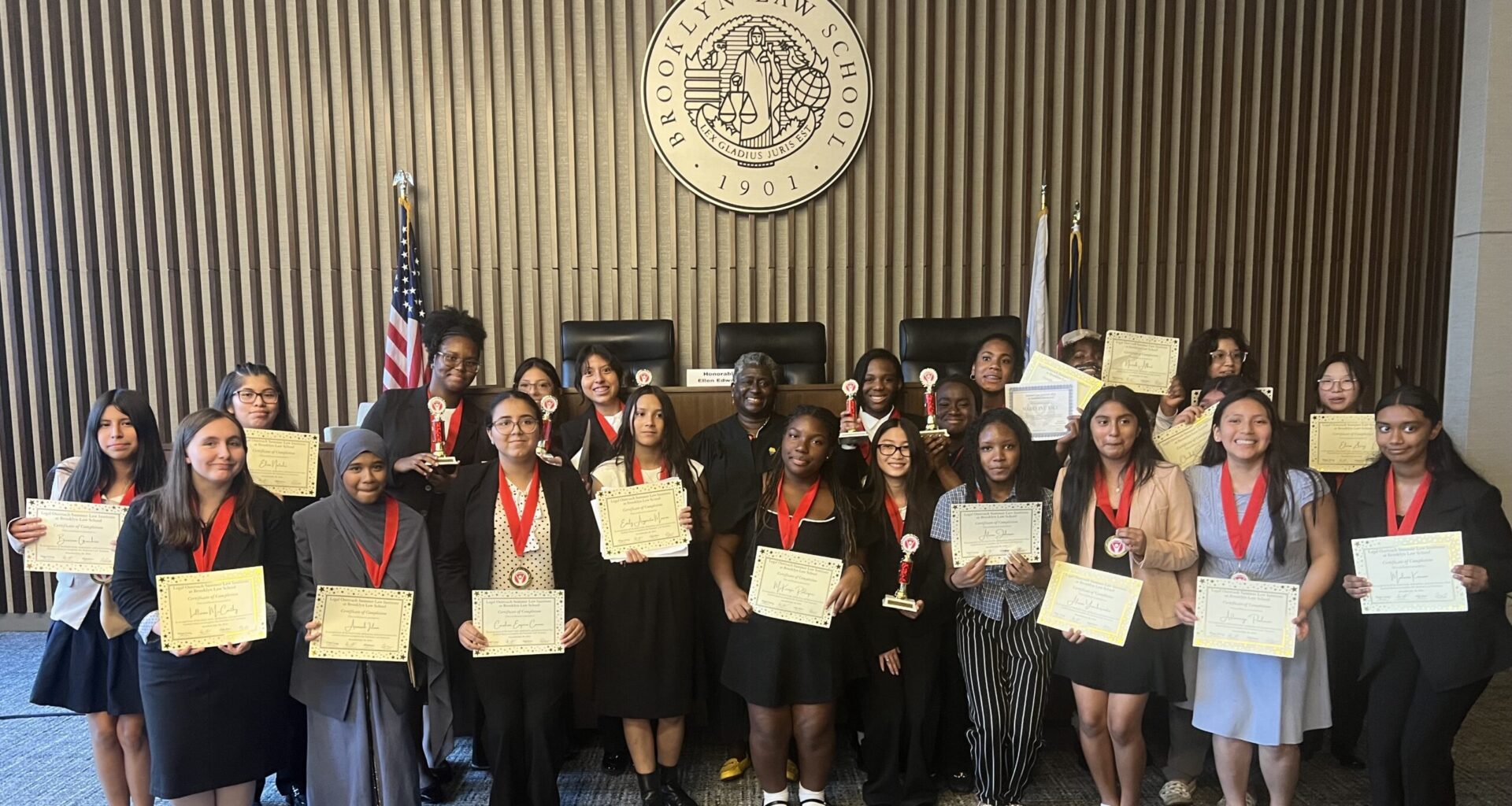
The case of the social media riot
The fictional case, State v. Bennett, centered on a social media influencer named Jay Bennett, known for his extravagant and often spontaneous public events. Bennett allegedly started a riot by enticing thousands of people to attend “Turn Up, Downtown,” promising a list of high-profile giveaways.
The atmosphere became increasingly chaotic, to the point that a thrown fire extinguisher injured an attendee. This triggered a series of unruly and violent actions.
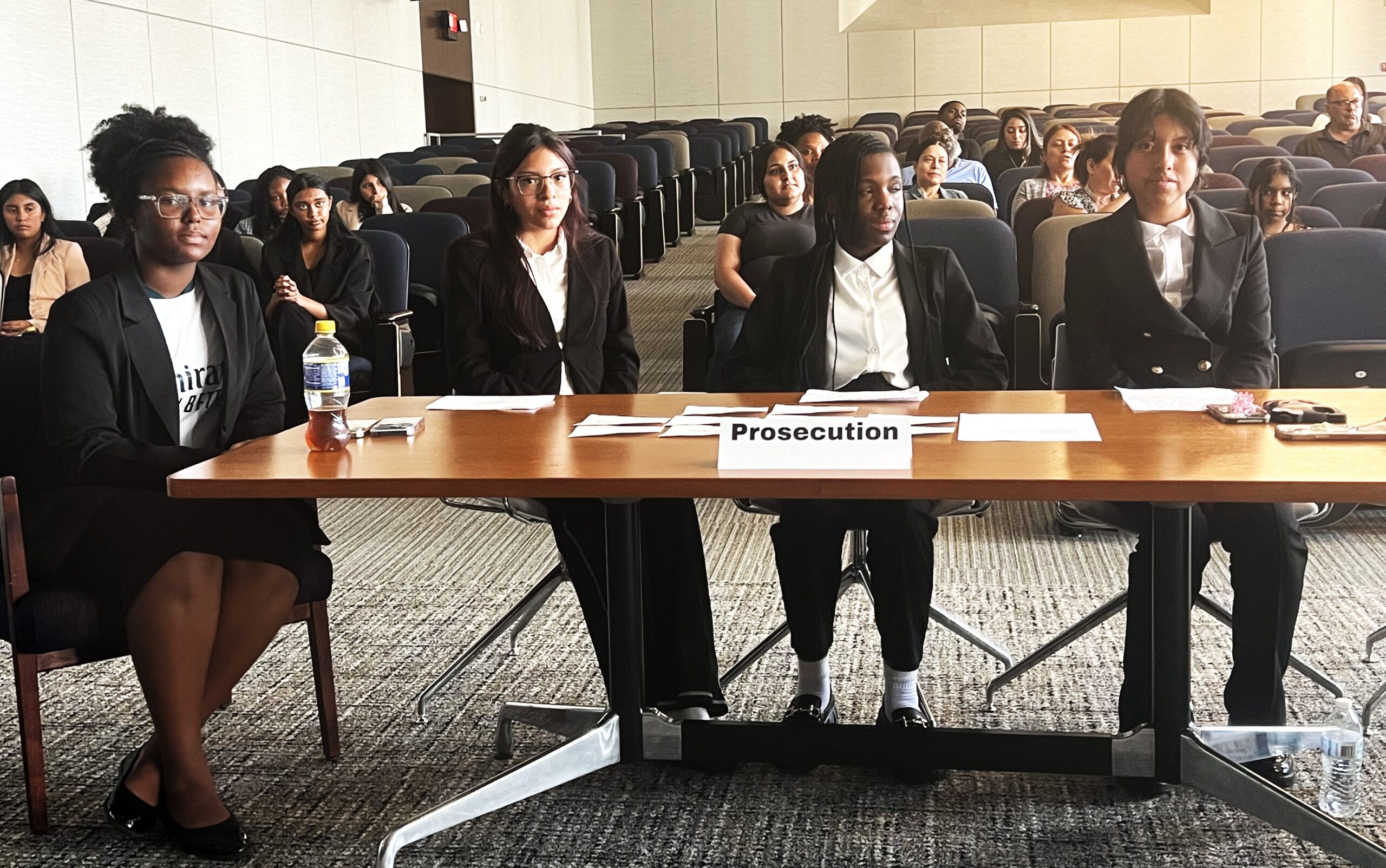 Members of the prosecution team. Photo: Wayne Daren Schneiderman/Brooklyn Eagle
Bennett, who was livestreaming in his car, continued to urge his followers to “turn things up.” Eventually, he realized the situation was spiraling out of control and attempted to call the giveaway off, but things had apparently gone too far, and Bennett left the scene, causing the crowd to become more riotous. Police were called, and several were arrested. Following the event, Bennett was charged with a class E felony of riot in the first degree.
Edwards maintained a realistic courtroom atmosphere, holding the participants to professional standards rather than treating them leniently. There was no official verdict, as participants were evaluated on their performance rather than the legal strength of their arguments.
In the end, the prosecution team was victorious.
Uzma Sherieff, the Brooklyn site director for the Legal Outreach Summer Law Institute, said she was “beyond impressed” with the students’ knowledge of the substantive and procedural elements of criminal law and how they’d applied it to the mock trial.
“Honestly, I’m just blown away by their performances,” Sherieff said. “Watching them was incredibly rewarding.”
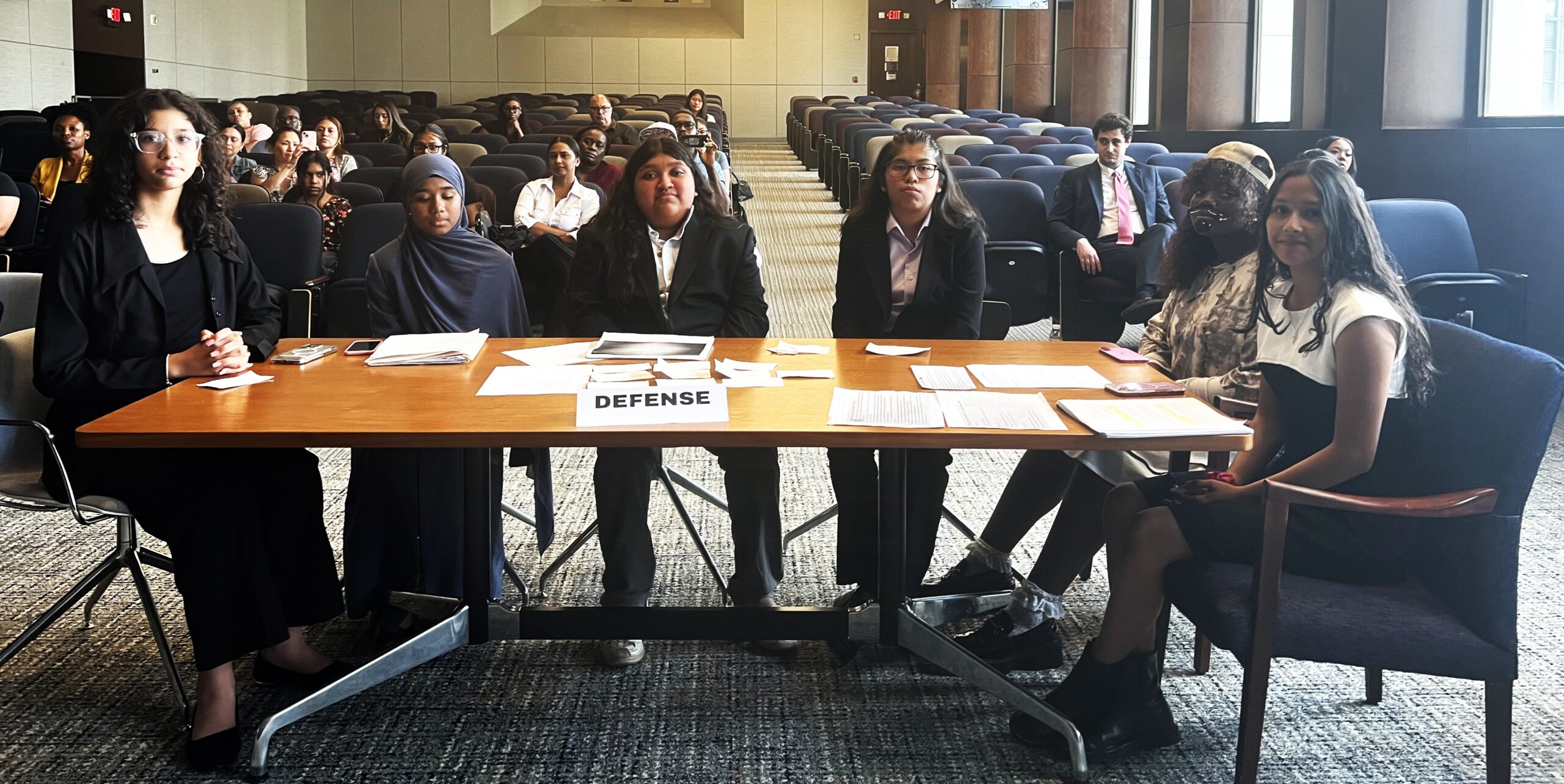 Members of the defense team. Photo: Wayne Daren Schneiderman/Brooklyn EagleJudge Edwards’ commentary
After the trial, Edwards addressed the audience and participants. “I’m so proud of you all, and happy to be here,” she said.
“This has been so much fun. I’m looking forward to seeing everyone here go on to whatever profession you choose,” she continued. “However, I would love to see you in my courtroom as an attorney, court officer, stenographer, administrator or an IT person. There are so many jobs in the court system at your disposal.”
The judge also offered some comments and critiques on the participants’ performances. “When you’re doing a presentation, you have to project, speak clearly, and with that, you will convey confidence,” she said. “You should be looking the person in the eye as well. I didn’t see a lot of those things going on.”
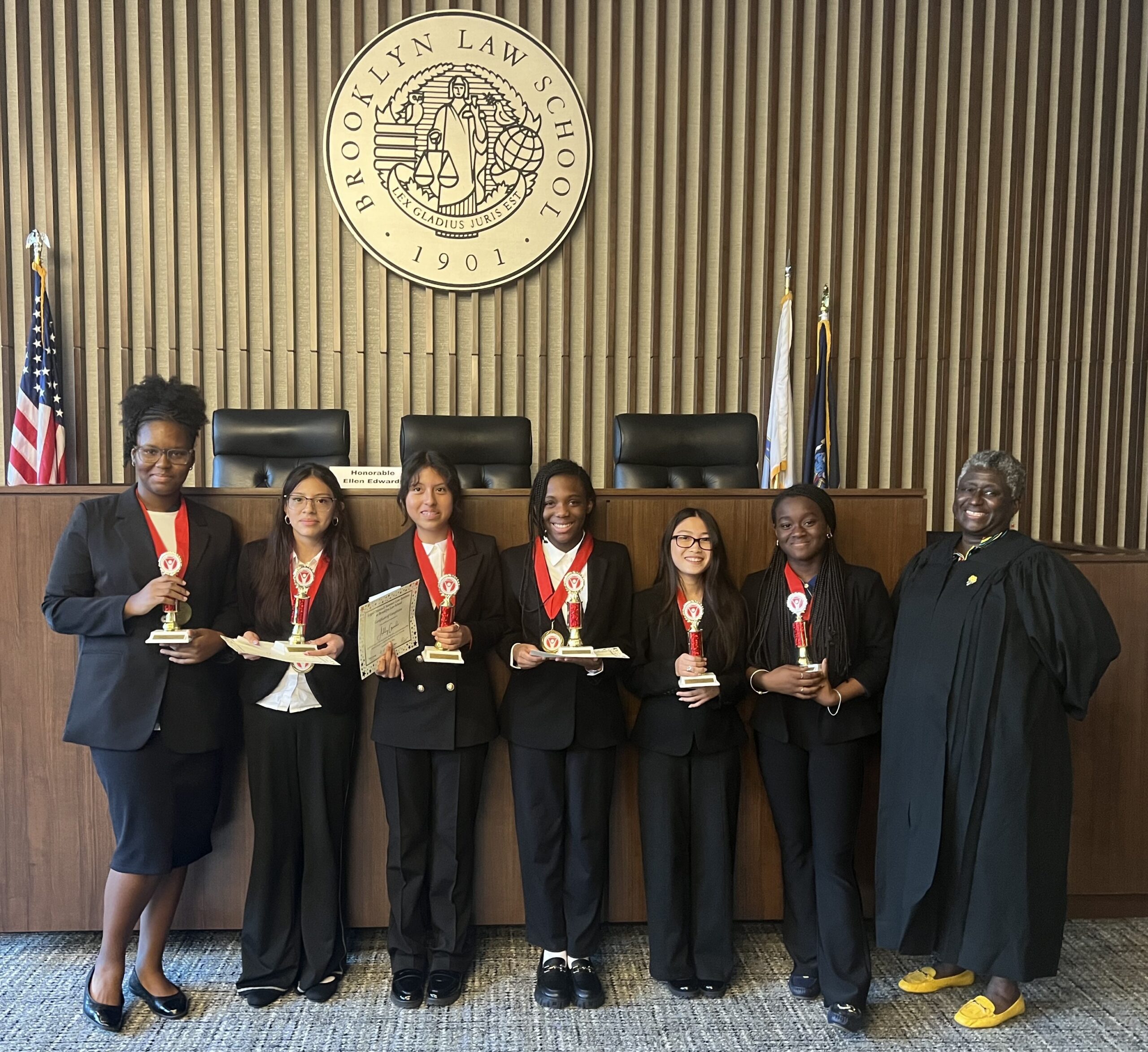 Hon. Ellen Edwards alongside the victorious prosecution team. There was no official verdict, as participants were evaluated on their performance rather than the legal strength of their arguments. Photo: Wayne Daren Schneiderman/Brooklyn Eagle
The judge also said it’s important to know your materials. “A lot of people were just reading,” she said. “You have to be more immersed in your information.”
To close, the judge said, “Law is not an individual sport but a team effort.”
Edwards, a lifelong resident of Brooklyn, emphasizes an integrated approach to the justice system, incorporating social work and a holistic view of individuals rather than treating them solely as cases.
As a judge, Edwards has issued published decisions in areas such as insurance disputes, medical supply litigation and landlord-tenant matters. She earned her bachelor’s degree in Urban Legal Studies from the City College of New York and her juris doctor from Emory University School of Law.