
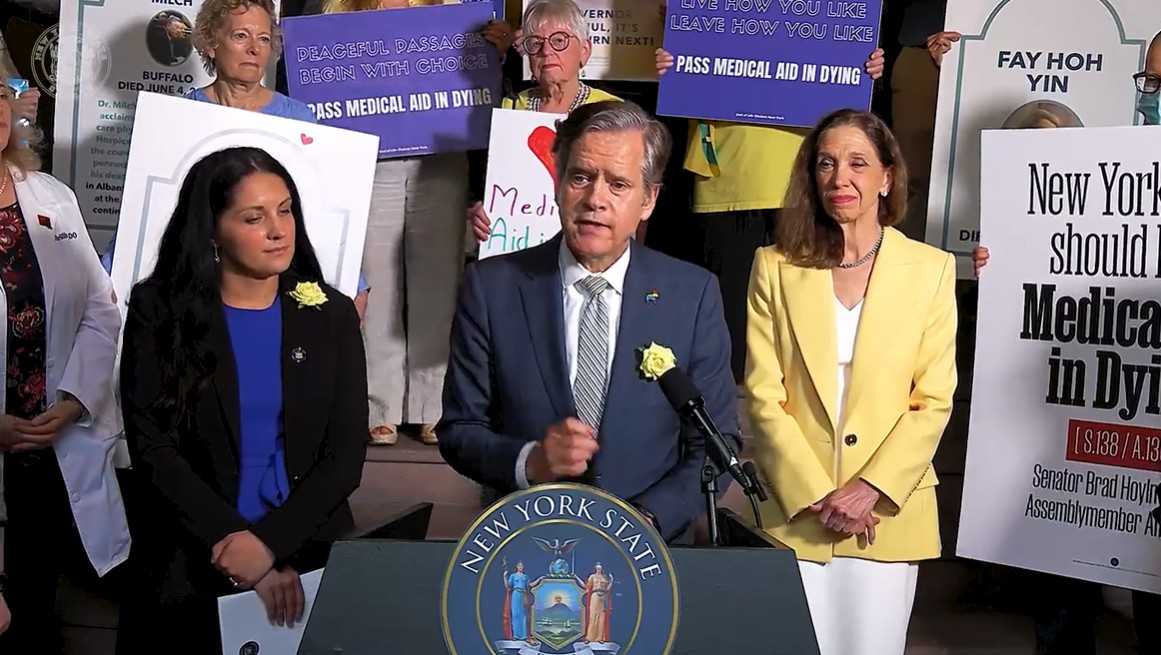
Medical Aid in Dying (MAID) is now in effect throughout New York. It arrived with both applause and opposition to the procedure that now grants physician-assisted suicide to eligible sick patients in the Empire State.
The bill took effect on Aug. 5 after Gov. Kathy Hochul signed it into law in February, following more than 10 years of advocacy by supporters of MAID.
What is MAID?
The legislation, authored and championed by Assembly Member Amy Paulin, who represents Westchester, allows mentally capable, terminally ill adults with six months or less to live to request medication to self-administer to end their lives.
“Beginning today, terminally ill New Yorkers facing unimaginable suffering have the comfort of knowing they have one more compassionate option available to them,” Paulin said. “This law is about dignity, autonomy, mercy, and respecting deeply personal end-of-life decisions.”
New York joins about a dozen other states that have MAID laws, including nearby New Jersey, Delaware and Vermont.
 New York joins about a dozen other states that have MAID laws, including nearby New Jersey, Delaware and Vermont. Photo via Getty Images
Paulin said that even though only a small percentage of eligible patients are expected to utilize the life-ending procedure, experience in other states has shown that many terminally ill patients “find tremendous comfort simply in knowing the option exists,” adding that many people who qualify for MAID never take the medication.
“For many families, simply having the choice provides comfort, reassurance, and a greater sense of control during one of life’s most difficult moments,” she said. “New York now joins a growing number of states that recognize medical aid in dying as a compassionate end-of-life option.”
Manhattan Borough President Brad Hoylman-Sigal championed the bill, too, when he was in the state Senate last year.
“Terminally ill New Yorkers with fewer than six months to live deserve the right to die with dignity,” he said. “I’m deeply grateful to the hundreds of patients, families, physicians, and faith leaders who bravely shared their stories and helped shape and deliver this legislation.”
Who is eligible to receive MAID?
Only terminally ill adults with a prognosis of six months or less to live qualify to use MAID.
However, after discussions between Hochul and state legislators, certain safeguards were put in place within the law to ensure it is used “carefully” and “responsibly,” advocates explained. These precautions include a mandatory five-day waiting period between when a prescription is written and filled; a written and oral request from the patient for the lethal drugs by video or audio; and a mental health evaluation.
People who stand to benefit financially from a patient’s death cannot serve as witnesses or interpreters.
“The safeguards built into this law ensure that it will be implemented carefully, responsibly, and with the utmost respect for patients and families,” Paulin said. “States that have had medical aid in dying laws in place for decades have demonstrated that these protections work, while giving tremendous peace of mind to those facing the end of life.”
Was there opposition to the bill?
Yes. Although advocates have said that about 70% of New Yorkers support MAID, passing the bill did not come easy.
Many individuals and groups stood firmly against the action, including individual New Yorkers, fellow New York politicians, and religious and disability-rights groups.
“I fought this legislation tooth and nail from the day it was introduced until the final vote because I believe New York should always choose hope, compassion, and quality end-of-life care over physician-assisted death,” NYS Sen. Bill Weber, who represents Rockland County and other areas just north of NYC, said on Wednesday.
Kristen Curran, director of government relations at the New York State Catholic Conference, told amNewYork in December that the bill is “dangerous” and was concerned about what passing it could lead to.
“This is an incredibly dangerous piece of legislation,” she said. “The bill as written right now would be the most permissive assisted-suicide legislation in the country. Part of why this is so dangerous is because they are not going to stop here.”
In Canada, MAID was expanded to include patients who do not have a fatal or terminal illness as eligible for the procedure.
Going forward
A person can withdraw their request for MAID medication at any time. Doctors will have to document information regarding the patient’s medical record, including dates of oral requests and noting that all requirements have been met.
The cause of death on the individual’s death certificate, who dies after self-administering the lethal medication, will be the underlying terminal illness or condition.