
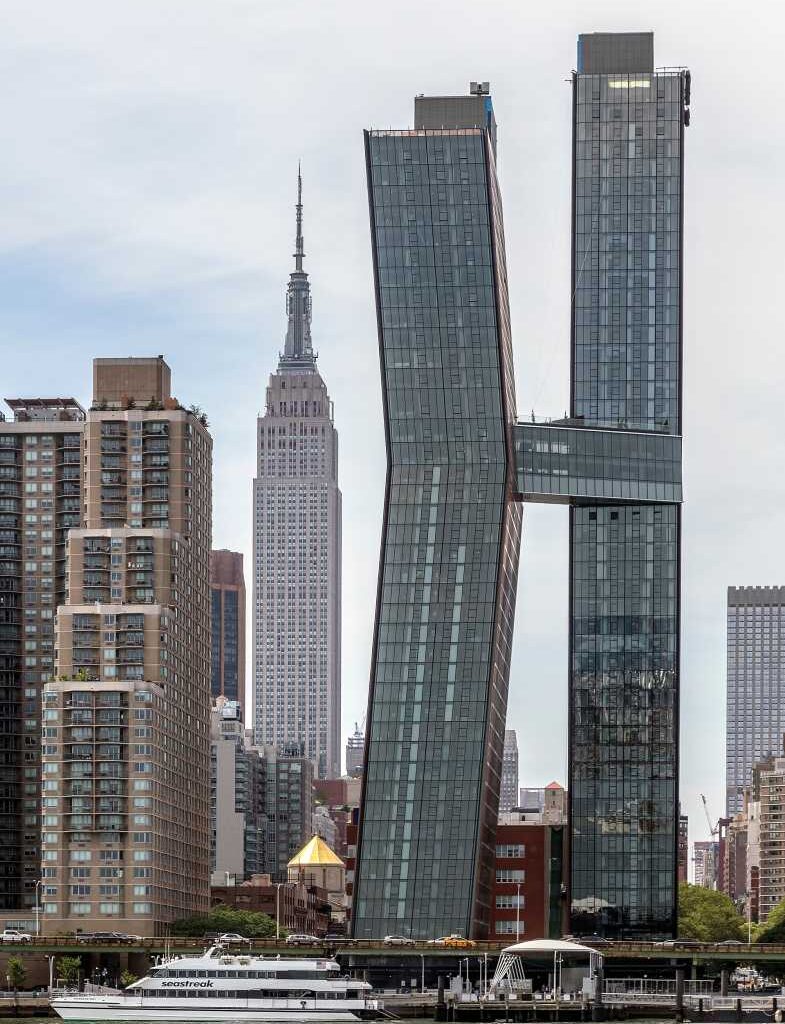
Tenants of the mammoth East River-facing American Copper Building apartment complex filed a class action lawsuit on Tuesday, alleging that its owner systematically overcharged renters in rent-stabilized units.
The lawsuit against the owners of the 761-unit conjoined residential towers located 626 1st Ave. in the Murray Hill neighborhood of Manhattan could impact 3,500 tenants, and demands the return of over an estimated $20 million in rent overcharges, according to the Housing Rights Initiative, which helped investigate the alleged violations.
“What’s especially disturbing is that this landlord received tens of millions of taxpayer dollars in public benefits while allegedly violating the very laws designed to protect tenants,” Manhattan Borough President Brad Hoylman-Sigal said in a statement.
Black Spruce Management, the owner of the towers, benefits from the 421-a tax credit program, which has provided it with tens of millions of dollars in tax benefits in exchange for keeping all units properly rent-stabilized, according to court papers. The firm did not respond to a request for comment from amNewYork Law prior to publication.
Tenants allege that the developers used a scheme that involved offering an initial lease at a lower “net rent” that was calculated by averaging a time-limited discount, while simultaneously registering the rents of the apartments with the state for stabilization purposes at an inflated price. When it came time to renew the lease, the landlord would reduce the rent concession and put tenants on the hook to accept rent increases far over the increases that are legally allowed for rent-stabilized apartments.
Tenants allege that this rent concession system violates the types of increases that are allowed under the state rent stabilization laws. For instance, one of the tenant plaintiffs, David Cohen, entered into a two-year lease for an apartment in 2022 that was set to expire in 2024, with monthly rent of $4,485.19 on the state books. But as part of the lease, Cohen received a four-month rent concession, making his “net effective rent” $3,737.69.
The lawsuit argues that the landlord should have used that lower, effective rent figure as the rent-stabilized amount it registered for Cohen’s unit. Instead, when Cohen tried to renew his lease, the landlord provided only a two-month concession that increased the effective cost of his rent-stabilized apartment by approximately 19.5% — far above the maximum 2.75% increase permitted by the city’s Rent Guidelines Board.
On his next lease renewal, the landlord completely withdrew the rent concessions, increasing Cohen’s rent by 12.4%.
An investigation by the Housing Rights Initiative, which prompted the lawsuit, found that this type of rent increase was pervasive throughout the property.
For relief, the tenants are asking for an independent audit that would determine rent refunds and would reform existing leases to properly comply with rent stabilization laws.
“It is an outrage that massively profitable real estate giants are able to make use of these tax benefits to further enrich themselves, yet time and again they have shown that they are unwilling to do the bare minimum to uphold their end of the bargain and keep rents stabilized,” HRI’s organizing director Michael Shank said.