
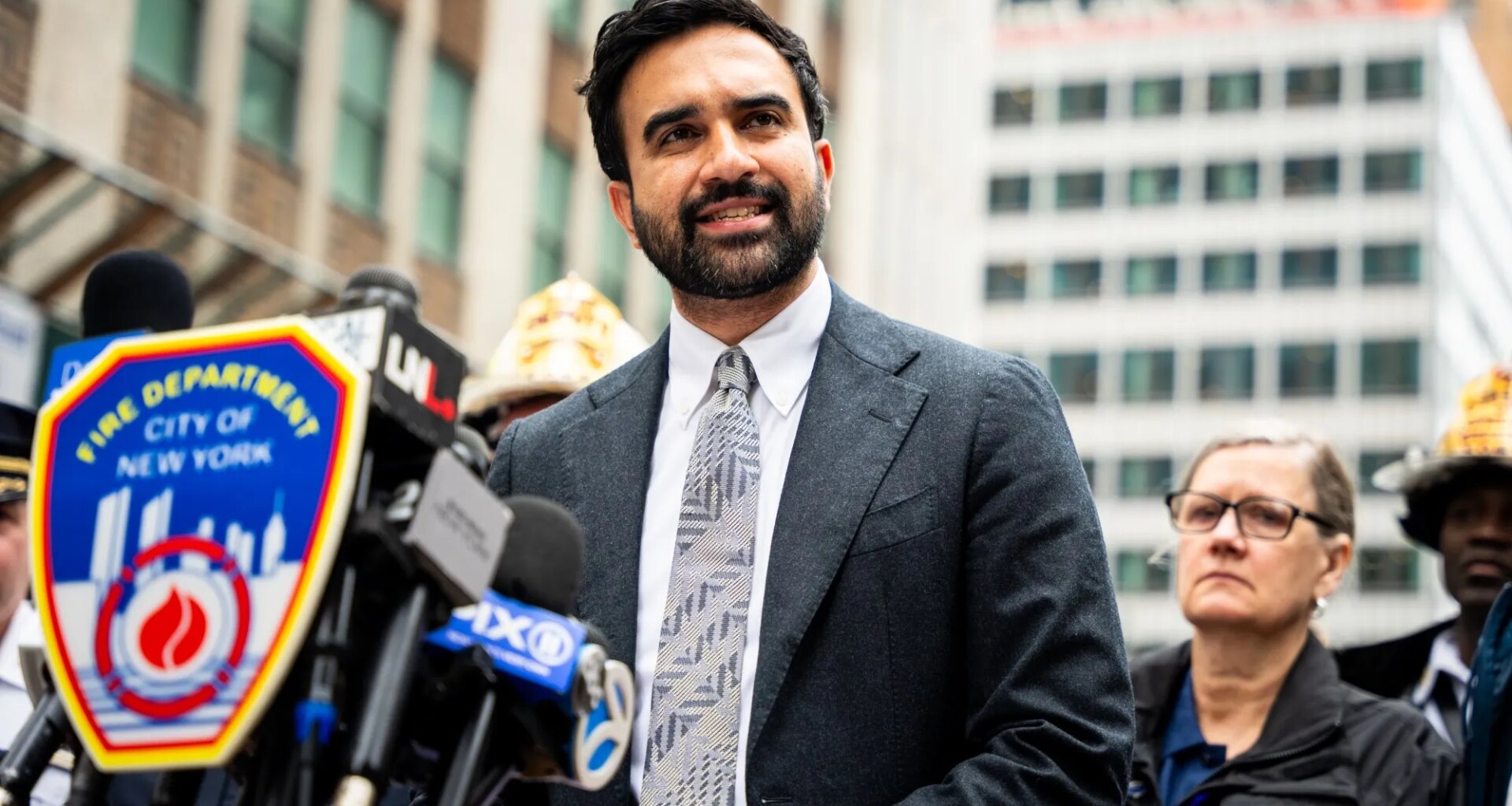
The rise of America’s socialist left continued this week with Abdul El-Sayed’s win in Michigan’s Democratic Senate primary. For those familiar with global events of the late 20th century, this is disconcerting.
In the 1970s, about one-third of the world’s residents lived under socialist or communist governments that micromanaged their nations’ economies, to disastrous effect. Vast poverty led China’s leaders — who were unusually pragmatic for a dictatorial state — to embrace free-market principles. Decades of economic stagnation also fueled the collapse of the Soviet empire in 1991 and the emergence of a corrupt but recognizable form of capitalism under Russian leader Boris Yeltsin.
These historic events were a potent reminder that free-market capitalism, whatever its many flaws, transformed and enriched the world over the last 300 years, helping billions lead more prosperous and much longer lives. By 2000, only North Korea and Cuba — two of the poorest nations on Earth — still practiced socialist economics. This is why extreme global poverty has plunged by 70% since 1980, according to the World Bank.
And this is why Americans who don’t live in New York should not fear Mayor Zohran Mamdani’s agenda. They should welcome it. Because when it goes haywire, the nation will reject socialism — again.
In the Big Apple, based on events of the last week, the backlash is already under way. Because of how Mamdani implemented a hugely costly “second home” tax, 17,000 residents have to prove they live there at least half the year. This guilty-until-proven-innocent approach is an imperious abuse of power — and a reflection of many socialists’ contempt for property rights and due process. The reaction to it has been overwhelmingly negative.
In time, the same reaction awaits Mamdani’s plan to launch city-owned, privately operated grocery stores in 2027 that offer a subsidized 30% discount on staple foods like produce, meat and egg salad. Even though decades of evidence show that grocery stores have among the smallest profit margins of any industry, this initiative was at the center of Mamdani’s campaign promise to make New York more affordable.
But when key details emerged last week, many New Yorkers were stunned to learn the subsidized food would be available to anyone — including both millions of wealthy city residents and nonresidents. In a city running a $500 million deficit, this is nutty. As Manhattan Institute policy analyst Adam Lehodey noted, since taxpayers will have to pay a massive tab for subsidies, “the 30% savings that Mamdani announced at his government-owned stores are an illusion.”
An infinitely more practical way to address the cost of food is a city initiative to increase SNAP benefits for those in genuine need. But that would mean not realizing the socialist dream of government-owned stores. And if achieving that dream drives many of the 13,000 unsubsidized bodegas in the city out of business, well, that’s the price of progress — or the socialist definition of it. No wonder a leader of the United Bodegas of America organization reacted profanely to the plan and declared that “it makes no sense.”
Before long, this realization will be shared by a whole lot of people, both in and out of New York. Maybe then they will get back to the hard work of smoothing the rough edges off the U.S. version of capitalism — instead of crippling it with government interference.